
China Rare Earth Producers Post Blockbuster H1 Profits
China's rare earth producers posted blockbuster first-half profits as prices climbed, with Northern Rare Earth forecasting growth above 112 per cent — showing US de-risking has yet to erode Beijing's grip on critical minerals. AI demand and export controls tighten supply, while Japan and the West...
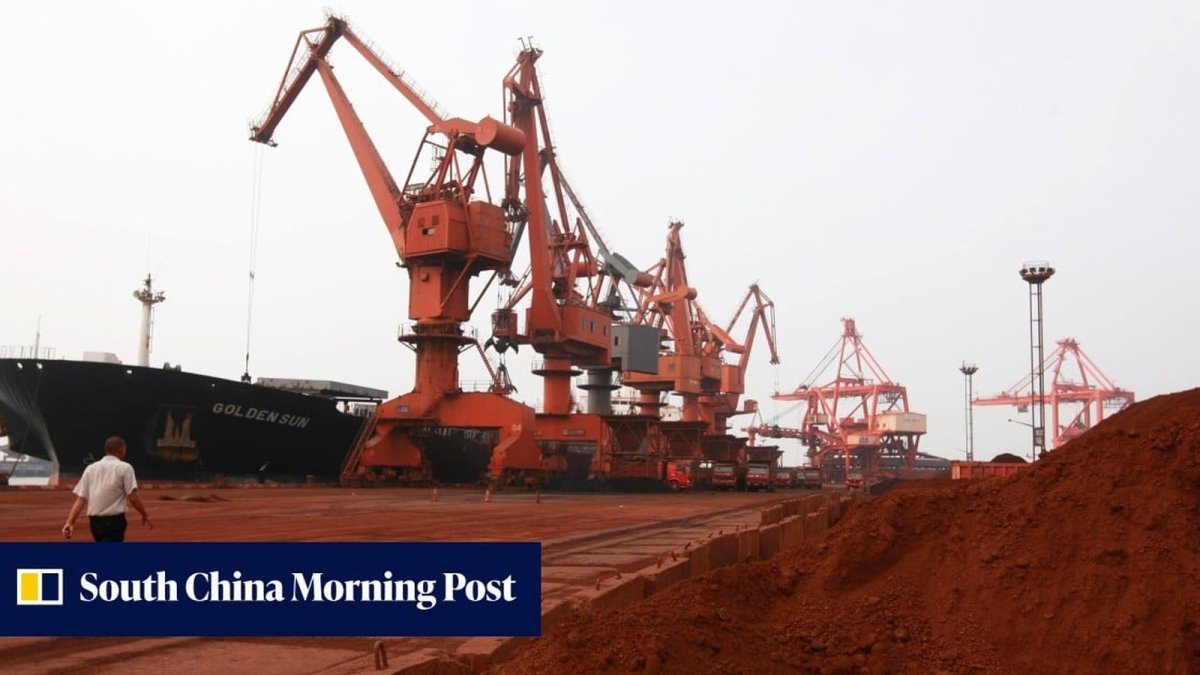
China's Rare Earth Giants Cash In as Prices Climb
China's rare earth producers have emerged from the first half of 2026 with blockbuster profits, underlining how Beijing's command of the critical minerals market continues to pay dividends even as Washington steps up its push to break the country's near-monopoly. The earnings season paints a picture of an industry that has turned geopolitical tension into pricing power.
Shenzhen-listed China Rare Earth Resources and Technology posted a 46.53 per cent year-on-year surge in first-half net profit to 237 million yuan (US$35.1 million), the company said in an exchange filing on Friday. Shanghai-listed China Northern Rare Earth (Group) High-Tech, the nation's largest producer, expects first-half net profit of between 1.98 billion yuan and 2.06 billion yuan, representing year-on-year growth of between 112.74 per cent and 121.33 per cent.
Two Industry Leaders, One Direction: Up
The numbers reflect a sector firing on all cylinders. China Northern Rare Earth's forecast, released in mid-July, pointed to net profit more than doubling from the 931.31 million yuan recorded in the same period a year earlier, driven by sustained high prices, rising production and sales volumes of key products, and steady improvements in operational efficiency.
The company's magnetic materials subsidiary generated roughly 9.5 billion yuan in revenue during the first half, up about 107 per cent from a year earlier, according to industry data cited by rareearth exchanges. Record production levels were achieved across rare earth separation products, metals and advanced materials, a sign that downstream expansion is accelerating beyond the mining stage.
Investor enthusiasm has followed the earnings. China Rare Earth Resources and Technology traded at a price-to-earnings ratio of 636.88 in February; that multiple now stands at around 254, still far above the market average. China Northern Rare Earth's ratio peaked at 105.4 in February and has since cooled to roughly 58 — elevated, but reflective of the market's conviction that the upcycle has room to run.
What Is Driving the Price Rally
The engine of the boom is demand, not just policy. "Rare earth prices have maintained a strong upwards trajectory driven by the rapid expansion of the AI supply chain and surging demand for hardware components," said Guo Lingyu, an investment manager at Jianyuan Fund. Domestic regulatory controls on exports have compounded the effect, tightening supply just as global buyers compete for magnets, motors and high-performance electronics.
The demand picture is broad-based. Beyond AI data-centre hardware, rare earth permanent magnets are essential inputs for electric vehicle traction motors, wind turbine generators, robotics actuators and consumer electronics — sectors that have all expanded through 2026. China's own industrial upgrading, including its push to electrify transport and build out renewable capacity, keeps a large share of the output at home even as export volumes face tighter oversight.
Data from the Association of China Rare Earth Industry showed its rare earth price index — which compares daily transaction data with prices from the whole of 2010 — climbed 31.7 per cent since August 2025. Independent trackers corroborate the trend: the index reached 271.9 on July 8, 2026, continuing a recovery that began in late 2025 as heavy rare earth supply stayed tight.
Guo added that the sector's prospects rest on "structural supply constraints and accelerating downstream adoption across hi-tech", pointing to electric vehicles, wind turbines, robotics and AI data centre hardware as the demand pillars of the next phase.
Washington's Push Back — and Its Limits
The profit surge comes against a backdrop of intensifying US pressure. US President Donald Trump announced more than US$2 billion of domestic mining investment on Friday, widely viewed as an attempt to diversify the American rare earth supply chain away from China's near-monopoly. The move follows a July 20 executive order that imposed strict limits on defence procurement waivers for Chinese critical minerals.
Those measures are the latest in a series that began with a December 2017 executive order designating rare earths as critical minerals and directing the development of a federal strategy to reduce dependence on foreign suppliers — particularly China. Washington has also sought to cultivate partners elsewhere, from MP Materials in the United States to discussions over Ukraine's mineral resources.
So far, however, the strategy has done little to dent the near-term earnings power of Chinese producers. Analysts note that Western projects remain in their infancy compared with the integrated Chinese supply chain that spans mining, separation, alloying and magnet manufacturing.
Japan's Stake in the Rare Earth Equation
For Japan, the stakes are particularly high. Tokyo has long treated rare earths as a strategic vulnerability, having experienced China's export controls first-hand during the 2010 Senkaku Islands dispute, when shipments to Japan were disrupted. Beijing's renewed use of the minerals as leverage in trade relations with Japan and the United States has revived those memories.
Japan has responded by diversifying — securing supply agreements with Australia's Lynas Rare Earths, building domestic recycling capacity, and having state-backed JOGMEC stockpile critical minerals. Yet the processing bottleneck remains: even when ore is mined elsewhere, much of it still flows through Chinese separation and magnet facilities, the very stages where most of the industry's value and pricing power now sits.
The Daiwa Capital Markets analysis underscores the point. Dennis Ip, the bank's regional head of power, utilities, renewables and environment research, said China's advantages extend "far beyond mining, spanning separation, metallisation, alloying, magnet manufacturing, customer qualification and scale economics". For Japan's automakers and electronics giants — the world's heaviest consumers of rare earth magnets — that concentration remains the defining supply risk.
Why De-Risking Hasn't Bitten Yet
The uncomfortable conclusion for Western policymakers is that pressure may be consolidating Beijing's grip rather than loosening it. "On Western de-risking, I do not think it is materially eroding Chinese producers' earnings power in the near term," Ip said. "Western projects are strategically important … but the buildout is slow, capital-intensive and still faces midstream and downstream constraints."
Indeed, the counterintuitive dynamic is that export controls and geopolitical friction have tightened supply and pushed prices higher, enriching the very producers Washington seeks to weaken. "In the short to medium term, de-risking may actually reinforce China's pricing power because downstream customers still need Chinese processing and magnet capacity while supply security becomes more valuable," Ip said.
That logic is visible in the valuations: Chinese rare earth stocks are trading at multiples that reflect scarcity value, not just earnings growth. The US$2 billion US investment announcement, while symbolically significant, pales next to the scale of China's integrated industry and the years required to replicate it.
What to Watch For
The second half of 2026 will test whether the profit cycle can hold. Key signals include the trajectory of rare earth prices through the autumn restocking season, the pace of China's export quota decisions, and any escalation in US-China trade measures beyond the minerals sector — including the 15 per cent polysilicon tariff ordered this month and Beijing's response.
For Japan and the broader Asia-Pacific region, the deeper question is structural: how quickly can non-Chinese supply chains — from Lynas's expansion to US and Australian magnet projects — close the processing gap? Until they do, China's rare earth producers are likely to keep converting geopolitical leverage into record earnings, and the region's manufacturers will keep paying the price.
By Kenji Tanaka, Staff Writer
This article was produced with AI-assisted research and editorial support. Sources: South China Morning Post, Metal.com, Futunn, Rare Earth Exchanges, Daiwa Capital Markets, Association of China Rare Earth Industry.
What's Your Reaction?
 Like
0
Like
0
 Dislike
0
Dislike
0
 Love
0
Love
0
 Funny
0
Funny
0
 Wow
0
Wow
0
 Sad
0
Sad
0
 Angry
0
Angry
0

Japan Correspondent at Global1.News. Tokyo-based voice covering Japanese politics, technology, economy, and culture. Tracks the intersection of tradition and innovation in one of the world's most dynamic societies.













Comments (0)