
Hong Kong’s Wine and Dine Festival to feature extended hours, 10% more booths
The Hong Kong Wine and Dine Festival, a staple of the city’s culinary calendar, is set to expand both its scale and its operating hours this year. on 30 October and 31 October.
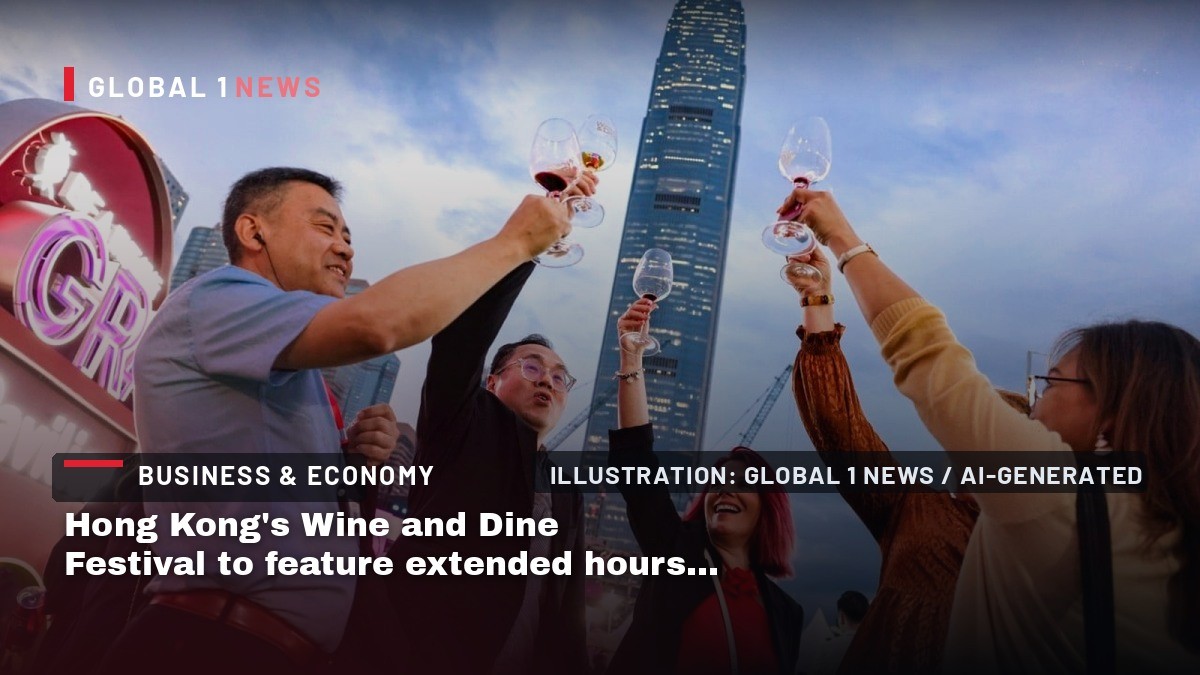
The Hong Kong Wine and Dine Festival, a staple of the city’s culinary calendar, is set to expand both its scale and its operating hours this year. Organized by the Hong Kong Tourism Board under the theme “Taste the World’s Best,” the four‑day event will run from 29 October to 1 November at the Central Harbourfront. In addition to a modest increase in the number of exhibition booths, the board has announced a follow‑up “Hong Kong Gourmet Month” for November, aiming to lengthen visitor stays and stimulate higher per‑capita spending.
Extended operating hours signal a shift toward nightlife tourism
For the first time since its inception, the festival will remain open until 1 a.m. on 30 October and 31 October. The decision to push closing times deeper into the night reflects a broader strategy to capture the city’s vibrant after‑hours culture. By aligning the festival’s schedule with the habits of both local night‑owls and international tourists who often arrive late after flights, the Tourism Board hopes to convert what was previously a late‑evening attraction into a full‑night experience.
This extension is likely to have a cascading effect on ancillary services such as late‑night transport, security, and hospitality staffing. Operators of nearby bars, hotels, and retail outlets may see a surge in demand, creating a ripple of economic activity that extends beyond the festival grounds themselves. The board’s move can be read as an effort to integrate the festival more tightly into Hong Kong’s broader nightlife economy, a sector that has shown resilience even amid recent global travel disruptions.
Booth expansion and its implications for vendors
The board has announced a 10 per cent increase in the number of booths compared with the previous edition. While the exact count of booths is not disclosed, the proportional growth suggests a deliberate effort to broaden the variety of culinary offerings and to accommodate a larger cohort of participating vendors. This expansion offers small‑ and medium‑sized food enterprises a rare platform to showcase their products alongside established luxury brands, potentially leveling the competitive field.
For existing exhibitors, the added competition may drive innovation in menu design, presentation, and interactive experiences. The presence of more booths also enhances the festival’s appeal to a wider demographic, encouraging repeat visits across the four days. From a logistical standpoint, the board will need to manage increased foot traffic, crowd control, and waste management, all of which will test the operational capacity of the Central Harbourfront venue.
Visitor projections and attendance trends
The Tourism Board projects attendance of 168 000 visitors for this year’s edition, a modest rise over the 160 000 recorded last year. Although the increase appears incremental, it represents a positive trajectory in a market where visitor numbers have been volatile due to shifting travel restrictions and regional competition. The board’s confidence in a higher turnout is anchored in the extended hours and the added booths, which together create a more compelling value proposition for both domestic and international guests.
When viewed against the backdrop of Hong Kong’s broader tourism recovery, the festival’s attendance goal aligns with the city’s ambition to re‑establish itself as a premier destination for experiential travel. The incremental growth also suggests that the board is adopting a cautious optimism, balancing ambition with realistic expectations based on recent attendance data.
“Hong Kong Gourmet Month” as a post‑festival strategy
Following the four‑day festival, the board will launch a month‑long series of luxury dining events throughout November, branded as “Hong Kong Gourmet Month.” While specific activities have not been enumerated, the description of “more luxury dining activities” indicates a focus on high‑end culinary experiences, likely involving Michelin‑starred restaurants, exclusive tasting menus, and perhaps collaborations with international chefs.
This extended programme is designed to sustain the momentum generated by the festival and to encourage visitors to extend their stays beyond the initial weekend. By offering a curated calendar of gastronomic events, the board hopes to transform Hong Kong’s image from a short‑stop destination to a longer‑duration culinary hub, thereby increasing average length of stay and overall visitor spend.
Economic rationale behind the initiatives
Board chairman Peter Lam Kin‑ngok articulated the underlying economic motive: “Through these initiatives, we aim to encourage visitors to stay longer and spend more, creating additional business opportunities for the trade.” The emphasis on longer stays directly targets a key metric in tourism economics—per‑capita expenditure. By extending operating hours and adding a month‑long luxury dining calendar, the board is effectively creating additional revenue windows for hotels, restaurants, and ancillary services.
Moreover, the festival’s theme “Taste the World’s Best” positions Hong Kong as a gateway for global culinary trends, reinforcing the city’s reputation as an international food capital. This branding can attract not only tourists but also trade delegations, food importers, and culinary talent, potentially spawning longer‑term business partnerships and supply‑chain investments.
Potential challenges and risk factors
While the expansion plans are ambitious, they also introduce several operational risks. Extending hours to 1 a.m. raises concerns about public safety, noise regulations, and the capacity of public transport to accommodate late‑night patrons. Coordination with the Transport Department will be essential to ensure sufficient train and bus services, especially given the festival’s central location.
Additionally, the increase in booth numbers may strain the venue’s infrastructure, from power supply to waste disposal. The board will need to enforce strict compliance with health and safety standards to prevent any incidents that could tarnish the festival’s reputation. Finally, the success of “Hong Kong Gourmet Month” will hinge on the willingness of high‑end establishments to participate and on the ability to market the programme effectively to both domestic and overseas audiences.
Outlook: positioning Hong Kong’s culinary tourism for the future
In the context of an increasingly competitive Asia‑Pacific tourism market, Hong Kong’s decision to amplify its flagship food festival reflects a strategic pivot toward experiential, high‑value tourism. By extending operating hours, expanding vendor participation, and launching a month‑long luxury dining series, the city is betting on its culinary heritage to differentiate itself from neighboring destinations that may focus more on shopping or theme‑park attractions.
If the projected attendance of 168 000 materialises and the “Gourmet Month” successfully draws visitors to stay longer, the combined impact could translate into a measurable boost in tourism revenue for the sector. Moreover, the festival’s emphasis on global cuisine under the “Taste the World’s Best” banner may reinforce Hong Kong’s role as a conduit for international food culture, attracting future trade missions, culinary conferences, and investment in food‑related infrastructure.
In sum, the 2026 Hong Kong Wine and Dine Festival represents more than a seasonal celebration; it is a calculated instrument in the city’s broader tourism recovery and diversification strategy. The outcomes of this year’s expanded programme will likely inform the design of future festivals and could set a benchmark for how Hong Kong leverages its culinary assets to sustain economic growth in the post‑pandemic era.
This article was produced with AI-assisted research and editorial support. Reporting is based on the source material cited below. Sources: South China Morning Post; scmp.com; Global1.News (07 October 2026).
By Kenji Tanaka, Staff Writer
What's Your Reaction?
 Like
0
Like
0
 Dislike
0
Dislike
0
 Love
0
Love
0
 Funny
0
Funny
0
 Wow
0
Wow
0
 Sad
0
Sad
0
 Angry
0
Angry
0

Japan Correspondent at Global1.News. Tokyo-based voice covering Japanese politics, technology, economy, and culture. Tracks the intersection of tradition and innovation in one of the world's most dynamic societies.











Comments (0)