
Simon Levy Guilty of Double Murder and Rape at Old Bailey
Simon Levy spent years slipping through the hands of the very institutions meant to stop him — and two women are dead because of it. On Friday, the 40-year-old from Tottenham was found guilty at the Old Bailey of murdering Carmenza Valencia-Trujillo and Sheryl Wilkins, and of a brutal rape and attack on a third woman who survived.
Simon Levy spent years slipping through the hands of the very institutions meant to stop him — and two women are dead because of it. On Friday, the 40-year-old from Tottenham was found guilty at the Old Bailey of murdering Carmenza Valencia-Trujillo and Sheryl Wilkins, and of a brutal rape and attack on a third woman who survived. The verdict has exposed a collective failure across the Metropolitan Police, the British Transport Police and the Crown Prosecution Service that left a prolific predator free to kill.
How Simon Levy Was Left Free to Kill Twice — and the System Failures That Let Him
London, UK – 10 August 2026 — Simon Levy now faces whole-life prison sentences after an Old Bailey jury convicted him of murdering two women and raping a third. The five-week trial, which ended on Friday 7 August after 13 hours of deliberation, laid bare a litany of blunders: police and prosecutors knew Levy posed a serious risk to women, yet he remained on bail as his attacks escalated to double murder.

The Verdict at the Old Bailey
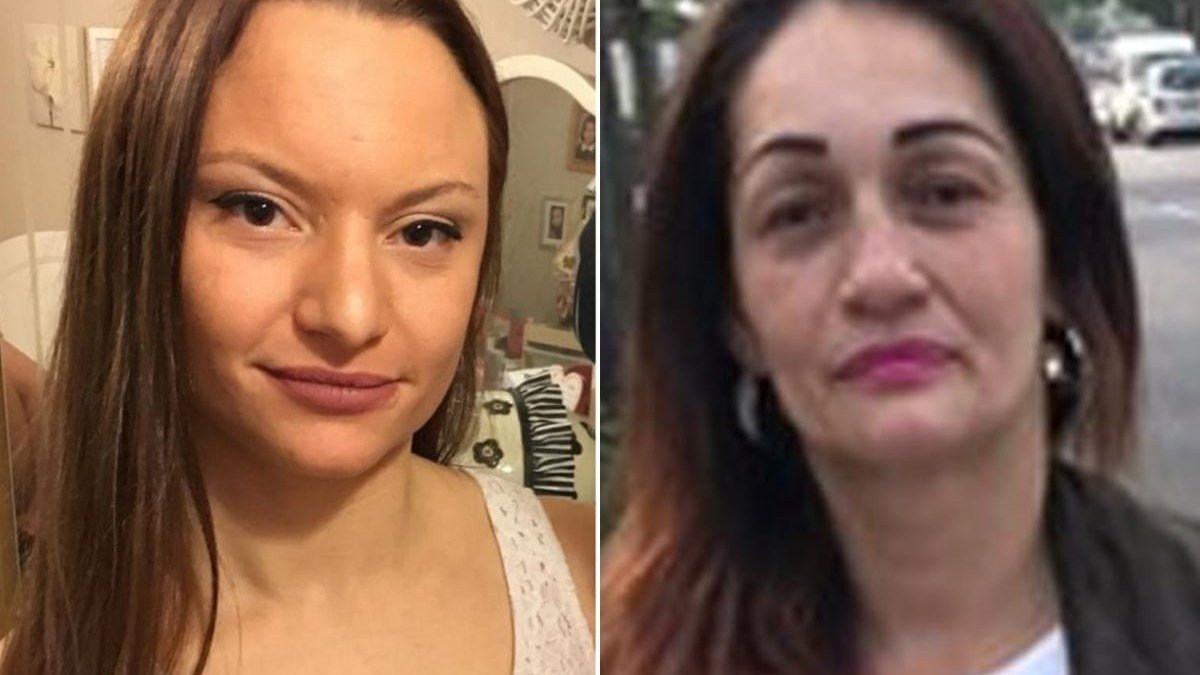
Levy, of Beaufoy Road in Tottenham, was found guilty of murdering grandmother Carmenza Valencia-Trujillo, 53, whose body was discovered on 17 March 2025 in a partly disused tower block on the Aylesbury Estate in SE17, south-east London. The jury returned an 11-1 majority verdict on that charge. He was convicted unanimously of the murder of Sheryl Wilkins, 39, a mother of four, found behind a car park wall near Tottenham High Road at 06:30 on 24 August 2025.
Both women were suffocated in sexually motivated attacks. Levy was also convicted of two counts of rape, grievous bodily harm with intent and the non-fatal smothering of a third woman, 35, attacked in January 2025 in the same Tottenham car park where Ms Wilkins's body was later found. She survived, but suffered a broken collarbone.
Members of the victims' families wept as the verdicts were delivered. Levy, wearing sunglasses over an eye injury and sporting a pointed beard, gave no reaction. He had declined to give evidence and pleaded not guilty to all charges. Judge Mark Lucraft KC adjourned sentencing until Wednesday 12 August and remanded Levy into custody, with a whole-life order widely expected.
A Catalogue of Missed Chances
What makes this case so devastating is not just the crimes, but how avoidable they were. Levy was on bail as a suspect for Ms Valencia-Trujillo's murder when he killed Ms Wilkins five months later. He had been arrested on suspicion of the first murder on 1 April 2025, but because a post-mortem could not provide a definitive cause of death, police said they lacked sufficient evidence to charge him — and he walked free.
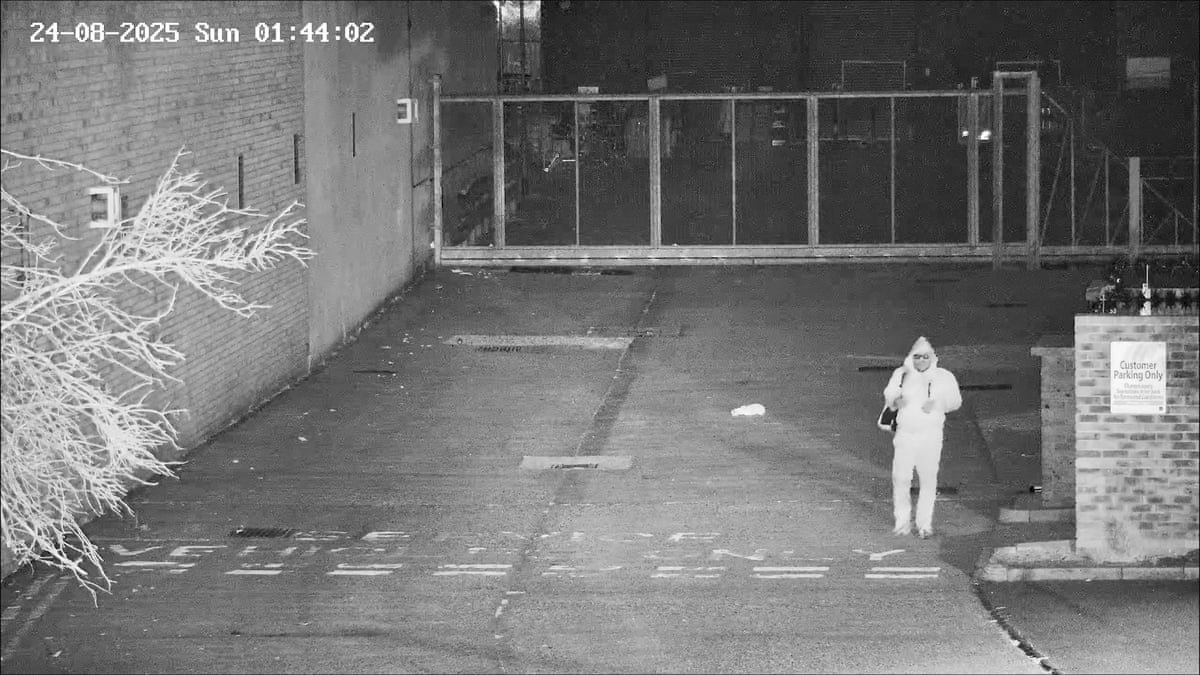
The Metropolitan Police has admitted it failed to treat Ms Valencia-Trujillo's death as murder, despite arresting Levy and finding his DNA on her body, until after he had killed again. Deputy Assistant Commissioner Kevin Southworth conceded that Ms Wilkins "would probably have been alive" were it not for what he called a "collective system failure".
By May 2025, police wanted Levy remanded in custody, fearing he posed a "high risk of reoffending" with his crimes "escalating". Yet the Crown Prosecution Service admitted errors at three court hearings in May, June and August 2025 that ended with Levy remaining free. It failed to tell the courts he had been arrested for Ms Valencia-Trujillo's murder, failed to mention his past sexual assault convictions, and failed to note he was a suspect in a 2024 rape investigation.
A Decade of Offending
Levy's record reads as a decade of escalating violence against women that the system repeatedly failed to contain. He was first jailed in 2021 for groping two women in the summer of 2018 — one at Notting Hill Carnival, the other at a party in Camden. While in prison at HMP Brixton, he sexually assaulted a female prison officer in 2022, yet was still released the following year.
Out again, he sexually assaulted a woman on the Tube in October 2023 and allegedly raped another in May 2024, for which he was recalled to prison and released once more in August 2024. In November 2024, British Transport Police arrested him for four sexual assaults on the Underground, with CCTV tying him to the scenes. Six more assaults followed in the first five months of 2025 — including one on a daughter travelling with her mother — taking his total to ten across London.
In February 2026, a jury convicted Levy of ten sexual assaults on trains and the attack on the prison officer. Details of that trial could only be reported now that the murder trial has concluded and reporting restrictions were lifted.
Institutional Failure — and the Fallout
The scale of the failure spans three agencies. The Crown Prosecution Service said: "We accept there was relevant information regarding bail that was not provided to the court when bail applications were being considered. Our actions fell short of the standards that victims, families and the public are entitled to expect." A CPS source said individuals involved in the Levy case had been disciplined.
Levy also failed to attend three crown court hearings for the train attacks — claiming illness on two occasions — and the CPS accepts there is no evidence a warrant was ever sought for his detention. His final non-appearance was on 11 August 2025. A fortnight later, he murdered Sheryl Wilkins.
British Transport Police delayed charging Levy for his train assaults because of a hold-up in arranging an identification parade after his November 2024 arrest. During that delay, he attacked and raped another woman and murdered Ms Valencia-Trujillo. BTP also handed back a stolen Oyster travel card without realising it was stolen, and never searched his home. It has not referred its errors to the police watchdog; instead, one officer was moved out of investigations and a supervisor given words of advice. Peter Fulton, BTP's head of crime, defended the approach, saying: "There's a fine line between going fishing and breaching someone's human rights."
The Independent Office for Police Conduct has served a gross misconduct notice on a Metropolitan Police constable and a misconduct notice on a detective sergeant, with two Met officers now under investigation. The Met made a voluntary referral to the IOPC in January 2026.
Reaction and Accountability
Speaking outside the Old Bailey, Detective Chief Inspector Neil John, who led the investigation, said: "Simon Levy is a dangerous and predatory offender. His crimes were calculated, cruel and deeply disturbing. Throughout the trial, he has shown complete disregard for the victims and victim-survivor." Flanked by Ms Wilkins's two sisters and Ms Valencia-Trujillo's daughter, he appealed for any other victim-survivors of Levy to come forward.
London's Victims' Commissioner, Andrea Simon, said she was "appalled by the litany of failures to manage a prolific offender like Levy" and called for an examination of every key moment when justice agencies had an opportunity to intervene. Crime and Policing Minister Sarah Jones said: "The fact that Levy was able to inflict such devastating harm after being freed by police and the courts is deeply concerning. It raises serious questions that require urgent answers."
Helena Croft, chief executive of the charity StreetlightUK, said the case "demonstrated the need to treat women involved in the sex industry as women at risk of serious violence", pointing to missed opportunities around listening to frontline services and sharing information. Prosecutor Tom Little KC told the court Levy had targeted three vulnerable women, all of whom carried out street sex work to fund drug addictions.
What This Means for the UK
For women across Britain, this case will land as a brutal confirmation of a pattern: repeated warnings, monitored offenders, and a justice system that too often acts only after the worst has happened. It echoes the lessons of earlier high-profile failures — from the murder of Sarah Everard in 2021 to the deep-dive reviews of violence against women and girls that followed — and raises sharp questions about whether the police's own reforms are moving fast enough.
The Met has pointed to improvements: refreshed training on how officers share intelligence to identify risk, including an automated system that flags when multiple forces need to be aware the moment an offender is charged. Specialist officers have also been deployed across Haringey and Enfield to protect vulnerable people involved in street-based sex work. But the timing of those changes offers cold comfort to the families of Carmenza Valencia-Trujillo — remembered by her children as a "big character", "full of life", a salsa-loving grandmother — and Sheryl Wilkins, a "much-loved" mother whose family say they miss her every day.
The Bottom Line — What Comes Next
On Wednesday 12 August, Judge Lucraft will sentence Simon Levy at the Old Bailey, and a whole-life order — meaning he will die in prison — is the near-certain outcome for a man prosecutors described as a predatory offender whose crimes spanned 2018 to 2025. But the sentencing will not be the end of this story. The IOPC investigation into two Met officers is ongoing, the CPS faces searching questions over its bail failures, and the BTP's refusal to refer its own errors to the watchdog will draw fresh scrutiny. The families of the two women Levy killed — and the survivor who testified against him — deserve more than accountability for one man. They deserve a system that proves it can stop the next Levy before he strikes.
By Erica Thornton, Staff Writer
This article was produced with AI-assisted research and editorial support. Reporting is based on sources cited in the article.
What's Your Reaction?
 Like
0
Like
0
 Dislike
0
Dislike
0
 Love
0
Love
0
 Funny
0
Funny
0
 Wow
0
Wow
0
 Sad
0
Sad
0
 Angry
0
Angry
0

US Politics and Policy Correspondent at Global1.News. Based in Washington DC, covering American politics, policy, elections, and the courts. Knows how the system works and tells you what it actually means.











Comments (0)