
Fatal Hudson River Boat Capsizing Kills Mother and Infant; Operator Faces 13 Counts of Reckless Endangerment
A mother and her 5-month-old daughter died when an overloaded boat capsized near Liberty Island in New York Harbor on Saturday night. The operator, Manuel Hernandez, 46, faces 13 counts of reckless endangerment as the Coast Guard investigates whether the vessel ran as an illegal charter.
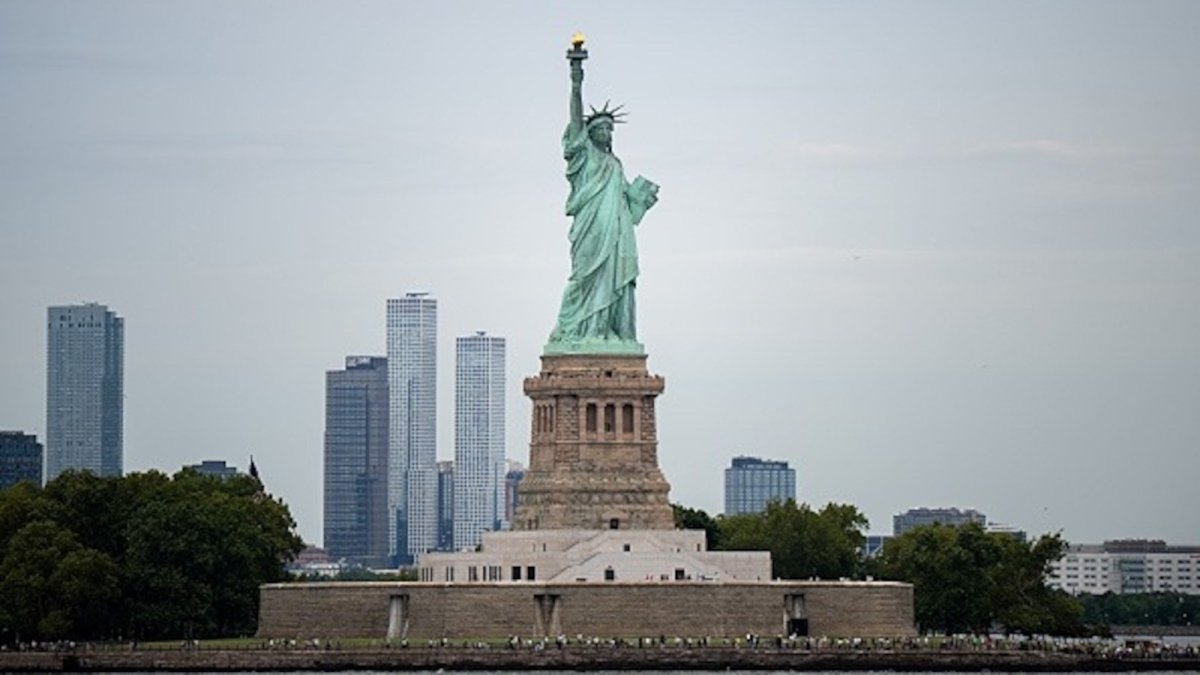
The waters of New York Harbor turned from a late-summer recreation spot into a scene of tragedy late Saturday night when a 22-foot motorboat capsized near Liberty Island, claiming the lives of a 27-year-old mother and her 5-month-old daughter. The operator of the vessel, 46-year-old Manuel Hernandez, was arrested on Sunday and now faces 13 counts of reckless endangerment as federal and local authorities piece together how a routine evening on the water went so catastrophically wrong.
The victims have been identified as Sara Sanchez and her infant daughter Antonella Garcia, both of College Point, Queens. They were pulled from the dark waters of the Hudson River and rushed to NYU Langone Lutheran Medical Center in Brooklyn, where they were pronounced dead. The baby's father, who is Sanchez's boyfriend, was also on board at the time of the tragedy and survived, according to officials familiar with the rescue.
As the sun rose over the harbor on Sunday morning, salvage crews were seen lifting the overturned white vessel from the water, a stark visual reminder of a night that began with 14 people aboard a boat designed for far fewer. The incident has now triggered a formal Coast Guard investigation into whether the vessel was operating illegally as an uncredentialed charter, raising serious questions about the unregulated corners of recreational boating in one of the busiest harbors in the world.
A Nighttime Capsizing Near the Statue of Liberty
The emergency unfolded just before 10:30 p.m. on Saturday, August 8, when the boat overturned in the Hudson River near Buoy 32, a stretch of water situated between the Statue of Liberty and the Bay Ridge Anchorage, close to Liberty Island. The precise sequence of events that led to the capsizing remains under investigation, but the location is known among local mariners for its challenging conditions, including strong currents and heavy commercial traffic.
First responders were dispatched immediately after the distress calls came in, converging on the scene from multiple directions. The NYPD Harbor Unit, scuba divers, and aviation units were joined by FDNY vessels and the US Coast Guard in a coordinated search-and-rescue effort that lit up the night sky. NYPD helicopters hovered overhead, their searchlights scanning the choppy surface, while FDNY boats patrolled the waters looking for any sign of survivors.
Remarkably, 12 of the 14 people on board were rescued from the water. According to the US Coast Guard, a nearby vessel pulled 12 people from the water before police arrived on the scene, an act of civilian heroism that likely prevented an even greater loss of life. The 11 surviving passengers who were removed from the water were transported to area hospitals in stable condition, suffering only minor injuries. The two victims, Sanchez and her daughter, were the exceptions, succumbing to their ordeal despite the rapid response.
The Victims: A Young Family from College Point
Sara Sanchez, 27, was a young mother from College Point, a quiet neighborhood in the borough of Queens known for its waterfront parks and tight-knit community. Her daughter, Antonella Garcia, was just 5 months old, an infant whose entire life was measured in weeks rather than years. The two were part of a group of 14 who had boarded the vessel for what was presumably an evening outing in the harbor, a common pastime during the summer months when the city's skyline is best viewed from the water.
The loss has devastated the family, and the pain was on full display at the hospital on Saturday night. A loved one of one of the victims was heard wailing at NYU Langone Lutheran Medical Center, crying out, "No! Why? Why? No!" as the reality of the tragedy set in. Witnesses at the hospital reported that people were still holding their life jackets, a haunting detail that underscores how suddenly the situation turned deadly.
Sanchez's boyfriend, who is also the father of baby Antonella, was on board at the time of the capsizing. He survived the ordeal, but the emotional toll of losing his partner and his child in a single moment is unimaginable. The family has not yet released a public statement, and funeral arrangements are expected to be announced in the coming days as the College Point community rallies around them in their grief.
The Operator: Manuel Hernandez and the Charges
Manuel Hernandez, 46, whose last known address was a condo building off Central Park South in Midtown Manhattan, was arrested on Sunday, August 9, in connection with the fatal incident. He has been charged with 13 counts of reckless endangerment, and law-enforcement sources have indicated that additional charges could be filed as the investigation continues to unfold.
Notably, toxicology tests have determined that Hernandez did not appear to be impaired at the time of the capsizing, ruling out alcohol or drugs as a contributing factor in the immediate sense. This detail is significant because it shifts the focus of the investigation away from questions of intoxication and toward the more fundamental issue of how the vessel was being operated, including whether it was dangerously overloaded and whether Hernandez had the proper credentials to be carrying passengers at all.
The fact that Hernandez resides in a luxury building near Central Park South, one of the most expensive addresses in Manhattan, has added a layer of scrutiny to the case. It raises questions about the nature of the outing itself, whether this was a private excursion among friends or a paid charter operation conducted without the necessary licenses. The distinction is critical, as legal charters are subject to strict safety regulations that unlicensed operations are not required to follow.
The Overloaded Vessel: A Boat Built for Far Fewer
At the center of this tragedy is the vessel itself, a boat that was never designed to carry the number of people who were on board when it capsized. According to the New York Post, the boat was a 2019 white 21-foot Yamaha AR210 motorboat with front seating, a popular recreational model known for its speed and maneuverability. Online specifications for the Yamaha AR210 list a seating capacity of no more than 10 people, yet 14 individuals were on board at the time of the incident.
NYPD sources have confirmed that the vessel was dangerously overloaded, a finding that is likely to be central to any criminal case against Hernandez. But experienced captains who spoke to the New York Post went even further, suggesting that even the manufacturer's stated capacity of 10 passengers would be too many for the conditions of New York Harbor. These captains estimated that the boat was more suited for no more than five passengers given the challenging waters, strong currents, and debris that characterize the area.
The discrepancy between the boat's design capacity and the actual number of passengers on board is a textbook example of the kind of risk-taking that can turn a fun evening into a fatal disaster. When a vessel is overloaded, its center of gravity shifts, making it far more susceptible to capsizing in even moderate waves or when weight shifts suddenly. The fact that an infant was among those on board, with no apparent regard for the vessel's limitations, suggests a profound failure of judgment on the part of the operator.
The Rescue Operation: A Coordinated Response
The rescue effort on Saturday night was a textbook example of interagency cooperation, with multiple city and federal agencies working in tandem to save as many lives as possible. The NYPD Harbor Unit was among the first on the scene, deploying scuba divers into the dark waters to search for anyone who might have been trapped or swept away by the current. FDNY vessels patrolled the perimeter, while NYPD aviation units provided aerial support with searchlights that illuminated the search area.
The US Coast Guard also played a critical role, coordinating the overall response and later taking the lead on the formal investigation into the cause of the capsizing. In a statement, the Coast Guard confirmed that a nearby vessel had rescued 12 people from the water before police arrived, a crucial intervention that likely saved lives. The identity of the Good Samaritan vessel has not been released, but their actions are being hailed as heroic by officials.
By Sunday morning, the scene had shifted from rescue to recovery and investigation. Pictures taken in the early hours showed the upturned vessel being lifted out of the water by salvage crews, a process that would allow investigators to examine the boat for any mechanical failures or other evidence that might explain why it capsized. The 11 surviving passengers who were transported to the hospital were listed in stable condition with minor injuries.
The Coast Guard Investigation: An Unlicensed Charter?
The US Coast Guard has launched an active investigation into the circumstances and cause of the fatal incident, with a particular focus on whether the vessel was operating illegally as an uncredentialed charter. This line of inquiry is significant because it goes to the heart of whether Hernandez had the legal authority to be carrying passengers for hire, and whether the boat was equipped with the safety equipment required of licensed operators.
In a statement, the Coast Guard noted that uncredentialed charter operations "often lack necessary safety equipment and may not meet the same safety standards as legal charters." This is a pointed warning about the dangers of the gray market in recreational boating, where individuals can effectively operate as informal taxis on the water without any oversight. If Hernandez was indeed operating without the proper credentials, it would represent a serious violation of federal maritime law.
The investigation will also examine the broader circumstances of the outing, including how the group came to be on the boat and whether any payment was exchanged. The Coast Guard has broad authority to subpoena records and interview witnesses, and their findings could lead to federal charges in addition to the state charges Hernandez already faces. The outcome of this investigation will be closely watched by the boating community, as it could lead to stricter enforcement of charter regulations in New York Harbor.
New York Harbor Safety: A 'Wild West' on the Water
The tragedy has reignited concerns about the safety of recreational boating in New York Harbor, a body of water that presents unique challenges even for experienced mariners. "Recreational boating in New York Harbor is the Wild West. Uncharted debris, rig rap, bridge abutments, marine plane traffic," a well-placed source told the New York Post, painting a picture of a waterway that is far more hazardous than many recreational boaters realize.
The source's description is not hyperbole. New York Harbor is one of the busiest ports in the United States, with commercial shipping traffic, ferries, and tour boats sharing the water with recreational vessels of all sizes. The harbor is also home to significant debris, including floating logs and other objects that can appear without warning, as well as strong currents that can quickly push a small boat off course. Add in the presence of seaplanes, which operate in the area, and the potential for disaster multiplies.
This incident comes just over a month after a seaplane carrying eight people crashed into the East River on July 5, 2026. In that case, all on board were safely rescued after the Kodiak 100 single-engine turboprop made a hard landing on the water. While that incident ended without loss of life, it served as a stark reminder of the inherent dangers of operating aircraft and vessels in the congested airspace and waterways around New York City. The two incidents together paint a troubling picture of a harbor where safety regulations are often ignored or inadequately enforced.
What Happens Next: Charges, Investigation, and Accountability
Manuel Hernandez currently faces 13 counts of reckless endangerment, a serious charge in New York State that carries the potential for significant prison time. Law-enforcement sources have indicated that additional charges, potentially including manslaughter, could be filed as the investigation progresses. The decision to add more serious charges will likely depend on the findings of the Coast Guard investigation and the medical examiner's determination of the exact cause of death for Sanchez and her daughter.
The legal process will unfold over the coming weeks and months, with Hernandez expected to appear in court for arraignment in the near future. His defense attorney will likely argue that the capsizing was a tragic accident rather than a criminal act, but the fact that the boat was overloaded by at least four people will be a difficult fact to overcome. The prosecution will argue that Hernandez's decision to take 14 people onto a boat designed for 10, in a harbor known for its challenging conditions, constituted a reckless disregard for human life.
For the family of Sara Sanchez and Antonella Garcia, no legal outcome can bring them back. The loss of a young mother and her infant daughter is a tragedy that will reverberate through the College Point community for years to come. As the investigation continues and the legal process moves forward, the hope is that this incident will serve as a wake-up call about the dangers of overloaded vessels and unregulated charter operations in New York Harbor. The waters around the Statue of Liberty should be a place of joy and wonder, not a site of preventable tragedy.
By Jessica Ali, Staff Writer
This article was produced with AI-assisted research and editorial support. Sources: ABC News, CBS News, CNN, New York Post, Daily Mail, US Coast Guard.
What's Your Reaction?
 Like
0
Like
0
 Dislike
0
Dislike
0
 Love
0
Love
0
 Funny
0
Funny
0
 Wow
0
Wow
0
 Sad
0
Sad
0
 Angry
0
Angry
0

Editor-in-Chief at Global1.News. Atlanta-based journalist who cuts through the BS and tells it like it is. Lead anchor, host, and the voice you hear when the spin stops and the truth starts.











Comments (0)