
China-Africa at 70: A Partnership Model Built on Sovereign Equality and Mutual Benefit
In a recent CGTN exclusive interview, Alhaji Sarjoh Bah, the African Union's Permanent Representative to China, offered a comprehensive reflection on seven decades of diplomatic ties between China and African nations.
In a recent CGTN exclusive interview, Alhaji Sarjoh Bah, the African Union's Permanent Representative to China, offered a comprehensive reflection on seven decades of diplomatic ties between China and African nations. The conversation, which delved into the evolution of a relationship that has grown from initial state-to-state contacts into a sprawling, institutionalized framework for cooperation, arrives at a symbolic moment. As 2026 marks the 70th anniversary of diplomatic relations and is designated the China-Africa Year of People-to-People Exchanges, Bah’s remarks serve as a timely assessment of a partnership that has weathered global shifts and now stands as a defining feature of the contemporary international landscape. His central thesis, that the relationship offers a model for international cooperation, invites a deeper examination of the strategic principles, concrete achievements, and future trajectory of this enduring alliance.
The Diplomatic Milestone and a Framework for Cooperation
The year 2026 is not merely a ceremonial marker; it is a testament to the longevity and resilience of a relationship that began with Egypt establishing diplomatic ties with China in 1956. The intervening seventy years have witnessed the transformation of a nascent connection into a comprehensive strategic partnership. This evolution was the central theme of a seminar held in Beijing on June 17, 2026, which commemorated the 70th anniversary of both China-Africa and China-Arab diplomatic relations. It was at this gathering that Bah articulated the foundational philosophy underpinning the partnership, praising President Xi Jinping's leadership and stating, "The evolution of China-Africa relations demonstrates what is possible when partnerships are built on sovereign equality, non-interference, mutual benefit and respect for the development choices of nations."
This statement cuts to the heart of the matter. The principles Bah cites are not rhetorical flourishes; they are the operational pillars of China's engagement with the continent. This approach stands in stark contrast to the conditionalities often attached to Western aid and investment. For African nations, many of which have navigated the complexities of post-colonial development, the appeal of a partnership that explicitly respects national sovereignty and development autonomy is profound. The institutional embodiment of this philosophy is the Forum on China-Africa Cooperation (FOCAC), established in 2000. As Bah noted, "FOCAC transformed longstanding friendship into an organized, results-oriented framework for collective dialogue and practical cooperation." This triennial platform, operating at both ministerial and summit levels, has provided the predictable, structured environment necessary for translating high-level political will into tangible projects on the ground.
From Pledges to Projects: The Tangible Outcomes of FOCAC
The true test of any diplomatic framework lies in its implementation. Here, the record of China-Africa cooperation is substantial. Bah emphasized that commitments made under FOCAC are "being translated into tangible outcomes across infrastructure, transport connectivity, energy, agriculture, public health, science and technology, education, skills development and human-capital formation." This is not an abstract promise. The most recent FOCAC summit, held in Beijing in September 2024, saw President Xi Jinping announce ten partnership actions and pledge 360 billion yuan (roughly US$50 billion) in financial support over three years. These are significant, concrete figures that signal a sustained commitment.
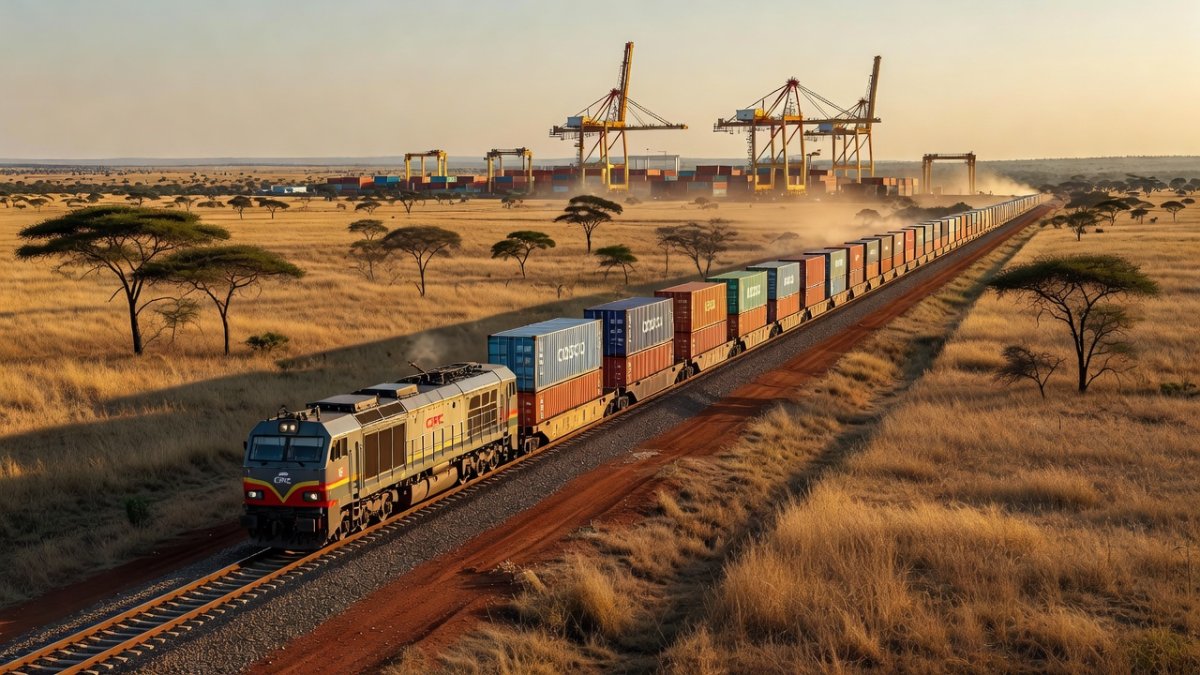
The physical evidence of this cooperation is visible across the continent. Under the Belt and Road Initiative, China has funded and constructed transformative infrastructure projects, including the Mombasa-Nairobi Standard Gauge Railway in Kenya and the Addis Ababa-Djibouti Railway. These are not merely transport links; they are economic arteries designed to reduce logistics costs, stimulate internal trade, and integrate regional markets. Furthermore, China's construction of the African Union headquarters in Addis Ababa stands as a powerful symbol of solidarity and support for continental integration. This focus on hard infrastructure is complemented by softer, but equally critical, investments in human capital and public health, areas that have become increasingly central to the partnership's agenda. The scale of this engagement is underscored by the fact that China has been Africa's largest trading partner for more than a decade, with bilateral trade exceeding US$290 billion in 2024.
Strategic Calculus: What Each Side Seeks
To understand the durability of this partnership, one must analyze the strategic calculus of both parties. For China, the relationship with Africa is multifaceted. It is a crucial component of the broader Belt and Road Initiative, providing access to resources, new markets for Chinese goods and services, and a proving ground for Chinese standards and technology. Politically, Africa's 54 votes are a significant bloc in multilateral forums like the United Nations, where Beijing has consistently sought support on issues related to its core interests, including Taiwan and human rights. The relationship also aligns with China's broader foreign policy doctrine of fostering a "community with a shared future for mankind," positioning Beijing as a leader of the Global South and a champion of a more multipolar world order.
For African nations, the calculus is equally compelling. The partnership offers an alternative to traditional Western development models, one that prioritizes infrastructure and economic growth without the political conditionalities that have often accompanied Western aid. China's investments in transport, energy, and digital infrastructure directly address some of the continent's most persistent bottlenecks to development. Moreover, the "respect for the development choices of nations" that Bah highlighted is a significant diplomatic asset, offering African leaders a degree of policy space that is often constrained in other international engagements. The relationship provides leverage, allowing African states to diversify their international partnerships and negotiate from a position of greater strength. This mutual utility, rather than sentiment alone, is the bedrock of the relationship's resilience.
Geopolitical Implications for the Global South and Beyond
The deepening China-Africa axis has profound second-order effects on the international system. For the Global South, it serves as a powerful example of South-South cooperation, demonstrating that meaningful development partnerships can exist outside the traditional OECD framework. It challenges the notion that developing nations must choose between competing blocs, offering a model of engagement based on non-interference and mutual benefit. This has implications for other regions, particularly ASEAN and Latin America, which observe the tangible benefits Africa has derived from its engagement with China and may seek to emulate aspects of this model.
For Western powers, particularly the European Union and the United States, the relationship presents a strategic challenge. It has forced a re-evaluation of their own engagement with Africa, prompting initiatives like the EU's Global Gateway and renewed US interest in the continent. The competition is not merely for resources or markets, but for influence and the ability to shape Africa's future development trajectory. The African Union's Permanent Representative's praise for the partnership underscores that Africa is not a passive arena for great-power rivalry but an active agent, leveraging its partnerships to secure the best possible outcomes for its own citizens. The success of the China-Africa model, if it continues to deliver tangible results, will further erode the influence of Western-led development paradigms and accelerate the shift toward a more multipolar global order.
Challenges and the Road Ahead
Despite the impressive scale of cooperation, the path forward is not without its challenges. The sheer volume of financial commitments, such as the US$50 billion pledged at the 2024 summit, raises questions about debt sustainability and the long-term economic viability of certain projects. Critics have also pointed to concerns regarding labor practices, environmental standards, and the governance of Chinese-funded projects in some African nations. These are legitimate points of scrutiny that will require careful management to ensure the partnership's continued legitimacy and effectiveness.
However, the narrative of a purely extractive relationship is increasingly difficult to sustain. The focus on "human-capital formation" and "skills development" that Bah mentioned indicates a shift toward building local capacity, a crucial element for long-term, self-sustaining growth. The China-Africa Year of People-to-People Exchanges in 2026 is a deliberate effort to deepen the relationship beyond government-to-government contacts, fostering educational, cultural, and grassroots connections that can build a more resilient foundation for the future. As the partnership enters its eighth decade, the focus will likely be on qualitative improvements—ensuring that projects are not only built but are sustainable, that trade is more balanced, and that the benefits of cooperation are widely shared across African societies. The framework is in place; the next seventy years will be defined by how effectively these principles are translated into inclusive and lasting prosperity.
By Prof. Marcus Chen, Staff Writer
This article was produced with AI-assisted research and editorial support. Reporting is based on sources cited in the article.
What's Your Reaction?
 Like
0
Like
0
 Dislike
0
Dislike
0
 Love
0
Love
0
 Funny
0
Funny
0
 Wow
0
Wow
0
 Sad
0
Sad
0
 Angry
0
Angry
0

World Politics Analyst at Global1.News. Based in Beijing, covering US-China relations, global trade, and geopolitical strategy. Brings deep analytical perspective to the power dynamics shaping international affairs.













Comments (0)