
Anutin Meets Canva to Boost Thailand's Creative Economy
SYDNEY, Australia — In a meeting that could reshape how the world sees Thai design, Prime Minister and Interior Minister Anutin Charnvirakul walked into the Sydney headquarters of Canva on Tuesday afternoon with a simple but ambitious message: Thailand's creative economy is ready for the g.
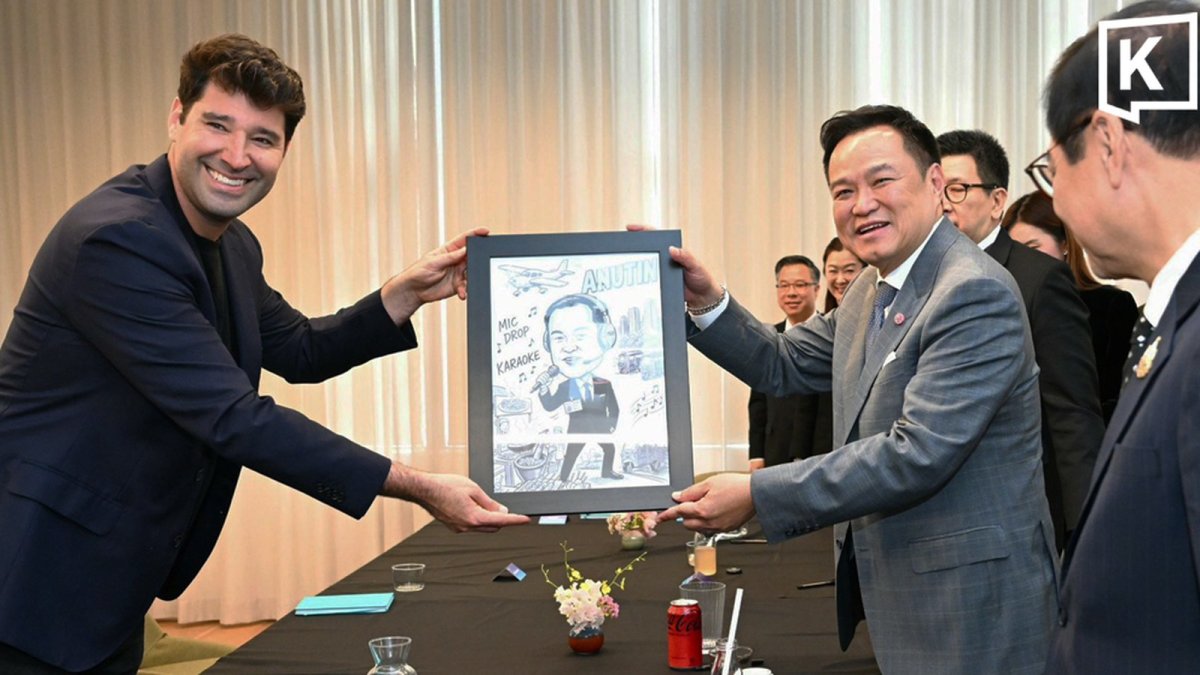
SYDNEY, Australia — In a meeting that could reshape how the world sees Thai design, Prime Minister and Interior Minister Anutin Charnvirakul walked into the Sydney headquarters of Canva on Tuesday afternoon with a simple but ambitious message: Thailand's creative economy is ready for the global stage. At 13:45 local time, Anutin sat down with Canva co-founder and COO Cliff Obrecht, Southeast Asia CEO Willix Halim, and Thailand-based regional executive Pakapol Tangtongchin to map out a future where Thai silk patterns, temple-inspired graphics, and the bold colours of our festivals appear on screens from Bangkok to Berlin.
The meeting was not a ceremonial handshake. It was a working session focused on concrete numbers, timelines, and partnerships. The most striking commitment to emerge: Canva aims to grow the number of Thai Canva Creators from roughly 190 today to 1,000 by 2028. For a country that has long talked about soft power, this is the kind of hard metric that turns aspiration into a business plan.
A Creative Economy Built on Thai Identity
Anutin, who also holds the Interior portfolio, framed the creative economy as one of the government's key industrial priorities. He pointed to Thailand's skilled talent, distinctive identity, and rich cultural assets as raw materials that can be refined into high-value products, services, and intellectual property for global markets. This is not a new idea in Bangkok policy circles, but the prime minister's direct engagement with a global tech platform signals a shift from rhetoric to execution.
The logic is straightforward. Thailand has never lacked creative energy — from the intricate lai Thai patterns that adorn temple walls in Chiang Mai to the contemporary fashion houses of Sukhumvit. What has been missing is a scalable distribution channel. Canva, with its 200 million monthly users worldwide, offers exactly that. By featuring more Thai designs, cultural elements, and creative works on its platform, the company can put Thai aesthetics in front of millions of potential customers, while Thai creators earn income from their work.
For Thai SMEs, many of which operate in the Isaan region's textile workshops or the craft communities of Chiang Rai, this represents a potential lifeline. The Department of Business Development (DBD) and the Digital Economy Promotion Agency (depa) have already been working with Canva to develop skills in design, digital technology, and AI among small businesses. The Tuesday meeting elevated that cooperation to the prime ministerial level, which in Thai bureaucratic culture carries significant weight.
Canva's Growing Footprint in Thailand
Canva is not a newcomer to the Kingdom. The company has been quietly building relationships with Thai agencies for years, and its Southeast Asia leadership has consistently viewed Thailand as a priority market. Willix Halim, who oversees the region, has been a regular visitor to Bangkok, and Pakapol Tangtongchin's presence at the Sydney meeting underscored the importance of the Thai market to Canva's regional strategy.
The company's cooperation with the Ministry of Education is particularly noteworthy. By helping Thai youth gain access to design tools and digital skills, Canva is positioning itself as an educational partner, not just a software vendor. This aligns with Thailand's broader push to modernise its curriculum and prepare students for a digital economy that increasingly rewards creativity and visual communication.
For Thai universities and vocational schools, this partnership could mean free or discounted access to professional-grade design tools, along with training programmes that teach students how to monetise their creative work. The goal is not just to produce more designers, but to produce Thai entrepreneurs who can build businesses around their cultural heritage.
An Invitation to Invest in Thailand
Anutin did not stop at cooperation. He extended a direct invitation for Canva to establish a legal entity in Thailand and expand its business base there. This is a significant ask. A legal entity would mean Canva hiring Thai staff, paying Thai corporate taxes, and potentially establishing a regional hub in Bangkok. The prime minister also encouraged the company to bring international talent to work alongside Thai professionals, which he argued would facilitate knowledge transfer and strengthen Thailand's technology and creative ecosystem.
The Board of Investment (BOI) is already engaged in these discussions. The BOI has been aggressively courting tech companies with tax incentives, streamlined visa processes, and support for skills development programmes. The Skill Bridge programme, which the prime minister specifically mentioned, is designed to upskill Thai workers and SMEs in partnership with private sector leaders. If Canva commits to a formal investment, it would be a major win for the BOI's efforts to position Thailand as Southeast Asia's creative technology hub.
For Thai workers, the potential benefits are tangible. A Canva legal entity would create jobs in design, engineering, marketing, and customer support. More importantly, it would create a pipeline for Thai talent to work on global products without leaving the country. The brain drain that has long affected Thailand's tech sector — with many of our best engineers heading to Singapore or Silicon Valley — could be partially reversed if global companies like Canva establish meaningful operations in Bangkok.
What This Means for ASEAN's Digital Economy
The Thailand-Canva partnership is not just a bilateral story. It is a signal to the entire ASEAN region that creative industries are becoming a serious pillar of economic development. Southeast Asia's digital economy is projected to reach $300 billion by 2030, and creative content — from graphic design to video production — is a growing slice of that pie.
Thailand's approach offers a model for other ASEAN nations. By leveraging cultural identity as a competitive advantage, Thailand is showing that small and medium-sized creative businesses can plug into global platforms and reach international audiences without needing massive marketing budgets. This is particularly relevant for neighbours like Laos, Cambodia, and Myanmar, which have rich artistic traditions but limited access to global distribution channels.
Canva's Southeast Asia strategy has always been regional. The company has offices in Singapore, Manila, and Jakarta, and its creator programmes span the region. By deepening its engagement in Thailand, Canva is betting that Thai creativity can compete with the best in the world. The company's target of 1,000 Thai creators by 2028 is ambitious, but it is also a vote of confidence in the country's creative potential.
Thai Soft Power Meets Global Technology
For years, Thai governments have talked about soft power — the ability to influence others through culture, values, and ideas. Thai cuisine, Muay Thai, and tourism have been the traditional pillars. But the creative economy offers a new frontier. Digital products, design assets, and intellectual property can be exported without a single baht spent on shipping.
The timing is fortuitous. As the global economy shifts toward digital services, countries with strong creative traditions have an opportunity to capture value that was previously locked in physical goods. A Thai artisan in Chiang Mai who creates a digital pattern for Canva can sell it to a user in Brazil or Nigeria within minutes. The transaction is small, but the cumulative effect could be significant.
Anutin's meeting in Sydney also carries political weight. As prime minister, he has made economic development a central theme of his administration. By personally engaging with a global tech leader, he is signalling that Thailand is open for business in the digital age. The fact that he chose Canva — a company founded by Australians and now used by millions worldwide — underscores the importance of international partnerships in achieving domestic goals.
A Path Forward for Thai Creators
For the 190 Thai creators currently on Canva's platform, the next two years could be transformative. The company's commitment to expand that number to 1,000 by 2028 means more training, more mentorship, and more opportunities to earn income. It also means more competition, which in a creative economy is generally a good thing — it pushes everyone to improve.
The partnership with the DBD and depa is equally important. These agencies have the reach to connect with SMEs in every province, from the silk weavers of Khorat to the furniture makers of Chiang Mai. By integrating Canva's tools into their skills development programmes, they can help small businesses create professional marketing materials, product catalogues, and e-commerce listings that compete on a global level.
The Ministry of Education's involvement is the long-term play. If Thai students learn to use Canva in school, they will enter the workforce with a valuable skill. More importantly, they will learn to see their cultural heritage as a source of economic opportunity, not just tradition. This mindset shift could be the most lasting outcome of the partnership.
Looking Ahead
The meeting in Sydney was a beginning, not an end. The BOI will continue working with Canva to turn the discussions on investment, talent development, and the creative economy ecosystem into concrete projects in Thailand. The prime minister's invitation for Canva to establish a legal entity is now on the table, and the company's response will be closely watched in Bangkok.
For Thai readers, the message is clear: the creative economy is no longer a buzzword. It is a strategy with specific targets, named partners, and measurable outcomes. The journey from 190 to 1,000 Thai Canva Creators will not happen overnight, but the direction is set. As Thailand continues to build its digital infrastructure and nurture its creative talent, partnerships like this one will determine whether the country becomes a regional leader in the creative economy or a bystander to the digital revolution.
In the coming months, we can expect to see more details emerge about Canva's plans for Thailand — the legal entity, the training programmes, the education partnerships. For now, the prime minister's visit to Sydney has put Thailand firmly on the map of global creative technology. The rest is up to the creators, the SMEs, and the young Thais who will carry this vision forward.
This article was produced with AI-assisted research and editorial support. Sources: Khaosod English
By Ann Srisawat, Staff Writer
What's Your Reaction?
 Like
0
Like
0
 Dislike
0
Dislike
0
 Love
0
Love
0
 Funny
0
Funny
0
 Wow
0
Wow
0
 Sad
0
Sad
0
 Angry
0
Angry
0

Southeast Asia Correspondent at Global1.News. Based in Bangkok, covering Thai and Southeast Asian politics, economy, technology, and culture. Deep regional perspective on one of the world's most dynamic regions.














Comments (0)