
ChangXin Memory Technologies IPO Surge Reflects Beijing's Strategic Drive for Semiconductor Autonomy Amid US-China Tech Rivalry
ChangXin Memory Technologies has achieved a landmark listing on the Shanghai Stock Exchange's Star Market, with shares surging nearly 470 percent on debut and pushing the firm's valuation to roughly 3.3 trillion yuan. This development comes as Beijing intensifies efforts to build domestic semiconductor capacity in response to sustained US export controls on advanced chip technology. The IPO underscores how Chinese policymakers are channeling capital markets toward firms that.
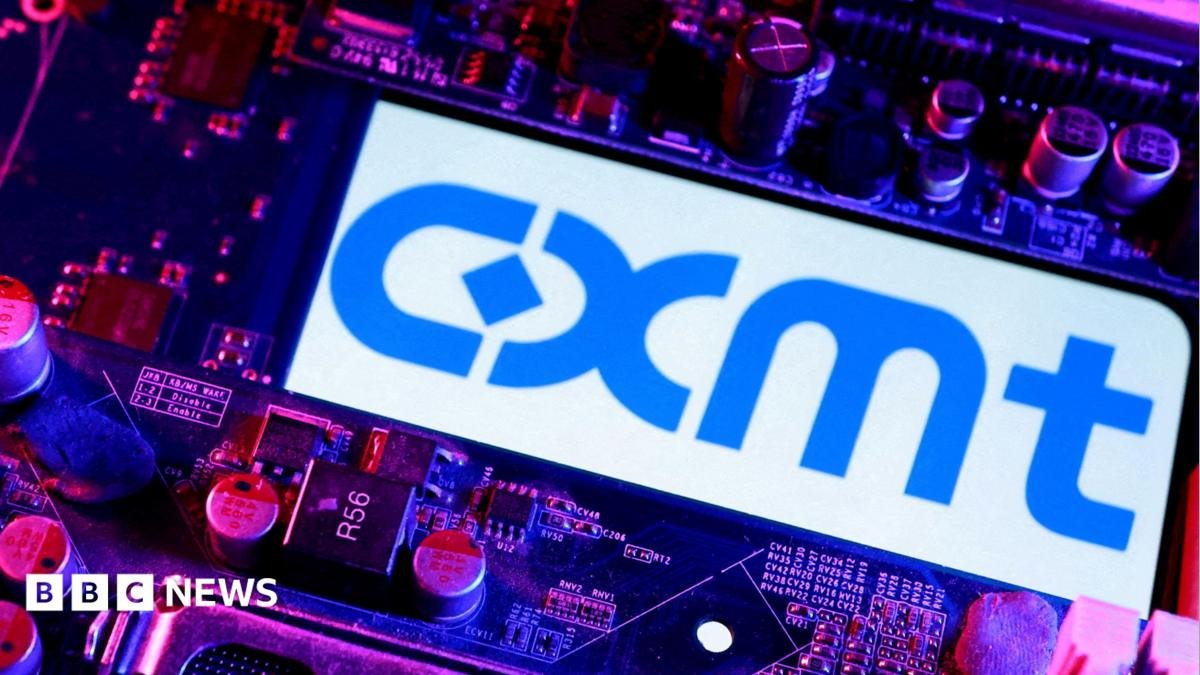
ChangXin Memory Technologies has achieved a landmark listing on the Shanghai Stock Exchange's Star Market, with shares surging nearly 470 percent on debut and pushing the firm's valuation to roughly 3.3 trillion yuan. This development comes as Beijing intensifies efforts to build domestic semiconductor capacity in response to sustained US export controls on advanced chip technology. The IPO underscores how Chinese policymakers are channeling capital markets toward firms that advance technological self-reliance under the Dual Circulation framework.
CXMT IPO Fuels China's Memory Chip Ambitions
Beijing, China — Article continues...
Market Debut Delivers Extraordinary Valuation Jump
Shares in ChangXin Memory Technologies rose by nearly 470 percent on their first day of trading on the Shanghai Stock Exchange's Star Market. The surge lifted the company's market valuation to approximately 3.3 trillion yuan, equivalent to $487 billion, establishing it as the most valuable listed company in mainland China. This performance stood out even as technology stocks experienced a sharp global sell-off during the same period.
Core Operations Focus on DRAM Production
ChangXin Memory Technologies manufactures dynamic random-access memory chips essential for AI data centers, mobile phones, personal computers, tablets, and other electronic devices. Founded in 2016 by Chairman Zhu Yiming, the company is headquartered in Hefei, Anhui Province in eastern China. The firm has indicated that most proceeds from the initial public offering will fund expanded production capacity and additional research and development initiatives.
Beijing Advances Semiconductor Self-Reliance Goals
China's semiconductor industrial policy has long centered on the National Integrated Circuit Industry Investment Fund, commonly known as the Big Fund, which channels state capital into domestic chip production. The Ministry of Industry and Information Technology coordinates these efforts alongside the National Development and Reform Commission, directing resources toward memory fabrication clusters in Hefei and other sites. Made in China 2025 explicitly set targets for raising the domestic share of integrated circuits, while the 14th Five-Year Plan reinforces self-reliance through the Dual Circulation strategy that prioritizes internal supply chains over export-led growth.
US export controls introduced in October 2022 and tightened in October 2023, including Entity List designations and restrictions on equipment from ASML, Lam Research, and Applied Materials, accelerated Beijing's import-substitution drive. These measures exposed vulnerabilities in advanced node access and prompted accelerated investment in mature-process DRAM and NAND capacity. Chinese planners responded by scaling the Big Fund's second and third phases to support firms like ChangXin Memory Technologies, illustrating how external pressure translated into coordinated industrial mobilization rather than retreat.
Chinese investors demonstrated strong appetite for a domestic chipmaker at a time when Beijing is accelerating plans for technology industry independence. The government has emphasized reducing external dependencies through targeted industrial policies. CXMT's successful listing illustrates how such strategic priorities translate into market enthusiasm for firms positioned to support national objectives in critical technology sectors.
Stock Market Measures Provide Timely Support
Chinese financial officials have introduced steps to address a recent stock market slump that erased more than $1.5 trillion in value. The CXMT IPO benefited from limited supply, with only 7 percent of shares available for trading. Anna Macdonald, investment strategy director at Hargreaves Lansdown, noted that this restricted float contributed directly to the sharp price increase observed on debut day.
Strategic Implications in US-China Technology Competition
Washington seeks to maintain a decisive lead in advanced compute by restricting China's access to cutting-edge lithography and process technology, thereby preserving military and commercial advantages. Beijing, in turn, pursues self-sufficiency in both memory and logic chips to eliminate chokepoint dependencies reminiscent of the pre-2020 telecom equipment era, when reliance on foreign suppliers created strategic vulnerabilities. DRAM represents a more attainable near-term objective than leading-edge logic because it relies on commodity-scale manufacturing where incremental process improvements can yield competitive products without immediate need for extreme ultraviolet tools.
Second-order effects include hedging behavior among US allies. Japanese, South Korean, and Taiwanese firms balance American pressure for export alignment against the commercial imperative of retaining access to China's vast market. This dynamic strains the cohesion of emerging technology alliances, as partners weigh the costs of full decoupling against the benefits of selective engagement, potentially fragmenting global standards and investment flows in memory and related sectors.
Global Memory Market Faces Supply Pressures
The DRAM sector remains an oligopoly dominated by Samsung Electronics, SK Hynix, and Micron, which together control roughly 90 percent of global output. An AI-driven memory supercycle has lifted prices more than twofold since late 2024, propelling SK Hynix past the $1 trillion valuation mark in May and fueling capital inflows into next-generation high-bandwidth memory. This concentration creates both pricing power for incumbents and systemic risk for downstream industries dependent on stable supply.
ChangXin Memory Technologies' listing introduces a new variable into this structure. Its planned capacity expansions in Hefei could eventually exert downward pressure on prices, echoing the industry's historical boom-bust cycles where oversupply periodically erased margins. SK Hynix's $26.5 billion New York offering underscores parallel global capital flows toward AI infrastructure, yet CXMT's domestic financing route signals China's determination to capture a share of these flows within its own regulatory perimeter.
Shifts in Global Memory Supply Chains and AI Infrastructure
Diversification efforts by major technology companies could open opportunities for new entrants in the memory market. Booming demand tied to AI infrastructure has already driven price increases that some device makers have passed on to consumers through higher costs for tablets and gaming consoles. These trends suggest ongoing adjustments in how global supply networks allocate production and manage component sourcing.
Outlook Points to Sustained Price Pressures Through 2027
TrendForce analyst Ellie Wong's projection of continued memory price increases through the end of 2027 rests on persistent supply constraints and rising AI accelerator demand. Major technology buyers are actively pursuing supplier diversification beyond the Korean duopoly and Micron, seeking a credible third source to mitigate geopolitical and cyclical risks. This customer strategy creates commercial openings for CXMT even as the firm operates several generations behind the leading edge in high-bandwidth memory variants.
Realistic catch-up remains constrained by technology gaps and potential US countermeasures, including further Entity List actions targeting CXMT or its equipment suppliers. Cyclical oversupply risks persist, as memory markets have repeatedly demonstrated sharp reversals after capacity buildouts. Nevertheless, successful diversification could moderate long-term cost inflation in AI infrastructure worldwide, provided Chinese production achieves sufficient scale and reliability without triggering additional export restrictions that fragment supply chains further.
The IPO's strong reception may encourage further domestic listings that align with Beijing's long-term objectives for technological independence and industrial upgrading.
By Prof. Marcus Chen, Staff Writer
This article was produced with AI-assisted research and editorial support. Reporting is based on sources cited in the article.
What's Your Reaction?
 Like
0
Like
0
 Dislike
0
Dislike
0
 Love
0
Love
0
 Funny
0
Funny
0
 Wow
0
Wow
0
 Sad
0
Sad
0
 Angry
0
Angry
0

World Politics Analyst at Global1.News. Based in Beijing, covering US-China relations, global trade, and geopolitical strategy. Brings deep analytical perspective to the power dynamics shaping international affairs.















Comments (0)