
Sara Duterte Impeachment Trial: COA Auditors Take the Stand on P612.5M Funds
In a recent ANC 24/7 report, the Senate Impeachment Court opened Day 11 proceedings on Monday, August 3, 2026, as state auditors prepared to present documents on the P612.5 million in confidential funds. The coverage showed ordinary Filipinos in Manila and Quezon City following the trial closely, concerned about how public money reaches their barangays and sari-sari stores. Senate Impeachment Court Shifts Focus to COA Auditors in Sara Duterte Con
In a recent ANC 24/7 report, the Senate Impeachment Court opened Day 11 proceedings on Monday, August 3, 2026, as state auditors prepared to present documents on the P612.5 million in confidential funds. The coverage showed ordinary Filipinos in Manila and Quezon City following the trial closely, concerned about how public money reaches their barangays and sari-sari stores.
Senate Impeachment Court Shifts Focus to COA Auditors in Sara Duterte Confidential Funds Trial
[Manila, Philippines – August 3, 2026] — The Senate Impeachment Court resumed Day 11 of the trial against Vice President Sara Duterte today, entering its fifth week with testimony from Commission on Audit officials. The court is examining how the Office of the Vice President and the Department of Education spent P612.5 million released by the National Treasury between 2022 and 2023.

The Trial Enters Its Audit Phase
The court subpoenaed Roderick Wamil, former COA state auditor of the Intelligence and Confidential Funds Audit Office, and Celine May Del Campo, current supervising auditor of the same office, to testify on August 3 to 5. House of Representatives Legislative Information Resources Management Department Director Marivic Pareja is also scheduled later this week.
Article I of the Articles of Impeachment charges Duterte with misusing the full P612.5 million, which prosecutors said was withdrawn in cash through seven Treasury checks. The shift to COA witnesses moves the trial from tracing the money to examining its liquidation and use.
House prosecutor Lorenz Defensor expressed confidence that the panel now holds sufficient evidence to establish impeachable offenses once the auditors detail the paper trail. The move to subpoena these officials came after the prosecution successfully argued last week that only a full audit review could clarify whether the withdrawals qualified as confidential funds under the law.
Impeachment court spokesperson Regie Tongol noted that the prosecution had yet to fully link the cash withdrawals to confidential fund rules, a gap the COA witnesses are expected to address directly this week through their examination of liquidation documents and fund utilization reports.
What the Bank Managers Told the Court
Last week on Day 10, former LandBank Shaw Boulevard branch manager Violeta Constantino testified that four Treasury checks worth P125 million each, totaling P500 million, were encashed for the OVP in December 2022 and February, April, and July 2023 by Special Disbursing Officer Gina Acosta with Assistant Secretary Lemuel Ortonio. Former DepEd branch manager Nenita Camposano stated that three checks worth P37.5 million each, totaling P112.5 million, were encashed for DepEd in February, April, and July 2023 by Special Disbursing Officer Edward Fajarda.
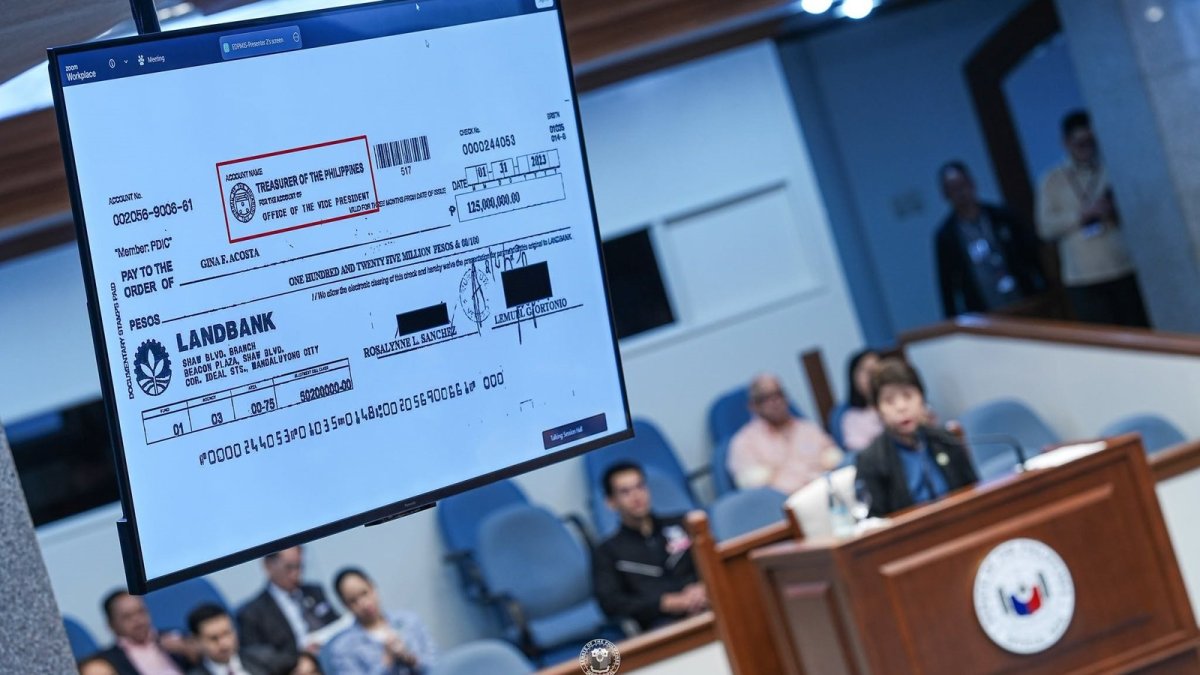
Both managers described the large cash withdrawals as unusual. Senator-Judge Erwin Tulfo questioned the process, while Senator-Judge Bam Aquino asked if the transactions were reported under the Anti-Money Laundering Act. Constantino invoked confidentiality rules and noted that original copies of the OVP checks had been shredded. Camposano said Fajarda left through a fire exit after each encashment.
Tingog party-list Rep. Jude Acidre, a lead prosecutor, emphasized that the bank testimony established two key facts: the money originated from public funds and was withdrawn in cold cash. He stressed that the upcoming COA testimony will now determine whether supporting documents met the strict rules that govern confidential and intelligence funds.
Prosecution spokesman Robert Ace Barbers added that the central question remains whether these funds supported legitimate intelligence operations that delivered verifiable public benefit, noting that confidentiality cannot shield officials from accountability when public money is involved.
The day also carried its share of courtroom theater. ML party-list Rep. Leila de Lima, a former senator and justice secretary, began an opening statement on why Duterte should be convicted of impeachable offenses over the alleged misuse of the confidential funds, but the court cut the remarks short, saying it should be the witnesses who testify on these matters. Earlier ANC 24/7 recaps of the trial also flagged how OVP representatives allegedly used three to four gym bags to carry P125 million in cash out of a LandBank branch — a detail that has stuck with viewers and turned the accounting of the withdrawals into a central test of the prosecution's case.
The COA Findings Behind the Disallowances
COA issued a notice of disallowance for P448 million in confidential funds released to the OVP in 2023 and directed the return of P73.287 million released in 2022. A 2024 House Committee on Good Government and Public Accountability inquiry found alleged irregularities in liquidation documents, including acknowledgment receipts with names such as Mary Grace Piattos, Milky Secuya, and Kokoy Villamin. Philippine Statistics Authority certifications and NBI findings showed many supposed recipients had no matching birth records and several signatures appeared written by the same hand.
The fictitious names on those receipts quickly became a source of public ridicule online, turning into shorthand for suspected ghost recipients and highlighting how easily accountability can slip when oversight is weak. COA’s audit examined liquidation documents, acknowledgment receipts, and fund utilization reports, with disallowance findings meaning the funds must be returned by accountable officers unless successfully appealed.
Command Responsibility and the Search for the Order-Giver
Deputy Speaker Paolo Ortega stated that the core issue is who gave the order and decided how the funds would be spent, emphasizing command responsibility. He noted that documented paper trails alone are insufficient without evidence of actual operations, real beneficiaries, and genuine public benefits.
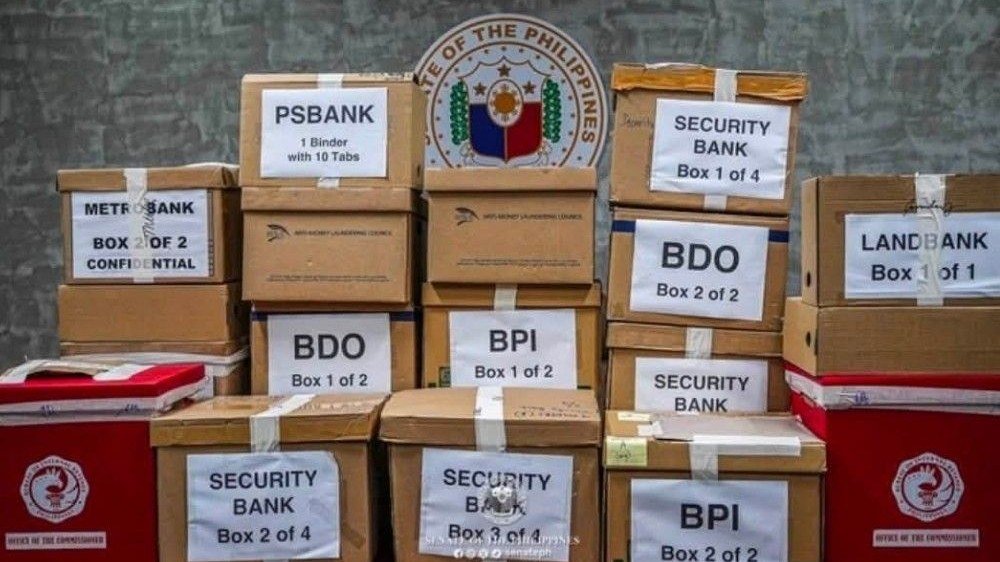
Ortega pressed further, asking whether the withdrawals were truly rushed and stressing that paper documentation alone cannot prove the funds reached real people or produced tangible results. He insisted that the trial must show no money disappeared and that genuine public benefits actually occurred.
The OVP, as the constitutional office assisting the president and maintaining programs during transitions, held confidential funds separate from those of DepEd, where Duterte served as education secretary from June 2022 until resigning in June 2025. This distinction has shaped how prosecutors present the chain of command and spending decisions.
Philippine Context: Confidential Funds and Public Accountability
Confidential funds are intended for intelligence and security operations and are exempt from standard procurement and liquidation rules under Philippine law. The Senate impeachment court, presided over by Senate President Francis Escudero with spokesperson Regie Tongol, is now examining whether those exemptions were properly applied in the OVP and DepEd cases.
By law these funds require only the agency head’s certification that they were spent for their intended purpose, which is why COA’s audit and liquidation review carry such heavy weight. The trial unfolds amid wider congressional debates over confidential funds in agencies like the Department of Health and Philippine National Police, with lawmakers across parties urging tighter safeguards.
COA has also affirmed its earlier decision flagging the vice president's confidential funds, keeping the pressure on even as the impeachment proceedings run their course. For many Filipinos, the case has become a referendum on whether the system can actually hold powerful officials accountable — not just on paper, but in practice, from the halls of the Senate down to the barangay treasurer keeping watch over a community's funds.
Impact on Filipinos
Families in Cebu, Davao, and Baguio rely on government programs funded through transparent budgets. When large cash withdrawals bypass normal checks, jeepney drivers, farmers, and students in provincial barangays lose access to services that could improve daily life. The trial directly affects how taxpayers see the use of their contributions to national programs.
The stakes remain concrete for ordinary citizens: the P612.5 million could have funded thousands of classroom chairs, school feeding programs, rural health units, or livelihood aid—the very services families depend on each day. Senator-Judge Panfilo Lacson, a former national police chief, has long advocated stricter rules on such funds precisely because of the ease with which they can be abused.
Reactions and Responses
Duterte has denied wrongdoing and maintained that the funds supported legitimate programs. Her camp has questioned the prosecution narrative. House prosecution panel members, including Manila 3rd District Rep. Joel Chua, ML party-list Rep. Leila de Lima, and Tingog party-list Rep. Jude Acidre, continue to present evidence on the withdrawals and liquidations.
Earlier in the trial, prosecutors referenced other incidents involving Duterte, including the P5,000 gunman remark and questions about the OVP’s cash holdings, keeping public attention fixed on the proceedings. Duterte’s supporters continue to argue that the funds served national security needs, while critics call for full transparency to restore faith in public spending.
What to Watch For
Senator-Judge Panfilo Lacson highlighted the need for expert testimony on intelligence and confidential fund handling. Both sides have reserve witnesses ready. The court will next hear from the COA auditors on how the P612.5 million was spent and documented.
The outcome will shape public trust in how confidential funds are managed across Congress, the Senate, and agencies such as the Philippine National Police and DepEd. Filipinos will continue to monitor whether accountability reaches those who ordered the withdrawals and decided their use.
By Bella Reyes, Staff Writer
This article was produced with AI-assisted research and editorial support. Reporting is based on sources cited in the article.
What's Your Reaction?
 Like
0
Like
0
 Dislike
0
Dislike
0
 Love
0
Love
0
 Funny
0
Funny
0
 Wow
0
Wow
0
 Sad
0
Sad
0
 Angry
0
Angry
0

Philippines/Southeast Asia Correspondent at Global1.News. Manila-based journalist covering Philippine politics, environment, maritime security, and social issues. Passionate about marine conservation and the communities protecting the Philippines' natural heritage.














Comments (0)