
Canada Weighs Concessions for U.S. Tariff Relief by Aug. 19
In a recent CBC News report on Power & Politics, new details emerged about what Ottawa may be prepared to give up in exchange for relief from a threatened 50 per cent U.S. tariff on Canadian goods. With the Aug. 19 deadline fast approaching, the federal government is weighing concessions on provincial alcohol bans, auto tariffs and dairy rules — and the decisions could affect everything from the price of groceries to the health of manufacturing jobs in Ontario and Quebec.
In a recent CBC News report on Power & Politics, new details emerged about what Ottawa may be prepared to give up in exchange for relief from a threatened 50 per cent U.S. tariff on Canadian goods. With the Aug. 19 deadline fast approaching, the federal government is weighing concessions on provincial alcohol bans, auto tariffs and dairy rules — and the decisions could affect everything from the price of groceries to the health of manufacturing jobs in Ontario and Quebec.
Canada Weighs Trade Concessions as U.S. Tariff Deadline Looms
Ottawa, Ontario – This week — Canada's trade negotiators are working through daily meetings with U.S. counterparts as the Aug. 19 deadline for a threatened 50 per cent tariff on Canadian exports draws near. CBC News has learned Ottawa is prepared to offer concessions on provincial alcohol bans, retaliatory auto tariffs and dairy import rules in exchange for relief on the new levies and existing sectoral duties on steel and aluminum.

The Impending Tariff Deadline
U.S. President Donald Trump has threatened a new 50 per cent levy on about 5 per cent of Canadian exports, covering goods from alcohol to hockey sticks to cement, effective Aug. 19, 2026.
The Trump administration declined to renew the Canada-United States-Mexico Agreement in its current form during the pact's six-year review, citing provincial alcohol bans, dairy import quotas, and auto tariffs as key complaints.
Canada is pressing Washington to drop plans for tariffs on $20 billion worth of Canadian exports and to reduce existing tariffs of up to 50 per cent on Canadian steel, aluminum, and autos.
The 75 per cent of Canadian exports directed to the United States places the Aug. 19, 2026 deadline at the centre of federal-provincial economic planning. Ontario and Quebec manufacturing plants that ship autos, steel and aluminum components face immediate exposure if the 50 per cent levy on roughly five per cent of those shipments takes effect. Daily cross-border flows already sustain hundreds of thousands of jobs, and any disruption would transmit quickly through supply chains that link assembly lines in Windsor and Oshawa to parts suppliers in the Montreal region.
President Trump has listed provincial alcohol restrictions, dairy import quotas and auto tariffs as the core reasons for refusing to renew the Canada-United States-Mexico Agreement in its present form during the six-year review. Canadian officials have countered by seeking removal of the new tariffs on 20 billion dollars of exports while pressing for relief on existing steel, aluminum and auto duties that have operated since last year. The review process itself now hinges on whether negotiators can produce enough movement by the deadline to keep talks alive into the fall.
For Canadian workers the stakes extend beyond headline export figures. Employment gains recorded in July 2026 already rest on steady access to the U.S. market, and a sudden tariff shock would threaten those positions in sectors that have only recently returned to growth. Provincial governments in export-heavy regions therefore watch the daily Washington meetings for signs that Ottawa can secure enough relief to protect payrolls before the August date arrives.
Concessions Under Consideration
Canadian negotiators have signalled willingness to end provincial bans on American alcohol, lift retaliatory tariffs on U.S. autos, and make unspecified changes to dairy import rules.
Canada is also working to reduce sectoral tariffs on steel, aluminum, lumber, and autos that have been in place since last year, though U.S. negotiators have indicated those levies will not be removed entirely.
In exchange, Canada seeks the removal of the new 50 per cent tariffs, relief from current sectoral tariffs on steel and aluminum, and a joint announcement that talks on the Canada-United States-Mexico Agreement will resume in the fall.
Ending provincial bans on American alcohol would reopen shelves in liquor control systems that currently block U.S. products, yet the move carries direct fiscal consequences for provinces that rely on those monopolies for revenue. Lifting retaliatory auto tariffs would reduce costs for U.S. vehicle imports while exposing Canadian parts makers to renewed competition, and any adjustment to dairy import rules would affect supply-management pricing that supports thousands of farms across Quebec and Ontario. Each step therefore requires careful calibration so that short-term tariff relief does not simply shift pressure onto other domestic sectors.
Ottawa presents these steps as elements of a larger strategic package rather than isolated retreats. Trade Minister Dominic LeBlanc and chief negotiator Janice Charette have framed the concessions as necessary to unlock removal of the threatened 50 per cent tariffs and to restart formal Canada-United States-Mexico Agreement discussions. The Globe and Mail commentary that likened any quick agreement to a Neville Chamberlain moment highlights the political risk that the federal government could face accusations of weakness if premiers later withhold support.
The role of LeBlanc and Charette remains central in managing these trade-offs. Their Washington meetings have focused on sequencing the concessions so that provincial liquor boards see concrete tariff reductions before any policy change on alcohol sales. This approach seeks to maintain negotiating leverage while addressing the immediate August deadline that both sides have described as a cliff-type moment.
Resistance from Provincial Leaders
British Columbia Premier David Eby stated there is not a chance in hell that U.S. alcohol is going back on the shelf in provincially run liquor stores.
Ontario Finance Minister Peter Bethlenfalvy said his government's resolve remains firm to keep U.S. liquor off store shelves until it sees the details of any deal.
Quebec's premier has insisted that decisions on when U.S. alcohol returns to shelves in that province rest solely with Quebec.
Provincial governments pulled American alcohol from shelves after earlier disputes, causing U.S. wine sales in Canada to plummet by $343 million US in 2025.
Federal-provincial tension has sharpened because liquor sales fall under provincial jurisdiction while tariff policy rests with Ottawa. At their annual meeting premiers made clear that any concession on alcohol must deliver measurable relief on steel, aluminum and auto duties before they will consider restocking U.S. products. British Columbia Premier David Eby has rejected outright any return of American alcohol to provincial shelves, while Ontario Finance Minister Peter Bethlenfalvy has conditioned any change on seeing the full details of a deal.
Quebec maintains that decisions on the Société des alcools du Québec remain exclusively provincial, a position that limits federal room to negotiate a uniform national approach. The LCBO and SAQ together represent major purchasers whose earlier removal of U.S. wines produced a 343 million dollar drop in American wine sales in Canada during 2025. The Distilled Spirits Council has separately estimated 536 million dollars in lost U.S. export revenue, underscoring how provincial actions already affect bilateral flows.
These stances reflect deeper concerns about precedent. Premiers recall the more unified front during the 2018 NAFTA renegotiation and worry that fragmented responses now could weaken Canada’s overall position. Their insistence on seeing tariff relief first therefore serves both to protect provincial revenues and to signal to Washington that Ottawa cannot deliver concessions without provincial consent.
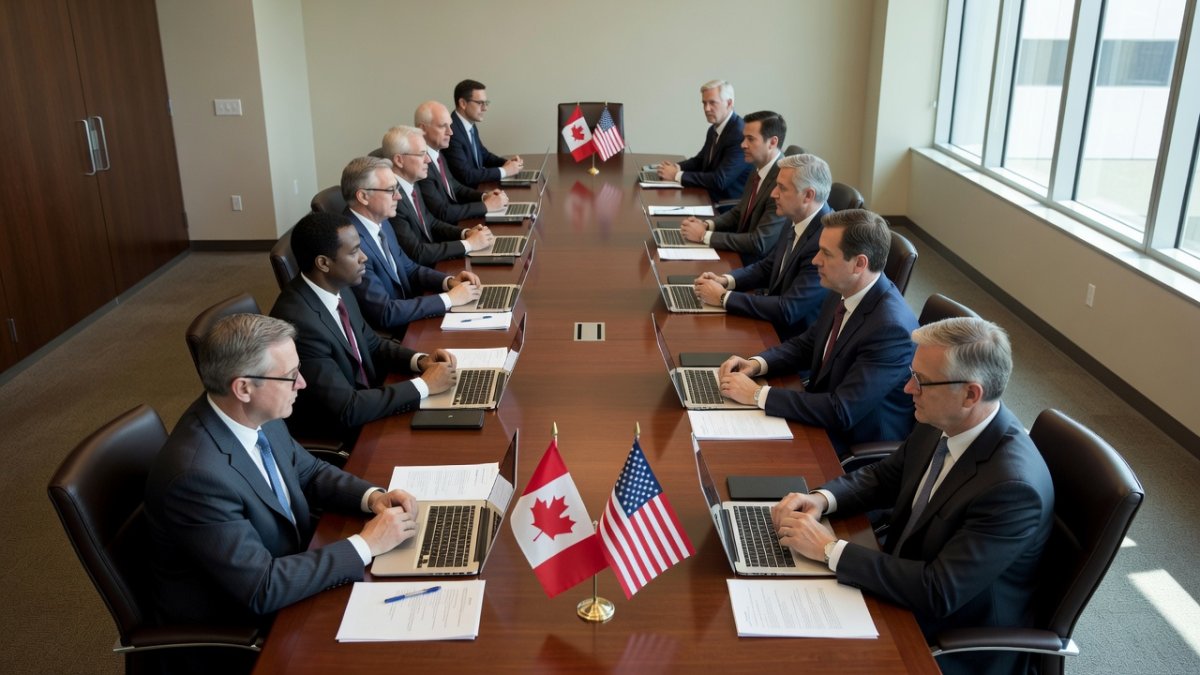
Ottawa's Diplomatic Efforts
Trade Minister Dominic LeBlanc and chief trade negotiator Janice Charette met U.S. Trade Representative Jamieson Greer in Washington on Thursday, Aug. 6.
LeBlanc described the meeting as constructive and detailed in a social media post, while his office declined to comment on specifics.
Both sides agreed to hold daily meetings at various levels until the Aug. 19 deadline, with Canadian officials describing the date as a cliff-type moment with no political appetite to continue talks if tariffs take effect.
Trade Minister Dominic LeBlanc and Janice Charette met U.S. Trade Representative Jamieson Greer in Washington on Aug. 6 and agreed to maintain daily meetings at multiple levels until the Aug. 19 deadline. LeBlanc described the session as constructive, though his office has released no further specifics. Canadian officials have characterised the date as a cliff-type moment, noting that political appetite for continued talks would evaporate if the new tariffs take effect.
The Carney government must balance messages for two audiences. Domestically it emphasises that any agreement will form part of a comprehensive package addressing strategic sectors, while in Washington it stresses the mutual costs of renewed tariff escalation. Daily contact is intended to narrow differences on alcohol rules, dairy access and auto tariffs before the deadline forces a binary choice between acceptance and imposition.
This cadence also allows Ottawa to test provincial reactions in real time. By keeping premiers informed of incremental U.S. responses, federal negotiators hope to build the minimum consensus required to implement concessions without triggering immediate provincial countermeasures that could unravel the package.
Economic Implications for Canada
Canada added 75,000 jobs in July 2026, pushing the unemployment rate down to 6.4 per cent, the lowest level in two years, according to Statistics Canada data.
Roughly 75 per cent of Canadian exports go to the United States, making the threatened tariffs a direct threat to employment in Ontario and Quebec manufacturing sectors.
Economist Jim Stanford noted that three straight months of job growth confirm Canada is not in a recession, yet the trade dispute risks reversing those gains in export-dependent provinces.
July data showed the United States shed 23,000 jobs, a contrast that highlights Canada's relative resilience amid cross-border trade tensions. Ontario and Quebec manufacturing sectors, which rely heavily on exports to the United States, face direct pressure from any new levies on steel and aluminum communities in places such as Hamilton and Saguenay. Tariff relief would lower input costs for those industries and ease upward pressure on household expenses tied to construction materials and vehicles.
Bank of Canada officials have kept interest rates steady in recent months partly because employment gains have supported consumer spending. Any reversal in export volumes could prompt renewed caution on rate cuts, affecting mortgage and borrowing costs for Canadian families. Regional steel and aluminum producers have already adjusted shifts and supply chains in response to existing duties, and further barriers would compound those adjustments.
Economists tracking the data note that sustained job growth in export-dependent provinces remains vulnerable to sudden policy shifts from Washington. Relief on current sectoral tariffs would help stabilise production schedules and protect the cost-of-living gains recorded in July. Without such measures, households in manufacturing centres could see renewed price increases on everyday goods.
Political Reactions at Home
Prime Minister Mark Carney, speaking in Saguenay, Que., on Thursday, said restocking American alcohol is ultimately a provincial decision but suggested changes should form part of a larger comprehensive deal.
Conservative Leader Pierre Poilievre called on the government to take leverage to the bargaining table and secure concrete results rather than continue talks without gains.
Former Trudeau deputy chief of staff Brian Clow told CBC News that premiers are not as united as they were during the 2018 NAFTA negotiations, partly because Trump is inflicting more tariff damage than in his first term.
Prime Minister Mark Carney used a firm tone in Saguenay when he framed any alcohol policy changes as part of a comprehensive deal rather than isolated concessions. He dismissed President Trump's description of Canadian leadership as nasty by stating that whatever adjective is used, Canada is standing up for its workers. This approach signals Ottawa's intent to maintain leverage while acknowledging provincial authority over liquor sales.
Conservative Leader Pierre Poilievre pressed the government to move beyond ongoing talks and deliver concrete results at the bargaining table. His criticism focuses on the need for measurable tariff reductions before the August deadline rather than continued negotiations without clear wins.
Brian Clow observed that provincial premiers are less aligned than during the 2018 NAFTA renegotiations because current tariffs are causing greater immediate damage across multiple sectors. The Power Panel on CBC examined whether Ottawa's strategy of daily meetings and targeted concessions can hold together if premiers withhold support on alcohol or dairy adjustments.
Outlook for August 19
Carney stated that Canada wants pathways to a global deal addressing strategic sectors, though he acknowledged it remains unclear whether all objectives can be met by Aug. 19.
Trump, speaking at a Las Vegas rally on Wednesday night, called Canada's leadership nasty, a remark Carney dismissed while reaffirming that Canada is standing up for its workers and businesses.
The key question, as Brian Clow framed it on Power & Politics, is whether provincial premiers will support federal concessions needed to secure tariff relief before the deadline.
Negotiators are preparing for three main scenarios by the deadline: a full deal that removes the threatened 50 per cent tariffs, a partial agreement that addresses only some sectors, or the imposition of new levies if talks collapse. If no deal is reached, the Canada-United States-Mexico Agreement review process would face added strain, with Washington already signalling reluctance to extend the current terms.
Carney has referred to multiple pathways that could lead to a broader agreement on strategic sectors even if not every Canadian objective is met by August 19. Daily meetings between Canadian and U.S. officials continue at various levels, creating a steady flow of updates that Canadians can monitor through official statements from Trade Minister Dominic LeBlanc and chief negotiator Janice Charette.
The political stakes for the Carney government centre on whether tariff relief can be secured without fracturing relations with premiers who control key concessions. Observers will watch for any joint announcement on resuming CUSMA talks in the fall and for signs that steel and aluminum duties are being scaled back. Failure to show progress could intensify domestic criticism and affect public confidence in Ottawa's handling of the file.
The coming days will determine whether Canada can secure a deal that protects jobs and households without fracturing the federal-provincial front. For Canadians watching from kitchen tables and factory floors alike, the Aug. 19 deadline is more than a negotiating date — it is a test of whether Ottawa can turn firmness into results.
By Alex Thompson, Staff Writer
This article was produced with AI-assisted research and editorial support. Reporting is based on sources cited in the article.
What's Your Reaction?
 Like
0
Like
0
 Dislike
0
Dislike
0
 Love
0
Love
0
 Funny
0
Funny
0
 Wow
0
Wow
0
 Sad
0
Sad
0
 Angry
0
Angry
0

Canada Correspondent at Global1.News. Based in Toronto, covering Canadian politics, energy, trade, and US-Canada relations. Provides the Canadian perspective on North American and global affairs.














Comments (0)