
Zambia signs US health deal after disputes over data-sharing
Zambia has finally sealed a five‑year health financing pact with the United States, bringing an end to a heated public debate that saw civil‑society groups fear the country was trading its citizens’ medical data and mineral wealth for foreign aid.
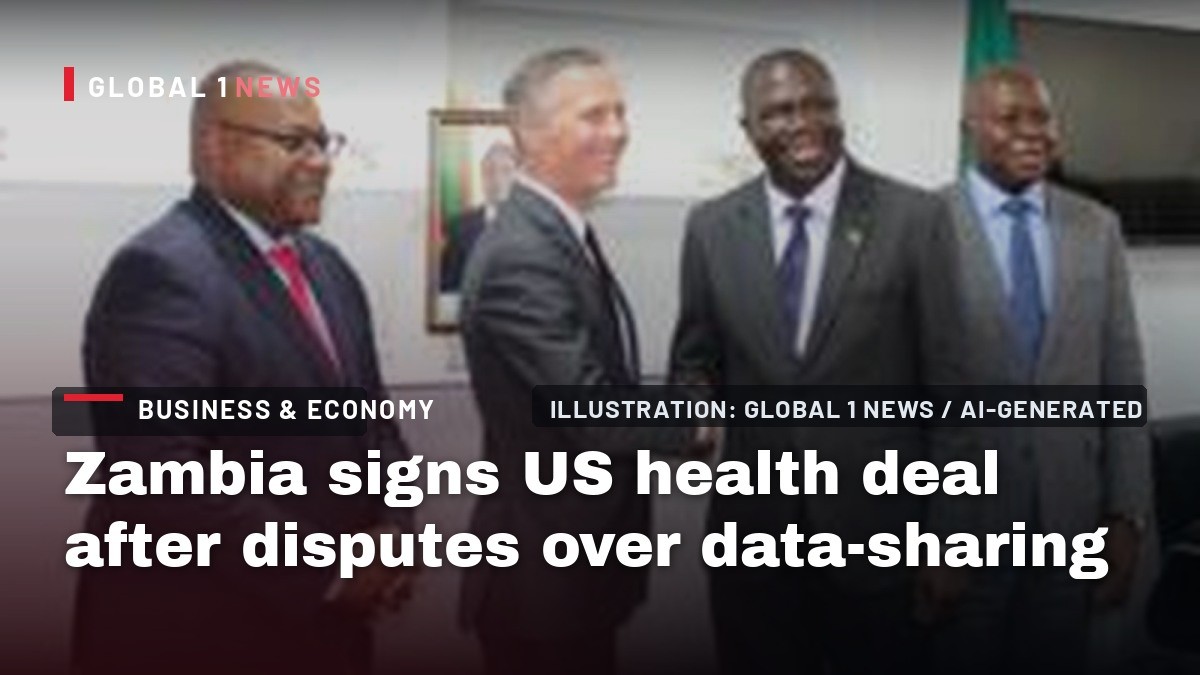
Zambia has finally sealed a five‑year health financing pact with the United States, bringing an end to a heated public debate that saw civil‑society groups fear the country was trading its citizens’ medical data and mineral wealth for foreign aid. The memorandum of understanding, signed in Lusaka on Thursday, pairs a substantial cash injection with a data‑sharing protocol that, after intense negotiation, now limits the flow of information to what is needed for programme monitoring and evaluation.
Background to the deal
The agreement arrives in the wake of a dramatic shift in U.S. aid policy. After President Donald Trump ordered the closure of the United States Agency for International Development (USAID) last year, Washington has pursued a new model that asks partner governments to shoulder a larger share of the cost. The move has already produced similar health financing arrangements with Kenya, Tanzania and Uganda, while Ghana and Zimbabwe have turned down comparable offers over concerns about data and specimen sharing.
In Zambia’s case, the proposed partnership sparked a fierce public dispute. A leaked draft of the agreement raised alarms that the country might be required to hand over extensive pathogen data and biological specimens, and that health funding could be tied to preferential access for U.S. companies to Zambia’s rich copper and other critical mineral reserves. The controversy forced the government to revisit the terms before the final signing.
The financial package
The United States will contribute roughly $1.5 billion (about £1.1 billion) over the five‑year period, with Zambia also expected to fund part of the programme. Officials estimate that the combined package covering 2026 to 2030 will total around $3.6 billion, although the exact Zambian share has varied in public statements.
Unlike the previous USAID‑led model, the new arrangement is framed as a partnership of shared responsibility. The United States has signalled that its funding will gradually decline as Zambia steps up domestic spending on health, a narrative intended to portray the shift as a move toward greater sustainability rather than a simple cutback.
Key health priorities
The money is earmarked for a broad suite of health interventions. Core areas include HIV/AIDS, tuberculosis, malaria, maternal and child health, disease surveillance and the recruitment of community health workers. By channeling resources into these sectors, the partnership aims to bolster Zambia’s health system capacity while addressing long‑standing disease burdens.
Health Minister Roma Chilengi emphasised that the revised deal removes clauses that would have required Zambia to send biological specimens to the United States and bars the sharing of individual patient records. Data exchange will be limited to aggregate information necessary for monitoring and evaluating the funded programmes, a concession that seeks to allay privacy concerns raised by activists.
Civil‑society reaction and concessions
Human‑rights organisations, notably the Chapter One Foundation, warned that the original draft would have forced Zambia to “sign away” citizens’ health data. HIV advocacy groups, such as the Treatment Advocacy and Literacy Campaign, argued that any data flow would be one‑way, favouring U.S. interests. Their pressure, along with opposition politicians’ accusations that the health money was linked to mineral concessions, compelled the government to renegotiate the terms.
In the final text, privacy safeguards were strengthened, and provisions concerning intellectual property and benefit‑sharing were clarified. The removal of mandatory specimen transfers and the restriction on individual patient data represent the most tangible outcomes of civil‑society lobbying, illustrating how public scrutiny can reshape international agreements.
The mineral‑rights controversy
Beyond data concerns, the deal was shadowed by claims that health assistance was being conditioned on preferential access for U.S. firms to Zambia’s copper and other critical minerals. Foreign Minister Mulambo Haimbe publicly described the data clauses as a violation of privacy and “unconscionable,” accusing Washington of tying health aid to mineral concessions.
The then‑U.S. ambassador, Michael Gonzales, dismissed these allegations as false, maintaining that the agreement’s focus was health financing. While the final memorandum does not explicitly link mineral rights to the health package, the episode underscores the broader tension between African resource sovereignty and foreign investment interests.
Implications of the USAID closure
The closure of USAID has reverberated across the continent, disrupting programmes that relied on American funding. In Zambia, the shift marks a transition from a donor‑recipient model to a partnership that demands greater domestic contribution. Critics argue that the dismantling of USAID has hampered disease detection and response capacity, citing the ongoing Ebola outbreak in the Democratic Republic of Congo as an example where the agency’s logistical expertise was previously vital.
The United States counters that its new approach is more “aligned and effective,” pointing to a $270 million contribution earmarked for Ebola response. Nonetheless, the debate over the impact of USAID’s shutdown continues, with many African health officials warning that reduced external support could slow progress on disease surveillance and outbreak containment.
Looking ahead: sustainability and sovereignty
Zambia’s new health financing arrangement illustrates the delicate balance African nations must strike between securing much‑needed resources and safeguarding national sovereignty. By securing a sizeable infusion of funds while extracting stronger privacy protections, the Zambian government has demonstrated a willingness to engage with external partners on its own terms.
The partnership’s success will hinge on Zambia’s ability to increase domestic health spending, as pledged, and on the United States’ commitment to honour the revised data‑sharing limits. If the collaboration delivers tangible improvements in HIV, TB, malaria and maternal health outcomes, it could serve as a model for other countries navigating the post‑USAID landscape. Conversely, any perceived erosion of data privacy or mineral rights could reignite public opposition and fuel broader scepticism toward foreign‑funded health programmes across the continent.
This article was produced with AI-assisted research and editorial support. Reporting is based on the source material cited below. Sources: BBC News Africa; bbc.co.uk; Global1.News (09 October 2026).
By Amara Diop, Staff Writer
What's Your Reaction?
 Like
0
Like
0
 Dislike
0
Dislike
0
 Love
0
Love
0
 Funny
0
Funny
0
 Wow
0
Wow
0
 Sad
0
Sad
0
 Angry
0
Angry
0

West Africa/Sahel Correspondent at Global1.News. Dakar-based journalist covering politics, security, climate, and development across Francophone and Anglophone West Africa. Tells the stories of a region undergoing profound transformation.












Comments (0)