
Iraq Issues Terrorism Warning to Iran-Backed Militias Ahead of September 30 Deadline
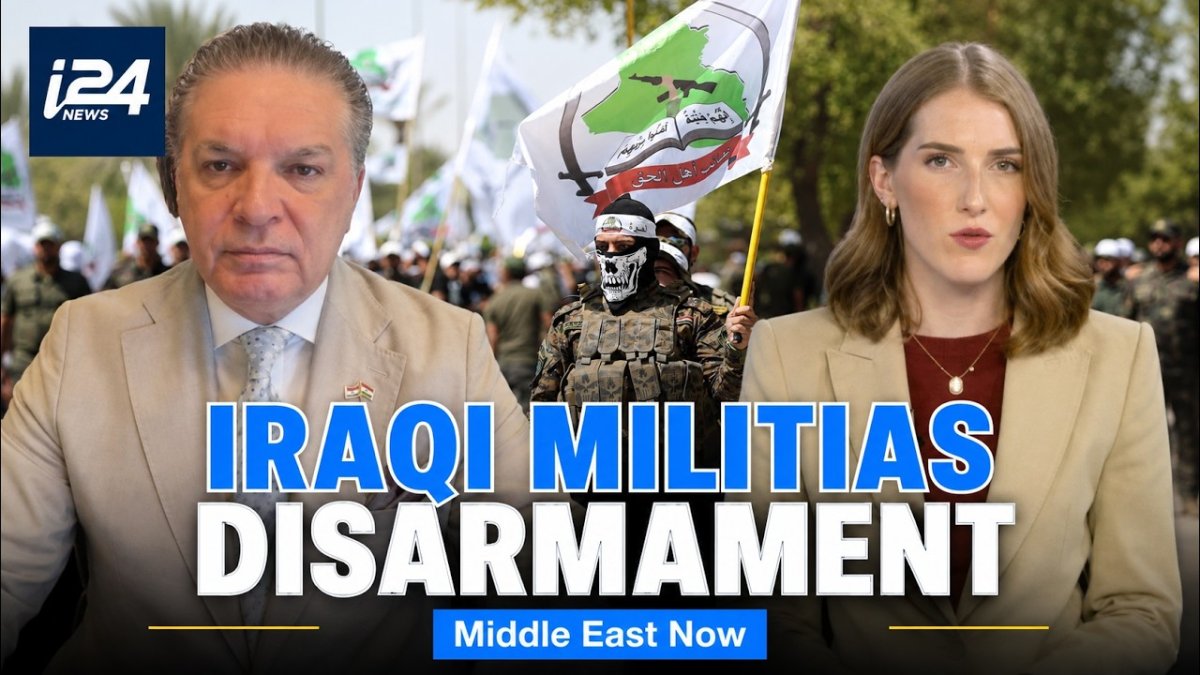
In a recent i24NEWS English report examining whether Iraq can disarm its militias on time, the focus falls on Baghdad's September 30 deadline to absorb Iran-backed groups into state forces, a move that carries direct implications for Israeli security given repeated drone threats from Iraqi territory toward Jordan and beyond.
In a recent i24NEWS English report examining whether Iraq can disarm its militias on time, the focus falls on Baghdad's September 30 deadline to absorb Iran-backed groups into state forces, a move that carries direct implications for Israeli security given repeated drone threats from Iraqi territory toward Jordan and beyond. The report highlights how the State Administration Coalition's ultimatum, issued after a Wednesday meeting, targets groups using Iraqi soil for cross-border operations that have already drawn IDF attention. This development intersects with ongoing regional tensions involving Iran, the United States, and Gulf states, all while Iraq lacks diplomatic ties with Israel.
Iraq Issues Terrorism Warning to Iran-Backed Militias Ahead of September 30 Deadline
Jerusalem – this week — Iraq's State Administration Coalition delivered its firmest ultimatum yet to Iran-backed armed factions, stating that groups failing to meet the September 30 integration deadline will face terrorism charges under Iraqi law. The coalition, which unites Shiite, Sunni, and Kurdish parties, issued the statement following a Wednesday meeting convened by Prime Minister Ali Al Zaidi in Baghdad. Participants included President Nizar Amedi, Parliament Speaker Haibat Al Halbousi, Supreme Judicial Council chief Faiq Zaidan, and Kurdistan Region President Nechirvan Barzani.
Coalition Statement Details Red Lines on Cross-Border Attacks
The coalition's statement emphasized continued efforts to confine weapons to the hands of the state and explicitly drew a red line against cross-border attacks launched by pro-Tehran militias. It warned against using Iraqi lands as a launchpad to attack neighboring countries or dragging Iraq into conflicts that do not serve its people's interests. The text stated that anyone engaging in such behavior commits a crime threatening the country's security and will be treated as an outlaw who must be fought. After September 30, any armed behavior outside the state framework will fall under the anti-terrorism law, which includes the death penalty for serious acts. The inclusion of judiciary chief Faiq Zaidan in the meeting signals that legal mechanisms are being prepared in advance for enforcement.
Three Militias Refuse Integration While Others Comply
Only three groups have announced integration into Iraq's security forces so far, while Kataib Hezbollah, Nujaba under leader Akram al-Kaabi, and Kataib Sayyid al-Shuhada have refused to surrender weapons. These factions operate under the Popular Mobilization Forces umbrella that also includes Badr. The PMF has previously attacked Kurdistan Regional Government buildings in Erbil, US bases in Jordan and Syria, and Saudi oil infrastructure, with links to a drone attack targeting Riyadh in January 2021. Washington has repeatedly informed Iraqi leaders that continued attacks from Iraqi soil will trigger direct US retaliation, and since the Iran war outbreak in February 2026, US forces have conducted airstrikes on militia warehouses and command sites across Iraq.
Recent Flare-Up Involves Drone Strikes and Casualties
The coalition condemned recent attacks that targeted Iraqi Armed Forces units and PMF members, resulting in at least 20 fighters killed, including five Iranian military advisers, with dozens injured according to PMF reports. These incidents followed alleged drone strikes on Saudi oil infrastructure. Baghdad and the militias deny involvement and have requested evidence from Riyadh. FDD data shows Iran-backed groups have expanded attacks to Iraq's neighbors using primarily drones, but also missiles and rockets aimed at Jordan, Kuwait, and Saudi Arabia. In late July, three drones intercepted over Jordan were assessed by Israeli sources as likely launched by Iran-backed Shi'ite militias in Iraq, though the IDF noted the aircraft did not cross into Israeli territory and the launch source remains under investigation.
Israeli Security Perspective on Iraqi Militia Activity
Israeli Defense Minister Israel Katz stated that Israel knows how to manage such threats and remains prepared. The absence of diplomatic relations between Iraq and Israel limits direct channels, yet the trajectory of militia activity directly affects Israeli threat assessments in the north and east. The September 30 deadline coincides exactly with the date set for US troops to leave Iraq under the 2024 Baghdad-Washington agreement, which militias have used as their primary pretext for retaining weapons. The outcome will shape the next phase of US-Iraq security relations and determine whether Baghdad can avoid deeper entanglement in the confrontation between Washington, Riyadh, and Tehran's allied networks.
Economic Pressures and Diplomatic Efforts Add Urgency
Oil export disruptions and threats to shipping in the Strait of Hormuz have compounded Baghdad's challenges, including delays in salary payments to public sector workers. The coalition called for diversifying oil export routes and combating corruption to stabilize the economy. Saudi Foreign Minister Prince Faisal bin Farhan met Iraqi Foreign Minister Fuad Hussein in Jordan recently to discuss bilateral concerns. These economic strains increase the stakes for Prime Minister Ali Al Zaidi's government as it attempts to enforce the militia deadline without triggering internal conflict.
Outlook for Regional Stability and Israeli Interests
The September 30 deadline represents a critical test of whether Iraq can reassert state control over armed groups that have operated with significant autonomy since the PMF's formalization. Failure to enforce integration risks further escalation involving US forces already conducting strikes inside Iraq and potential spillover affecting Jordanian and Saudi territory. For Israeli security planners, the continued presence of operational militias in Iraq sustains a vector for drone and missile threats that have already reached Jordanian airspace. The coalition's explicit linkage of non-compliance to anti-terrorism prosecutions, backed by the Supreme Judicial Council, indicates Baghdad intends to treat holdouts as criminal actors rather than political partners. Regional observers will watch the coming weeks for signs of compliance or confrontation that could reshape the balance between Baghdad, Tehran, and Washington.
By Hannah Berg, Staff Writer
This article was produced with AI-assisted research and editorial support. Reporting is based on sources cited in the article.
What's Your Reaction?
 Like
0
Like
0
 Dislike
0
Dislike
0
 Love
0
Love
0
 Funny
0
Funny
0
 Wow
0
Wow
0
 Sad
0
Sad
0
 Angry
0
Angry
0

Israel Correspondent at Global1.News. Based in Tel Aviv, covering Israeli politics, security, technology, and society. Provides balanced, deeply-sourced reporting on one of the most closely-watched regions in the world.















Comments (0)