
BREAKING: Explosion at Bangchak’s Bangkok refinery prompts evacuation warning
On the afternoon of 26 November, a sudden explosion ripped through Bangchak’s refinery on Sukhumvit Soi 62, sending thick black smoke and fierce flames into the sky above the bustling Bang Na district.
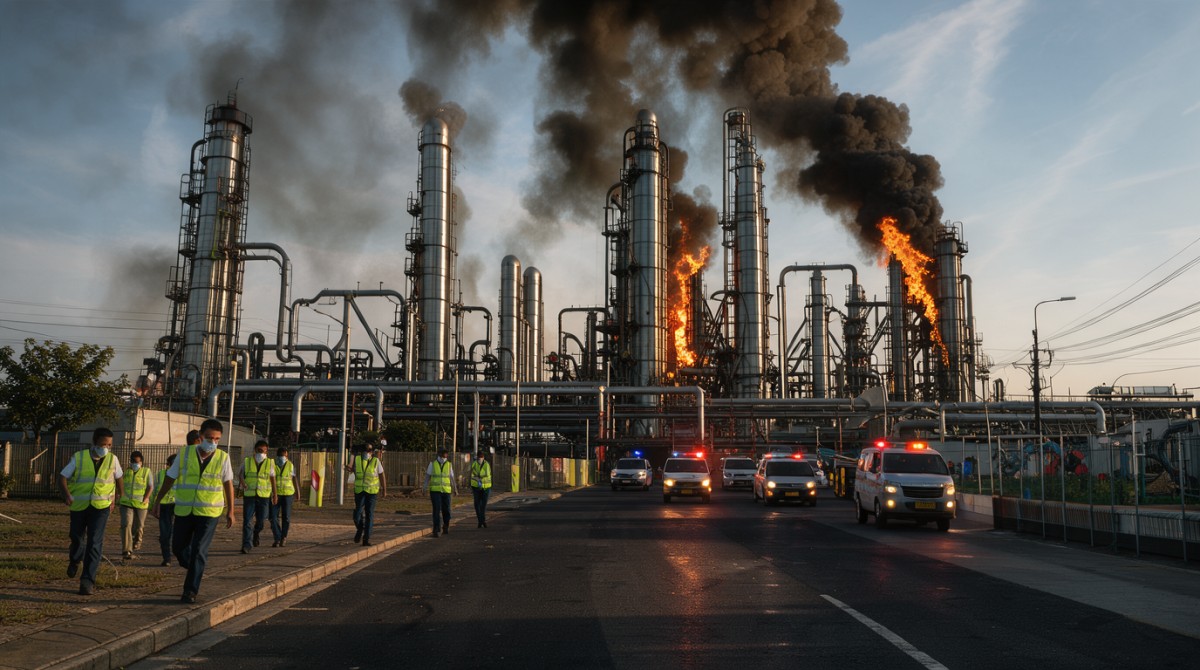
On the afternoon of 26 November, a sudden explosion ripped through Bangchak’s refinery on Sukhumvit Soi 62, sending thick black smoke and fierce flames into the sky above the bustling Bang Na district. The incident, which unfolded within minutes, prompted an immediate evacuation warning and a rapid response from city officials, emergency crews, and the local community. While the fire was brought under control within roughly twenty minutes, the event left seven people injured, four of whom remain in critical condition and three in moderate condition, according to the Department of Disaster Prevention and Mitigation’s latest update at 17:16. The unfolding drama offers a window into how Bangkok’s urban fabric, Buddhist values of compassion, and the region’s industrial landscape intersect in moments of crisis.
Chronology of the blast and emergency response
The first public alert came from the Bang Na District Office’s Facebook page at 14:50, urging residents to evacuate the immediate vicinity. Within minutes, photographs and videos captured by by‑standers showed a towering column of black smoke and bright flames licking the sky, a stark contrast to the usual rhythm of traffic and street vendors along Sukhumvit. Rescue teams, fire units, and other emergency agencies were dispatched swiftly, reflecting Bangkok’s well‑rehearsed protocols for industrial accidents.
By 15:30, the Bangkok Metropolitan Administration announced via an emergency SMS that the fire had been brought under control. The message also advised motorists to avoid roads in the area, a precaution that helped prevent further congestion and potential secondary incidents. Bangchak, the refinery operator, confirmed that the situation was under control at 15:45 and that all production units had been temporarily shut down while safety checks continued.
Injury tally and medical response
Initial reports at 16:14 indicated eight injured persons, six of whom were taken to hospitals while two remained on the scene. Ambulances were placed on standby, and authorities emphasized that the situation remained under control. By 16:38, Bangkok Governor Chadchart Sittipunt arrived at the scene, reiterating the figure of eight injured and classifying five as ‘red’ cases—those requiring urgent medical attention—and three as ‘yellow’, denoting moderate injuries. Notably, none of the injured were members of the public; they were likely refinery staff or emergency responders.
A later update at 17:16 revised the total to seven injured, with four in critical condition and three in moderate condition. This adjustment reflects the fluid nature of emergency reporting, where casualty numbers can shift as patients are triaged and conditions evolve. The Department of Disaster Prevention and Mitigation’s role in providing accurate, real‑time data underscores Thailand’s commitment to transparency during crises.
Environmental monitoring and air quality
Bangchak reported that air quality monitoring around the refinery showed normal readings despite the visible plume of smoke. This suggests that the fire, though dramatic, may have been contained before releasing large quantities of hazardous pollutants. Nevertheless, the brief burst of black smoke raised concerns among nearby residents, many of whom gathered at the perimeter to watch the unfolding scene, a behavior rooted in communal curiosity and the Thai tradition of bearing witness to public events.
Environmental agencies continue to monitor the area, and the temporary shutdown of production units allows for thorough inspection of equipment and safety systems. In a country where industrial growth often coexists with densely populated neighborhoods, such incidents highlight the delicate balance between economic development and environmental stewardship.
Community reaction and Buddhist compassion
As the flames were doused, local residents gathered near the evacuation routes, offering water, food, and prayers for those affected. In Thai culture, moments of danger often trigger spontaneous acts of generosity, known as “nam jai,” reflecting the Buddhist principle of compassion (karuṇā). Volunteers set up makeshift shelters and distributed bottled water, embodying the community’s collective responsibility to care for one another.
Monks from nearby temples were also seen chanting and offering blessings for the safety of the workers and the swift recovery of the injured. Such spiritual support provides emotional comfort, reinforcing the cultural belief that collective goodwill can mitigate suffering. The presence of these rituals underscores how Buddhist practice remains woven into the fabric of everyday life, even amid modern industrial settings.
Impact on Bangkok’s transportation and daily life
The emergency SMS advising motorists to avoid the area had an immediate effect on traffic flow along Sukhumvit, one of the city’s major arteries. Commuters rerouted through parallel roads, leading to temporary congestion in adjacent districts. For many Bangkokians, the incident served as a reminder of the city’s vulnerability to sudden industrial disruptions, especially during peak travel times.
Local businesses near the refinery, including street food stalls and small shops, experienced a brief slowdown as customers heeded evacuation warnings. Yet many vendors quickly adapted, offering free tea and snacks to emergency workers—a gesture that reflects the Thai spirit of hospitality and resilience in the face of unexpected challenges.
Government and corporate accountability
The rapid arrival of Governor Chadchart Sittipunt at the scene signaled a high‑level governmental response. His presence, coupled with the Department of Disaster Prevention and Mitigation’s timely updates, demonstrates the state’s commitment to overseeing industrial safety. While Bangchak confirmed that all production units were temporarily shut down, the incident raises questions about preventive measures and emergency preparedness at the refinery.
In the aftermath, both the Bangkok Metropolitan Administration and Bangchak are expected to conduct joint investigations to determine the cause of the explosion and to assess whether safety protocols were fully observed. Transparency in these investigations will be crucial for maintaining public trust, especially in a city where industrial sites sit close to residential neighborhoods.
Regional implications and future outlook
Bangkok’s role as a hub of Southeast Asian commerce means that any disruption at a major refinery can have ripple effects across the region’s energy supply chain. While the temporary shutdown of Bangchak’s units is unlikely to cause a significant fuel shortage, it does highlight the importance of robust contingency planning for critical infrastructure.
Looking ahead, the incident may prompt a broader review of safety standards at industrial facilities throughout Thailand and neighboring countries. As Southeast Asia continues to industrialize, balancing economic growth with community safety and environmental protection remains a central challenge. The collective response—government officials, corporate managers, emergency crews, and ordinary citizens—offers a hopeful example of how Thai society can come together to navigate such challenges with compassion, resilience, and a shared commitment to the common good.
This article was produced with AI-assisted research and editorial support. Reporting is based on the source material cited below. Sources: Khaosod English; khaosodenglish.com; Global1.News (27 November 2026).
By Ann Srisawat, Staff Writer
What's Your Reaction?
 Like
0
 Dislike
0
 Love
0
 Funny
0
 Wow
0
 Sad
0
 Angry
0

Southeast Asia Correspondent at Global1.News. Based in Bangkok, covering Thai and Southeast Asian politics, economy, technology, and culture. Deep regional perspective on one of the world's most dynamic regions.













Comments (0)