
Qassem Draws a Red Line Around Any Force That Replaces UNIFIL
Hezbollah's Naim Qassem said any force that replaces UNIFIL outside United Nations authority will be treated as an occupying army, drawing a red line five weeks before the peacekeeping mission's mandate expires.
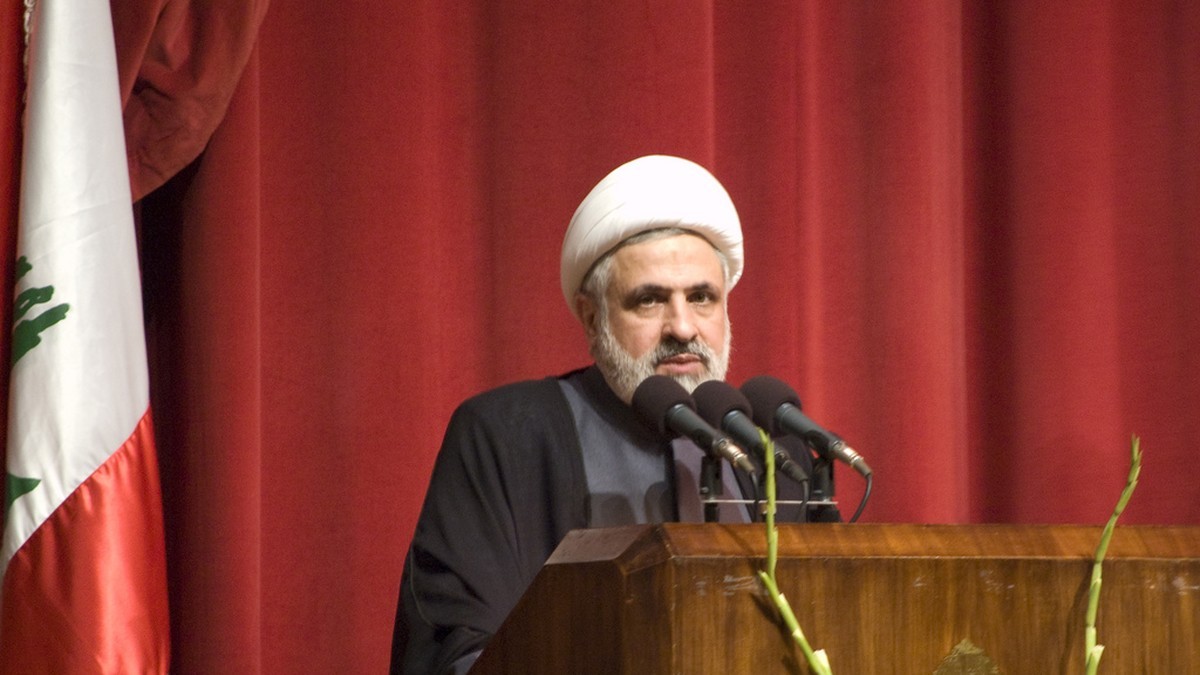
Hezbollah's secretary-general spent Wednesday evening launching a book. What he actually delivered was a warning with a deadline attached to it, aimed less at Israel than at the diplomats who have until December 31 to decide who patrols southern Lebanon next.
Qassem Draws a Red Line Around Any Force That Replaces UNIFIL
BEIRUT — Naim Qassem used a book launch on Wednesday night to say out loud what he has implied for months. Any international mission that replaces UNIFIL without operating under United Nations authority, he said, will be treated by Hezbollah as an occupying army.
The Book, and the Calendar Behind It
Qassem spoke at the launch of "Sharh Nahj al-Balagha," an encyclopedia compiled in memory of Sayyed Hashem Safieddine, the Hezbollah figure killed in an Israeli strike in Beirut in October 2024. The address was carried on Al-Manar, the movement's television station, and it ranged across constitutional law, Iranian diplomacy, casualty figures and the war in the south.
The occasion was a memorial. The timing was not incidental. UNIFIL's mandate expires on December 31, thirty-five days from Thursday, and the Security Council has not yet agreed on what, if anything, comes after it. The force has patrolled the Blue Line for 48 years, since it was created to confirm Israel's withdrawal from an invasion in 1978. Qassem drew his line first.
"An Occupying Force, Whatever Its Name"
The operative sentence was short. "Any international force must operate under the umbrella of the United Nations and within the framework of Resolution 1701," Qassem said. "Otherwise, we will consider any force, regardless of its name or designation, to be an occupying force."
He went further on the legal frame. Any new international decision on Lebanon, he argued, must sit under the ceiling of Resolution 1701 and the November 27, 2024 agreement that ended the last war, whose second anniversary falls on Friday. Everything else, in his account, is a rewrite.
Qassem did not say what Hezbollah would do to a force it designated as occupying. The word he chose carries its own history. It is the term his movement uses for Israel. He also called the June 26 framework agreement "unconstitutional" and "illegal" — reached, he said, under pressure and coercion.
Why the Successor Force Is the Whole Argument
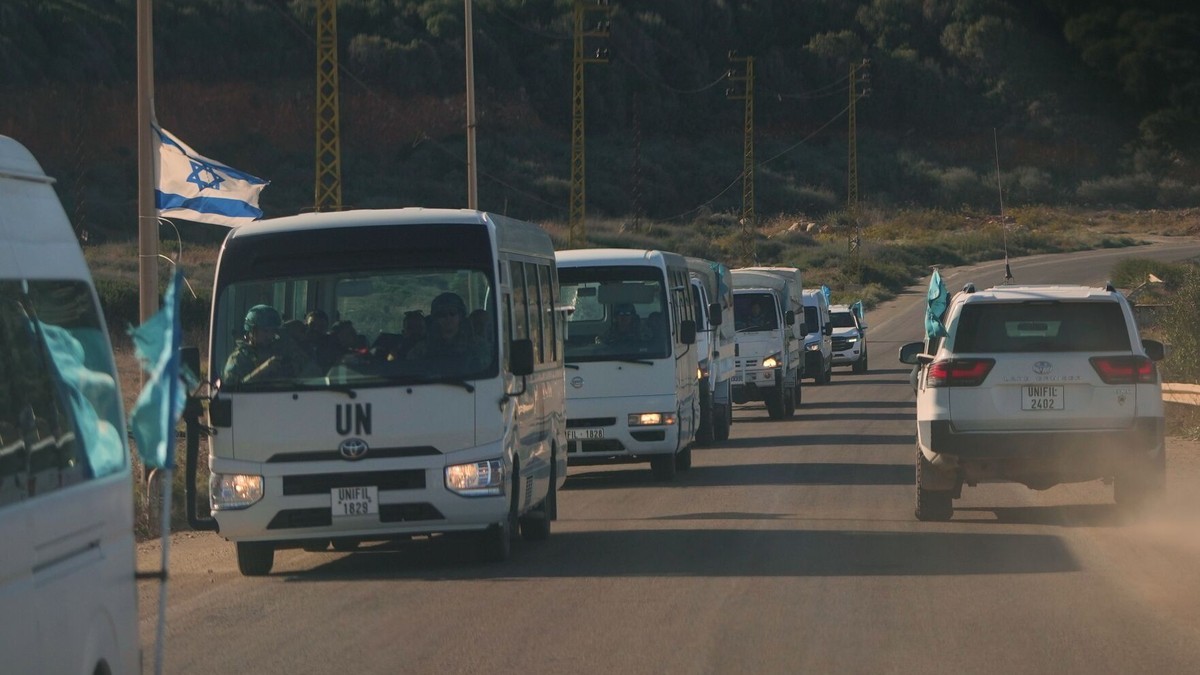
The mandate question is not abstract. Resolution 2790, adopted unanimously in August 2025, extended UNIFIL's mandate for a final time to December 31, 2026, ordered it to cease operations that day, and set an orderly drawdown within a year, with the stated aim of making the Lebanese government the sole provider of security in the south.
What replaces it is still unsettled. Proposals floated in recent months, as reported by UPI, have included a European-led force of up to 3,500 troops focused on border monitoring, which was dropped quickly; a small American-backed verification mission of roughly 100 personnel; and a more recent suggestion of a mechanism modeled on the Multinational Force and Observers that has watched the Egypt-Israel peace for four decades.
The American ambassador to the United Nations, Mike Waltz, told Lebanese officials in Beirut on November 16 that he expects Resolution 1701 to continue "with some modifications" and "some updating." He also noted the force numbers 8,000 to 11,000 troops and costs half a billion dollars a year. "We think that needs to change and be updated," he said.
The handover has already begun. UNIFIL's head of mission, Diodato Abagnara, announced in Tyre on Saturday that the mission had started transferring positions to the Lebanese Army. Defense News reported that most of its facilities sit in areas where Israeli troops are present and Lebanese troops are not, meaning some handovers may happen on paper only.
The President He Was Answering
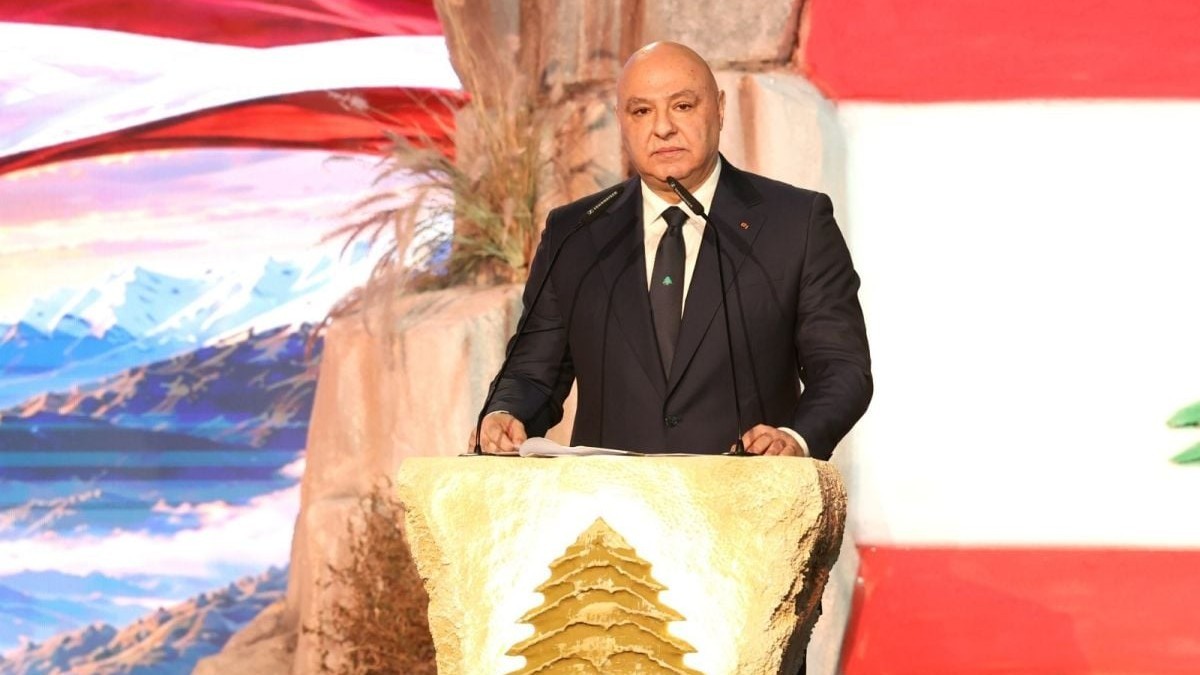
Qassem's speech was a reply. On Saturday, at the independence ceremony at Nahr al-Kalb, President Joseph Aoun broke with the careful language of the past year and put the demand to Hezbollah plainly: "The era of weapons outside the state is over."
Aoun framed Lebanon's independence as blocked by two things: "the Israeli occupation of parts of our land," and foreign interference "specifically by certain influential quarters within the Iranian regime, through weapons and decision-making outside the authority of the Lebanese state." Addressing Tehran, he added: "What you would not accept for your own country, do not ask Lebanon to accept."
He paired that with a defense of the negotiations underway with Israel, saying that "negotiation does not constitute a renunciation of rights." Four days later, Qassem answered all of it.
"The Constitution Is the Reference, Not Individuals"
Qassem opened with the Taif Agreement, the 1989 accord that paved the way to ending Lebanon's civil war, and the constitutional amendments that followed. Hezbollah, he said, accepted both as a social and political contract binding on every Lebanese. "The Constitution is the reference, not individuals," he said.
From there he turned on the president. Aoun, he charged, placed "the brutal Israeli aggression, supported by savage America" on the same footing as "the honorable, noble, popular and national Lebanese resistance," equating "the occupying force that attacks, destroys, kills and seeks extermination" with "his own people who suffer, endure and have made great sacrifices."
He accused Aoun of having "divided the Lebanese vertically instead of being a unifying factor," and asked whether "free concessions and surrender" had become "the hallmark of this term." Then came the line that carried the threat: "patience in the face of injustice has its limits."
"A Wise Person Does Not Make Concessions When Others Are Falling"
Qassem then read the world's election results as leverage. "Those who are wise do not make concessions when others are falling," he said, urging Hezbollah to exploit the setbacks suffered by President Donald Trump and Prime Minister Benjamin Netanyahu.
The record is more mixed than the rhetoric. Democrats won control of both chambers of Congress on November 3, taking the House 259 to 173 and a Senate majority, a result Qassem had already called an "earthquake" in a speech on November 12, according to Al Jazeera. In Israel, Netanyahu's bloc took 53 seats in the October 27 election and lost its parliamentary majority, but he remains caretaker prime minister. Gadi Eisenkot holds the mandate to form a government and has until December 6.
Netanyahu has not fallen. He has lost his majority, and that is a different thing.
"It Is Iran That Acts for Us"
The most consequential passage was about Tehran, and Qassem did not soften it. Hezbollah, he said, is "proud of its relationship with the Islamic Republic of Iran," and he credited Iran with ending the Israeli offensive within Lebanon's current borders.
He described Iran as conditioning any agreement with Washington on an end to "all forms of aggression on all fronts," with Lebanon as "the first of these fronts," and called that position "an immense responsibility." Then the sentence that Aoun's advisers will quote for months: "We do not act for Iran, it is Iran that acts for us and bears the burden for us, while we sacrifice for our country."
He also accused the American ambassador in Beirut of "encouraging discord and internal strife, humiliating the presidency, and threatening Lebanon with sanctions," and said independence "cannot be achieved by submitting to American injunctions."
The Numbers He Put on the Table
Qassem attached a toll to his argument: more than 10,000 dead over the past two years among fighters, men, women, children and civilians, along with 30,000 wounded, prisoners, and hundreds of thousands of destroyed homes. The figures have not been independently verified and no breakdown was offered.
The number is doing political work. In Qassem's telling, a movement that absorbed losses on that scale has earned the right to keep the weapons it says held the line, and a state that cannot protect its people has forfeited the standing to demand their surrender. "There is only one danger in Lebanon today: the Israeli enemy," he said, arguing that "the resistance fills an enormous gap" left by an army with limited capabilities.
The Ground He Was Speaking Over
None of this was hypothetical. Israeli forces shelled and searched across the south throughout the week. Lebanon's National News Agency reported artillery fire on Haddatha and Wadi al-Hujeir on Thursday morning and a large-scale search in Khiam, in the Marjayoun district. On Wednesday it reported shelling and explosions across Nabatieh, Tyre and Marjayoun.
Qassem set five conditions for what he calls real sovereignty: an end to Israeli attacks, the withdrawal of Israeli forces and the deployment of the Lebanese Army south of the Litani, the release of prisoners, reconstruction, and the return of the displaced. "There is no sovereignty without liberation, nor independence in dependence," he said.
He left one door open. Hezbollah, he said, is ready to discuss a national security strategy once Israel has withdrawn. Not before.
What Has to Be Decided Before December 31
The decision now belongs to the Security Council, and the fight is over adjectives. If a successor mission is anchored in Resolution 1701 and described as a United Nations operation, Qassem has left himself room. If it is an American-led or American-verified arrangement tied to the framework signed in Washington on June 26, he has pre-declared it hostile.
That framework sets out phased, verified steps: the Lebanese Army taking security responsibility in pilot zones, the verified disarmament of non-state armed groups, and Israeli redeployment as those steps hold. Aoun has committed to delivering it.
He has also promised no vacuum, telling a French delegation that Lebanon and France converge on extending UNIFIL's work into 2027 if necessary, with any replacement under the UN umbrella. Hezbollah has now told him what it will call that force if the umbrella slips. Before the year turns, someone has to choose.
By Jessica Ali, Staff Writer
This article was produced with AI-assisted research and editorial support. Sources: L'Orient Today, UPI, Al Jazeera, Anadolu Agency, Reuters, the U.S. Department of State, the Washington Institute, the UN Security Council mandate registry, UN Peacekeeping, the House of Commons Library, Defense News, NPR, the Associated Press, Asharq Al-Awsat and MTV Lebanon. Photographs: Naim Qassem at a podium in Beirut (Sebastian Baryli, CC BY 2.0, via Wikimedia Commons, file photo); President Joseph Aoun at the independence ceremony at Nahr al-Kalb on Nov. 21, 2026 (Lebanese presidency via L'Orient Today); a UNIFIL convoy passing an Israeli flag near Naqoura on Nov. 24, 2026 (Hassan Ammar/AP).
What's Your Reaction?
 Like
0
 Dislike
0
 Love
0
 Funny
0
 Wow
0
 Sad
0
 Angry
0

Editor-in-Chief at Global1.News. Atlanta-based journalist who cuts through the BS and tells it like it is. Lead anchor, host, and the voice you hear when the spin stops and the truth starts.













Comments (0)