
SpaceX Pledges a Share to Every Active Trump Account, and the Qualifier Narrows the Gift
SpaceX will give one Class A share to every currently active Trump Account, with Elon Musk matching share for share. The word 'active' may cut the gift well below the $10 billion once promised for every child.
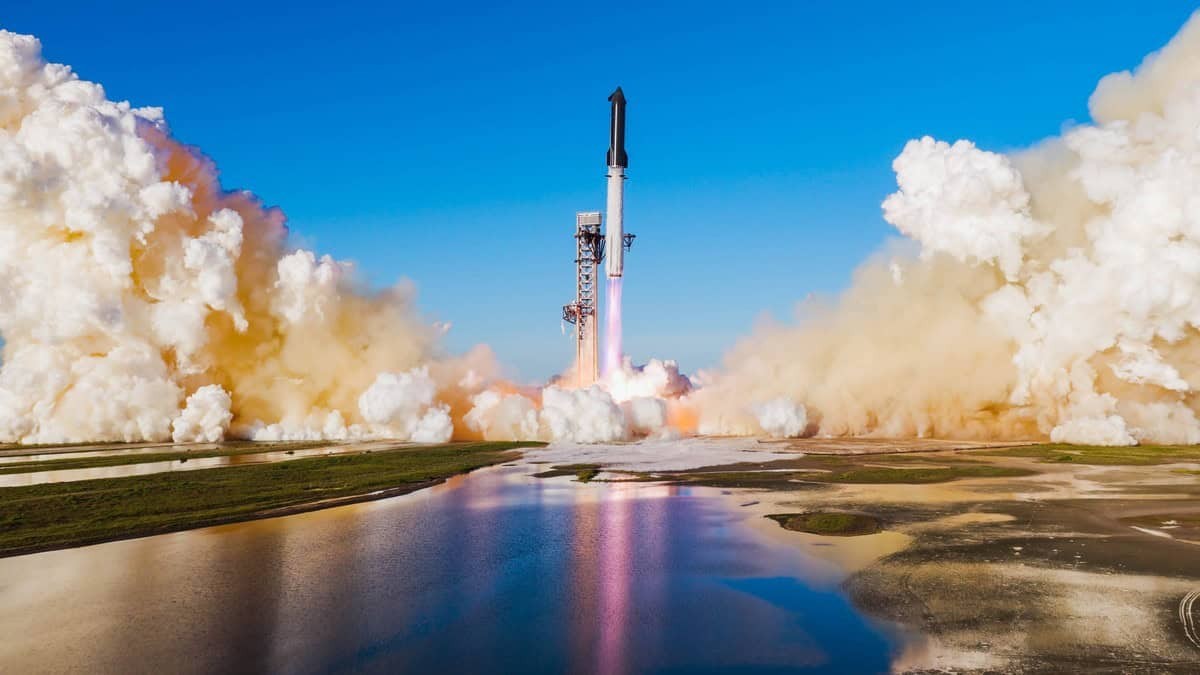
WASHINGTON — SpaceX said Wednesday it will give one newly issued share of its Class A stock to every currently active Trump Account, and that chief executive Elon Musk will match the gift share for share. It also carries a qualifier, "active," that quietly narrows who gets paid.
SpaceX Pledges a Share to Every Active Trump Account, and the Qualifier Narrows the Gift
Washington, D.C. — The company's announcement runs three short paragraphs. It does not say how many accounts qualify, what one share is worth, when the stock will move, or which approvals stand in the way. Those four gaps are the story.
The Three Sentences SpaceX Published
SpaceX posted the commitment on its investor relations site on November 25. The company will contribute one newly issued share of Class A common stock to every currently active Trump Account, the tax-advantaged investment accounts set up for American children. Musk will personally match the number of shares SpaceX donates, described in the release as part of his pledge "to donate one SpaceX share to every kid in America."
SpaceX President and COO Gwynne Shotwell separately announced a personal gift of more than two million SpaceX shares to the same effort, according to the release. The company framed the move in its own terms: "ownership of the company creating these systems should extend to the next generation of Americans for their long-term benefit." The release also carries standard forward-looking language, warning that any future contribution depends on "third-party and government approvals."
What it withholds is as notable as what it states. There is no headcount, no transfer date, no valuation method and no explanation of how shares will be allocated among accounts or of any restriction on when a child could sell.
What the Word "Active" Leaves Out
A Trump Account exists for every eligible child with a valid Social Security number, but a parent or guardian has to claim it before anyone can manage it or pay into it. The Internal Revenue Service says Treasury began automatically enrolling eligible children on October 1.
SpaceX's obligation is written against accounts that were already active when it made the announcement, not against every account in existence. That distinction matters because the public promise was broader. Musk first floated the idea on X in October, offering one share to every child in the United States; at roughly 73 million children, the pledge was valued at around $10.7 billion at the time, according to Investing.com.
Treasury Secretary Scott Bessent later described the plan as one share to every Trump Account, with distribution set for January, putting the relevant population at 70 million accounts and the value at roughly $10 billion. Between the October pledge and the November commitment, the population being promised a share changed from every child to every active account.
The Number Nobody Can Settle
How many accounts are actually active is the single fact that determines the size of the gift, and the published figures do not agree with each other.
A week after automatic enrollment began, only about 164,000 accounts had been claimed, according to Treasury benefits tax counsel Helen Morrison, as reported by Bloomberg Law and cited by Fortune. Invest America put claimed accounts at roughly 10 million on October 13. On October 21, CNBC reported about $500 million in unclaimed money.
The first figure and the second cannot both describe the same thing. Neither Treasury nor SpaceX has reconciled them, and the November 24 program release that announced the billion-dollar family milestone did not include a claimed-account count at all. If the lower number is anywhere near right, a share-for-share match on active accounts is a far smaller transfer than a share for every child.
A Billion Dollars From Families
The corporate announcement landed one day after the program's own milestone. Trump Accounts said on November 24 that contributions from friends and family members to individual accounts had passed $1 billion, funded by more than three million people and counted separately from large philanthropic gifts such as those from the Michael and Susan Dell Foundation.
Adding family money, philanthropic commitments and the federal seed deposit, the program put total assets in the accounts above $9 billion.
"The American people are investing in Trump Accounts with a generosity that represents the finest instincts of our national character," Bessent said in a written statement. He added that the president had personally contributed to individual accounts this week. The administration did not disclose how much Trump gave or whose accounts received it.

Where the Nine Billion Sits
The headline total and the money families can actually reach are different quantities, and the difference is the program's central practical problem.
On Tuesday afternoon, IRS chief executive Frank Bisignano posted the latest figures on X: more than $1 billion in claimed accounts from parents, relatives and friends, and "over $6 billion" from donors, most of it sitting in accounts that "still need to be claimed and activated."
Large gifts explain much of that gap. Michael and Susan Dell committed $6.25 billion in December 2025 to put $250 into the accounts of 25 million children aged 10 and younger in eligible ZIP codes with median incomes below $150,000, and Dell has said the money reached almost 25 million children without any parent filing anything. Automatic enrollment pushed the total number of accounts to roughly 70 million after October 1. Money can arrive before a parent logs in; control cannot.
Why Shares Can Be Given at All
Stock donations were not always an option. Treasury issued temporary regulations at the end of September allowing Trump Accounts to hold donated shares, a change aimed at unlocking exactly this kind of gift, according to Bisignano.
The structure is attractive to donors for a reason that has nothing to do with children. Gifting appreciated stock lets founders and major shareholders avoid the capital gains tax they would trigger by selling shares and donating the cash, according to certified financial planner Ben Henry-Moreland of Kitces.com.
For the accounts, the trade-off is different. A share of a single company concentrates a child's savings in one stock rather than a diversified fund, and the benefit depends on what that share is worth years from now. Treasury's rules opened the door. They did not settle valuation, and neither release explains how a donated block of stock would be priced for tax purposes.
The Claiming Problem
The mechanics of claiming are simple, which makes the low take-up harder to explain. Parents can download the Trump Accounts app, verify their identity and their authority over the child, and activate the account without filing a form to open it, according to the IRS.
The $1,000 federal deposit for children born between January 1, 2025 and December 31, 2028 is a separate step: families must use IRS Form 4547 to elect it. The IRS's own description of that form has moved with the process. In March testimony, Bisignano called Form 4547 the form taxpayers "will need to file with the IRS to open a Trump Account"; since automatic enrollment began, the agency says no form is needed to open one, only to request the money. Contributions from family and friends are capped at $5,000 per child per year in after-tax dollars, a limit indexed for inflation after 2027, CNBC reported.
There is no deadline to claim, and unclaimed accounts stay open and convert to a traditional individual retirement account in the child's name at 18. Under the tax code section that created the accounts, 26 U.S.C. 530A, children generally cannot withdraw the money before January 1 of the year they turn 18. Britain offers the cautionary version: of roughly 3.8 million matured Child Trust Fund accounts, about 827,000 remain unclaimed.
The Man Running It
Trump Accounts has an unusual governance structure and one official at the center of it. Bisignano is the 18th commissioner of the Social Security Administration, a post he has held since May 2025, and the first chief executive officer of the Internal Revenue Service, a position Treasury created for him. The IRS describes him as executive-in-charge of Trump Accounts.
Treasury named him in July to lead the program's expansion. On October 29, the IRS announced that the Bisignano Family Fund would donate to the Trump Accounts of children in the Brooklyn ZIP code where he grew up. In March testimony to the House Ways and Means Committee, he reported that the IRS had already received roughly two million Forms 4547 by February 18, months before contributions opened.
The Timing, and the Politics Around It
Musk announced the original pledge on X two weeks before the November 3 midterm elections, writing, "This will be the first of many." President Donald Trump thanked him on Truth Social and linked the SpaceX share donations to the accounts, according to Investing.com.
The relationship has not been static. Forbes reported that Musk indicated after the midterms that he did not align with the Make America Great Again movement, and the corporate gift now arrives with the company behind it, not just its executives.
More donations are queued. Bessent said in a November 20 interview with CNBC that a founder of Anthropic would make a large gift to Trump Accounts in the coming weeks. The program is becoming a channel through which the country's largest private fortunes are reaching individual children's accounts.
What to Watch
The number that matters next is Treasury's claimed-account count after the SpaceX shares are distributed. If it stays near the low end of the published range, the constraint on the program is the claiming process rather than the generosity of donors, and a share of stock will sit in an account nobody has opened.
SpaceX has not said how many accounts it expects to pay, when the transfer will happen, how the shares will be valued, or which approvals it awaits. Nor has it said whether families who claim after the announcement get anything, a question the word "currently" leaves open.
The company's own framing is that ownership of the future economy should belong to the next generation. Whether that ownership reaches a child depends, for now, on a parent with a Social Security number, a smartphone and a reason to log in.
By Jessica Ali, Staff Writer
This article was produced with AI-assisted research and editorial support. Sources: SpaceX investor relations; Trump Accounts and the U.S. Department of the Treasury; the Internal Revenue Service; CNBC; Reuters; The Hill; Benzinga; Forbes; Investing.com; 247WallSt; TeslaNorth; Kitces.com. Photographs: a SpaceX Starship lifts off from Starbase, Texas (SpaceX, via TeslaNorth); the U.S. Treasury Building in Washington, D.C. (Rchuon24, CC BY-SA 3.0, via Wikimedia Commons).
What's Your Reaction?
 Like
0
 Dislike
0
 Love
0
 Funny
0
 Wow
0
 Sad
0
 Angry
0

Editor-in-Chief at Global1.News. Atlanta-based journalist who cuts through the BS and tells it like it is. Lead anchor, host, and the voice you hear when the spin stops and the truth starts.














Comments (0)