
Draining peatlands is responsible for a few percent of our global warming
When most Americans think of climate change, the first thing that comes to mind is the endless plume of smoke from coal‑fired power plants or the endless traffic on our highways.
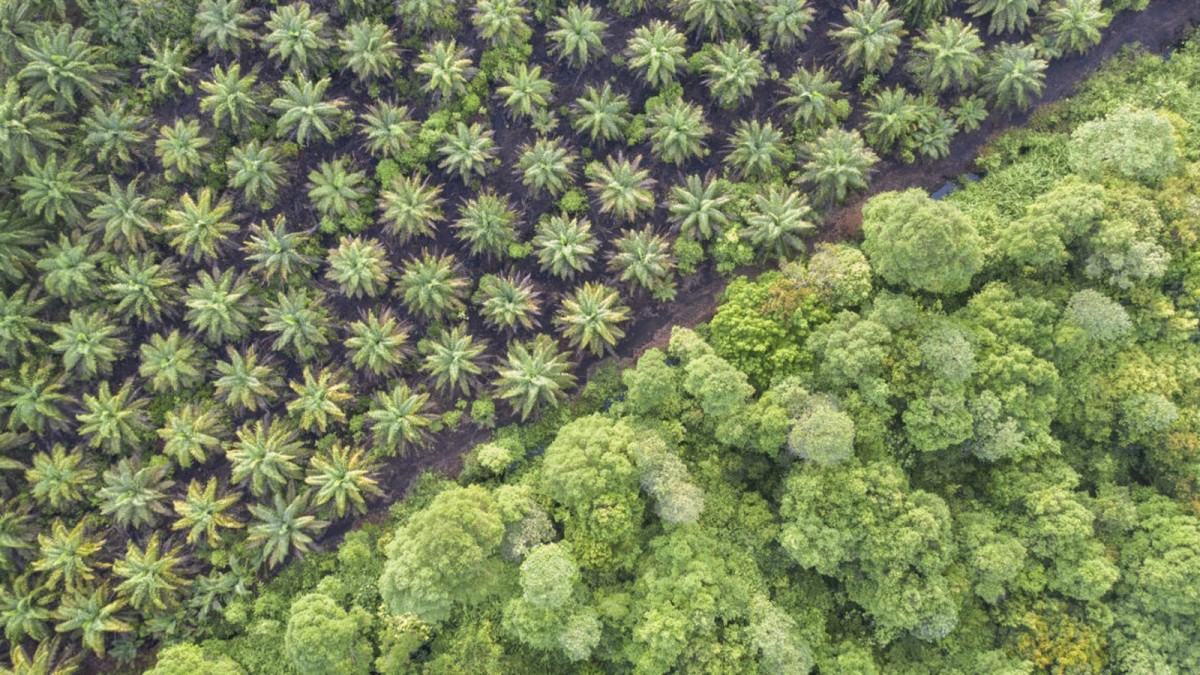
When most Americans think of climate change, the first thing that comes to mind is the endless plume of smoke from coal‑fired power plants or the endless traffic on our highways. That focus is not misplaced—fossil fuels are the dominant driver of warming. Yet a growing body of research shows that the story is more complicated. Land‑use change, especially the draining of peatlands, is responsible for a measurable slice of the heat we’re adding to the planet. A new study led by MIT researcher Jevan Yu quantifies that slice, revealing that peatland drainage contributes a few percent of total human‑caused warming—a figure that may seem modest but carries weighty implications for policy and restoration efforts.
The hidden carbon vault beneath our feet
Peatlands—bogs, fens, and other water‑logged ecosystems—store an astonishing amount of carbon. The MIT team notes that roughly 600 billion tons of carbon are locked in these saturated soils, a quantity that exceeds the carbon contained in all of the world’s living vegetation combined. Because the waterlogged conditions starve the soil of oxygen, the decomposition of organic matter proceeds at a glacial pace, handled by anaerobic bacteria that break down only a fraction of the material.
This slow decay means that most of the carbon remains sequestered, but the portion that does escape does so as methane (CH₄), a greenhouse gas far more potent than carbon dioxide (CO₂) on a per‑molecule basis. Over time, methane oxidizes into CO₂, creating a “trade‑off” where peatlands keep the bulk of carbon out of the atmosphere but release a smaller share as a more powerful warming agent.
From wet to dry: How drainage flips the greenhouse gas balance
Human activity has repeatedly altered this delicate balance. Draining peatlands—often by digging ditches to lower water tables for agriculture or other land uses—introduces oxygen to the peat surface. That oxygen invites aerobic bacteria, which feast on the exposed organic matter and release CO₂ in large quantities. At the same time, the methane output drops because the anaerobic environment is compromised.
The net effect is a dramatic shift from a methane‑dominated emission profile to one dominated by CO₂. While methane’s global warming potential is higher, the sheer volume of CO₂ released from drained peatlands outweighs the reduction in methane, amplifying the overall greenhouse impact of land‑use change.
Quantifying the climate impact: Energy‑budget terms
Yu’s team built a global model that translates changes in peatland water levels into radiative forcing—a measure of how much a given gas alters Earth’s energy budget. By reconstructing water‑level changes back to 1800 and feeding recent gas‑emission measurements into the model, they arrived at a 2020 snapshot: CO₂ emissions from drained peatlands contributed about +83 milliwatts per square meter (mW m⁻²) to Earth’s energy budget, while the concurrent drop in methane emissions offset that by roughly –9 mW m⁻². The net result is a +73 mW m⁻² forcing, which represents about 2.7 percent of the total human‑caused change in Earth’s energy budget. Even accounting for uncertainties, the range sits between 1.8 percent and 3.6 percent.
Put another way, the study estimates that roughly 4 percent of the carbon originally buried in peatlands now resides in the atmosphere—a non‑trivial fraction given the sheer size of the peat carbon pool.
Geography of the emissions: Europe, Southeast Asia, and North America
The model also breaks down where these emissions originate. Over half of the total CO₂ released from peatland drainage comes from Europe, reflecting the continent’s long history of peat exploitation for fuel and agriculture. Southeast Asia accounts for almost a quarter of the emissions, with a notable surge in the last few decades as the region expands agricultural frontiers and peat extraction for biofuel and horticulture. North America contributes about 14 percent, a smaller share but still significant given the continent’s extensive peatland areas in places like the Great Lakes region and the boreal zones of Canada.
The timing of these regional contributions differs. Europe’s emissions have been relatively steady over the past two centuries, while Southeast Asia’s share has climbed sharply only in recent decades, mirroring rapid land‑use changes and economic development in that part of the world.
Future trajectories: What happens if we do nothing?
The researchers extended their model forward to 2100 to explore potential futures. If water levels remain at 2020 levels, the net forcing from peatland drainage would nearly double, rising from +73 mW m⁻² to about +138 mW m⁻² by the end of the century. This escalation underscores the long‑term nature of peat carbon release: once a peatland is drained, the carbon stored there continues to oxidize for decades, even centuries, feeding the atmosphere long after the initial disturbance.
In contrast, the model shows that restoring peatland water levels can dramatically curb this trajectory. A “moderate” restoration scenario—raising water tables to partially re‑saturate the soils—could halve the projected increase in forcing. An “ambitious” restoration effort, aiming to return water levels to near‑pre‑drainage conditions, could even push the net forcing slightly below today’s 2020 level, effectively erasing the peatland contribution to warming.
Policy implications: Restoration as a climate lever
These findings give policymakers a concrete lever. While cutting fossil‑fuel emissions remains the cornerstone of any climate strategy, the peatland story shows that land‑use decisions also shape the trajectory of warming. Restoring drained peatlands—by plugging ditches, re‑wetting soils, and curbing further conversion—offers a relatively low‑tech, high‑impact mitigation option.
Crucially, the study emphasizes that full restoration to the 1800 landscape is unlikely, given the scale of agricultural conversion and the economic stakes involved. Nonetheless, even partial restoration can deliver measurable climate benefits, especially in regions where drainage has been most extensive. The research thus adds weight to ongoing conservation initiatives in Europe and Southeast Asia, where peatlands are both abundant and heavily altered.
Conclusion: A modest slice with outsized relevance
Draining peatlands may account for only a few percent of the total human‑caused energy‑budget change, but that figure translates into billions of tons of carbon shifting from safe storage to the atmosphere. The study by Yu and colleagues quantifies that shift, showing that past land‑use decisions continue to echo into the future, and that proactive restoration can blunt that echo.
In the broader climate narrative, peatland drainage reminds us that the fight against warming is not solely about flipping a switch on fossil‑fuel power plants. It also involves rethinking how we manage the land beneath our feet. As the data make clear, the carbon locked in peat is a massive, largely untapped climate resource—one that we can protect, and even recover, if we act with the urgency and scale that the climate crisis demands.
This article was produced with AI-assisted research and editorial support. Reporting is based on the source material cited below. Sources: Ars Technica; arstechnica.com; Global1.News (26 November 2026).
By Jessica Ali, Staff Writer
What's Your Reaction?
 Like
0
 Dislike
0
 Love
0
 Funny
0
 Wow
0
 Sad
0
 Angry
0

Editor-in-Chief at Global1.News. Atlanta-based journalist who cuts through the BS and tells it like it is. Lead anchor, host, and the voice you hear when the spin stops and the truth starts.















Comments (0)