
Bangkok’s Loy Krathong Festival Illuminates History and Waterway Preservation
On Tuesday evening, the heart of Bangkok glowed with the soft light of thousands of floating krathongs as the city launched its 2026 Loy Krathong Festival.
On Tuesday evening, the heart of Bangkok glowed with the soft light of thousands of floating krathongs as the city launched its 2026 Loy Krathong Festival. The celebration, held at Mahakan Fort and along the historic Khlong Ong Ang in the Phra Nakhon district, was more than a night of lanterns and music; it was a vivid reminder of Thailand’s deep connection to its waterways and a public pledge to protect them. Prime Minister Anutin Charnvirakul presided over the opening ceremony, underscoring the national importance of the event and the Bangkok Metropolitan Administration’s (BMA) commitment to preserving the Rattanakosin waterways for future generations.
Historic Setting and the Festival’s Theme
The choice of Mahakan Fort and Khlong Ong Ang as the festival’s focal points was deliberate. Both sites sit within the historic Rattanakosin Island, the old city that houses many of Thailand’s most treasured monuments. By staging the opening at these landmarks, the BMA linked the ancient tradition of Loy Krathong with the very streets and canals that have shaped Bangkok’s identity for centuries.
The 2026 festival carried the theme “Preserving Thai Traditions, Sustaining Rattanakosin Waterways.” This wording reflects a growing awareness among Thai officials and citizens that cultural heritage cannot be separated from environmental stewardship. The festival’s organizers highlighted that the act of floating a krathong—traditionally a symbolic gesture of letting go of misfortune—now also carries a message of responsibility toward the water that sustains daily life in the capital.
For many locals, the theme resonated with personal memories of childhood festivals spent along the canals, where families would gather to release lanterns and share traditional foods. The BMA’s framing of the celebration as both cultural and ecological signals a broader shift in Thai public policy, where heritage preservation and sustainability are increasingly intertwined.
Prime Minister’s Role and Government Support
Prime Minister Anutin Charnvirakul’s presence at the opening ceremony underscored the government’s endorsement of the festival’s dual objectives. By personally presiding over the event, the Prime Minister sent a clear signal that the protection of Bangkok’s waterways is a priority at the highest level of leadership. His remarks, as captured in the Bangkok Post footage, emphasized the need for collective action, inviting both residents and tourists to partake in the celebration while respecting the environment.
The Prime Minister’s involvement also reflects the political climate of 2026, where urban development and heritage conservation often intersect. Bangkok’s rapid growth has placed pressure on its historic canals, prompting the BMA to adopt more proactive measures. The government’s visible support during the festival helps to align public sentiment with policy goals, encouraging community participation in future clean‑up initiatives.
Observers noted that the Prime Minister’s participation may also serve a diplomatic purpose, showcasing Thailand’s cultural vibrancy to foreign visitors. The presence of international tourists among the crowds highlighted the festival’s role as a soft‑power tool, promoting Thailand’s image as a nation that values both tradition and modern stewardship.
Crowds, Commerce, and Community Spirit
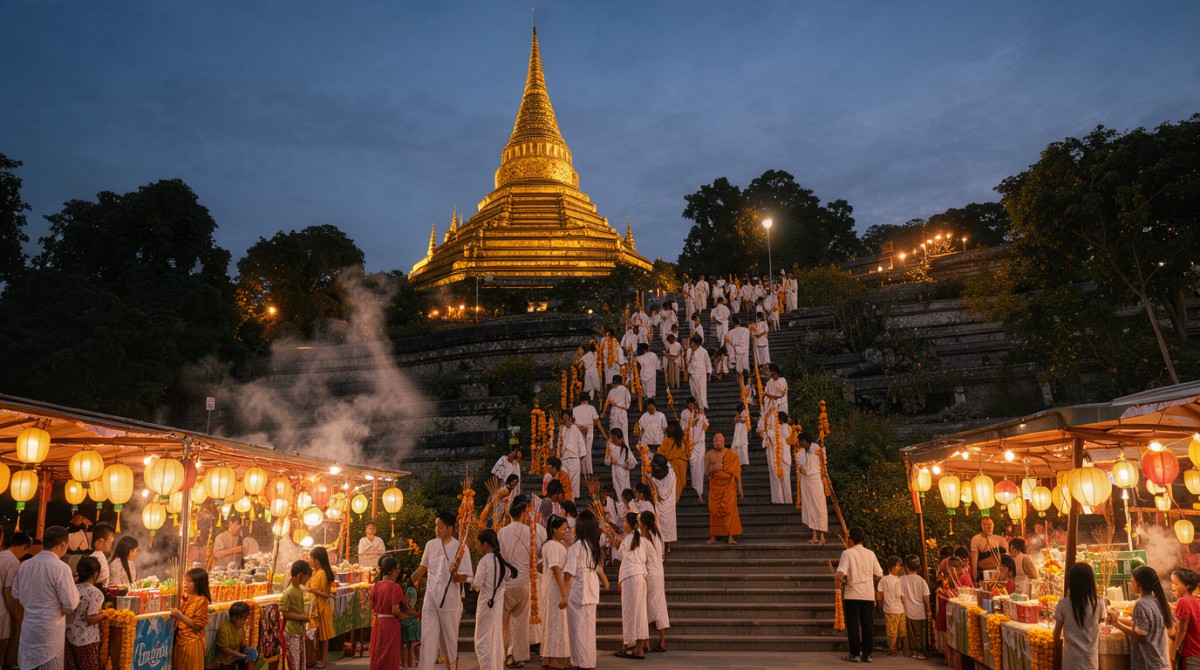
The evening’s festivities attracted a lively mix of locals and foreign tourists, all gathered along the canal banks to watch lanterns rise and krathongs drift. The atmosphere was festive yet purposeful, with families, students, and senior citizens sharing space and stories. Vendors set up temporary stalls along the waterway, offering traditional snacks, handcrafted souvenirs, and seasonal decorations.
These market stalls, while adding a commercial dimension to the event, also reinforced community bonds. Small‑scale entrepreneurs displayed locally made items, supporting the informal economy that thrives around Bangkok’s canals. The bustling market scene reminded attendees that the waterways are not only scenic backdrops but also vital arteries for daily commerce and livelihood.
Live music filled the air, featuring a blend of contemporary Thai pop and traditional instruments. The performances provided a cultural bridge, linking younger generations with the heritage of Loy Krathong. The communal enjoyment of music, food, and the visual spectacle of lanterns highlighted the festival’s role in fostering social cohesion across diverse groups.
Environmental Measures: Krathong Collection and Sorting
Following the evening’s celebrations, the BMA announced a large‑scale krathong collection and sorting operation near Phra Pok Klao Bridge. This initiative aims to prevent the accumulation of discarded krathongs—often made from banana leaves, flowers, and sometimes plastic—within the canal system. By centralising the clean‑up effort, officials hope to streamline waste management and protect aquatic life.
The collection operation will involve volunteers, municipal workers, and environmental NGOs working together to retrieve floating debris. The sorting process will separate biodegradable materials from non‑biodegradable items, ensuring that recyclable components are properly processed. This systematic approach reflects a growing trend in Bangkok’s municipal planning: integrating cultural events with concrete environmental actions.
While the video report did not provide specific numbers on the expected volume of waste, the BMA’s commitment to a “large‑scale” effort signals an awareness of the potential impact of the festival on water quality. By addressing waste immediately after the celebration, officials aim to maintain the cleanliness of Khlong Ong Ang, preserving its role as a historic and functional waterway.
Tourism Impact and Regional Significance
The Loy Krathong Festival has long been a magnet for tourists seeking authentic Thai experiences. In 2026, the event’s location in the heart of the old city offered visitors a direct encounter with Bangkok’s heritage sites, from the centuries‑old Mahakan Fort to the bustling canal corridors. The influx of foreign tourists added an international dimension to the celebration, reinforcing Thailand’s reputation as a cultural destination in Southeast Asia.
Tourism officials often view such festivals as opportunities to showcase regional diversity. By highlighting the Rattanakosin waterways, the BMA aligns Bangkok’s urban narrative with broader Southeast Asian themes of riverine culture and maritime trade. The festival thus serves both local and regional storytelling, positioning Thailand as a steward of historic waterways in a region where many cities face similar environmental challenges.
Economic benefits from the festival extend beyond immediate spending at market stalls. The positive media coverage, including the Bangkok Post’s video report, amplifies Bangkok’s image abroad, potentially encouraging future travel and investment. The event’s blend of tradition, community, and sustainability may also inspire similar initiatives in neighboring countries, fostering a shared commitment to preserving cultural landscapes.
Looking Ahead: The Future of Bangkok’s Waterways
The 2026 Loy Krathong Festival, with its emphasis on “Preserving Thai Traditions, Sustaining Rattanakosin Waterways,” marks a pivotal moment in Bangkok’s ongoing dialogue about urban development and heritage conservation. The festival’s success, measured not only in lanterns lit but also in the organized clean‑up that follows, suggests a growing public appetite for responsible celebration.
Future festivals are likely to build on this model, integrating more robust environmental protocols and expanding community participation. The BMA’s proactive stance—evident in the post‑event collection operation—may become a standard component of citywide celebrations, ensuring that cultural practices do not compromise the health of the canals.
As Bangkok continues to balance modernization with its historic identity, events like Loy Krathong serve as both a reminder and a catalyst. They illuminate the city’s waterways with the glow of tradition while prompting citizens, officials, and visitors alike to consider how each floating krathong can be a symbol of reverence for the water that sustains the capital. The gentle ripple of each lantern on Khlong Ong Ang carries a message: Thailand’s cultural heart beats in harmony with the rivers that have shaped its past and will guide its future.
By Ann Srisawat, Staff Writer
This article was produced with AI-assisted research and editorial support. Reporting is based on the source material cited below. Sources: Bangkok Post video report (25 November 2026); Bangkok Post; Global1.News
What's Your Reaction?
 Like
0
 Dislike
0
 Love
0
 Funny
0
 Wow
0
 Sad
0
 Angry
0

Southeast Asia Correspondent at Global1.News. Based in Bangkok, covering Thai and Southeast Asian politics, economy, technology, and culture. Deep regional perspective on one of the world's most dynamic regions.










Comments (0)