
The Houthis Say They Hit Saudi Arabia's Biggest Refinery. Riyadh Confirms Four Drones.
Yemen's Houthis say they struck Saudi Arabia's largest refinery at Ras Tanura and caused fires. The Saudi-led coalition confirms four drones were downed, not that the refinery was hit, as Brent rises nearly six percent in two sessions.
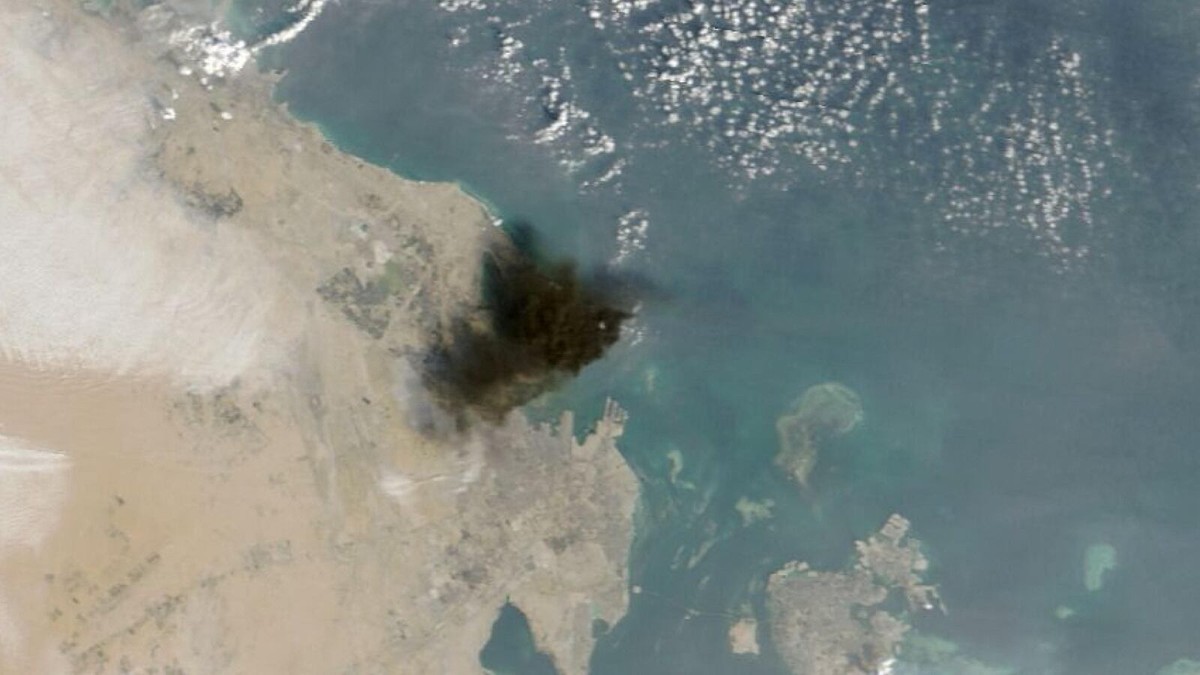
Saudi Arabia spent Wednesday shooting drones out of the sky over Ras Tanura, the refinery and export complex that was the kingdom's main oil gateway to the world until this war rearranged its map. Yemen's Houthis spent the same day telling anyone who would listen that the drones had already done their job.
By Thursday night, Riyadh had confirmed that a second Saudi refinery had been hit, had promised a firm military response, and had still never said a word about what happened at the first one.
The Houthis Say They Hit Saudi Arabia's Biggest Refinery. Riyadh Confirms Four Drones.
Riyadh, Saudi Arabia — The distance between those two sentences is the story of the week in the Gulf, and it is not a small one. Oil markets moved nearly six percent in two sessions on the strength of a claim the Saudi government has neither accepted nor denied. The smoke is real. The damage is not established. And the refinery at the center of it processes 550,000 barrels a day.
What Saree Said, and What Riyadh Would Not Say
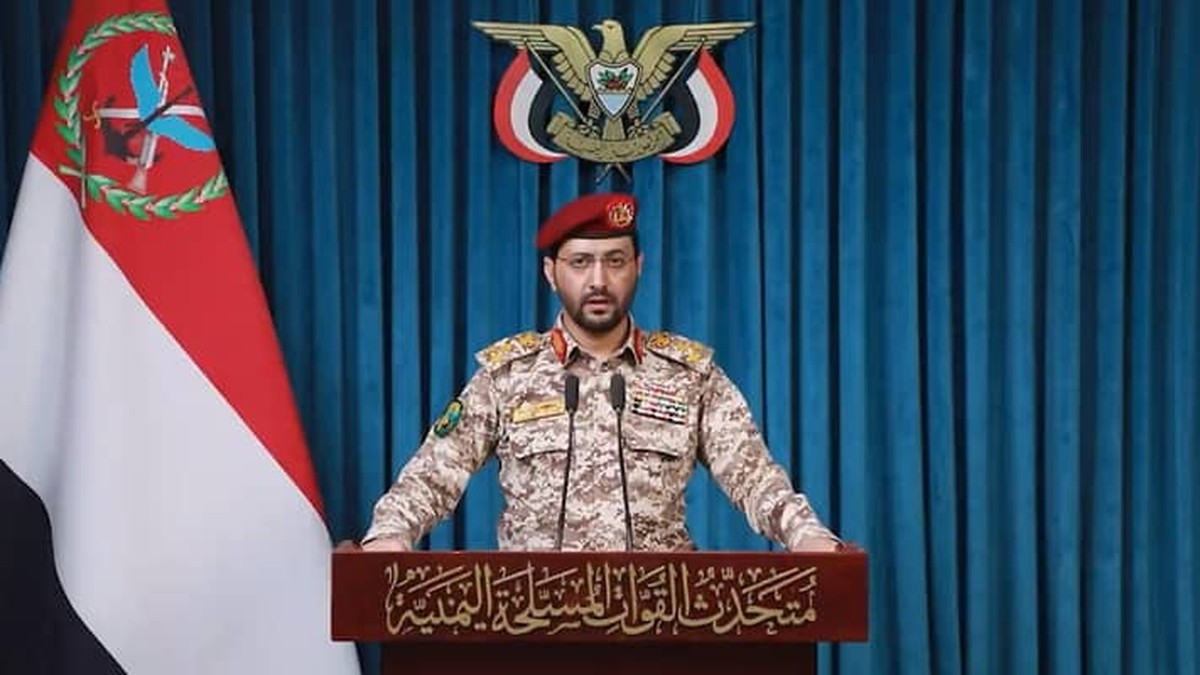
Houthi military spokesman Yahya Saree said on Wednesday that "accurate and direct" strikes had targeted Ras Tanura, which he described as Saudi Arabia's largest oil refinery and a major crude export terminal, and that they had "caused fires to break out at the facility", according to DW. He said the same operation hit Riyadh's financial district and was "carried out in three phases, with strikes hitting their targets accurately".
The Saudi-led coalition told a different, narrower story. Its air defenses had intercepted and destroyed four drones over Ras Tanura in the Eastern Province, spokesman Maj. Gen. Turki al-Malki said, and fragments fell afterward. An initial assessment indicated no casualties. The coalition did not say the refinery was struck.
The Saudi government and Aramco did not immediately respond to requests for comment. A source with knowledge of the matter did confirm an attack on the refinery to Reuters. That is the entire evidentiary base: one combatant's claim, one coalition statement that stops short of it, one anonymous confirmation, and a satellite image nobody disputes.
A Plume the Size of Chicago
Satellite imagery from NASA and Planet Labs showed thick black smoke over the installation, and it was enormous. Reuters put the smoke at about 600 square kilometers, roughly the size of Chicago. It is worth being precise about what that number describes, because a lot of syndicated copies of the story got it wrong.
Al-Monitor, carrying the Reuters dispatch, appended a correction to its own text: the figure refers to the area covered by smoke, not the refinery. That distinction matters. A refinery with 550,000 barrels a day of capacity occupies a few square kilometers, not six hundred. The correction does not diminish the story. It sharpens it. Smoke on that scale implies a serious fire somewhere in the complex, and it does not tell you which unit burned or whether the crude export terminal next door was ever touched.
That terminal is the part the oil market actually cares about.
The Threat, Then the Ports
The sequence matters, because the Houthis announced their target list before they struck it. Saree warned on Telegram on Wednesday that "the port of Jeddah, along with all other Saudi enemy ports along the Red Sea coast, will become targets for our forces should the enemy carry out its threats to bombard the port of Hodeidah". He urged ships to leave the ports immediately.
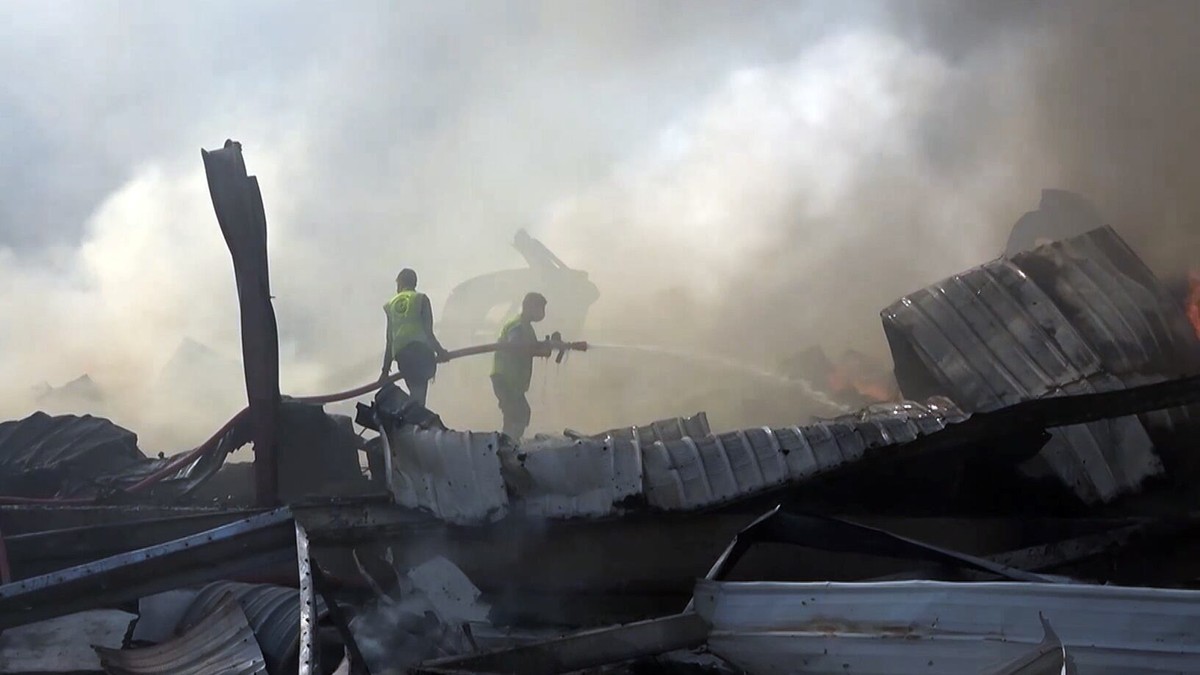
The coalition went ahead. "We targeted operational capabilities at the port of Hodeida", it posted, after warning civilians to evacuate, and it said it struck targets in Saada and Amran as well. No casualties were mentioned in that statement.
Then the Houthis did what they had promised. They said late Wednesday they had attacked the Red Sea ports of Jeddah and Jazan. The coalition confirmed a projectile fell at Jazan port, causing minor damage and no civilian injuries, and the Saudi Press Agency said a Houthi drone was intercepted and destroyed near Jeddah Islamic Port.
No independent confirmation ever emerged that Jeddah port was struck.
Thursday: The Coalition Names a Refinery
On Thursday the coalition finally attached its own words to a refinery. It said the Houthis had attacked Aramco's Jazan refinery in the southwest, near the Yemeni border, a day after hitting the largest refinery in the kingdom. Jazan is designed to process up to 400,000 barrels of crude a day, and it supplies diesel, gasoline and petrochemical feedstocks to domestic and regional markets.
"The Jazan refinery was attacked by the Houthi terrorist militia", al-Malki wrote on X. "Targeting civilians and civilian objects will be met with a firm military response".
The coalition then said it had destroyed a ballistic missile launch platform in the Yemeni port city of Hodeidah, which it said the Houthis had used in Thursday's attack. Explosions echoed over Riyadh the same day as Saudi forces reported downing missiles and drones. Houthi-controlled al-Masirah television reported overnight strikes on Sanaa and blamed Saudi Arabia; the Associated Press said it could not verify the claim.
The Tower in the Financial District
The refinery was never the only target. Saudi civil defense said 11 people were wounded on Tuesday in a strike on a tower in Riyadh's financial district, the tallest building in the capital, which houses the headquarters of the Public Investment Fund, the kingdom's sovereign wealth fund.
It was the second strike on that tower in less than a week. The first, on 19 November, damaged the building and caused no injuries. Civil defense posted an image on Tuesday showing damage about halfway up the facade, in a pattern similar to the earlier attack.
Hitting a sovereign wealth fund's headquarters is a message with nothing to do with oil. The Public Investment Fund is the kingdom's main vehicle for turning oil revenue into everything else it wants to build. A scarred facade is aimed at the credibility of that project, not the barrel price, and unlike the refinery claim it is a hit the Saudi state has openly acknowledged.
Nearly Six Percent in Two Sessions
Markets did not wait for the argument to resolve. Brent crude settled $3.21, or 3.5 percent, higher at $94.61 a barrel on Wednesday, while West Texas Intermediate settled at $83.68, up $1.63, or 2 percent. That extended a two-session rally to nearly 6 percent; Brent had been near three-month lows of roughly $89 earlier in the week.
Thursday's quotes wandered with the clock rather than the news, from $94.62 at 03:30 GMT to $96.25 by 14:25 GMT. Those are snapshots of a moving market, not a disagreement between outlets.
PVM analyst Tamas Varga said the Houthi statement triggered Wednesday's rally by lifting the geopolitical risk premium. Daniel Richards, senior economist at Emirates NBD, put it plainly: "Supply-surplus concerns took a back seat to disruption risk ahead of Sunday's Opec+ meeting".
One analyst quoted by Reuters offered the range traders are now living in: "The new trading range, it appears, is around $88-$97, basis Brent."
The Strait Nobody Can Fix
Behind the refinery headlines sits a shipping lane that has been degraded for months. UK Maritime Trade Operations said an outbound tanker was struck by an unidentified projectile while transiting the Strait of Hormuz on Wednesday, roughly 18 nautical miles east of Khasab, Oman. All crew were accounted for and no environmental impact was reported.
In a separate incident, an explosion went off 50 meters from a tanker on 25 November off the UAE. Security firm Vanguard Tech identified the vessel as the Marshall Islands-flagged Captain Leon. The crew was safe and the ship was undamaged.
There has also been a death. Jordan's foreign ministry said on Thursday that the body of sailor Mohammed Hussam al-Din al-Otaibi had been recovered a day earlier by the UAE coast guard near Ras Al Khaimah, eight days after he went missing in an attack on the ADNOC Logistics and Services vessel Navig8 Messi, which injured 11 of his crewmates.
Iran claims to have hit 22 commercial vessels with mines in a week. The Joint Maritime Information Center said on 22 November that none of those claims had been confirmed by regional authorities.
What Aramco Has Not Said
The single most consequential unanswered question is whether the crude kept flowing. A shipping source told CNN on Thursday that oil loadings at the Ras Tanura terminal were suspended after the attack, and that it was unclear whether they had resumed.
That is one source, and it deserves the caution it is getting. Ship Universe noted that no validated volume loss or damage assessment for the adjacent marine terminal had been established, and that a confirmed drone-defense operation does not prove the terminal stopped operating. Aramco has said nothing at all.
The stakes are not abstract. Saudi Arabia exported 5.4 million barrels a day in September, up more than 20 percent on August, according to JODI data, with its statistics agency reporting a 25.6 percent rise in oil export value. Ras Tanura was the kingdom's main export terminal until the war pushed traffic toward Yanbu on the Red Sea, fed by the East-West pipeline. Both ends of that system are now in range.
The Diplomacy Running Alongside the Bombs
None of this is happening in a vacuum. The Mecca pact nations — Saudi Arabia, Turkey and Pakistan — were due to meet in Islamabad on Thursday, and Pakistan's defense minister, Khawaja Asif, told AFP that the "continuous turmoil south of Saudi Arabia will obviously be one agenda point in the meeting and it is very important". The three signed a mutual defense agreement in August.
In Washington, envoy Jared Kushner said President Donald Trump is keeping "all options on the table" on Iran, and confirmed he has met Iranian representatives several times during the conflict. Iran's foreign minister, Abbas Araghchi, accused Israel of trying to drag the United States into another war after an Israeli minister alleged Tehran was developing chemical weapons.
The United Arab Emirates condemned the Houthi targeting of Saudi territory, saying it "constitutes a flagrant violation of the sovereignty of the Kingdom of Saudi Arabia and a threat to its security and stability".
What to Watch
Sunday's Opec+ meeting lands in the middle of a shooting war, and the cartel's supply arithmetic has been overtaken by disruption risk. Watch whether Ras Tanura loadings resume on a stated schedule, because that single fact will price this crisis more than any statement about intent.
Watch Hodeidah. The coalition has struck the port more than once in a week, and the Houthis have answered by widening their target list rather than shortening it.
Because the question that started all of this is still open. Four drones were shot down, the coalition says. The refinery caught fire, the Houthis say. Smoke covered an area the size of Chicago, and no one disputes that. What is missing is the one party with both the access and the motive to settle it, and that party has not spoken.
Until Aramco or the Saudi government says what burned, every barrel of this rally is priced on a claim. That is not a reason to doubt the fire. It is a reason to keep asking who benefits from the ambiguity.
By Jessica Ali, Staff Writer
This article was produced with AI-assisted research and editorial support. Sources: Reuters, CNN, DW, AFP, AGBI, Seatrade Maritime News, The National, Gulf News, Al Jazeera, Al-Monitor, Roya News, Ship Universe and Saudi Press Agency. Photographs: satellite imagery of the smoke plume over the Ras Tanura complex (Reuters), rescue workers at a factory hit in Hodeidah (EPA via The National), and Houthi military spokesman Yahya Saree (Roya News).
What's Your Reaction?
 Like
0
 Dislike
0
 Love
0
 Funny
0
 Wow
0
 Sad
0
 Angry
0

Editor-in-Chief at Global1.News. Atlanta-based journalist who cuts through the BS and tells it like it is. Lead anchor, host, and the voice you hear when the spin stops and the truth starts.















Comments (0)