
Trump’s New Tariffs Threaten Latin America’s Trade Links and Climate Goals
In a recent Al Jazeera English report titled “What will Trump's latest tariffs mean for the world?” the network outlines a fresh wave of U.S. import duties that could reshape global commerce.
In a recent Al Jazeera English report titled “What will Trump's latest tariffs mean for the world?” the network outlines a fresh wave of U.S. import duties that could reshape global commerce. President Donald Trump has announced tariffs of up to 20 percent on goods from fourteen major trading partners, a list that includes China and the European Union. The measures replace earlier levies that were struck down by the U.S. Supreme Court, signalling a renewed willingness to use trade policy as a tool of economic pressure. While the video focuses on the geopolitical tug‑of‑war between Washington, Beijing and Brussels, the ripple effects will be felt keenly across Latin America, where export‑driven economies, climate‑focused development projects and fragile social contracts already wrestle with the fallout of external shocks.
Why the United States is Turning to Tariffs Again
The Al Jazeera segment explains that the new tariffs are presented as a response to what the administration calls “unfair trade practices” by its partners. By imposing duties of up to 20 percent, the Trump administration hopes to compel renegotiations on issues ranging from intellectual property to market access. The video notes that the previous round of tariffs was halted by the Supreme Court, prompting the president to craft a fresh legal footing for his trade agenda.
Presenter Rishaad Salamat frames the policy as part of a broader “America First” strategy that seeks to protect domestic industries while extracting concessions from abroad. The report highlights that the tariffs are not limited to China and the EU; they extend to a broader coalition of fourteen economies, though the exact composition beyond the two named partners is not detailed in the footage.
According to the analysis of Greg Swenson, a founding partner of Brigg Macadam, the move is also a signal to domestic constituencies that the administration remains vigilant against perceived threats to American jobs. The video suggests that the tariffs are intended to serve both a political purpose at home and a bargaining chip abroad, a dual motive that will inevitably shape how Latin American exporters are treated in U.S. markets.
Immediate Trade Implications for Latin America
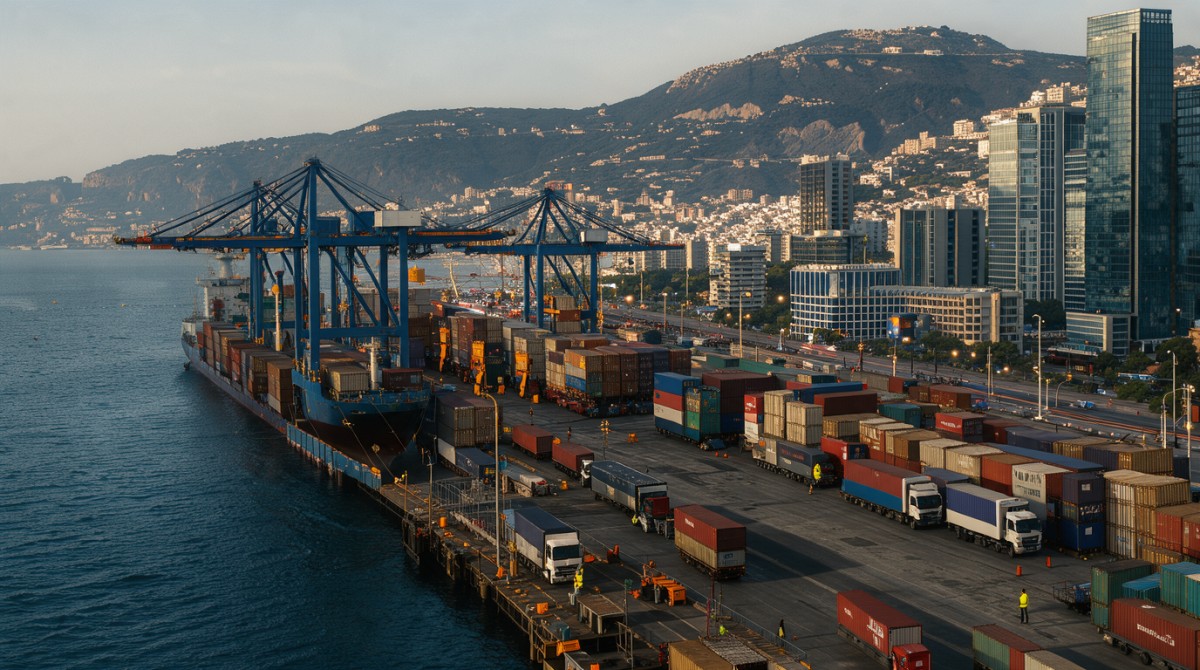
Although the report does not list specific Latin American countries among the fourteen partners, the region’s deep integration with both the United States and the EU means it will feel the pressure of any broad‑based tariff regime. Many Latin American exporters—particularly in agriculture, mining and manufactured goods—already rely on preferential access to U.S. markets under agreements such as the United States‑Mexico‑Canada Agreement (USMCA) and various bilateral treaties.
Should the United States extend the 20‑percent levy to goods that transit through the listed partners, Latin American producers could see their products become more expensive for American buyers. This would erode competitiveness, especially for commodities like soy, coffee and beef that already face tight margins. The video’s focus on China underscores a parallel risk: if Chinese manufacturers shift production to lower‑cost Latin American sites to avoid U.S. duties, the region could experience a surge in foreign direct investment that brings both jobs and environmental challenges.
Moreover, the report’s mention of the EU as a target partner hints at a possible alignment of European and American trade policies. Many Latin American countries have sought to deepen ties with the EU through the EU‑Mexico Global Agreement and similar frameworks. A coordinated tariff front could force the region to navigate a more hostile trade environment on two fronts simultaneously.
Climate Finance and Renewable Energy Projects at Risk
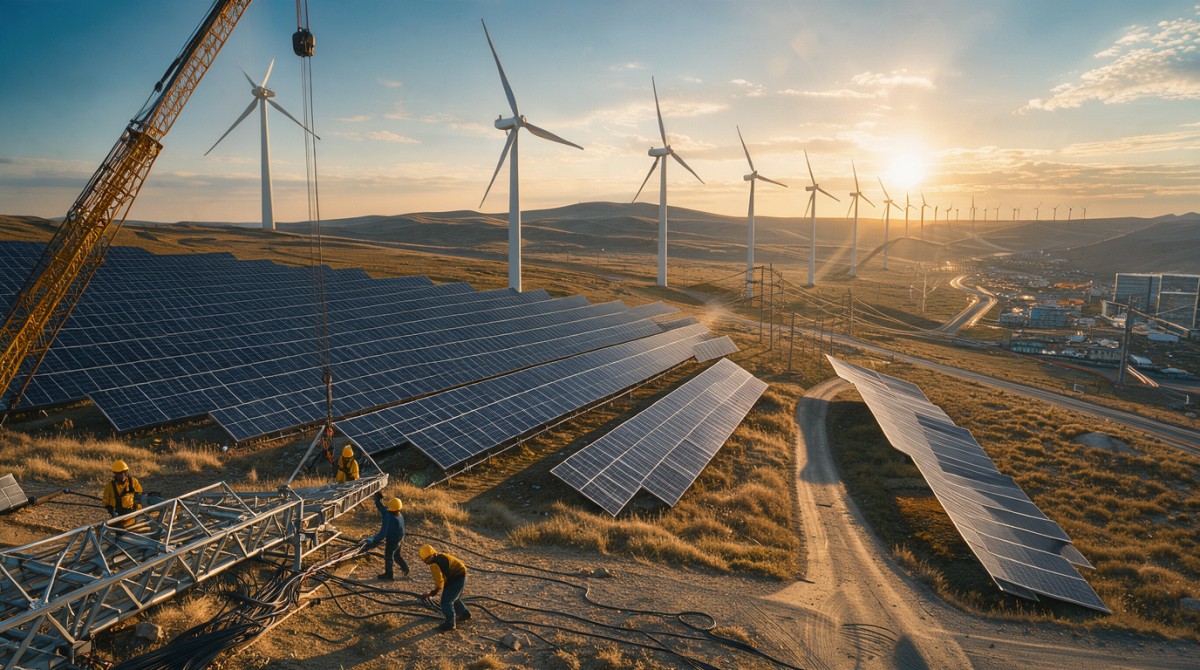
Latin America is currently in the midst of a renewable energy boom, with Brazil, Colombia, Peru and Chile attracting billions in climate‑related financing for wind, solar and hydro projects. The Al Jazeera video does not directly address climate finance, but the broader context of heightened trade tensions raises concerns about the stability of foreign investment flows.
International banks and development agencies often tie climate project financing to broader economic stability. If U.S. tariffs trigger a slowdown in global trade, investors may become more risk‑averse, delaying or scaling back commitments to large‑scale renewable infrastructure. Countries that depend on export revenues to fund climate mitigation—such as Brazil’s hydro‑electric expansion or Chile’s solar farms in the Atacama—could see budgetary pressures mount.
Furthermore, the video’s inclusion of experts like Zichen Wang, deputy secretary general of the Center for China and Globalization, hints at the strategic competition between the U.S. and China for influence in developing markets. Should Chinese firms step in to fill gaps left by retreating U.S. investors, they may prioritize projects that serve their own supply chains over those aligned with local climate goals, potentially compromising environmental standards.
Impact on Indigenous Communities and Environmental Justice
Latin America’s Indigenous peoples have long been frontline defenders of the Amazon, the Andes and the Gran Chaco. Their livelihoods depend on both the health of ecosystems and the stability of markets that purchase their artisanal products. The Al Jazeera report’s focus on tariffs underscores a broader pattern: trade policy can become a lever that reshapes land use and resource extraction.
If higher U.S. duties make Latin American commodities less competitive, governments may turn to alternative revenue streams, such as expanding mining concessions or approving new agribusiness plantations. Such moves often come at the expense of Indigenous territories, exacerbating conflicts over land rights and environmental degradation. The video’s mention of “global trade” as a battlefield suggests that the stakes for local communities are far from abstract.
Conversely, a surge in Chinese investment—potentially spurred by the tariff environment—could bring new infrastructure projects that cut through remote regions. While these projects may promise jobs, they also risk violating the principle of free, prior and informed consent that underpins Indigenous rights in Brazil, Colombia and Peru. The interplay between trade policy and on‑the‑ground environmental justice is a critical, yet under‑reported, dimension of the tariff debate.
Political Repercussions Within Latin America
The video’s panel, featuring analysts like Mujtaba Rahman of the Eurasia Group, points to the geopolitical reverberations of U.S. trade moves. In Latin America, where political landscapes are already fragmented, the tariffs could become a flashpoint for domestic debates over alignment with the United States versus diversification toward China and the EU.
Left‑leaning governments that have pursued sovereign trade strategies—such as Mexico’s recent push for greater self‑reliance or Bolivia’s emphasis on regional integration—may use the tariffs to argue for reduced dependence on the U.S. market. Meanwhile, right‑wing administrations that champion pro‑U.S. ties could double down on negotiating exemptions or seeking bilateral deals to shield key sectors.
Election cycles in several countries, including Brazil’s upcoming gubernatorial races and Colombia’s legislative elections, will likely see the tariff issue woven into campaign rhetoric. Politicians may invoke the tariffs as evidence of external aggression, rallying nationalist sentiment while also promising protective measures for domestic producers. The Al Jazeera report’s framing of the tariffs as a “new front” in trade wars underscores how quickly such policies can become politicized far beyond Washington.
Strategic Paths Forward for the Region
Given the uncertainties outlined in the Al Jazeera video, Latin American policymakers face a complex strategic calculus. One avenue is to deepen regional trade integration through mechanisms like the Pacific Alliance and MERCOSUR, reducing reliance on any single external market. Strengthening intra‑regional supply chains could buffer the impact of external tariffs and create new opportunities for value‑added production.
Another strategy involves leveraging climate finance as a diplomatic tool. By aligning renewable energy projects with the United Nations’ Sustainable Development Goals, countries can attract funding from a broader pool of multilateral donors, insulating climate initiatives from the volatility of trade politics. The video’s emphasis on the role of major powers in shaping trade rules suggests that climate diplomacy may offer an alternative arena for influence.
Finally, civil society and Indigenous movements must be included in any policy response. The Al Jazeera report’s focus on high‑level negotiations reminds us that the real consequences of tariffs are felt on the ground. Ensuring that trade adjustments do not come at the expense of environmental justice will require transparent consultation processes, robust legal safeguards and the strengthening of institutions such as Brazil’s IBAMA and Colombia’s Ministry of Environment.
By Elena Vasquez, Staff Writer
This article was produced with AI-assisted research and editorial support. Reporting is based on the source material cited below. Sources: Al Jazeera English video report (26 November 2026); Al Jazeera English; Global1.News
What's Your Reaction?
 Like
0
 Dislike
0
 Love
0
 Funny
0
 Wow
0
 Sad
0
 Angry
0

Latin America Correspondent at Global1.News. Based in Mexico City, covering politics, economics, energy, and culture across the region. Brings an on-the-ground perspective to stories spanning from the Rio Grande to Patagonia.











Comments (0)