
At least 12 dead as wildfires sweep through northern Algeria
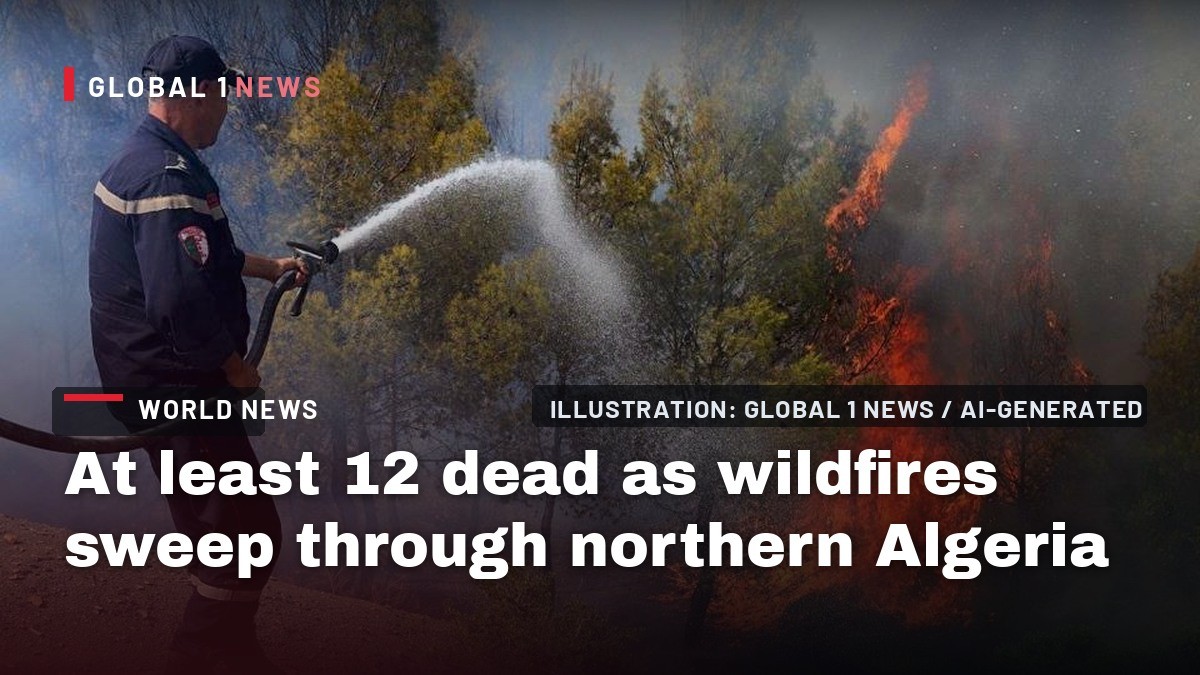
Algeria wildfires: 12 dead, 54 injured as blazes rage across north Algiers, Algeria — The acrid smell of smoke hung over the Kabylie region on Wednesday evening as Algeria confronted one of its most ferocious wildfire days in recent memory.
Algeria wildfires: 12 dead, 54 injured as blazes rage across north
Algiers, Algeria — The acrid smell of smoke hung over the Kabylie region on Wednesday evening as Algeria confronted one of its most ferocious wildfire days in recent memory. At least 12 people have been killed and 54 others injured as more than 150 blazes tore through the forested hills of the country's north, according to the Interior Ministry.
The deaths, confirmed by Interior Minister Said Sayoud in an address to national television, were concentrated in three provinces of the rugged, Mediterranean-facing northeast — a region that has become the recurring epicentre of Algeria's seasonal fire tragedy. As night fell, nearly 70 fire fronts remained active across 13 wilayas, or provinces, with civil protection units and army reinforcements battling the flames into the darkness.
A deadly Wednesday in three provinces
Interior Minister Sayoud told reporters that the confirmed fatalities were spread across Jijel, Béjaïa, and Tizi Ouzou provinces — all mountainous areas known for their dense pine and oak forests. Five people were killed in Jijel, four in Béjaïa, and three in Tizi Ouzou, where the deaths occurred in the town of Boghni, a community nestled in the Djurdjura mountains.
Beyond the dead, the minister said 54 people were being treated for burns, including six in serious condition who had been hospitalised for specialised care. The figures, while still preliminary, underscore the speed and ferocity with which the fires moved through villages and forestland on Wednesday afternoon, when temperatures across the region soared and winds picked up.
Local media reported that many of the injured were residents who had stayed behind to defend their homes and olive groves, a familiar and heartbreaking pattern in a country where wildfires have become a brutal annual ritual.
Authorities mobilise air power and ground crews
Algeria's response to the crisis has been swift and substantial, drawing on a firefighting arsenal that has been expanded in recent years after a series of devastating blazes. Water-bombing aircraft, including Beriev BE-200 amphibian planes and Air Tractor AT-802 fire tractors, were deployed to the worst-hit zones, according to Algerian media reports. These aircraft, which can scoop water from the Mediterranean and release it over burning ridges, have become a critical tool in a country where terrain often makes ground access impossible.
On the ground, civil protection units were supported by elements of the Algerian army, with thousands of personnel working to establish firebreaks and evacuate threatened communities. The Interior Ministry said the priority was protecting human life, with evacuation orders issued for several villages in the path of the advancing flames.
Despite the scale of the response, officials acknowledged that the sheer number of simultaneous blazes — more than 150 reported on Wednesday alone — had stretched resources thin. Nearly 70 fire fronts remained active across the 13 affected wilayas as of Wednesday evening, a figure that suggests the crisis is far from over.
A North Africa in flames
Algeria's ordeal is not isolated. The entire North African region has been gripped by an exceptionally brutal summer, with heatwaves that have shattered records and turned the landscape into tinder. In July 2026, neighbouring Tunisia recorded temperatures as high as 49 degrees Celsius, accompanied by long power outages and an astonishing 900 fires in a single 72-hour window. Algeria, too, saw more than 100 people hospitalised in July after wildfires swept through several provinces.
That July outbreak killed at least six people, a grim precursor to this week's tragedy. The pattern is consistent: extreme heat dries out vegetation, strong winds fan the flames, and the region's mountainous terrain makes firefighting perilous and slow.
For Algerians, the summer of 2026 has felt like a siege. From the coastal plains of Annaba to the hills of Tlemcen, communities have watched plumes of smoke rise on the horizon, wondering which village will be next. The psychological toll is immense, even for a nation that has grown accustomed to fire season.
Why Algeria burns: a landscape built for fire
Northern Algeria's geography is both its beauty and its vulnerability. The Tell Atlas mountain range, which runs parallel to the Mediterranean coast, is covered in dense forests of Aleppo pine, cork oak, and cedar. These forests are not just ecological treasures; they are the lungs of the region and the economic backbone of rural communities that depend on cork harvesting, beekeeping, and livestock grazing.
But this same landscape is highly flammable. The Mediterranean climate — hot, dry summers followed by wet winters — creates ideal conditions for vegetation to grow rapidly and then dry out completely. When summer temperatures spike, as they have this year, the forests become a powder keg.
Wildfires are a natural part of this ecosystem, and Algeria has experienced them for centuries. Local communities have long practised controlled burns and maintained firebreaks. But the scale and intensity of recent fires are unprecedented, overwhelming traditional coping mechanisms and forcing a reliance on modern technology and national coordination.
The climate change amplifier
Climate experts are unequivocal: while forest fires are a regular feature of northern Algeria's summer, climate change is making them worse. Rising global temperatures are leading to increasingly frequent droughts and more intense heatwaves across the Mediterranean basin, creating conditions in which fires ignite more easily and spread more rapidly.
The science is straightforward. Warmer air holds more moisture, drawing it from the soil and vegetation, leaving the landscape drier. When a fire starts — whether from lightning, human negligence, or arson — it encounters fuel that is primed to burn. The result is fires that are larger, hotter, and more destructive than those recorded in previous decades.
For North Africa, a region already grappling with water scarcity and agricultural stress, the implications are profound. The fires are not just a seasonal nuisance; they are a symptom of a changing climate that is reshaping the region's relationship with its land.
Community resilience amid the ashes
In the face of such devastation, the response of ordinary Algerians has been remarkable. In villages across Jijel, Béjaïa, and Tizi Ouzou, neighbours have formed human chains to pass buckets of water, while young men on motorcycles have ferried supplies to isolated hamlets. Women have opened their homes to displaced families, cooking meals for firefighters and volunteers who have worked through the night.
This is the Algeria that rarely makes international headlines: a society that, despite its challenges, mobilises with extraordinary solidarity in times of crisis. The Kabylie region, in particular, has a long tradition of communal self-help, and that spirit has been on full display this week.
Yet there is also anger and grief. Families who have lost loved ones, farmers who have lost their livelihoods, and communities that have watched centuries-old forests turn to ash are demanding answers. Questions are being asked about preparedness, about the adequacy of firefighting resources, and about the long-term strategy for managing forests in a warming world.
What happens next
As of Wednesday evening, the immediate priority remains containing the active fire fronts and treating the injured. The Interior Ministry has promised a full assessment of the damage once the fires are brought under control, and authorities have urged residents to cooperate with evacuation orders.
The coming days will be critical. Forecasts suggest the heatwave may persist, and firefighters are bracing for the possibility of new ignitions. The government has urged citizens to report any signs of fire immediately and to cooperate with evacuation orders, a plea that carries particular weight in a region where many residents are reluctant to abandon their homes and livestock.
Beyond the immediate crisis, however, lies a deeper question: how will Algeria — and North Africa as a whole — adapt to a future in which extreme fire seasons become the norm? The answer will require investment in firefighting infrastructure, yes, but also in forest management, early warning systems, and, crucially, in addressing the root causes of climate change.
For now, the people of northern Algeria are doing what they have always done: fighting, mourning, and rebuilding. The fires will eventually be extinguished, but the scars — physical and emotional — will remain for years to come.
By Amara Diop, Staff Writer
This article was produced with AI-assisted research and editorial support. Sources: BBC News, Al Jazeera, France 24, RFI.
What's Your Reaction?
 Like
0
Like
0
 Dislike
0
Dislike
0
 Love
0
Love
0
 Funny
0
Funny
0
 Wow
0
Wow
0
 Sad
0
Sad
0
 Angry
0
Angry
0

West Africa/Sahel Correspondent at Global1.News. Dakar-based journalist covering politics, security, climate, and development across Francophone and Anglophone West Africa. Tells the stories of a region undergoing profound transformation.








Comments (0)