
Ukraine Says Kim Halted Missile Deliveries to Russia, and Moscow Has Said Nothing
Ukraine's military intelligence says Kim Jong Un personally ordered a temporary suspension of KN-23 missile and artillery deliveries to Russia, and closed North Korean airspace to Russian military transports. Moscow and Pyongyang have not confirmed the claim.
North Korea's arms pipeline to Russia is the one supply line Moscow has never had to defend, and Ukraine's military intelligence now says it has developed a kink. Kim Jong Un personally ordered a temporary halt to ballistic missile and artillery deliveries, according to the agency, and closed North Korean airspace to Russian military transport aircraft. It is a single agency's account, unverified, and unanswered so far by either capital. But the reason given for the pause is the part that matters.
Ukraine Says Kim Halted Missile Deliveries to Russia, and Moscow Has Said Nothing
Seoul — The claim landed on Thursday, and it went straight at the foundation of the alliance Vladimir Putin has spent three years building.
What Ukraine's Intelligence Said
Ukraine's Main Directorate of Intelligence, known by its Ukrainian initials HUR, published an analysis on November 26 stating that North Korea has temporarily suspended military support for Russia. The agency said the decision was taken by Kim Jong Un himself, and it listed three specific measures: a ban on Russian military transport aircraft using North Korean airspace, a suspension of deliveries of KN-23 ballistic missiles, and a pause on the next batch of artillery ammunition. Interfax-Ukraine quoted the agency saying the restrictions "include a ban on Russian military transport aircraft using North Korean airspace, as well as the suspension of deliveries of KN-23 ballistic missiles and another batch of artillery ammunition." HUR also said Pyongyang is holding back a Russian request to expand its contingent inside Russia from 8,500 troops to 50,000. The agency did not say how it learned any of this, and the Kyiv Independent, which reported the analysis, said it could not independently verify it.
The Remark That Started It
HUR traced the rupture to October, and to a single Russian diplomat. Deputy Foreign Minister Andrey Rudenko told reporters in Moscow on October 20 that Moscow had noted South Korean statements about normalizing relations with Russia, and that Seoul's position was that full normalization could come only once what it calls the geopolitical situation changes. "It was not us who initiated the severing of ties with South Korea," Rudenko said, according to TASS. "Seoul joined the sanctions which were imposed on Russia first." He also said the two countries were discussing a resumption of direct flights. According to HUR, Rudenko went further and signaled that the Kremlin would help de-escalate relations between Seoul and Pyongyang. That, the agency said, drew an angry reaction in Pyongyang. North Korean Foreign Minister Choe Son Hui responded in late October that such statements did not correspond to the character of the two countries' allied agreements, and demanded clarification of Russia's policy toward South Korea.
A Record That Does Not Quite Fit
Here is where the account gets thinner than the headlines that followed it. Rudenko's remarks on the record, as carried by TASS and by Turkey's Anadolu Agency, concerned relations between Moscow and Seoul: sanctions, direct flights, the war in Ukraine. The Ukrainian outlet Hromadske, examining the same remarks, reported that they concerned Moscow-Seoul relations rather than inter-Korean ones, and that it could not independently verify the diplomatic conflict the intelligence agency described. There is a second inconsistency. On November 16, President Volodymyr Zelensky said Russia was receiving dozens of ballistic missiles from North Korea every month and warned that the partnership threatened security well beyond Ukraine. Ten days before HUR's report, that was the Ukrainian government's public position: the pipeline was running, not stopping.
The Kremlin Greeting, Ten Days Ago
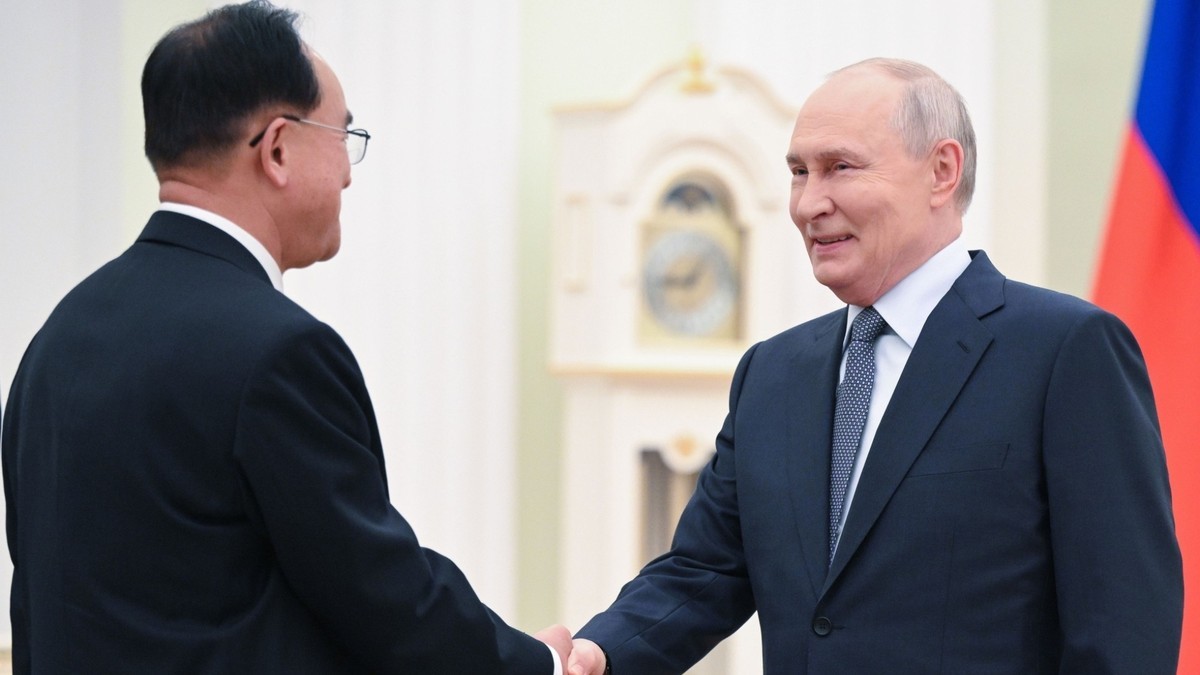
If Pyongyang froze military cooperation in late October, Moscow spent November behaving as though it had not. On November 16, Putin received Jo Yong Won at the Kremlin, one of Kim's closest aides and a secretary of the Workers' Party Central Committee. "We greatly value the practical and friendly relations we have developed," Putin said, according to South Korea's SBS, and he added: "We will never forget the heroic actions of North Korean soldiers who fought shoulder-to-shoulder with the Russian military in the Kursk region." Jo replied that he was conveying Kim's "warmest greetings and highest regards." NK News reported that Jo also voiced support for Moscow's struggle against what Pyongyang calls American neocolonialism and neo-Nazism. Reuters noted that diplomatic contacts had continued through the month, with both men reported to have praised bilateral cooperation. Nothing in the Kremlin's account of that meeting hints at a dispute.
The Numbers Behind the Pause
The scale of what may be on hold is why this matters beyond a diplomatic spat. North Korea has supplied Russia with weapons since 2023 and troops since 2024, under a comprehensive strategic partnership signed during Putin's visit to Pyongyang in June 2024 that includes a mutual defense provision. HUR has previously assessed that North Korea provides between 25 and 40 percent of the artillery ammunition Russian forces fire. More than 100 KN-23 and KN-24 ballistic missiles have reportedly been delivered since June 2023. Kyiv's allies put the number of North Korean troops sent to Kursk Oblast at roughly 14,000. Casualty estimates, though, do not agree, and they are not measuring the same thing: HUR puts North Korean losses at 7,058 service members, including 2,251 irrecoverable losses, while South Korean, Ukrainian and Western officials have said more than 6,000 were killed.
What Has Not Stopped
Nothing in the HUR assessment says the North Korean presence in Russia has ended, and that distinction is the whole difference between a rupture and a slowdown. The agency said units of the 11th Special Operations Corps remain in Russia's Kursk region, serving in the second echelon of the force grouping there. It also said a combined North Korean missile unit has been deployed in Russia's Voronezh region since mid-summer, firing at Ukrainian territory, and that it operates inside Russia's 112th Missile Brigade, part of the 1st Tank Army of the Moscow Military District. In other words: the missiles already in Russian hands are still being launched. What HUR describes is a pause on the next shipments, not a withdrawal of what has already arrived, and the agency framed its own conclusion carefully, saying that further expansion of military cooperation between Moscow and Pyongyang was for now being restrained.
Why the Alliance Grinds
The most revealing part of the HUR analysis is not the diplomacy. It is the list of reasons the partnership is hard to run. The agency cited a low level of operational interoperability between the two armies, a language barrier and a shortage of interpreters, and a lack of adequate logistical support from the North Korean side. It also said Russia's senior military command treats North Korean soldiers with open contempt, describing them, in the agency's words, as "a politically imposed burden." And it pointed to the cost of Kursk, where the North Korean contingent took what HUR called heavy losses. Set against that, the bargain itself explains the friction. HUR said Moscow wants the weapons and components to keep coming, while Pyongyang is looking for equipment, raw materials, technology and financing, plus first-hand experience of modern war. Those are not the ingredients of a partnership collapsing for political reasons. They are the ingredients of one that was always going to be awkward, expensive and, at some point, renegotiated.
Kim's Own Week: Warheads, Not Weapons Shipments
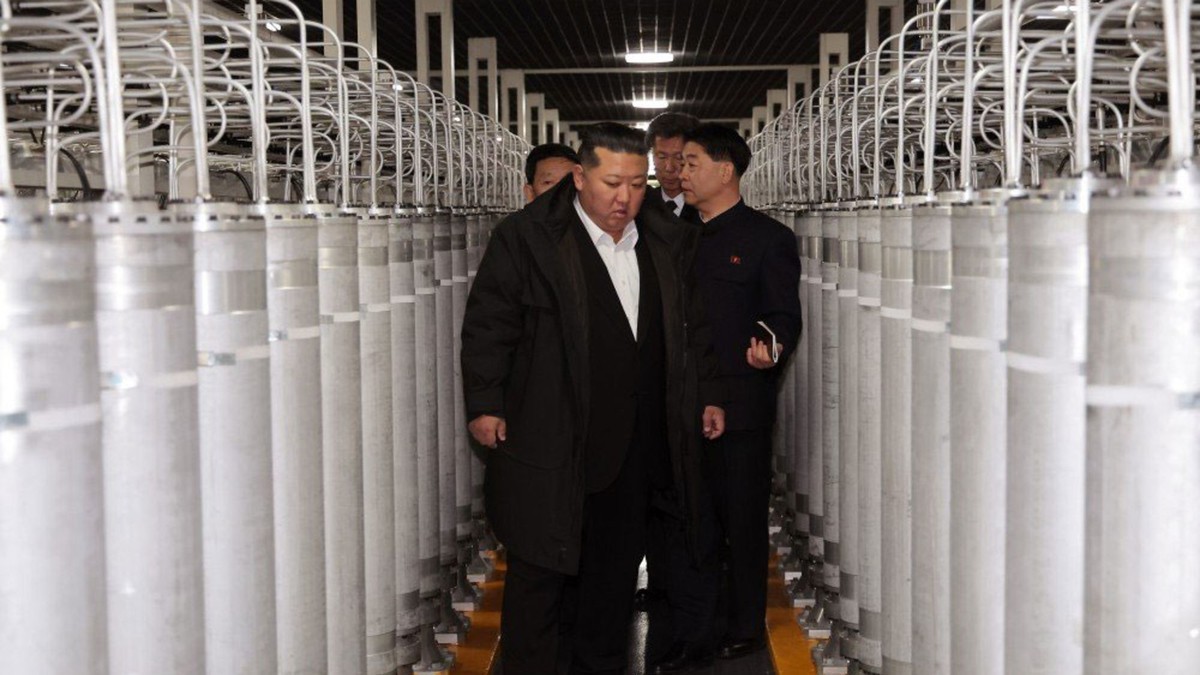
While the arms question hung in the air, Kim spent Wednesday somewhere else entirely. The Korean Central News Agency reported on Thursday that he had inspected two facilities producing nuclear materials, one newly inaugurated and one being expanded, along with a nuclear-powered equipment production base and a nuclear research institute. Photographs showed him walking between dense rows of what analysts identified as gas centrifuges, and past displays that analysts said appeared to include miniaturized tactical warheads of the Hwasan-31 type. Some images were blurred. Kim said the country's nuclear status was "absolutely inviolable," and the KCNA text quoted him saying that "our nuclear capability is now a reality." He called for deploying tactical nuclear weapons "across multiple domains for different missions," according to Reuters. Analysts told Reuters the nuclear-powered equipment base may be the first public glimpse of hardware for a naval reactor program. Yonhap noted it was his fourth such visit to a nuclear facility, after September 2024, January 2025 and June of this year.
What Is Not Established
Five things are worth stating plainly, because the coverage that followed the HUR report did not always say them. First, no North Korean or Russian official has confirmed the pause; Chosun Biz reported that both governments had yet to respond, and Bulgarian outlet Fakti noted there had been no public reaction from Moscow or Pyongyang. Second, the underlying cause is contested, as Hromadske's reporting shows. Third, HUR has not disclosed its sources, and no independent body has verified the operational detail. Fourth, the duration is unknown: the agency called the suspension temporary and did not say what would end it. Fifth, HUR itself does not describe a collapse, only a weakening. The language in circulation has run ahead of the document, which says deliveries were suspended and does not say when or on what terms they might resume. None of that makes the claim false. It makes it a claim.
What to Watch
The next signals will be quieter than a headline. Watch whether Russian military transport flights reappear over North Korean territory, which would suggest the airspace ban has lifted. Watch whether the 50,000-troop request moves, a number that has been in the air since August, when Ukrainian intelligence warned Moscow might ask for up to 50,000 more soldiers. Watch the Tumen River road bridge, inaugurated on September 7 and described by HUR itself as a logistics hub built to speed up bilateral freight. And watch for any Russian or North Korean statement at all, because silence from both capitals this long is itself information. The alliance that was supposed to solve Moscow's manpower problem is now the one being asked to explain itself.
By Jessica Ali, Staff Writer
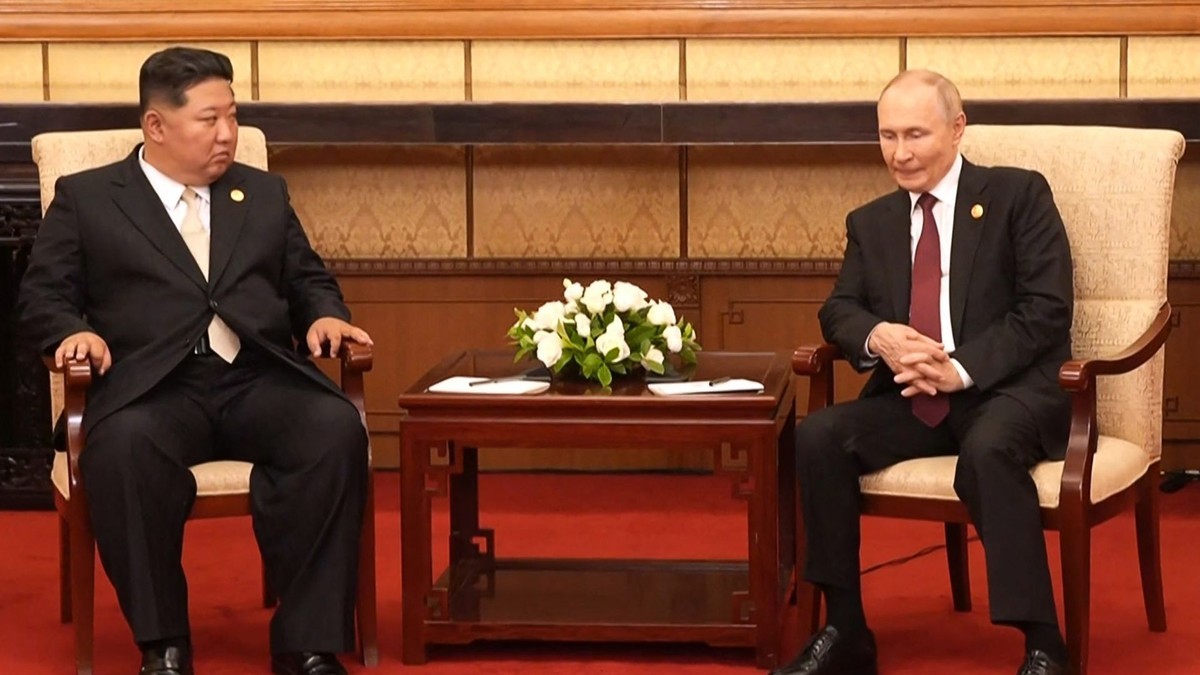
This article was produced with AI-assisted research and editorial support. Sources: Ukraine's Main Directorate of Intelligence (HUR), Reuters, TASS, Anadolu Agency, Interfax-Ukraine, The Kyiv Independent, The Telegraph, NK News, Yonhap, SBS, Chosun Biz, News1 Korea, The Defense Post, The Sacramento Bee and Asharq Al-Awsat. Photographs: the Kremlin handout of President Vladimir Putin greeting Jo Yong Won on November 16, 2026, carried by NK News; a KCNA photograph of Kim Jong Un at a nuclear material production facility released November 26, 2026, carried by CNN and Reuters; and a file photograph of Kim Jong Un and Vladimir Putin meeting in Beijing on September 3, 2025, by AFPTV/Pool/AFP via Getty Images, carried by The Kyiv Independent.
What's Your Reaction?
 Like
0
 Dislike
0
 Love
0
 Funny
0
 Wow
0
 Sad
0
 Angry
0

Editor-in-Chief at Global1.News. Atlanta-based journalist who cuts through the BS and tells it like it is. Lead anchor, host, and the voice you hear when the spin stops and the truth starts.











Comments (0)