
Brazil's E32 Blend Takes Effect as Ethanol Share Rises to 32 Percent
Brazil's mandatory ethanol share in regular petrol rose to 32 percent on 1 August 2026, a temporary CNPE-approved measure expected to cut gasoline imports by about 900 million litres a year. The E32 blend faces a legal challenge from federal prosecutors and industry questions.
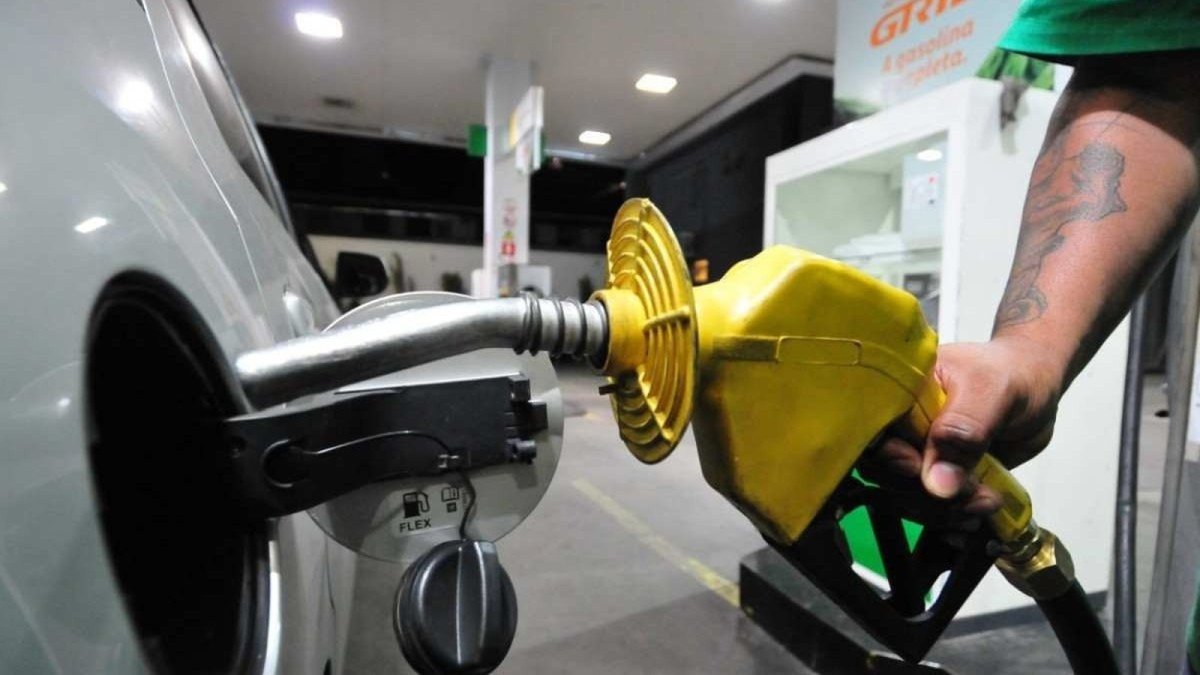
Brazilian drivers filled their tanks on Saturday with a slightly different fuel: regular petrol now carries 32 percent ethanol, up from 30 percent, in a temporary change approved by the country's National Energy Policy Council. The government says the move will shave a few centavos off each litre while cutting Brazil's dependence on imported gasoline at a moment of global oil turbulence. But the shift has also opened a legal fight and raised questions from industry groups about long-term effects on vehicles.
Brazil's E32 Blend Takes Effect as Ethanol Share Rises to 32 Percent
Sao Paulo, Brazil — Article continues below.
The change at the pump
Brazil's mandatory anhydrous ethanol share in regular petrol increased to 32 percent on 1 August 2026 under the E32 blend. Premium petrol remains at 25 percent. The National Agency of Petroleum, Natural Gas and Biofuels granted distributors a 15-day grace period and stations a 30-day period, extended to 60 days in northern states, to adjust supplies. Pump labelling stays unchanged.
The Ministry of Mines and Energy estimates drivers will save about R$0.03 per litre. The national average pump price stood at R$6.56 per litre in the week of 26 July to 1 August 2026, according to the ANP weekly survey. This reduction represents less than half a percent at current levels. Blending occurs at distribution terminals before fuel reaches stations.
Why Brasilia approved it
The National Energy Policy Council approved the increase at its 14 July 2026 meeting on a proposal from the Ministry of Mines and Energy. Minister Alexandre Silveira presented the measure through Resolucao CNPE no. 9/2026, published in an extra edition of the Diario Oficial da Uniao on 30 July 2026. The step forms part of efforts to cut gasoline imports, which account for roughly 15 percent of domestic consumption.
Officials project the higher blend will reduce import needs by about 900 million litres annually. The government frames the policy as a way to use domestic ethanol supplies to ease pump prices amid unsettled global oil markets, including tensions involving the Strait of Hormuz. The measure draws on the 2024 Fuel of the Future law, which allows the council to adjust blends without new legislation.
Brazil's ethanol policies trace back to the Proalcool program launched in the 1970s, which aimed to reduce oil import dependence after global price shocks and established sugarcane as a strategic energy crop. The introduction of flex-fuel engines in 2003 allowed drivers to switch between gasoline and ethanol based on price, fundamentally expanding domestic demand and integrating biofuels into everyday vehicle use across the country.
Petrobras pricing policies tied to import parity have long exposed consumers to international oil volatility, while Brazil continues to import gasoline despite its status as a major crude producer due to limited refining capacity. This structural gap has kept energy sovereignty a recurring priority in national planning.
The recent rise in global oil prices linked to shipping risks in the Strait of Hormuz has intensified pressure on import-dependent economies, reinforcing Brasilia's interest in scaling domestic biofuel production to buffer against external supply disruptions and advance long-term self-sufficiency targets.
The science and the tests
Tests coordinated by the Ministry of Mines and Energy at the Maua Institute of Technology examined light vehicles and motorcycles, including non-flex models. Results showed E32 delivered equivalent performance, fuel consumption, drivability and emissions compared with lower blends. Studies examining a potential E35 blend remain underway.
Nearly all new cars sold in Brazil are flex-fuel models designed to run on high ethanol mixtures. The Ministry states these findings support the immediate rollout while longer-term data collection continues.
What it means for the sugarcane economy
The sugarcane industry union UNICA projects the E32 requirement will generate additional demand of about 1 billion litres of anhydrous ethanol per year. Annual consumption is expected to reach roughly 13.5 billion litres. The sector plans to meet this volume through expanded corn ethanol production and mill capacity increases.
Brazil maintains one of the world's highest biofuel shares in its transport fuel mix. Sugarcane ethanol production supports jobs and economic activity across states including Sao Paulo, Goias and Mato Grosso do Sul, reinforcing the country's position as a regional leader in renewable fuels.
Sugarcane harvesting in Brazil's centre-south region follows an April-to-November cycle, with the 2026 crop already showing steady yields that align with rising ethanol demand from the new blend. This timing supports mills in ramping up output without major infrastructure changes.
Within the sugar-energy sector, ethanol production pairs with bagasse-based electricity cogeneration, supplying power to the grid and adding revenue streams for producers in states such as Sao Paulo and Goias. This dual output distinguishes Brazil's model from the United States corn ethanol approach, which lacks equivalent biomass energy recovery.
Higher domestic ethanol demand could lift prices at the pump, prompting flex-fuel owners to weigh E100 purchases more carefully during periods of tight supply and potentially shifting consumption patterns in major urban markets.
The legal fight and industry concerns
The Federal Prosecution Service filed a public civil action seeking to suspend the blend increase, arguing that sufficient technical studies had not been completed. The Ministry of Mines and Energy intends to maintain the 1 August deadline while contesting the case in court.
Industry groups including Brasilcom, Abicom, Fecombustiveis and SindTRR have raised concerns over the pace of long-term testing. Approximately 15 percent of Brazil's vehicle fleet consists of non-flex models. Professor Marcio D'Agosto of Coppe/UFRJ noted that imported vehicles calibrated for lower ethanol levels, such as those common in the United States and Europe, could experience performance issues or accelerated wear. Economist Pedro Rodrigues of CBIE added that lower energy density in ethanol may offset any pump-price savings through higher consumption volumes.
In Brazilian law, a public civil action allows the Ministério Público Federal to seek collective remedies for diffuse rights such as consumer protection and environmental standards, a process that can run for months while courts weigh technical evidence.
Owners of imported vehicles and motorcycles in cities including Sao Paulo and Curitiba face practical adjustments, as many models are calibrated for lower ethanol content and may require more frequent maintenance or performance monitoring once the blend rises.
The CNPE-approved fraud-fighting measures emphasize ANP-led inspections, full traceability systems, and coordination with state Procon offices to address chronic fuel adulteration issues that have historically affected quality and consumer trust in several regions.
Brazil's biofuel model and the road ahead
The Fuel of the Future law permits the National Energy Policy Council to adjust ethanol blends for up to 180 days, with one possible extension. The current E32 measure is temporary and subject to review. At the same July meeting, the council approved new guidelines to strengthen ANP inspection and traceability measures against fuel fraud and adulteration.
The Lula administration presents expanded biofuel use as part of Brazil's climate strategy and energy sovereignty goals. These policies gain attention ahead of the October 2026 presidential election. Brazil's approach continues to influence biofuel discussions across Latin America, where countries seek to balance domestic production with import dependence.
Brazil ranks among the world's top biofuel producers, and the Fuel of the Future law extends beyond ethanol to include sustainable aviation fuel targets, gradual diesel blend increases, and incentives for biomethane, creating a broader framework for decarbonizing transport and agriculture.
With the October 2026 presidential election approaching, energy policy differences between Lula's administration and potential challengers such as Flavio Bolsonaro are expected to feature in campaign debates, particularly around fuel costs and climate commitments.
Further studies on an E35 blend could open additional demand if technical thresholds are met, though expansion of feedstock crops must navigate tensions between agricultural growth and Amazon conservation priorities already embedded in regional land-use policies.
By Elena Vasquez, Staff WriterThis article was produced with AI-assisted research and editorial support. Reporting is based on sources cited in the article.
What's Your Reaction?
 Like
0
Like
0
 Dislike
0
Dislike
0
 Love
0
Love
0
 Funny
0
Funny
0
 Wow
0
Wow
0
 Sad
0
Sad
0
 Angry
0
Angry
0

Latin America Correspondent at Global1.News. Based in Mexico City, covering politics, economics, energy, and culture across the region. Brings an on-the-ground perspective to stories spanning from the Rio Grande to Patagonia.













Comments (0)