
Trump Announces Historic Hamas Disarmament Deal in Gaza
In a recent i24NEWS report titled "Trump claims Gaza breakthrough, says Hamas agrees to disarm under US plan", US President Donald Trump detailed a phased disarmament deal for Hamas and other armed groups in Gaza. The announcement arrives as Israeli strikes persist across the enclave, with the Gaza Health Ministry reporting six deaths and 34 wounded on Thursday alone.
In a recent i24NEWS report titled "Trump claims Gaza breakthrough, says Hamas agrees to disarm under US plan", US President Donald Trump detailed a phased disarmament deal for Hamas and other armed groups in Gaza. The announcement arrives as Israeli strikes persist across the enclave, with the Gaza Health Ministry reporting six deaths and 34 wounded on Thursday alone. This development intersects directly with Israel's security priorities and the broader regional push for stability involving the IDF and neighboring mediators.
Trump Secures Phased Hamas Disarmament Deal in Gaza as Israeli Forces Maintain Pressure
Jerusalem, Israel – In recent days — US President Donald Trump announced on Thursday that his Board of Peace reached a historic agreement for the complete disarmament of Hamas and other armed groups in Gaza. The deal forms a key milestone in his 20-point plan and involves structured phases where Israeli forces withdraw as disarmament advances. An International Stabilization Force would then coordinate with a new Palestinian police force to secure the territory.
On the Ground
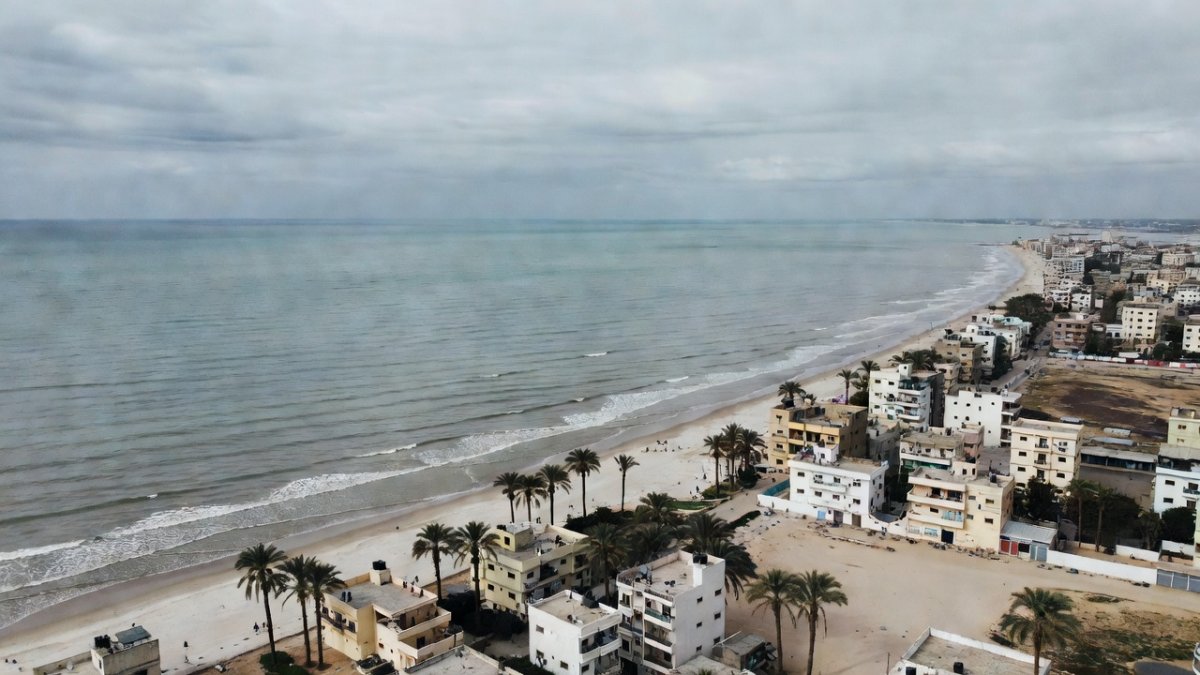
The Gaza Health Ministry confirmed that hospitals received the bodies of six people on Thursday, including an eight-year-old child killed in a strike on a displacement camp in Khan Younis. An 18-month-old baby also died when a home in the Bureij refugee camp was bombed. Israeli strikes continued across Gaza even after the ceasefire took hold.
At least 73,341 Palestinians have been killed and more than 174,000 wounded since Israel launched its campaign following the Hamas raid of October 2023. The IDF maintains operations in 70 percent of Gaza that it currently occupies. Local residents in Khan Younis and Bureij report ongoing displacement amid the strikes.
The October 7, 2023 Hamas attack killed almost 1,200 people in Israel, around two thirds of them civilians, while taking 251 hostages, an event that many Israelis believe Hamas would repeat if given the opportunity. Since the ceasefire, Israel has killed more than 1,000 additional Palestinians according to the Hamas-run health ministry, whose figures the UN regards as reliable. UNICEF reports that Israel has killed more than 20,000 children since October 7, 2023, underscoring the scale of the humanitarian crisis that continues to affect daily life across the enclave.
Ceasefire violations have persisted with Israeli strikes hitting displacement camps and residential areas in Khan Younis and Bureij, leaving residents in constant fear of further bombardment even as talks advance. The humanitarian situation remains dire, with widespread displacement and limited access to services, while the Gaza Health Ministry continues to document new casualties from ongoing operations in the 70 percent of the territory under IDF control.
The Deal in Detail
Board of Peace Director-General Nickolay Mladenov stated that agreement has been reached on the decommissioning of weapons and civilian transition in Gaza after months of difficult negotiations. The disarmament roadmap must be prepared within 14 days, with the National Committee for the Administration of Gaza overseeing inventory and storage under international verification. No weapons will be handed over to Israel or any non-Palestinian body.
Ghazi Hamad of Hamas's negotiating delegation told Al Jazeera that Hamas will not implement any disarmament steps until Israeli forces withdraw from Gaza and advance reconstruction. Hamas insists on inventorying and storing weapons under Palestinian oversight rather than direct handover. The process begins with entry of the National Committee and International Stabilisation Force into Gaza.
Israeli Politics
Moshe Sa'ada of Prime Minister Benjamin Netanyahu's Likud party told Kan News that Israel will not act until Hamas is fully disarmed, including its weapons, tunnels and infrastructure. National Security Minister Itamar Ben-Gvir rejected the deal outright, stating that talks with Hamas should only occur through the crosshairs and that the only acceptable solution involves encouraging emigration and destroying Hamas.
Netanyahu faces a general election at the end of October and trails in the polls while managing his corruption trial. An Israeli official indicated the proposed terms do not meet Israel's demands. The Prime Minister's Office has not yet issued formal approval for the phased withdrawal.
Netanyahu has long boasted to Israeli voters that he can manage relations with the United States, including with Trump, better than any rival, yet he now faces the challenge of juggling domestic political pressure ahead of the October election with demands from the Oval Office. His strategy of playing for time on major decisions may allow him to navigate until election day, but any perception that he is blocking a Trump-backed victory in Gaza risks direct blame from Washington, especially as the US approaches its own midterms in November.
Coalition dynamics add further constraints, with National Security Minister Itamar Ben-Gvir and Finance Minister Bezalel Smotrich maintaining hardline positions that limit Netanyahu's room to maneuver on withdrawal or phased disarmament. The corruption trial continues to shadow his leadership, forcing careful calibration between security demands and the need to project strength to his base.
Regional Context
Trump thanked Egypt, Qatar and Turkiye for their mediation roles in the Cairo talks that produced the framework. Khalil al Hayya, the newly confirmed political leader of Hamas, played a key part in dropping prior objections after Egyptian and Turkish diplomatic efforts. The National Committee for the Administration of Gaza, led by Ali Shaath, welcomed the agreement and said it stands ready to assume administration of the Strip.
Hamas announced the dissolution of its governing body in Gaza on July 6 after nearly two decades in power. The occupied West Bank faces rising violence, with ACLED data showing 2026 on track to become the most violent year in a decade. Finance Minister Bezalel Smotrich continues to push increased Jewish settlement expansion.
The occupied West Bank stands on the verge of intensified violence, with ACLED data indicating 2026 could become the most violent year since monitoring began a decade ago as Jewish settlers, encouraged by extremists in the Netanyahu government and operating with IDF tolerance, attack Palestinians and seize land. Palestinians have begun organizing resistance, raising the prospect of broader escalation beyond Gaza.
Smotrich, an extreme religious nationalist already sanctioned by major Western countries and banned from entering the UK, France, Australia and New Zealand, continues to advocate settlement growth that complicates regional mediation efforts. Egypt will host further Cairo talks involving the US, Qatar and Turkiye to lock in commitments for the second phase of the ceasefire roadmap, while Hamas itself faces severe internal strain after losing most senior figures and thousands of fighters to Israeli operations.
Diplomatic and International Reactions
An official told the BBC that Trump would be very disappointed if Israel decides against withdrawal as part of the plan. Palestinian Islamic Jihad stated that reports of the agreement were inaccurate and expressed reservations about the wording. Ramallah-based journalist Mohammed Najib noted that Hamas concluded construction cannot proceed without accepting disarmament under the US-brokered framework.
The United States and Israel both said they would not allow Gaza to be rebuilt while Hamas retains armed battalions. The Board of Peace holds veto power over decisions, with Trump personally designating his successor and no Palestinian representation on its upper bodies. Talks continue through established channels involving the mediating countries.
US midterm elections scheduled for November create additional urgency for Trump, who cannot claim a decisive win against Iran and therefore needs visible progress in Gaza to demonstrate foreign-policy success. Should Netanyahu appear to obstruct that outcome, Trump has signaled he will assign blame directly, testing the long-standing claim that the Israeli leader manages Washington better than his domestic rivals.
The verification body established under the Board of Peace retains final authority over sequencing, with no Palestinian members on its upper tier, while international pressure mounts on Hamas to move beyond its recent shift toward social and charitable programs such as Quran memorization for youth. Hamas's negotiating position remains constrained by battlefield losses and widespread Palestinian criticism of the October 7 attack's consequences.

Analysis and What This Means
The arrangement requires Hamas to disarm sector by sector before additional Palestinian police are recruited to work with an international coordination force that could include Indonesian and Turkish personnel. Israeli officials remain wary of Turkish involvement in any stabilization role. Implementation hinges on verification that moves in lockstep with Israeli withdrawal from occupied areas.
Netanyahu cannot easily reject a plan publicly announced by Trump, yet domestic political pressures and security concerns limit flexibility. The deal's success would reshape daily security realities for residents in Gaza and the West Bank while testing Israel's relations with Egypt and Qatar.
Forward movement depends on whether the phased process can satisfy both Hamas demands for prior withdrawal and Israeli requirements for verified disarmament. Observers in Jerusalem expect continued IDF operations until concrete steps on weapons decommissioning are confirmed by the international verification body.
A core bargain underpins the proposal: Hamas hands over weapons in exchange for Israeli withdrawal from the 70 percent of Gaza it occupies, yet many Israelis remain convinced that Hamas would launch another October 7-style attack if it retains any capacity. If Israel rejects the plan, Trump is likely to blame Netanyahu publicly ahead of the US midterms; if Hamas stalls on inventory and storage, the international force may struggle to deploy, leaving reconstruction frozen and daily conditions in Gaza unchanged.
Successful sequencing would allow gradual return of displaced residents and reduced strike activity, easing humanitarian pressures, while failure risks renewed escalation in both Gaza and the increasingly volatile West Bank, where settler violence already threatens to spiral beyond current levels.
By Hannah Berg, Staff Writer
This article was produced with AI-assisted research and editorial support. Reporting is based on sources cited in the article.
What's Your Reaction?
 Like
0
Like
0
 Dislike
0
Dislike
0
 Love
0
Love
0
 Funny
0
Funny
0
 Wow
0
Wow
0
 Sad
0
Sad
0
 Angry
0
Angry
0

Israel Correspondent at Global1.News. Based in Tel Aviv, covering Israeli politics, security, technology, and society. Provides balanced, deeply-sourced reporting on one of the most closely-watched regions in the world.














Comments (0)