
BIGBANG at 20: Veteran Returns, the Nostalgia Economy, and the Evolution of Korea's Cultural Power
The evening of August 19, 2026, saw thousands gather at the Mulbit Stage in Yeouido Hangang Park, not for a concert, but for a carefully orchestrated spectacle of memory. As BIGBANG marked its 20th debut anniversary with the release of the digital single "BiiiG," the event—a hybrid listening party and media-art showcase featuring a DJ set, a drone display, and fireworks over the Han River—demonstrated how far the K-pop industry has evolved from its raw idol-manufacturing...
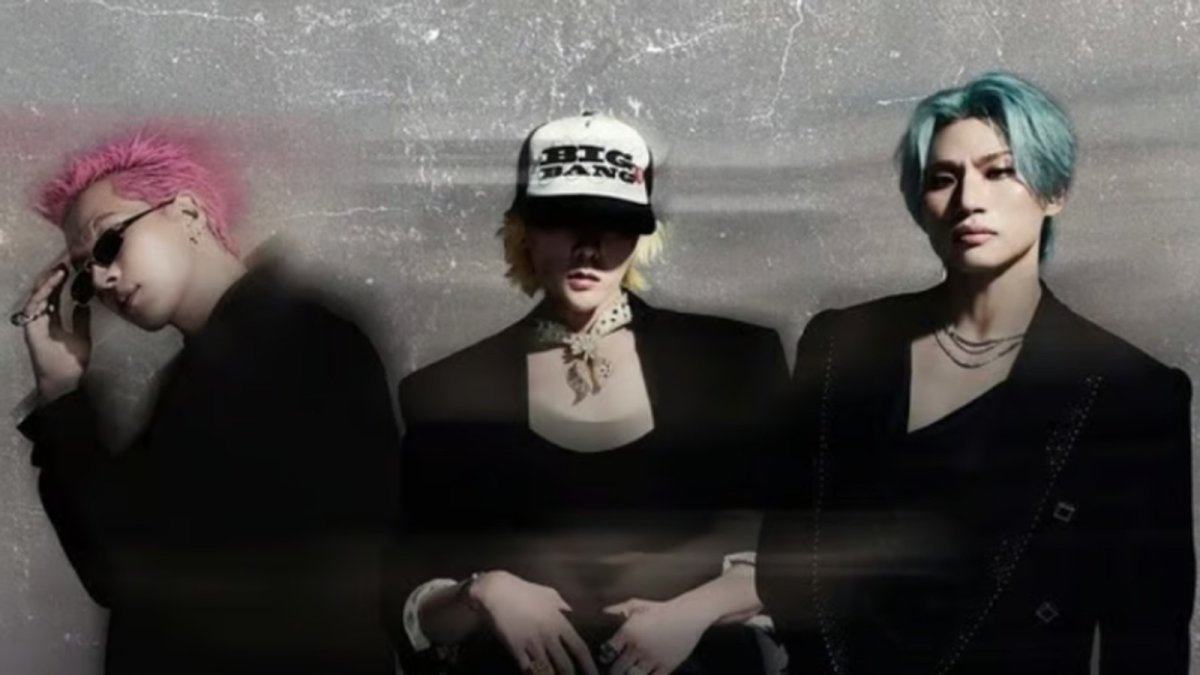
The evening of August 19, 2026, saw thousands gather at the Mulbit Stage in Yeouido Hangang Park, not for a concert, but for a carefully orchestrated spectacle of memory. As BIGBANG marked its 20th debut anniversary with the release of the digital single "BiiiG," the event—a hybrid listening party and media-art showcase featuring a DJ set, a drone display, and fireworks over the Han River—demonstrated how far the K-pop industry has evolved from its raw idol-manufacturing origins. The gathering was less a celebration of a single band than a testament to the institutional durability of Korea’s cultural export machine, which is now learning to monetize its own history.
BIGBANG at 20: Veteran Returns, the Nostalgia Economy, and the Structural Evolution of Korea’s Cultural Power
Seoul, South Korea – August 22, 2026 — The spectacle over the Han River was not merely a fan service; it was a strategic deployment of cultural capital. BIGBANG’s anniversary event, live-streamed via Coupang Play and featuring no live artist performance, signaled a new phase in the Korean Wave. As the industry pivots from a growth-at-all-costs model to one that prizes legacy and longevity, the return of veteran acts is reshaping the economics of Korean popular music and, by extension, the nation’s soft-power calculus.
The Numbers Behind the Nostalgia: A Market Shift Toward Legacy Acts
The commercial response to BIGBANG’s return offers a quantitative glimpse into this shift. The group’s third world tour, "BIGBANG 2026 2027 WORLD TOUR XX: COSMOS," opened general sales with over 210,000 users logged in simultaneously. The three Goyang concerts, scheduled for August 21-23 at the Goyang Sports Complex Main Stadium, sold out within 22 minutes—the highest ticket demand among all events sold through Coupang Play this year. This demand is not an isolated phenomenon. According to data from the Korea Performing Arts Box Office (KOPIS), popular-music ticket sales in South Korea reached approximately 452.7 billion won in the first half of 2026, a 9.6 percent increase year-on-year, now accounting for 55.9 percent of total performance ticket sales. The market is not merely growing; it is maturing, with a significant portion of that growth driven by audiences willing to pay premium prices for nostalgia.
Breaking the "Seven-Year Curse": Institutional Roots of K-Pop’s Fledgling Longevity
To understand why BIGBANG’s 20th anniversary is structurally significant, one must examine the institutional history that made such longevity rare. The so-called "seven-year curse" is not a cultural superstition but a legal artifact. In July 2009, the Fair Trade Commission introduced a standard exclusive contract that established seven years as a key limit for entertainment agreements. That same month, three members of TVXQ sought a court injunction against SM Entertainment over contracts that extended to 13 years, a landmark case that forced the industry to confront its exploitative labor practices. The subsequent standardization of the seven-year term created a structural churn: groups would debut, peak, and often dissolve as contracts expired. Shinhwa’s years-long fight over trademark rights and Beast’s 2016 departure from Cube Entertainment (continuing as Highlight before eventually regaining their name) illustrate the legal and reputational battles that defined the industry’s first generation of veterans.
The Data on Durability: Why Most Groups Never See a Decade
The statistical reality of K-pop group longevity is stark. A study by Professor Kim Jung-sup of Sungshin Women’s University, which examined 1,182 Korean idol groups that debuted between 1996 and 2025, found that the average period of activity was just 4.12 years. Only about 55 percent of groups remained active three years after debut; that figure drops to 36.6 percent after five years and a mere 17.9 percent after a decade. Perhaps most tellingly, only 19 groups—approximately 1.6 percent of the total—ever sold more than one million copies of a single album. These figures contextualize BIGBANG’s achievement: surviving two decades is not merely a matter of artistic endurance but of navigating a system designed for rapid turnover. The group’s reshaping into a trio following the departures of T.O.P and Seungri, and its subsequent release of "BiiiG"—which rose to No. 1 on several Korean digital music charts—represents a rare successful navigation of both contractual and reputational crises.

The Counter-Trend: When Leaving Early Becomes a Strategic Choice
Interestingly, the current landscape also features a counter-trend: younger idols leaving successful groups not because of failure, but as a strategic career choice. Heeseung’s departure from ENHYPEN in March 2026, following discussions with BELIFT LAB, and Mark’s exit from NCT when his contract with SM Entertainment ended in April 2026 after nearly a decade, both occurred while their groups remained commercially viable. This suggests a generational shift in how idols perceive their careers. For the fifth-generation act CORTIS, which reached No. 3 on the Billboard 200 with "GREENGREEN" this year, the path forward may not involve the same grueling two-decade trajectory. The industry is bifurcating: veterans like BIGBANG and BTS—whose comeback album "ARIRANG" spent three straight weeks atop the Billboard 200 after all seven members completed military service—command legacy audiences, while newer acts operate in a more fluid, individual-centric market.
Cultural Diplomacy and the Nostalgia Economy: Soft Power Through Shared Memory
The wave of veteran returns—I.O.I’s 10th-anniversary reunion sending "Suddenly" to No. 1 on Melon’s TOP100 and HOT100 charts, SeeYa’s comeback after 15 years, Wanna One’s reunion after roughly seven years, and anniversary projects for Secret, Boyfriend, and Click-B—is more than a commercial trend. It represents a deepening of Korea’s cultural soft power. The Korean Wave has historically been driven by novelty: new groups, new sounds, new visual aesthetics. The nostalgia economy, by contrast, builds on accumulated emotional capital. When a 20-year-old fan like Kwon Sun, who discovered BIGBANG through YouTube and did not know the group once had five members, attends the Goyang concert alone, she is participating in a cultural memory that predates her fandom. Conversely, Park Min-seok, born in 1995, who grew up with BIGBANG and owns nearly every album on CD, represents the original audience now returning with disposable income. This intergenerational fan base transforms K-pop from a transient youth culture into a durable component of Korean national identity—a shift with significant implications for how Korea projects its cultural influence globally.
Structural Implications for Korea’s Creative Economy
The economic implications extend beyond ticket sales. The world-tour pop-up that opened August 14, 2026, offering 58 official merchandise items including a redesigned version of the group’s signature light stick, illustrates how legacy acts are being integrated into a broader creative-economy ecosystem. The Coupang Play live-streaming of the Hangang event, with seated sections requiring advance booking via the app, demonstrates the convergence of entertainment and technology platforms that characterizes Korea’s digital economy. This is not merely a concert business; it is a multiplatform cultural enterprise. The KOPIS data showing popular music’s growing share of total performance ticket sales suggests that the Korean government’s long-standing support for the cultural content industry is yielding a self-sustaining ecosystem. As the industry matures, the question is no longer whether K-pop can produce global hits, but whether it can sustain the institutional frameworks—intellectual property rights, contract fairness, and artist welfare—necessary to support a multi-generational cultural economy.
Looking Forward: The Second Generation of the Korean Wave
As BIGBANG’s world tour moves beyond Goyang, the broader significance of this moment is becoming clear. The Korean Wave is entering its second generation, characterized not by explosive growth but by institutional consolidation. The return of veteran acts, the strategic departures of younger idols, and the data-driven approach to fan engagement all point to an industry that has learned from its past excesses. For Korea’s cultural diplomacy, this means a more stable, predictable source of soft power—one built on the accumulated trust of multiple generations of fans. The fireworks over the Han River on August 19 were not just a celebration of one group’s anniversary; they were a signal that Korea’s cultural exports have achieved a durability that rivals its industrial ones. The challenge ahead lies in ensuring that the institutional structures supporting this longevity—from contract law to intellectual property protection—evolve to match the ambitions of the artists and the expectations of their fans.
By Prof. David Park, Staff Writer
This article was produced with AI-assisted research and editorial support. Reporting is based on sources cited in the article.
What's Your Reaction?
 Like
0
Like
0
 Dislike
0
Dislike
0
 Love
0
Love
0
 Funny
0
Funny
0
 Wow
0
Wow
0
 Sad
0
Sad
0
 Angry
0
Angry
0

East Asia/Technology Correspondent at Global1.News. Seoul-based voice covering Korean politics, technology, business, and culture. Analyzes how technology and geopolitics intersect across East Asia.











Comments (0)