
China funding UK research and sending it to Beijing's spies, MI5 warns
In early October 2026 the United Kingdom’s domestic security service, MI5, issued an unprecedented public warning that Chinese intelligence agencies are exploiting British academic research to bolster their espionage capabilities.
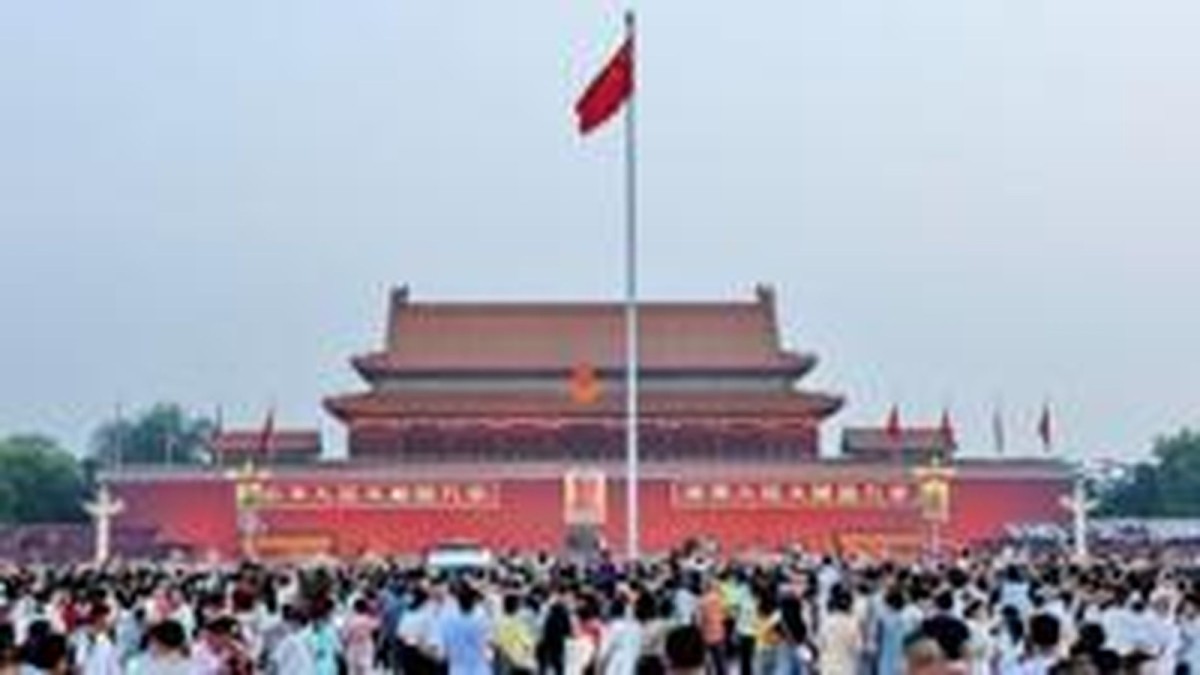
In early October 2026 the United Kingdom’s domestic security service, MI5, issued an unprecedented public warning that Chinese intelligence agencies are exploiting British academic research to bolster their espionage capabilities. The alert, which singled out the China General Technology Research Institute (CGTRI) – an entity with “very strong ties” to the Ministry of State Security (MSS) – has reverberated across the UK’s higher‑education sector and raised fresh questions about the strategic calculus of Sino‑British scientific collaboration. The episode must be understood against a backdrop of intensifying geopolitical rivalry, the United Kingdom’s own legislative response to foreign interference, and the broader pattern of Beijing’s use of academic front organisations to acquire advanced technologies and sensitive knowledge.
Scope of the alleged espionage network
MI5’s alert identified more than one hundred academics linked to British institutions who have, unwittingly or otherwise, contributed to research projects funded through CGTRI. The agency stressed that many of these scholars operated “in good faith,” unaware that the funding conduit was a front for the MSS. The research topics cited – artificial intelligence, cyber‑security, covert communications systems and steganography – are precisely the domains that underpin modern intelligence collection and covert operations. By channeling UK expertise into these fields, the MSS can accelerate its technical capacity for espionage, according to the security service.
The alert also noted that the CGTRI is sometimes translated as the China Academy of General Technology (CAGT), underscoring the opaque nomenclature that Beijing employs to mask state‑linked entities. The Ministry of State Security, China’s principal civilian intelligence organ, traditionally focuses on internal security and foreign intelligence gathering; its involvement in funding foreign research marks a strategic shift toward leveraging external scientific ecosystems to close technological gaps.
Legal and policy context in the United Kingdom
The warning arrives within the framework of the National Security Act of 2023, which introduced a specific offence for “assisting a foreign intelligence service” where the individual ought to have reasonably known the nature of the assistance. MI5’s communication warned that academics who fail to disengage from CGTRI‑funded projects could face criminal charges under this legislation. Security Minister Dan Jarvis underscored the seriousness of the breach, stating that the alert “exposes attempts by Chinese intelligence to covertly benefit from the expertise and research of our academics.”
In response, the minister has written to all university vice‑chancellors urging an immediate termination of ties with CGTRI. Universities UK, representing over 140 institutions, has pledged to review the alert and to bolster due‑diligence mechanisms. Its chief executive, Vivienne Stern, highlighted recent investments in risk‑assessment and research‑security processes, while reaffirming the sector’s commitment to international collaboration – a delicate balance between openness and safeguarding national interests.
International dimensions of the threat
MI5’s warning did not emerge in isolation. Earlier in June, the agency coordinated a joint alert with intelligence partners in the United States, Canada, Australia and New Zealand, which warned of Chinese military intelligence targeting professional networking sites and online job platforms. This multilateral effort reflects a shared perception among Western allies that Beijing is employing a “whole‑of‑government” approach to acquire strategic knowledge, blending overt academic partnerships with covert procurement channels.
The coordinated nature of the warning suggests that the CGTRI operation is part of a broader, trans‑national espionage campaign. By embedding front organisations within legitimate research ecosystems, Chinese intelligence can harvest cutting‑edge findings while maintaining plausible deniability. The UK alert therefore serves as a template for allied nations to scrutinise similar academic conduits that may be feeding the MSS or the People’s Liberation Army’s research arms.
Chinese diplomatic rebuttal and the narrative battle
The Chinese Embassy in London swiftly dismissed the accusations as “imaginary and purely fabricated,” asserting that all exchanges between UK universities and China are “voluntary” and “mutually beneficial.” The embassy claimed to have made “solemn representations” to the UK, urging intelligence authorities to cease “spreading falsehoods” and to stop undermining educational cooperation. This defensive posture aligns with Beijing’s broader diplomatic strategy of portraying foreign scrutiny as politically motivated interference, thereby seeking to defuse criticism while preserving access to overseas research networks.
The embassy’s statements also underscore the challenge for Western policymakers: how to counter covert influence without alienating legitimate academic collaboration. The Chinese narrative frames the issue as an attack on the free flow of knowledge, a theme that resonates with many scholars who value open scientific exchange. Consequently, any policy response must be carefully calibrated to target the covert mechanisms rather than the broader bilateral academic relationship.
Implications for UK research institutions
For British universities, the alert triggers a reassessment of partnership vetting procedures. While many institutions have already instituted risk‑assessment frameworks, the revelation that a front company could obscure its state‑security links raises questions about the depth of existing due‑diligence. Universities UK’s statement that the sector has “significant investments” in security processes suggests a readiness to adapt, yet the practical implementation of stricter controls will likely vary across institutions.
The potential fallout includes a chilling effect on collaborations with Chinese partners, especially in fields deemed sensitive by the National Security Act. Researchers may face increased administrative burdens, such as mandatory disclosures of funding sources and heightened scrutiny of joint publications. Moreover, the prospect of criminal liability could deter scholars from engaging with any Chinese‑funded projects, even those that appear benign, thereby reshaping the landscape of international research cooperation.
Strategic ramifications for Sino‑British relations
Beyond the academic sphere, the CGTRI episode reflects a deeper strategic contest. The United Kingdom, like many Western states, is seeking to protect its technological edge while managing the economic and diplomatic benefits of Chinese student enrolments and research funding. Conservative MP Sir Iain Duncan‑Smith, co‑chair of the Inter‑Parliamentary Alliance on China, warned that the “dependence on Chinese students” has opened British universities to “all sorts of problems,” calling for tighter security checks.
From Beijing’s perspective, securing advanced research through foreign partnerships is a core component of the “Made in China 2025” ambition and the broader “dual‑use” technology strategy. By embedding MSS‑linked front organisations within reputable foreign institutions, China can accelerate its acquisition of AI, cyber‑security and covert communications expertise without overtly violating international norms. The UK’s public exposure of this mechanism may compel Beijing to either recalibrate its approach or intensify covert efforts, potentially shifting towards more covert channels such as private think‑tanks or non‑governmental research consortia.
Future outlook and policy recommendations
The MI5 alert marks a pivotal moment in the ongoing contest over scientific sovereignty. Policymakers must balance the imperative of protecting national security with the need to preserve the openness that underpins world‑leading research. A pragmatic path forward could involve: (1) establishing a centralized registry of foreign‑funded research projects with mandatory transparency disclosures; (2) enhancing inter‑agency coordination to identify and flag front organisations; (3) providing clear guidance to academics on the legal thresholds for “reasonable knowledge” of foreign state involvement, thereby reducing inadvertent breaches of the National Security Act.
In parallel, diplomatic engagement with China should continue, but with a firmer articulation of the United Kingdom’s expectations regarding transparency in research funding. By signalling that covert exploitation of academic work will be met with legal consequences, the UK can deter similar front‑company operations while preserving legitimate scholarly exchange. The episode also underscores the importance of allied intelligence sharing, as coordinated alerts enable a unified response to a shared threat. As the geopolitical rivalry between Beijing and Western democracies deepens, the integrity of academic collaboration will remain a contested frontier, demanding vigilant oversight and calibrated policy responses.
This article was produced with AI-assisted research and editorial support. Reporting is based on the source material cited below. Sources: BBC News China; bbc.co.uk; Global1.News (02 October 2026).
By Prof. Marcus Chen, Staff Writer
What's Your Reaction?
 Like
0
Like
0
 Dislike
0
Dislike
0
 Love
0
Love
0
 Funny
0
Funny
0
 Wow
0
Wow
0
 Sad
0
Sad
0
 Angry
0
Angry
0

World Politics Analyst at Global1.News. Based in Beijing, covering US-China relations, global trade, and geopolitical strategy. Brings deep analytical perspective to the power dynamics shaping international affairs.















Comments (0)