
October 1: Nigeria’s journey has been too hard for many – Tinubu
President Bola Tinubu used his nationwide broadcast on October 1, 2026, to mark Nigeria’s 66th Independence Anniversary, and in doing so he offered a candid appraisal of the nation’s collective experience.
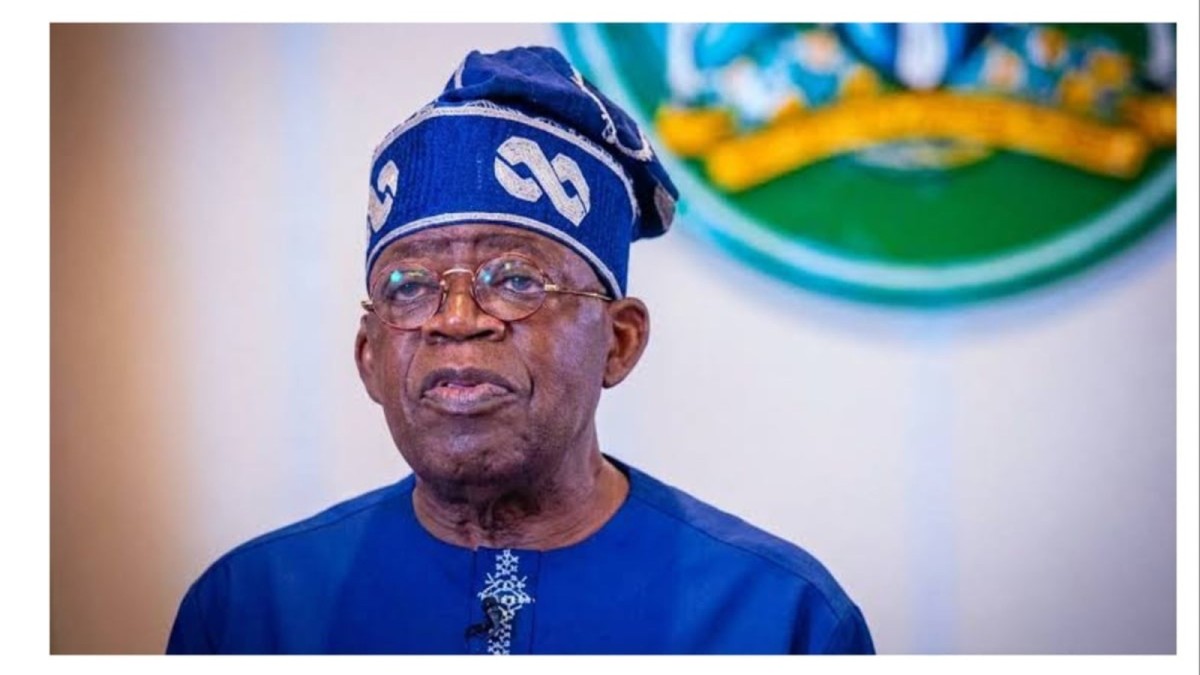
President Bola Tinubu used his nationwide broadcast on October 1, 2026, to mark Nigeria’s 66th Independence Anniversary, and in doing so he offered a candid appraisal of the nation’s collective experience. He acknowledged that the journey of the country has been “too hard for too many,” a phrase that resonated across the archipelago as he reflected on the cycles of hope and disappointment that have shaped everyday life. Tinubu’s remarks, delivered in a tone that blended gratitude, realism and optimism, were framed by a tribute to the ordinary Nigerians—farmers, traders, teachers and young entrepreneurs—who, in his view, constitute the backbone of the nation’s endurance.
Recognition of hardship amid celebration
In the context of an Independence Day address, Tinubu’s admission that “our journey has not always been easy” stood out as a rare moment of political candor. He noted that many citizens have lived through “moments of great hope and periods of profound disappointment,” signalling an awareness of the uneven distribution of progress across the federation. By foregrounding the hardships endured—war, military rule, economic crises, insecurity and political upheaval—he placed current challenges within a historical continuum, reminding listeners that the nation’s resilience has always been tested.
The president’s acknowledgment was not merely rhetorical; it was anchored in specific references to the people who keep the country moving. He thanked the Armed Forces and security services for placing themselves “in harm’s way so that others may live in peace,” linking the sacrifices of the security sector to the everyday efforts of farmers, traders, teachers and young business owners. This juxtaposition underscored a narrative that the nation’s survival depends on both the protection offered by the state and the industrious spirit of its citizens.
The symbolic role of the farmer
When Tinubu highlighted “the farmer who wakes up before sunrise to farm,” he invoked an image that is deeply rooted in Nigeria’s agrarian heritage. The farmer, in his words, represents the foundational labor that feeds the nation and sustains its rural economies. By emphasizing the early‑rising farmer, the president reminded listeners that agriculture remains a critical sector, even as the country grapples with urbanisation and industrialisation.
This reference also carried a subtle policy implication. By celebrating the farmer’s perseverance, Tinubu hinted at the need for continued support to the agricultural sector—be it through infrastructure, credit facilities or security measures that protect farms from insurgency and banditry. While the speech did not specify new programmes, the symbolic elevation of the farmer signals a political acknowledgement of agriculture’s centrality to national stability.
The trader as a pillar of daily commerce
Equally prominent in Tinubu’s address was the trader who “opens her shop every morning, hoping to make sales.” The gendered reference to a female trader spotlights the vital role women play in Nigeria’s informal economy. By naming the trader, Tinubu recognised the countless market women and small‑scale merchants whose daily hustle fuels local economies and provides livelihoods for families across the country.
The trader’s mention also alludes to broader economic challenges. The phrase “hoping to make sales” subtly acknowledges the uncertainties that small business owners face—from fluctuating commodity prices to security concerns that can disrupt market activities. In this way, the president’s tribute serves as an implicit call for policies that improve market conditions, enhance consumer confidence and protect commercial hubs from insecurity.
Teachers as custodians of future hope
In celebrating “the teacher who still believes in her pupils,” Tinubu turned the spotlight to education, a sector that has long been a barometer of national development. By emphasizing belief, he underscored the moral and motivational role teachers play, especially in a context where resources are often stretched and outcomes uneven.
The reference to teachers also resonates with broader continental concerns about quality education and human capital development. While Tinubu did not detail specific reforms, the acknowledgment of teachers’ dedication hints at an awareness that sustaining Nigeria’s future hinges on nurturing the next generation, even amid economic and security pressures.
Young entrepreneurs and the spirit of resilience
Perhaps the most forward‑looking segment of Tinubu’s address was his nod to “the young business owner who refuses to let his situation kill his dream.” This portrayal of youthful entrepreneurship captures a demographic that is increasingly central to Nigeria’s economic diversification. Young business owners, often operating in the informal sector or nascent tech ecosystems, embody a drive to innovate despite systemic constraints.
By highlighting the refusal to surrender dreams, Tinubu reinforced a narrative of resilience that aligns with the broader African story of youthful dynamism confronting structural challenges. The president’s words suggest an implicit endorsement of policies that lower barriers for young entrepreneurs—such as access to finance, regulatory simplification and protection from insecurity—though he stopped short of outlining concrete measures.
Security as the foundation of progress
Security featured prominently in Tinubu’s speech, both in his gratitude to the Armed Forces and security services and in his broader acknowledgment of “insecurity” as one of the nation’s enduring trials. By linking the safety provided by these institutions to the ability of farmers, traders, teachers and entrepreneurs to pursue their daily activities, the president underscored the interdependence of security and economic vitality.
The address implicitly reaffirmed the government’s commitment to maintaining peace, a prerequisite for any substantive development agenda. While the speech did not enumerate new security initiatives, the emphasis on the sacrifices of security personnel serves as a reminder that stability remains a core pillar upon which the hopes of ordinary Nigerians rest.
Hope as the unifying thread
Closing his broadcast, Tinubu returned to a theme of optimism: “Through every difficulty, generations of Nigerians have continued to believe in one thing: that this country of ours will be better.” This refrain ties together the varied experiences he described—farmers, traders, teachers, young entrepreneurs—and positions their collective perseverance as the engine of national progress.
By framing the nation’s hardships within a narrative of enduring hope, Tinubu aligned his message with a broader African tradition of resilience in the face of adversity. The address, while acknowledging the weight of past and present challenges, ultimately called on every Nigerian to sustain the belief that the country’s future can improve, provided that the indomitable spirit of its people continues to be matched by supportive policies and a secure environment.
This article was produced with AI-assisted research and editorial support. Reporting is based on the source material cited below. Sources: Daily Post Nigeria; dailypost.ng; Global1.News (01 October 2026).
By Sarah Okafor, Staff Writer
What's Your Reaction?
 Like
0
Like
0
 Dislike
0
Dislike
0
 Love
0
Love
0
 Funny
0
Funny
0
 Wow
0
Wow
0
 Sad
0
Sad
0
 Angry
0
Angry
0

Africa Correspondent at Global1.News. Based in Lagos, covering politics, business, technology, and culture across the continent. Focused on telling African stories beyond the headlines — the innovation, entrepreneurs, and communities shaping the region's future.














Comments (0)