
What Did Chinese Analysts Think of the Trump-Xi Summit?
This article maps the divergent analytical frames that have emerged among Chinese scholars, situating them within broader concerns about trust, economic imbalance, and the geopolitical calculus of the China‑U.S.
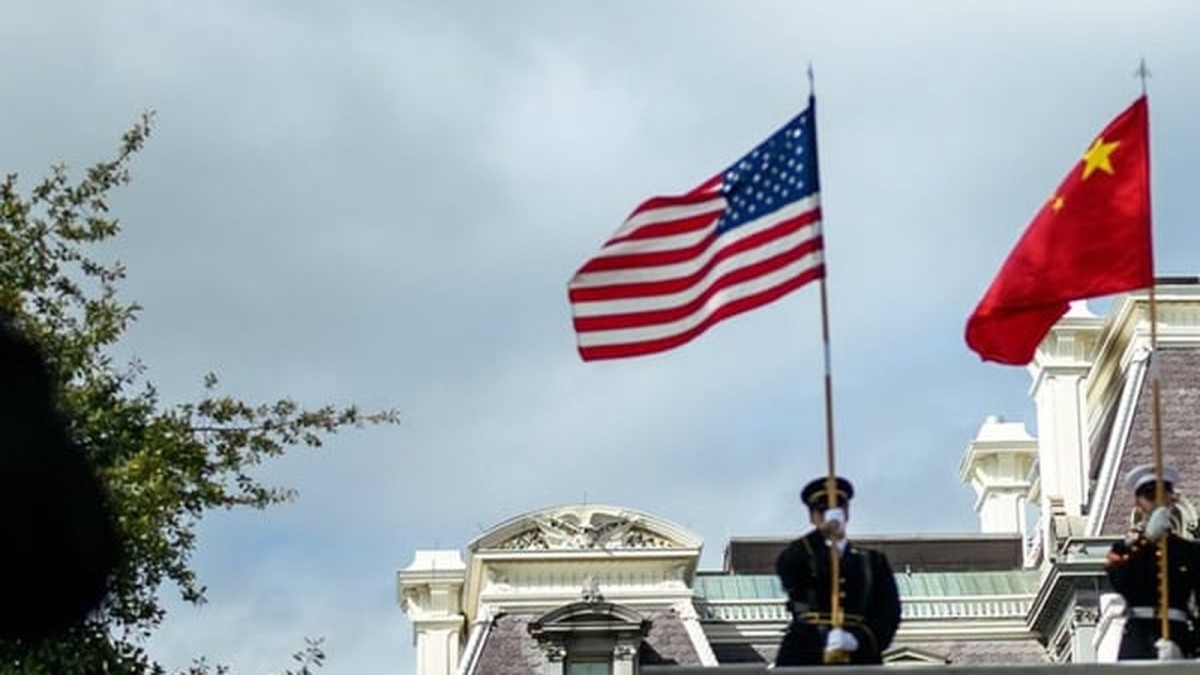
In late September 2026, the second summit of the year between President Xi Jinping of the People’s Republic of China and President Donald Trump of the United States unfolded amid a chorus of descriptors—“ambiguous,” “highly symbolic,” and “historic”—that echoed across both Chinese official media and the international press. While the ceremonial aspects of the meeting—airport greetings, a tea reception at the White House, and a state banquet—were widely reported, the underlying scholarly debate within China’s strategic community reveals a more nuanced contestation over the meaning of Trump’s “dramatic” personal diplomacy. This article maps the divergent analytical frames that have emerged among Chinese scholars, situating them within broader concerns about trust, economic imbalance, and the geopolitical calculus of the China‑U.S. relationship.
Symbolic Hospitality and the “Historic” Narrative
One strand of Chinese commentary, often identified as the “qin‑Mei” (pro‑U.S.) faction, celebrated the overt displays of courtesy that accompanied President Trump’s hosting of President Xi. Reports highlighted the personal greeting at Joint Base Andrews, noting that such a reception by a U.S. president had not been seen since President Barack Obama welcomed Pope Francis in 2015, and before that, President John F. Kennedy’s greeting of British Prime Minister Harold Macmillan in 1962. The qin‑Mei analysts framed these gestures as a rare level of courtesy, emphasizing the significance of Trump serving the same wine that President Richard Nixon used during his 1972 visit to China—a symbolic link to the historic opening of Sino‑American relations.
Professor Wu Xinbo of Fudan University’s Center for American Studies articulated this perspective in a Shanghai‑based digital e‑paper interview, asserting that the wine‑sharing gesture signaled a “historic and milestone” moment for bilateral ties. Wu further argued that informal interactions—tea receptions, walks, and cultural site visits—create a relaxed atmosphere conducive to diplomatic progress, echoing a long‑standing Chinese diplomatic tradition that values personal rapport alongside formal negotiations.
The “Fan‑Mei” Skepticism: Distrust of Trump’s Personal Touch
In contrast, scholars aligned with the “fan‑Mei” (anti‑U.S.) faction expressed deep suspicion toward Trump’s theatrical hospitality. Citing the same airport greeting and banquet remarks, they warned that Trump’s “dramatic” personal diplomacy could lull China into a false sense of security. One commentary described Trump’s claim that the bilateral relationship had never been as “harmonious” as it was at the summit as a “remarkable attempt” to whitewash the reality of ongoing tensions. The commentary further labeled Trump as “two‑faced and hypocritical,” drawing parallels to his confrontational stances toward Russia, Iran, North Korea, Cuba, and Venezuela, thereby questioning his reliability as a partner.
These skeptics also raised the strategic implication that Trump’s overt hospitality might be intended to drive a wedge between China and its traditional ally Russia. By emphasizing a “harmonious” China‑U.S. relationship, they argued, Trump could be seeking to isolate China diplomatically, a tactic they linked to his earlier efforts to cultivate a “harmonious” Russia‑U.S. relationship—a policy that, according to Chinese analysts, backfired domestically and resulted in accusations of collusion with Moscow.
Economic Imbalance as a Structural Lens
Beyond the personal and geopolitical dimensions, a third analytical current emerged from Chinese economists who framed the summit within the context of macro‑economic asymmetry. Professor Ju Jiandong of Tsinghua University, speaking at an economists’ forum on the eve of Xi’s Washington visit, described the prevailing “extreme pattern” in which China dominates manufacturing while the United States dominates finance as inherently unstable. He argued that this structural imbalance fuels competition and that the only viable path forward is a shift from “hegemonic iterations” to “competitive coexistence.”
Ju’s commentary, drawn from his recent book “The Great Power Competition and the Restructuring of World Order,” underscores a long‑standing Chinese policy concern: the need for a balanced global economic architecture that does not privilege one power’s sectoral dominance over another’s. By situating the summit within this broader economic discourse, Ju suggests that ceremonial gestures, however symbolically potent, cannot resolve the deeper systemic frictions that underlie Sino‑American rivalry.
Historical Analogies and the Specter of the Cold War
Some fan‑Mei scholars extended their critique by invoking Cold War analogies. They noted that Trump’s proclamation of unprecedented harmony recalled the historical moment when the United States and China cooperated against the Soviet Union. By positioning the current rhetoric as a “baseless accusation” designed to elevate China‑U.S. ties above the China‑Russia partnership, these analysts warned that such narratives could be weaponized to reshape regional alignments in favor of U.S. strategic interests.
This line of reasoning reflects a broader Chinese strategic culture that remains vigilant of external powers seeking to manipulate intra‑regional dynamics. The commentary’s reference to past U.S. efforts to “break up the close relationship between China and Russia” resonates with longstanding Chinese concerns about “divide‑and‑rule” tactics, a theme that has recurred in Chinese diplomatic discourse since the early Cold War era.
The Role of Media Framing in Shaping Elite Opinion
The divergent reactions among Chinese scholars were amplified by the media outlets that reported on the summit. Pro‑U.S. digital platforms highlighted the novelty of the wine gesture and the warmth of the tea reception, whereas left‑leaning publications foregrounded Trump’s “dramatic” personal touch as evidence of untrustworthiness. This bifurcation mirrors the broader split within Chinese intellectual circles between “qin‑Mei” and “fan‑Mei” camps, each interpreting the same set of events through distinct ideological lenses.
Such media framing has practical implications for policy deliberation within the Chinese Communist Party (CCP). By presenting competing narratives, the press creates a deliberative space in which policymakers can gauge public and elite sentiment, calibrate diplomatic posture, and adjust strategic messaging. The fact that scholars like Wu Xinbo, who previously attended a state banquet for Trump in Beijing, are vocal about the symbolic value of informal interactions suggests that personal diplomacy remains a contested but potent element of China’s diplomatic toolkit.
Forward‑Looking Assessment: Diplomacy Beyond Symbolism
As the 2026 summit recedes into the annals of diplomatic history, its legacy will be judged not solely by the ceremonial optics but by how the competing analytical frames influence future Sino‑American engagement. The qin‑Mei camp’s emphasis on personal rapport may encourage continued use of high‑profile hospitality as a confidence‑building measure, while the fan‑Mei skeptics are likely to press the CCP to adopt a more guarded stance, emphasizing strategic autonomy and vigilance against perceived U.S. attempts at isolation.
Simultaneously, the economic arguments articulated by Professor Ju underscore that any durable rapprochement must address the underlying sectoral asymmetries that fuel competition. Without substantive policy adjustments—such as mechanisms for balanced trade, investment reciprocity, and coordinated financial regulation—symbolic gestures risk being perceived as superficial. In the longer term, the interplay of these scholarly currents will shape the contours of China’s diplomatic calculus, informing whether future summits evolve from “historic” pageantry to substantive platforms for managing great‑power competition in a multipolar Northeast Asia.
This article was produced with AI-assisted research and editorial support. Reporting is based on the source material cited below. Sources: The Diplomat; thediplomat.com; Global1.News (02 October 2026).
By Prof. David Park, Staff Writer
What's Your Reaction?
 Like
0
Like
0
 Dislike
0
Dislike
0
 Love
0
Love
0
 Funny
0
Funny
0
 Wow
0
Wow
0
 Sad
0
Sad
0
 Angry
0
Angry
0
East Asia/Technology Correspondent at Global1.News. Seoul-based voice covering Korean politics, technology, business, and culture. Analyzes how technology and geopolitics intersect across East Asia.










Comments (0)