
Bessent's Economic Siege Meets Iran's Missing Uranium
The convergence of two unprecedented crises now defines the Middle East's strategic landscape: Washington's declaration of total economic warfare against Tehran, and the International Atomic Energy Agency's admission that it can no longer account for nearly half a ton of near-weapons-grade uranium inside Iran.
The convergence of two unprecedented crises now defines the Middle East's strategic landscape: Washington's declaration of total economic warfare against Tehran, and the International Atomic Energy Agency's admission that it can no longer account for nearly half a ton of near-weapons-grade uranium inside Iran. These twin developments, unfolding simultaneously in mid-August 2026, have transformed the region from a theater of contained conflict into a zone of profound uncertainty, where the tools of statecraft — sanctions, inspections, and military deterrence — have all reached their operational limits.
Bessent's Economic Siege Meets Iran's Missing Uranium: The Middle East's Dual Verification Crisis
Beirut, Lebanon – August 14, 2026 — The United States has pledged to impose on Iran "a combination of economic isolation, like the world has never seen before," according to Treasury Secretary Scott Bessent, who spoke to Newsmax on Thursday. The declaration comes as the IAEA confronts a parallel failure: the disappearance of 440.9 kilograms of 60 percent enriched uranium from its verification framework, a stockpile sufficient for multiple nuclear weapons. Together, these developments represent the most dangerous juncture in Middle East security since the 2025 war that closed the Strait of Hormuz and shattered the region's energy architecture.
An Unprecedented Threat: Bessent's Economic Isolation Pledge
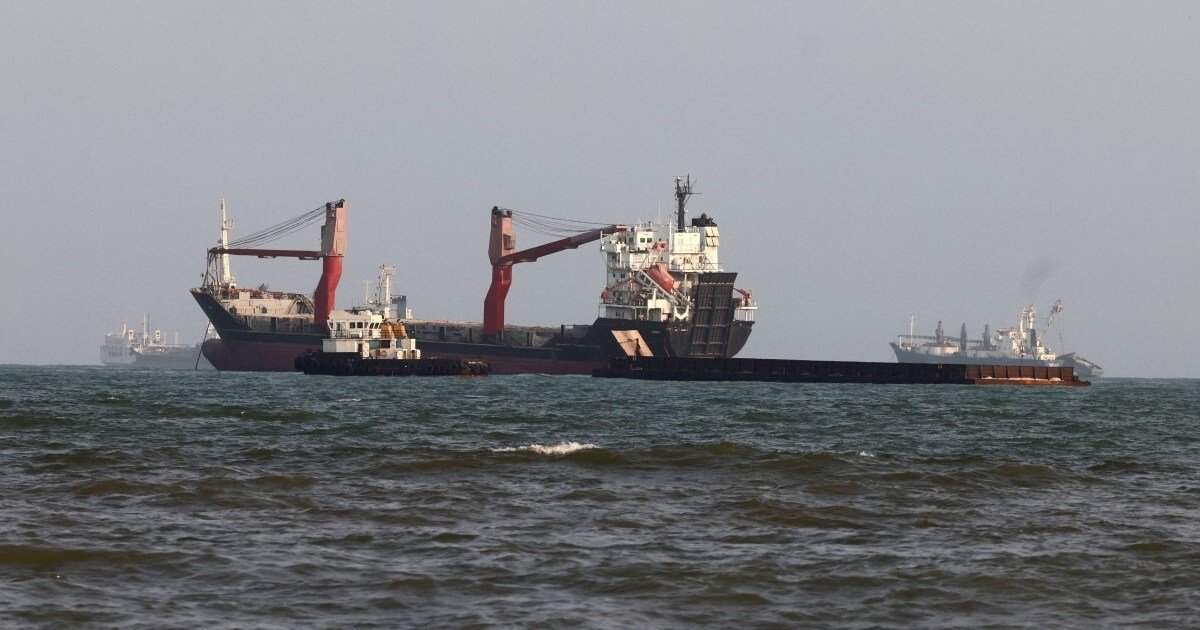
Secretary Bessent's remarks on August 13, 2026, delivered with the precision of a Treasury official accustomed to financial warfare, outlined a strategy of total economic strangulation. "The continued blockade in the Strait of Hormuz," he stated, "will keep anything from going in or out of the Iranian ports." New measures are expected to be unveiled next week, though the Treasury Department has not specified their exact contours. The language — "economic isolation, like the world has never seen before" — signals a departure from the targeted sanctions architecture that has defined US policy since 2018.
The Strait of Hormuz has been effectively closed since the 2025 US-Israel-Iran war, a conflict that reshaped the region's security calculus. The blockade, maintained through a combination of US naval presence and Iranian mine-laying operations, has severed Iran's primary export route for crude oil and liquefied natural gas. For Tehran, the closure represents both a wound and a weapon: it starves the Iranian economy of revenue while simultaneously constraining global energy supplies, creating leverage that Iran has wielded with calculated ruthlessness.
The timing of Bessent's announcement is significant. With the 2026 midterm elections approaching, Republicans face the prospect of voter backlash over soaring gasoline prices and an endless war. The White House finds itself in a precarious position: escalating pressure on Iran while managing domestic economic pain. Bessent's rhetoric suggests the administration has chosen confrontation over accommodation, betting that economic pain in Iran will force concessions faster than political pain in the United States will force a change of course.
The Missing Stockpile: IAEA Verification Crisis Deepens
The nuclear dimension of this crisis may be even more consequential than the economic one. Before the June 22-23, 2025 strikes on Iranian nuclear facilities, the IAEA maintained a detailed accounting of Iran's enriched uranium holdings: roughly 10,000 kilograms of enriched uranium in total, of which more than 400 kilograms was enriched to 60 percent — a level just steps away from weapons-grade material. Today, the agency cannot confirm where that stockpile resides.
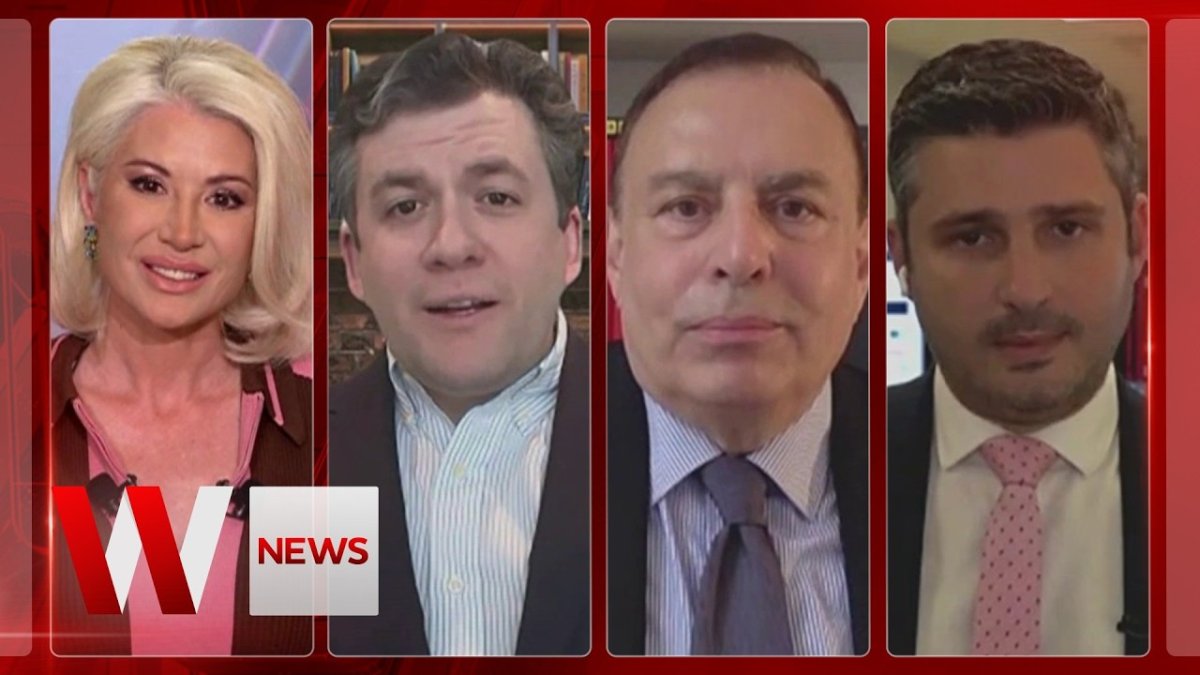
Tariq Rauf, former Head of Nuclear Verification and Security Policy at the IAEA, explained the gravity of the situation in the Al Arabiya English video. "Inspectors had a detailed accounting of Iran's enriched uranium before the 2025 strikes," Rauf noted, "but the agency can no longer confirm where the stockpile is." The loss of verification capability is not merely a technical failure; it represents the collapse of the international community's primary early-warning system for nuclear proliferation.
The numbers are stark. The IAEA has lost track of 440.9 kilograms of 60 percent enriched uranium. For months — more than 97 days as of mid-June 2026 — no IAEA inspector has entered Iranian nuclear facilities. The Board of Governors passed a resolution in June 2026 demanding detailed information on the stockpile's location and on activities at undeclared sites. Iran has not complied. The stockpile, analysts believe, is large enough for up to ten nuclear weapons if further enriched to 90 percent.
The verification crisis has been compounded by conflicting signals from Washington. On April 16, 2026, President Trump publicly stated that Iran had agreed to hand over its enriched uranium stockpile — which he described as "nuclear dust" — as part of negotiations mediated by Pakistan and Qatar. That handover has never been verified. In June 2026, reports emerged that Iran had booby-trapped tunnels leading to its highly enriched uranium stockpile at its main nuclear site, apparently to deter US raids. The combination of unverified diplomatic claims and physical obstacles to inspection has created an intelligence vacuum that neither Washington nor the IAEA has been able to fill.
Historical Background: From JCPOA to Collapse
The current crisis has its roots in the unraveling of the 2015 Joint Comprehensive Plan of Action (JCPOA), the multilateral agreement that placed strict limits on Iran's nuclear program in exchange for sanctions relief. The United States withdrew from the agreement in 2018 under President Trump's first administration, reimposing sanctions and initiating a "maximum pressure" campaign. Iran responded by progressively exceeding the JCPOA's enrichment limits, escalating from 3.67 percent enrichment to 20 percent, and ultimately to 60 percent — a level with no civilian justification.
The June 2025 strikes by the United States and Israel targeted Iran's nuclear facilities with unprecedented intensity, destroying much of the visible infrastructure. But the strikes also had a paradoxical effect: they drove Iran's nuclear program deeper underground, both literally and figuratively. The loss of IAEA access, combined with Iran's refusal to cooperate with inspectors, has created a situation where the international community knows less about Iran's nuclear status today than at any point since the early 2000s.
Jason Brodsky, Policy Director at United Against Nuclear Iran (UANI), has been a persistent voice warning against complacency. Brodsky has called Dubai "an economic lung for the Iranian regime," pointing to the UAE's role as a conduit for Iranian financial networks. His organization has documented the ways in which Iran's nuclear program and its regional proxies operate as an integrated system, with financial flows from the Gulf sustaining both. Brodsky's warning that the Trump administration "has to be prepared to walk away" from a bad deal reflects a broader concern among Iran hawks that the pressure campaign may be abandoned for a politically convenient but strategically unsound agreement.
Regional Dynamics: Gulf States Caught in the Crossfire
The Gulf states — Saudi Arabia, the United Arab Emirates, and Qatar — find themselves in an impossible position. They are simultaneously targets of Iranian retaliation, partners in US security arrangements, and architects of ambitious economic diversification plans that require regional stability. Saudi Arabia's Vision 2030, the crown jewel of Crown Prince Mohammed bin Salman's reform agenda, depends on attracting foreign investment and developing non-oil sectors. A prolonged conflict in the Strait of Hormuz threatens to undermine all of it.
The Houthi attacks on Saudi oil infrastructure have continued unabated, denting hopes for reopening the strait and keeping Brent crude above $85 per barrel. The attacks serve multiple purposes for Iran: they demonstrate Tehran's ability to project power beyond its borders, they pressure Riyadh to moderate its stance, and they keep global energy markets in a state of perpetual anxiety. For Saudi Arabia, the calculus is brutal: continued attacks erode the kingdom's economic ambitions, but capitulation to Iranian pressure would signal weakness and invite further aggression.
The UAE's crackdown on Iran-linked financial networks represents a significant shift in Gulf policy. For years, Dubai served as a crucial financial intermediary for Iran, facilitating trade and investment flows that circumvented international sanctions. The crackdown, which Brodsky has characterized as targeting "an economic lung for the Iranian regime," reflects both US pressure and Emirati recognition that continued facilitation carries unacceptable risks. The move has squeezed IRGC-linked financial networks, but it has also created friction within the UAE's business community, where Iranian commercial ties run deep.
Qatar, meanwhile, has positioned itself as a mediator, hosting negotiations alongside Pakistan. The Qatari role reflects the small state's ambition to punch above its weight diplomatically, but it also exposes the limits of mediation when the parties' positions are so far apart. Iran's willingness to engage in talks has not translated into concrete concessions, and the unverified "nuclear dust" handover announced in April remains a source of contention rather than resolution.
Strategic Calculus: What Washington Wants, What Tehran Calculates
Washington's objectives in the current crisis are clear but contradictory. The administration wants to prevent Iran from acquiring nuclear weapons, wants to reopen the Strait of Hormuz, wants to maintain pressure on Tehran without triggering a broader regional war, and wants to avoid domestic political damage from high gasoline prices. These goals are not mutually compatible. The economic isolation Bessent has promised may force Iranian concessions, but it may also push Tehran toward nuclear breakout as its only remaining source of leverage.
Tehran's calculations are equally complex. The Iranian leadership has demonstrated remarkable resilience in the face of sanctions, war, and internal dissent. The regime has survived for over four decades by adapting to pressure, and its current strategy appears to be one of strategic patience: absorb the economic pain, maintain ambiguity about the nuclear program, and wait for the United States to blink. The booby-trapped tunnels and the refusal to allow IAEA access suggest that Iran is preparing for the possibility of further military strikes while preserving the option of a negotiated settlement on its own terms.
The midterm election calendar adds a layer of urgency to Washington's calculations. Republicans fear that the war and soaring gasoline prices will cost them control of Congress. This creates a perverse incentive structure: the administration needs a visible success — either a diplomatic breakthrough or a decisive military action — before November. Iran, aware of this timeline, has little reason to make concessions that would hand the administration a victory. The result is a dangerous standoff in which both sides are waiting for the other to blink.
China and Russia remain buyers of discounted Iranian crude where possible, providing Tehran with a financial lifeline that partially offsets the impact of US sanctions. The involvement of these great powers complicates the US strategy of economic isolation. Neither Beijing nor Moscow has any interest in seeing Iran collapse, and both have the capacity to absorb Iranian oil exports through alternative payment mechanisms. The effectiveness of Bessent's "unprecedented" isolation will depend, in part, on whether the United States can persuade or compel China and Russia to abandon their Iranian purchases.
Oil Markets and the Global Economy: The Price of Confrontation
The economic consequences of the crisis are already visible in global energy markets. Brent crude surged above $85 per barrel on August 10, 2026, and approached $90 by August 12 as Houthi attacks dented hopes for reopening the Strait of Hormuz. These prices, while painful, are far below the crisis peak of $141 per barrel — the highest since 2008 — that followed the initial outbreak of war. US gasoline prices reached approximately $4 per gallon during the worst of the crisis, a level that has historically proven politically toxic for incumbent administrations.
Noureldeen Al Hammoury, Chief Market Strategist at Equiti Group, has analyzed the macro fallout with characteristic precision. The International Energy Agency's August 2026 Oil Market Report forecasts that world oil demand will decline by 1.6 million barrels per day in 2026 because of the Hormuz closure and elevated fuel prices. This demand destruction is a double-edged sword: it provides some relief to prices by reducing consumption, but it also signals broader economic damage that will reverberate through global supply chains and consumer confidence.
The OPEC+ framework, which has managed production levels since 2016, faces its most severe test. Spare capacity, concentrated primarily in Saudi Arabia and the UAE, is limited, and the closure of the Strait of Hormuz removes a significant portion of global supply from the market. The cartel's ability to stabilize prices is constrained by the very conflict that has disrupted supply. For Gulf producers, the current crisis presents a paradox: high prices generate revenue, but they also accelerate the global transition away from fossil fuels and undermine the economic diversification plans that are central to their long-term survival.
Regional Implications: The Road Ahead
The convergence of the nuclear verification crisis and economic warfare has created a situation with no clear exit. The IAEA's inability to account for 440.9 kilograms of 60 percent enriched uranium means that the international community cannot verify Iran's compliance with any future agreement. Even if negotiations resume and a deal is reached, the verification deficit will remain a fundamental obstacle. Iran's refusal to allow inspectors access, combined with the physical obstacles to inspection, means that any agreement would rest on trust rather than verification — a fragile foundation for a program with such catastrophic potential.
The nuclear breakout timeline is the most urgent question. If Iran possesses the 440.9 kilograms of 60 percent enriched uranium and has moved it to undeclared sites, the time required to produce weapons-grade material is measured in weeks, not months. The booby-trapped tunnels suggest that Iran is preparing for the possibility of military strikes while preserving its nuclear option. The international community faces a stark choice: accept a nuclear-armed Iran, launch another round of military strikes with uncertain outcomes, or find a diplomatic solution that addresses both the verification deficit and Iran's security concerns.
For the Gulf states, the crisis presents an existential challenge. Saudi Arabia's Vision 2030, the UAE's economic diversification, and Qatar's diplomatic ambitions all depend on regional stability. The current trajectory — continued blockade, ongoing Houthi attacks, and the prospect of further military escalation — threatens to unravel these projects. The Gulf states are caught between US demands for alignment, Iranian threats of retaliation, and their own populations' expectations of economic progress. There is no easy path forward.
The broader Middle East is watching with a mixture of fear and calculation. Turkey, which has maintained a delicate balance between NATO obligations and its relationship with Iran, faces the prospect of a refugee crisis and economic spillover. Israel, which initiated the 2025 strikes alongside the United States, has made clear that it will not tolerate an Iranian nuclear weapon under any circumstances. The Arab-Israeli normalization process, already strained by the war, faces an uncertain future. The region's security architecture, built over decades on the assumption of US primacy, is being tested as never before.
What emerges from this crisis will define the Middle East for a generation. The combination of economic isolation, nuclear ambiguity, and regional instability has created a perfect storm. The United States has promised measures "like the world has never seen before," but the world has also never seen a nuclear program operating without verification in the middle of a regional war. The intersection of these two unprecedented developments will determine whether the Middle East moves toward a new equilibrium or descends into further chaos. The stakes could not be higher.
By Malik Hassan, Staff Writer
This article was produced with AI-assisted research and editorial support. Reporting is based on sources cited in the article.
What's Your Reaction?
 Like
0
Like
0
 Dislike
0
Dislike
0
 Love
0
Love
0
 Funny
0
Funny
0
 Wow
0
Wow
0
 Sad
0
Sad
0
 Angry
0
Angry
0

Middle East Correspondent at Global1.News. Based in Beirut, covering politics, conflict, energy, and society across the Middle East. Brings context and depth to a region often reduced to headlines.










Comments (0)