
Israel's national security minister 'pleased' with harsh conditions of Palestinian prisoners
Ben-Gvir Says He Is ‘Pleased’ With Harsh Conditions for Palestinian Prisoners Israel’s National Security Minister Itamar Ben-Gvir said Sunday that he is “pleased” with the harsh treatment of Palestinian prisoners in Israeli jails, adding that he is directly responsible for prison conditions, according to a.
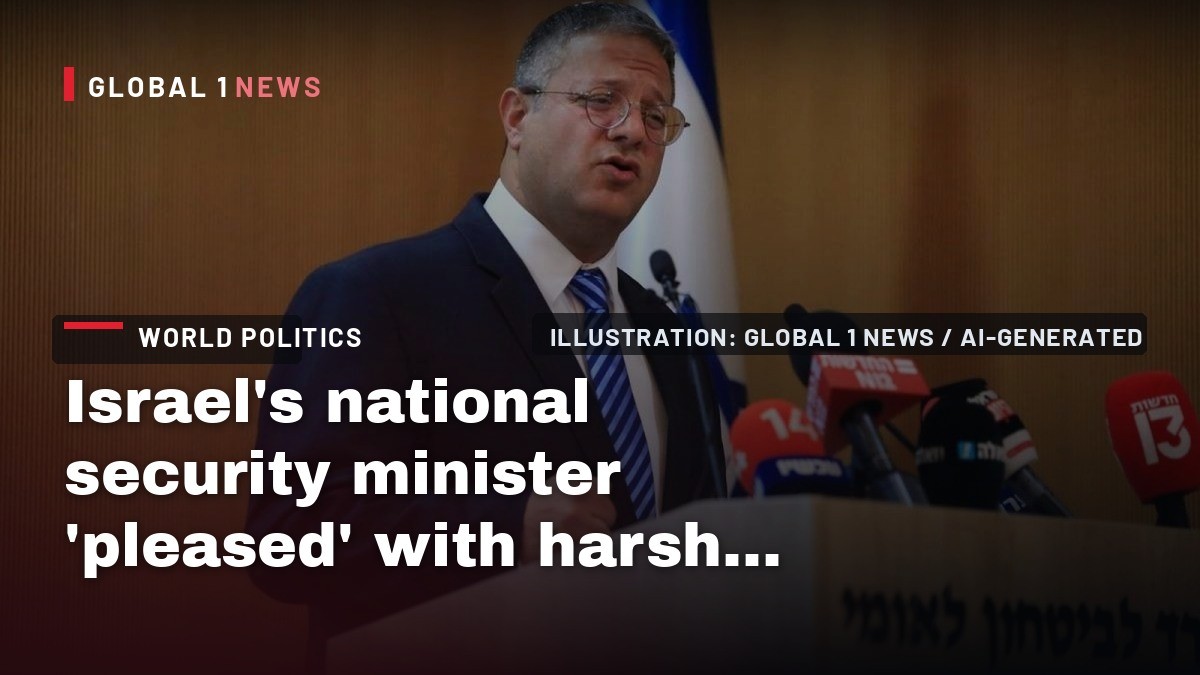
Ben-Gvir Says He Is ‘Pleased’ With Harsh Conditions for Palestinian Prisoners
Israel’s National Security Minister Itamar Ben-Gvir said Sunday that he is “pleased” with the harsh treatment of Palestinian prisoners in Israeli jails, adding that he is directly responsible for prison conditions, according to a report by Anadolu Agency. The remarks were made in a video released on the social media platform X, during which Ben-Gvir was seen speaking with Palestinian female prisoners.
The video, which has drawn widespread condemnation from Palestinian and human rights groups, shows Ben-Gvir responding to complaints from detainees about the deteriorating conditions inside Israeli detention facilities. The exchange marks the latest in a series of confrontational visits by the far-right minister to prison cells, where he has repeatedly dismissed prisoner grievances.
In the video, a Palestinian female prisoner is heard telling Ben-Gvir: “The conditions here are very bad, and we women are not afforded any special rights, such as access to personal necessities.” She added: “This is our third day without showers. We are not receiving medical treatment, and our clothes are not clean.”
Ben-Gvir, speaking through an interpreter, responded: “The good conditions that used to exist in the prisons are over.” In a post accompanying the video, he also wrote that the “whining” of the “terrorists” about prison conditions “doesn’t work on me.” When the female prisoner asked for the prison conditions to be improved, Ben-Gvir rejected her request outright.
A Pattern of Provocative Prison Visits
This is not the first time Ben-Gvir has entered the cells of Palestinian detainees to mock them. Earlier in August, he reportedly mocked a female prisoner who complained about the poor conditions of her detention and the lack of basic necessities, telling her that “prison is not a hotel.” That incident, like Sunday’s video, was widely circulated on social media and drew sharp criticism from Palestinian officials and international human rights organizations.
Ben-Gvir’s visits to prison facilities appear to be part of a deliberate strategy to project strength to his political base, while simultaneously signaling to Palestinian prisoners that their conditions will not improve under his watch. His public statements, often delivered with a tone of defiance, have become a recurring feature of his tenure as national security minister.
The minister’s direct involvement in prison affairs is unusual, as prison administration in Israel typically falls under the purview of the Israel Prison Service, which operates under the Ministry of National Security. Ben-Gvir has, however, made clear that he considers prison conditions a personal priority, and his public remarks suggest he views the treatment of Palestinian prisoners as a political statement rather than a matter of administrative policy.
Policy of Tightening Conditions Since Late 2022
Since taking office in late 2022, Ben-Gvir has moved to tighten the conditions of detention for Palestinian prisoners, including through policies of starvation and medical neglect, as well as torture and solitary confinement, according to the Anadolu Agency report. These measures have been implemented against a backdrop of rising prisoner numbers and growing international scrutiny of Israel’s detention practices.
The shift in policy marks a significant departure from previous administrations, which, while often criticized by human rights groups, had maintained certain baseline standards for detainees. Under Ben-Gvir, however, the emphasis has been on reducing the quality of life for Palestinian prisoners, with the minister publicly framing such measures as necessary to deter “terrorism” and assert Israeli authority.
Human rights organizations have documented a range of abuses in Israeli prisons, including the withholding of adequate food, denial of medical care, and the use of solitary confinement as a punitive measure. These practices, which have been reported by both Palestinian and Israeli human rights groups, have drawn repeated condemnation from international bodies, including the United Nations.
Ben-Gvir’s policies have also been criticized by some Israeli legal experts, who argue that they violate both domestic law and international standards governing the treatment of detainees. However, the minister has shown little willingness to alter course, and his public statements suggest he views criticism as validation of his hardline approach.
Scale of Detention: 9,500 Prisoners, Including Women and Children
Around 9,500 Palestinian prisoners are held in Israeli jails, including 94 women and more than 350 children, according to Palestinian and Israeli human rights reports cited by Anadolu Agency. These prisoners suffer from starvation, torture, and medical neglect, the reports state, painting a grim picture of life inside Israeli detention facilities.
The high number of detainees reflects the broader context of the Israeli-Palestinian conflict, with arrests often occurring during military operations, at checkpoints, or in the context of administrative detention, which allows for imprisonment without trial. The inclusion of women and children in the prisoner population has been a particular point of concern for human rights groups, who have documented cases of minors being held in adult facilities and subjected to harsh interrogation techniques.
The conditions described by the female prisoner in Sunday’s video — three days without showers, lack of medical treatment, and unclean clothing — are consistent with broader reports of deteriorating standards in Israeli prisons. Human rights organizations have repeatedly called for independent oversight of detention facilities, but such calls have been consistently rejected by Israeli authorities.
The figures, while stark, are not static. The number of Palestinian prisoners has fluctuated over the years, rising and falling with the intensity of the conflict and the policies of successive Israeli governments. Under Ben-Gvir, however, the trend has been toward harsher conditions, with the minister actively promoting policies that reduce the quality of life for detainees.
Ben-Gvir’s Rhetoric and Its Implications
Ben-Gvir’s language in Sunday’s video — referring to Palestinian prisoners as “terrorists” and dismissing their complaints as “whining” — reflects a broader dehumanizing discourse that has become increasingly prominent in Israeli political discourse. This rhetoric, which frames Palestinian prisoners as undeserving of basic rights, has been criticized by human rights groups for legitimizing abuses and undermining the possibility of a negotiated resolution to the conflict.
The minister’s direct engagement with prisoners, while unusual, serves multiple purposes. On one hand, it allows him to project an image of toughness to his political supporters, many of whom view Palestinian prisoners as enemies of the state. On the other hand, it sends a clear message to the prisoners themselves that their conditions will not improve, and that their complaints will be met with indifference or outright hostility.
Ben-Gvir’s approach has also raised questions about the role of the national security ministry in prison administration. While the minister has formal authority over the Israel Prison Service, his public interventions in individual cases suggest a level of personal involvement that goes beyond typical ministerial oversight. This has led some observers to question whether prison policies are being driven by political considerations rather than professional judgment.
The video, which was released on X, has been widely shared and commented upon, with many users expressing outrage at the minister’s remarks. However, it is unlikely to have any immediate impact on Israeli policy, as Ben-Gvir has shown no indication that he intends to change course. On the contrary, his public statements suggest that he views the harsh conditions as a deliberate and justified policy choice.
Human Impact and the Broader Context
The conditions described by the female prisoner in Sunday’s video are not isolated incidents but rather part of a systemic pattern of abuse that has been documented by human rights organizations over many years. The lack of access to basic necessities, including showers, medical treatment, and clean clothing, is a recurring theme in testimonies from Palestinian prisoners, many of whom have described their detention as a form of collective punishment.
The impact of these conditions extends beyond the prisoners themselves, affecting their families and communities. The detention of women and children, in particular, has a profound effect on Palestinian society, where the imprisonment of a family member is often experienced as a collective trauma. The refusal of Israeli authorities to provide adequate conditions for detainees has been a persistent source of tension, with families frequently staging protests outside prisons and international organizations calling for intervention.
Ben-Gvir’s policies, while framed as security measures, are widely seen by Palestinians as part of a broader effort to assert control and undermine the possibility of a viable Palestinian state. The treatment of prisoners, which has long been a central issue in the Israeli-Palestinian conflict, has become even more contentious under the current government, with the minister’s public statements adding fuel to an already volatile situation.
The international community has repeatedly called on Israel to adhere to international law in its treatment of detainees, but such calls have had little effect. Ben-Gvir’s remarks on Sunday, in which he expressed satisfaction with the harsh conditions, suggest that the situation is unlikely to improve in the near term. For the 9,500 Palestinian prisoners currently held in Israeli jails, the prospect of relief appears distant, as the minister continues to frame their suffering as a necessary and justified outcome of their alleged offenses.
By Fatima Al-Rashid, Staff Writer
This article was produced with AI-assisted research and editorial support. Sources: Middle East Monitor, Anadolu Agency.
What's Your Reaction?
 Like
0
Like
0
 Dislike
0
Dislike
0
 Love
0
Love
0
 Funny
0
Funny
0
 Wow
0
Wow
0
 Sad
0
Sad
0
 Angry
0
Angry
0

Gulf/MENA Correspondent at Global1.News. Based in Doha, covering Gulf politics, energy markets, diplomacy, and development across the Middle East and North Africa. Tracks the economic transformation of the Gulf states.












Comments (0)