
Israeli Settler Assaults Palestinian Bus Driver in Jerusalem
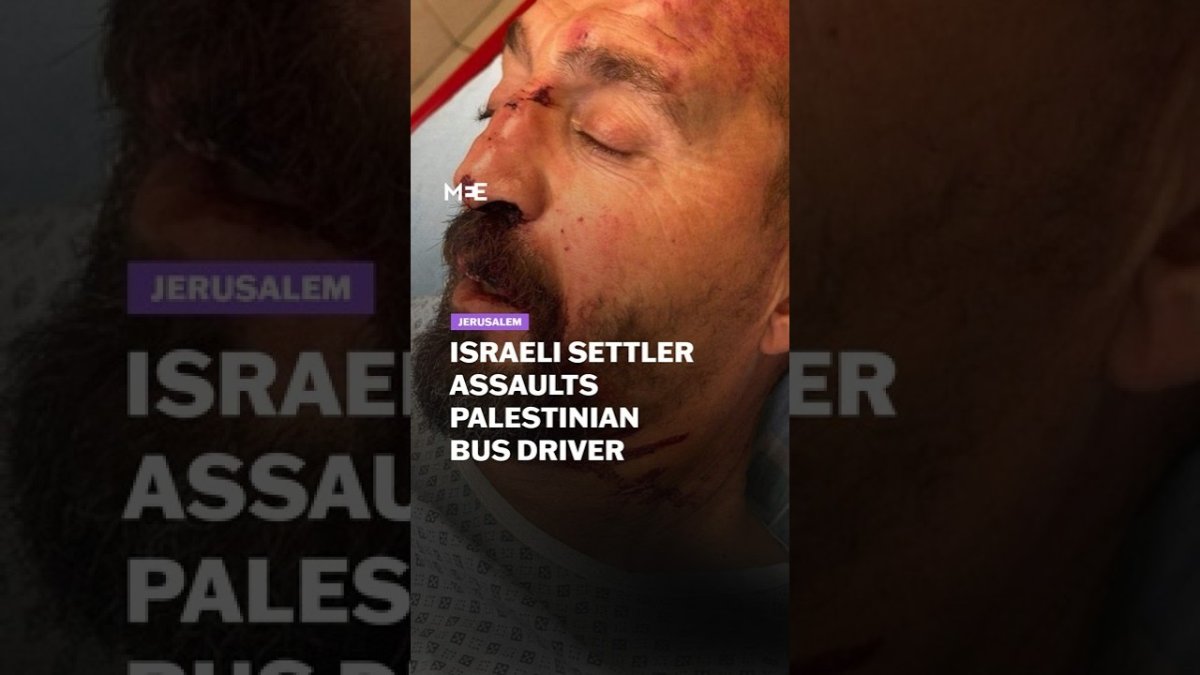
In a recent Middle East Eye report, video footage documented the moment an Israeli settler assaulted Palestinian bus driver Khaled Oweisat as he worked his route through the Jabal al-Mukaber neighborhood of occupied East Jerusalem on Sunday, August 30, 2026.
In a recent Middle East Eye report, video footage documented the moment an Israeli settler assaulted Palestinian bus driver Khaled Oweisat as he worked his route through the Jabal al-Mukaber neighborhood of occupied East Jerusalem on Sunday, August 30, 2026. The footage, published August 31, shows the attack unfolding and Oweisat's subsequent hospitalization, adding another stark data point to what the United Nations has called an "all-time high" in settler violence across the occupied West Bank.
The assault on Oweisat, a resident of Jabal al-Mukaber, occurred while he was driving his bus, a role that places Palestinian workers in constant, vulnerable proximity to settlers across the city's contested neighborhoods. He was taken to hospital for treatment, though the full extent of his injuries has not been officially confirmed; figures on his condition were not immediately available.
Jerusalem Bus Driver Beaten in Latest Settler Attack as UN Warns of Record Violence
Jerusalem - August 31, 2026 - The attack on Khaled Oweisat was reported by the Palestinian news agency WAFA, which cited the Jerusalem Governorate, as well as Roya News English, Al-Jarmaq News, and Yemen's Saba news agency. The Jerusalem Governorate recorded 43 settler attacks in July 2026 alone, including five involving physical assault, according to Saba's reporting. For Palestinian residents of East Jerusalem, the assault on Oweisat is not an isolated incident but a recurring feature of daily life under occupation, where buses, taxis, and public spaces have become flashpoints for settler aggression.
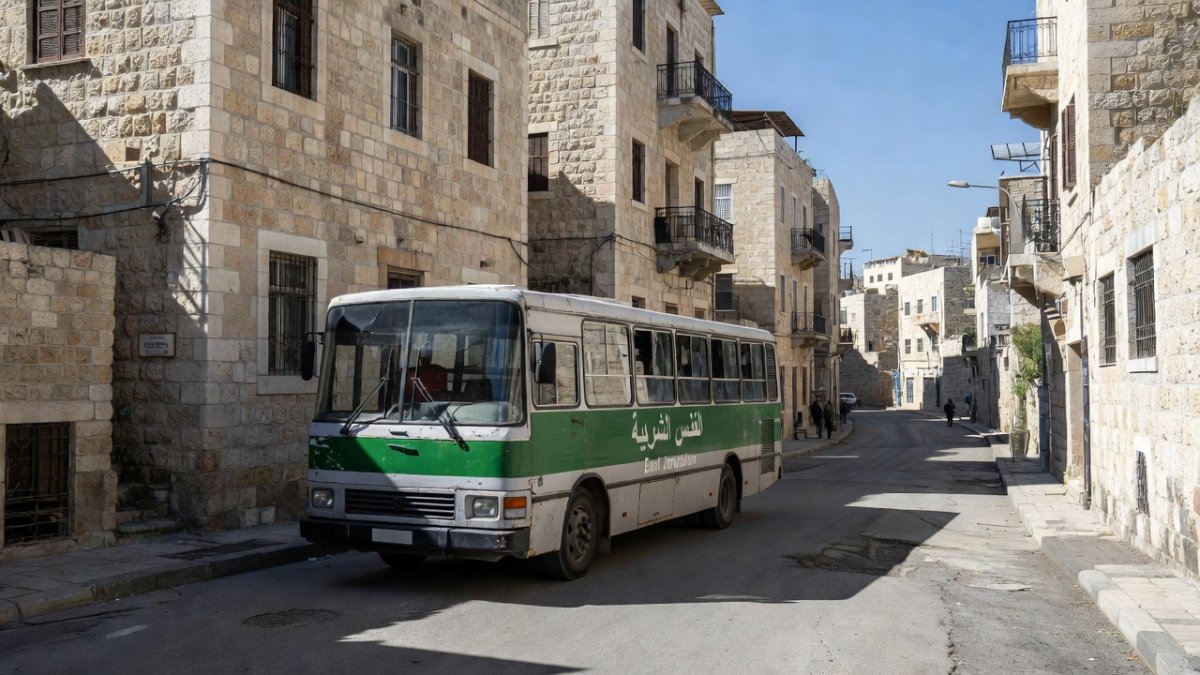
The Assault on Khaled Oweisat
Oweisat was driving his bus through Jabal al-Mukaber, a Palestinian neighborhood in southeast Jerusalem that sits adjacent to the Israeli settlement of Nof Zion, when the settler confronted and beat him. The Middle East Eye video shows the attack unfolding in real time, capturing both the violence and the aftermath as Oweisat was transported for medical care. The Jerusalem Governorate has not released additional details about the identity of the assailant or whether an arrest has been made; such information was not immediately available.
Bus drivers in East Jerusalem have long been targets of settler harassment and violence. Their work requires them to navigate routes that pass through or near settlements, checkpoints, and areas of heightened tension, making them uniquely exposed. Palestinian workers in Jerusalem face routine attacks, and Israeli authorities rarely prosecute the perpetrators, a pattern that has been documented extensively by human rights organizations including B'Tselem and Amnesty International. For Oweisat, a resident of the neighborhood he was serving, the assault represents a direct threat to his livelihood and his safety in a city where Palestinian presence is increasingly contested.
A Pattern of Daily Attacks
The assault on Oweisat comes amid a broader escalation that has drawn international condemnation. On August 29, 2026, The New York Times reported that dozens of Israeli settlers burst into a Palestinian man's house in the occupied West Bank, trapping and attacking people inside. That incident, described as one in a series of assaults, followed an Al Jazeera report on August 27 detailing how settlers are targeting Palestinian factories in the occupied West Bank, a campaign aimed at forcing workers off their land and further weakening an already fragile Palestinian economy.
These attacks are not random. They follow a logic of displacement and intimidation that has characterized settler activity for decades, but the frequency and brazenness have increased markedly. In Jabal al-Mukaber, residents describe a neighborhood under siege, where settlers from Nof Zion and other nearby outposts have been expanding their footprint, and where Palestinian movement is increasingly restricted. The assault on Oweisat is part of this larger pattern, one that targets not just individuals but the infrastructure of Palestinian daily life.
Record Levels of Settler Violence
The United Nations has been sounding the alarm. On July 29, 2026, the UN Office of the High Commissioner for Human Rights (OHCHR) warned that settler violence in the occupied West Bank is at an "all-time high," noting that settlers and Israeli security forces have "often" acted together to attack Palestinian communities. The UN Office for the Coordination of Humanitarian Affairs (OCHA) reported on July 31 that July 2026 matched March 2026 as the deadliest month for Palestinians in settler attacks since OCHA began systematic documentation.
At a UN Security Council briefing on August 11, 2026, OCHA reported an average of six settler violence incidents per day in the first half of 2026. The same briefing noted that more than 2,300 Palestinians, including over 1,000 children, have been displaced due to settler violence and access restrictions. These figures represent a humanitarian crisis unfolding in real time, one that the international community has repeatedly condemned but has not effectively addressed.
The data from OCHA between January 2023 and February 16, 2026, shows that 883 Palestinian households, comprising 4,765 people, were displaced across 97 communities and areas, most of them Bedouin and herding communities. These are communities that have lived on their land for generations, and they are being pushed out through a combination of violence, intimidation, and administrative measures that make it impossible to stay.
Displacement and Economic Pressure
The targeting of Palestinian factories, as reported by Al Jazeera, adds an economic dimension to the violence. Settlers have been attacking industrial sites in the occupied West Bank, damaging equipment, setting fires, and threatening workers. The goal, according to Palestinian business owners and labor advocates, is to force factories to shut down, eliminating jobs and pushing workers to leave the area. This strategy is particularly devastating in a territory where unemployment is already high and economic opportunities are limited by Israeli restrictions on movement, trade, and access to resources.
In East Jerusalem, the economic pressure is compounded by the constant threat of violence. Palestinian workers who depend on jobs in the city or in Israeli settlements face a double bind: they need the income, but they must navigate a landscape where they are vulnerable to attack at any moment. The assault on Oweisat is a reminder that even essential services like public transportation are not safe. When a bus driver is beaten on the job, it sends a message to the entire Palestinian community that no space is neutral, no role is protected.
Impunity and the Law
One of the most corrosive aspects of settler violence is the near-total impunity enjoyed by the perpetrators. Israeli authorities rarely arrest or prosecute settlers who attack Palestinians, and when they do, the charges are often minor and the sentences lenient. This impunity is not accidental; it reflects a legal and political system that privileges Israeli settlers over Palestinian residents of the occupied territories, a reality that has been documented by human rights groups and UN bodies for years.
In the case of Oweisat, it remains to be seen whether any investigation will be opened. The Jerusalem Governorate has recorded the incident, but Israeli police have not publicly commented on the assault as of this writing. The pattern in similar cases is that such attacks are either ignored or treated as isolated incidents, with no systemic response to the broader phenomenon of settler violence. This impunity emboldens further attacks, creating a cycle of violence that shows no signs of abating.
Analysis and Implications
The assault on Khaled Oweisat must be understood within the broader context of Israeli policy in the occupied Palestinian territory. Settler violence is not a fringe phenomenon; it is a tool of displacement and control that operates alongside military occupation, settlement expansion, and administrative restrictions. The UN's warning that settler violence is at an "all-time high" is a recognition that this is not a series of isolated incidents but a coordinated campaign with devastating consequences for Palestinian communities.
The international community has responded with statements of concern and calls for restraint, but these have had little effect on the ground. The United States, the European Union, and other actors have condemned specific attacks, but they have not taken meaningful steps to hold Israel accountable for its obligations under international law as an occupying power. The result is a situation where settlers act with impunity, Palestinian communities are displaced at record rates, and the prospects for a just peace grow ever more distant.
For the people of Jabal al-Mukaber and across East Jerusalem, the assault on Oweisat is a reminder of their vulnerability. It is also a reminder of their resilience. Palestinian bus drivers continue to show up for work, Palestinian families continue to resist displacement, and Palestinian communities continue to document and report the violence they face. The question is whether the international community will finally move beyond words and take action to protect a population that has been subjected to decades of occupation and violence.
As Oweisat recovers from his injuries, his community is left to wonder when the next attack will come. The Jerusalem Governorate's record of 43 settler attacks in July alone suggests that it will not be long. For now, the people of East Jerusalem continue their daily struggle, navigating a city that is increasingly hostile to their presence, and hoping that the world will one day pay more than lip service to their plight.
By Fatima Al-Rashid, Staff Writer
This article was produced with AI-assisted research and editorial support. Reporting is based on sources cited in the article.
What's Your Reaction?
 Like
0
Like
0
 Dislike
0
Dislike
0
 Love
0
Love
0
 Funny
0
Funny
0
 Wow
0
Wow
0
 Sad
0
Sad
0
 Angry
0
Angry
0

Gulf/MENA Correspondent at Global1.News. Based in Doha, covering Gulf politics, energy markets, diplomacy, and development across the Middle East and North Africa. Tracks the economic transformation of the Gulf states.














Comments (0)