
Being Eddie: Netflix Doc Reveals 50 Years of Comedy Genius
Comedy legend Eddie Murphy has spent nearly five decades making the world laugh, and for the first time in his career, he has opened the doors of his home and his heart for a documentary portrait.
Comedy legend Eddie Murphy has spent nearly five decades making the world laugh, and for the first time in his career, he has opened the doors of his home and his heart for a documentary portrait. "Being Eddie," now streaming on Netflix, traces his extraordinary journey from a teenage stand-up skipping school to one of the most influential entertainers of his generation — and for African audiences, the film is also a reminder of how deeply his work has shaped the continent's comedy and screen culture.
Being Eddie: Netflix Documentary Lifts the Curtain on 50 Years of Comedy Royalty
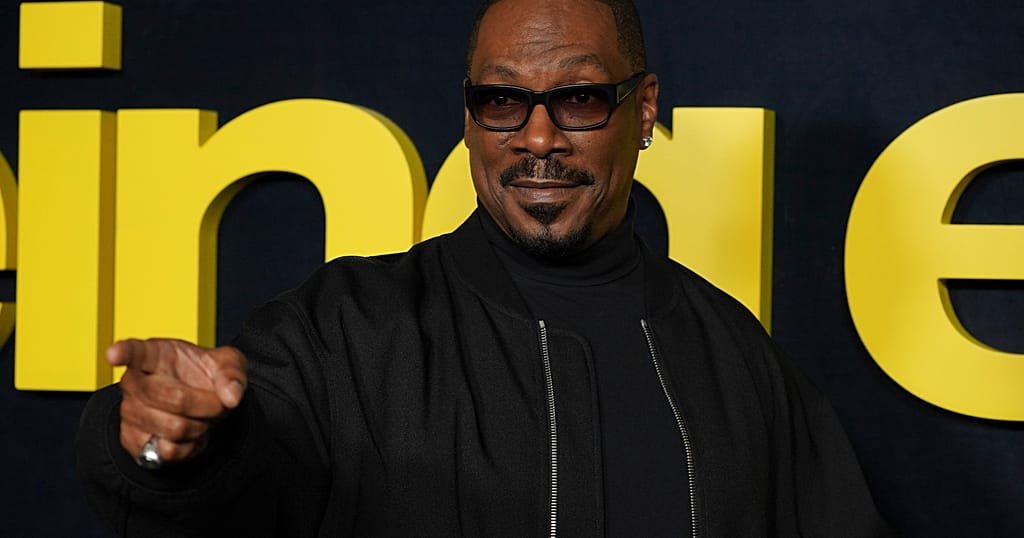
Los Angeles, United States — Eddie Murphy walked the red carpet at the Netflix Tudum Theater on 12 November 2025 for the premiere of "Being Eddie," an intimate portrait directed by two-time Oscar winner Angus Wall. Murphy started his career as a teenager, skipping school to perform stand-up before being thrust into the spotlight through Saturday Night Live. In the documentary, he reflects on the business then and now, his family, his faith and the creative instincts that carried him from "48 Hours" to "Beverly Hills Cop," "Coming to America," "The Nutty Professor," the "Shrek" franchise and an Oscar-nominated turn in "Dreamgirls."
An Intimate Portrait After Nearly 50 Years
The documentary follows a reflective structure that moves between Murphy's current life in his Los Angeles home and archival footage from his rise. Director Angus Wall, a two-time Oscar winner for editing "The Social Network" and "The Girl with the Dragon Tattoo," makes his feature-length directorial debut with this project. The film runs one hour and forty-four minutes and maintains a warm, unhurried tone that lets Murphy speak at length without heavy narration.
Interviewees include Adam Sandler, Arsenio Hall, Chris Rock, Dave Chappelle, Jamie Foxx, Jerry Seinfeld, Kevin Hart, Pete Davidson, Tracee Ellis Ross, Tracy Morgan, Kenan Thompson, Michael Che, Jeffrey Katzenberg, Jerry Bruckheimer, John Landis, Brian Grazer and Ruth Carter. Their comments build a portrait of Murphy as both a private man and a public force who shaped multiple eras of comedy.
Murphy explains his decision to participate by noting that audiences usually see him only during movie promotions. He states, "The only time the audience usually sees me is if I'm promoting a movie... this is me. This is my house, this is my family, and this is how I did it." The film therefore spends time inside his actual residence and with his family members rather than on red carpets alone.
Angus Wall describes the challenge of capturing such a long career while preserving the subject's essence. He observes, "There is no one else like him. Nobody. He's been famous longer than just about anyone alive, and he's never lost who he is." This perspective guides the editing choices that balance career highlights with quieter personal moments.
The premiere took place at the Netflix Tudum Theater in Los Angeles on 12 November 2025, drawing comedians and filmmakers who appear in the film. Guests walked a red carpet before settling into a screening that highlighted Murphy's five-decade span from stand-up stages to voice work in the "Shrek" franchise.
Viewers in Dakar and Lagos will recognize the film's emphasis on family gatherings and quiet reflection, elements that echo the communal storytelling traditions common across West Africa. The documentary avoids sensationalism and instead presents Murphy as a steady presence who has maintained his core values through decades of fame.
From Teenage Stand-Up to Saturday Night Live
Murphy began performing stand-up as a teenager, often skipping school to appear at local clubs in New York. This early drive led directly to his breakout on Saturday Night Live in the early 1980s, where his impressions and characters quickly made him a household name across the United States and beyond.
His first major film role came in "48 Hours" in 1982. Producer Jeffrey Katzenberg defended him when studio executives considered firing him during the first two weeks of production. Katzenberg reportedly told them, "No, don't fire him, there's something there." The film launched Murphy into a multi-picture deal signed when he was just nineteen years old.
Murphy reflects on how the industry has transformed since those years. He notes, "The business has changed so much. I can't imagine it happening the same way it happened... It's just a whole different business now." The documentary contrasts his path through late-night television with the current route many comedians take through social media platforms.
He admits he remains disconnected from digital trends, stating, "I'm not on social media and I don't have a computer and no one is following me." This choice stands in contrast to younger performers who build audiences online before transitioning to traditional media.
The film covers key early projects including "Trading Places" in 1983 and "Beverly Hills Cop" in 1984, showing how Murphy moved from supporting roles to leading man status within two years. These successes established the template of stand-up comedian turned film star that many later performers followed.
African audiences watching today can trace how Murphy's rapid ascent from club stages to major studio deals inspired similar ambitions among comics in Lagos and Accra who now seek opportunities on global streaming services.
Zamunda to Wakanda: Murphy's Enduring Love Letter to Africa
"Coming to America," released in 1988, introduced the fictional African kingdom of Zamunda and followed Prince Akeem on his journey to find a bride in New York. The film presented African royalty, ceremony and dignity at a time when Hollywood rarely offered such portrayals to mainstream audiences.
The documentary highlights the widely repeated phrase "There is no Wakanda without Zamunda," noting how Murphy's film paved the way for "Black Panther" three decades later. Ruth Carter, the costume designer interviewed in the film, connects the visual language of Zamunda to later Marvel productions that drew on similar cultural references.
The 2021 sequel "Coming 2 America" revisited the same kingdom and reinforced the original's celebration of African heritage. Both films found enthusiastic reception from viewers in Dakar, Lagos and Johannesburg who appreciated stories centered on African characters rather than stereotypes.
Murphy's decision to build an entire comedy around an African prince challenged prevailing Hollywood narratives of the era. The documentary shows how the film's humor and warmth allowed global audiences to embrace African culture without reducing it to exotic backdrop.
Comedians and filmmakers across the continent continue to reference the Zamunda sequences when discussing the need for authentic representation. The film's legacy demonstrates that African-rooted stories can succeed commercially while preserving cultural pride.
From the markets of Nairobi to the film sets of Accra, "Coming to America" remains a touchstone that encouraged later generations to tell their own stories with confidence and humor.
The Blueprint African Comics Still Chase
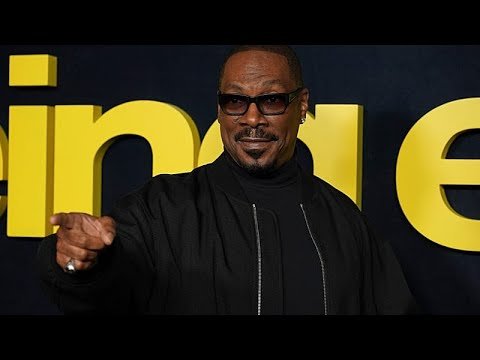
Comedian Deon Cole appears in the documentary to assess Murphy's influence. He states, "His whole career, every comic you see out here patterned their career after him wanting to do it... No one has... His whole being and everything is what we chase and strive to have." This assessment captures how Murphy combined stand-up, impressions, character work and film stardom into one career.
Stand-up scenes across Africa have cited Murphy as a foundational influence. In Lagos, performers such as Alibaba and Basketmouth built careers that blend sharp social observation with character-driven routines, echoing Murphy's approach. Similar scenes in Nairobi, Accra and Johannesburg have produced comics who study his specials for timing and stage presence.
Murphy describes himself as an artist who can express himself in multiple ways. He explains, "I'm an artist that can express himself a bunch of different ways. Sensitivity is the gauge, not how much talent you have." The documentary shows how this philosophy allowed him to move between "Raw," "The Nutty Professor" in 1996, the "Shrek" franchise and his Oscar-nominated role in "Dreamgirls" in 2006.
Streaming platforms now give African comics direct access to global audiences, a path that echoes Murphy's own expansion from television to film. The film suggests that longevity comes from adapting while remaining true to one's core voice.
Young comedians in Senegal and beyond watch Murphy's trajectory as proof that stand-up can serve as the foundation for broader artistic expression across genres and borders.
The documentary positions Murphy's career as a model of controlled evolution rather than constant reinvention for its own sake.
The Man Behind the Characters
The film includes personal revelations about Murphy's childhood, including the loss of his father at age eight. He speaks warmly of his stepfather Vernon Lynch, describing him as "a solid father figure for the rest of my life." These family stories ground the larger narrative of professional success.
Murphy recounts meeting Muhammad Ali, whom he calls his hero. He remembers, "He looked like he was plugged into the wall — he had this light. He stood up to the government, stood up for what he felt was right." The encounter reinforced Murphy's own sense of purpose during his early years in the spotlight.
His disciplined lifestyle receives attention as well. Murphy maintained a straight-edge approach for many years, avoiding alcohol, cigarettes and cocaine. He notes, "I was 30 years old when I first smoked a joint." Jamie Foxx adds that Murphy remains deeply introverted, often sitting quietly with a Coca-Cola even at large gatherings.
The documentary captures Murphy's reflection on self-acceptance. He states, "My biggest blessing is not my comedic talent — my biggest blessing is that I love myself and I knew what I wanted to do really, really early." This inner certainty carried him through decades of public scrutiny.
These personal details resonate with African viewers who value family stability and personal discipline as foundations for public achievement. The film presents Murphy as a man who protected his private life while building an enduring public legacy.
His story of early self-knowledge offers a quiet counterpoint to the flashier elements of entertainment fame.
What African Creatives Can Learn From a Comedy King
Murphy's career demonstrates creative reinvention across genres without losing identity. From the stand-up specials "Delirious" and "Raw" to blockbuster action-comedies, family films, animation voice work and drama, he maintained a consistent core while exploring new forms.
The documentary emphasizes that sensitivity serves as the true gauge of artistic work. African filmmakers and musicians can apply this lesson when navigating opportunities on global platforms while remaining rooted in local traditions.
His longevity across five decades shows the value of staying grounded amid fame. Murphy's path proves that African-rooted storytelling can command worldwide audiences when executed with care and cultural respect.
Parallels exist with African artists who have crossed genres and borders, from musicians blending traditional sounds with contemporary production to directors moving between Nollywood and international festivals. Murphy's example encourages measured growth rather than rapid overexposure.
Creative communities in Dakar and Johannesburg can draw from his model of building a body of work that evolves while honoring its origins. The film suggests that true influence comes from consistency and self-awareness rather than chasing every trend.
Young African comedians and filmmakers watching the documentary will see a roadmap for sustaining careers over decades while contributing to broader cultural conversations.
What to Watch For
"Being Eddie" is now streaming on Netflix and offers African audiences both entertainment and insight into one performer's approach to longevity. The documentary reveals Murphy's continued interest in new projects while underscoring the importance of family and personal discipline.
The continued global rise of African comedy and cinema finds encouragement in Murphy's story. Upcoming African-led projects on streaming platforms can draw from his blueprint of blending humor with cultural pride.
The film invites a new generation to discover classics such as "Coming to America" and "Raw," many of which remain popular in households from Senegal to South Africa. These works continue to shape how African stories reach international screens.
The broader conversation about representation in Hollywood that Murphy helped start remains relevant today. African viewers will recognize how his success opened doors for later performers who now appear in major studio productions.
Ultimately the documentary serves as a masterclass in artistic longevity for anyone building a creative career across borders. African audiences should watch it for both its humor and its quiet lessons on staying true to one's voice over time.
By Amara Diop, Staff Writer
This article was produced with AI-assisted research and editorial support. Reporting is based on sources cited in the article.
What's Your Reaction?
 Like
0
Like
0
 Dislike
0
Dislike
0
 Love
0
Love
0
 Funny
0
Funny
0
 Wow
0
Wow
0
 Sad
0
Sad
0
 Angry
0
Angry
0

West Africa/Sahel Correspondent at Global1.News. Dakar-based journalist covering politics, security, climate, and development across Francophone and Anglophone West Africa. Tells the stories of a region undergoing profound transformation.













Comments (0)