
Barbados Crop Over 2026 Ends on High Note with Sell-Out Events and Rihanna's Return
The close of Barbados Crop Over 2026 delivered a powerful statement of regional cultural strength, as every major fete and competition sold out completely while thousands took to the streets for Grand Kadooment Day. National Hero Rihanna's return to the parade route after her 2024 comeback added further lustre to an event already buoyed by strong diaspora participation and smooth organisation by the National Cultural Foundation.
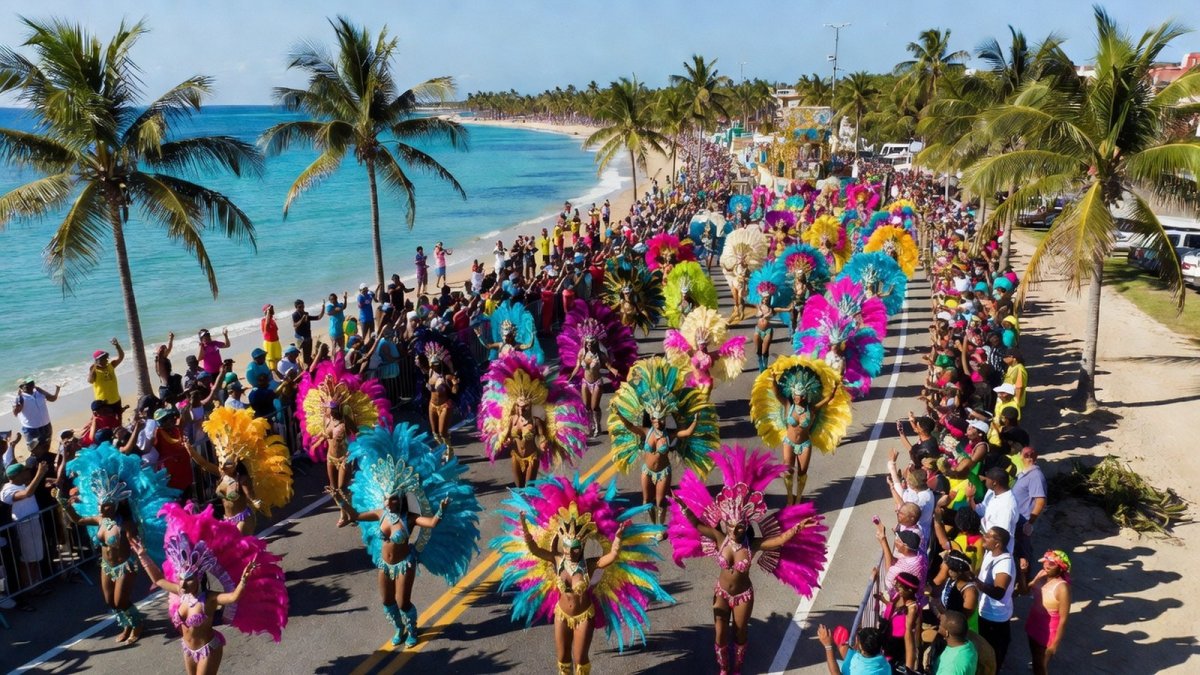
The Grand Kadooment Day Parade Unfolds
Grand Kadooment Day, the costumed street-parade finale of Barbados' Crop Over festival, took place on Monday, August 3, 2026. The parade drew thousands of masqueraders, overseas visitors and spectators along a route stretching from Princess Alice Highway to the Mighty Grynner Highway. Some 22 bands were on the road by mid-morning, several already past the judging point at Pelican Island when the NCF reported the event was near its halfway mark.
Grand Kadooment Day 2026 started approximately 10 minutes behind schedule, according to NCF Festival and Events Planner Stacia Bryan, who described overall production as progressing smoothly. The atmosphere remained festive and well-managed despite the minor delay, allowing masqueraders to enjoy the full route under clear skies typical of early August in Barbados.
Sell-Out Success Across All Events
NCF Chairman Dr Jasmine Babb declared Crop Over 2026 brilliant, noting that all fetes and events, including the Pic-O-De-Crop Finals, Pandemonium and Junior Kadooment, were sold out. The Pic-O-De-Crop Finals were relocated from the traditional Kensington Oval venue, secured for the state funeral of National Hero Sir Garfield Sobers, first to CARIFESTA House, then to the National Botanical Gardens after consultation with artists. This flexibility ensured the competition proceeded without disruption while honouring national mourning protocols.
The strong turnout and near-universal sell-out of ticketed events signals continued and likely growing demand for Crop Over as a regional cultural tourism product. Such results put pressure on bands, the NCF and hospitality providers to scale capacity without diluting the experience that keeps visitors returning year after year.
Diaspora Visitors and Premium Spend
Zell and Ortez Hurley, travelling from the United Kingdom with Aura Experience, said each of their costumes cost about £500. Roshae Daniel, from Queens, New York, purchased Aura's VIP package for nearly US$2,000, describing the investment as totally worth it due to food, goodie bags, cups and accessories provided on the road. These personal accounts highlight how Crop Over now attracts committed international participants willing to invest significantly in the full experience.
For international visitors, costume package pricing now ranges from roughly US$350 to US$2,000 for VIP tiers, placing Crop Over firmly in the premium carnival market comparable to Trinidad's top-tier bands. Many diaspora members from the United Kingdom, North America and across the Caribbean plan their travel around the festival calendar months in advance, with band registration for top sections like Aura routinely closing within 48 hours of opening.
The spending these visitors bring flows directly into the Barbadian economy — through costume purchases, accommodation, transport and the army of vendors who work the parade route — and the sheer scale of this year's turnout gave the hospitality sector one of its strongest August weekends in memory. That money matters for a small-island economy, and the economic ripple effects help sustain post-pandemic recovery even as hoteliers and rental hosts scramble to meet demand during Kadooment week. The challenge, as several operators have noted, is that success at this scale carries its own pressure: rooms are scarce, prices climb, and the festival's affordability for locals comes under strain.
For the diaspora themselves, the outlay is rarely about the costume alone. Many view their spending as an investment in cultural reconnection — a homecoming purchase rather than a holiday expense. Barbadian artisans, beaders and costume makers are the direct beneficiaries, and the foreign exchange those dollars and pounds bring in supports seasonal employment across the island. Yet the very success of that premium model raises a question the NCF cannot avoid: how to keep the festival accessible to the communities whose traditions built it.
Rihanna's Return and Local Craftsmanship
Rihanna appeared in the Grand Kadooment Day parade wearing a bejewelled costume and towering headpiece crafted by Barbadian designer Lauren Austin, marching with her brother's band, Aura, according to Vogue. Rihanna, 38, is a National Hero of Barbados. She was a fixture at Crop Over through 2019, went five years without appearing, returned in 2024, and was back on the road again this year.
Her presence alongside family and local designers reinforced the personal and communal ties that define the festival. Observers noted how her participation helped spotlight Barbadian creative talent on an international stage while celebrating the island's cultural heritage.
The significance of Rihanna's presence goes well beyond star power. Having been a regular fixture at Crop Over through 2019 before a five-year absence, her return in 2024 and again this year signals continuity for the designers and craftspeople who have shaped her looks over the past decade. Every photograph and clip that circled the globe this week carried the work of Barbadian hands — a form of cultural export no marketing budget could buy. It elevates local talent, encouraging investment in traditional skills while fostering pride among the communities that sustain these art forms.
The global spotlight generated by such moments helps position Barbados as a centre for innovative masquerade design, drawing parallels with regional festivals where local makers gain recognition. Lauren Austin's longstanding collaboration with Rihanna exemplifies how individual artisans benefit from high-profile endorsements, potentially opening doors for apprenticeships and expanded workshops. In a nation where cultural icons walk among their people during the festival, this dynamic strengthens the link between heritage and contemporary expression. It also supports tourism narratives that emphasise authentic experiences over imported spectacles.

Deep Roots in Caribbean History
Crop Over history traces back to the plantations of the 1780s as a workers' celebration marking the final cane cart of the harvest season. It survived colonial decline and near-extinction in the 1940s as global sugar demand collapsed after World War II. A grassroots revival in 1974 wove calypso competition, folk arts and masquerade into a single national event that continues to anchor Barbados' August tourism peak.
Today the festival draws diaspora visitors from Britain, North America and across the Caribbean, many of whom view participation as a form of homecoming. This mirrors similar sentiments in Trinidad and Tobago during Carnival, where returning nationals and regional participants strengthen cultural bonds across the islands.
There is a symbolic weight to that history that is easy to miss amid the feathers and the soca. The end of the crop once meant the close of the cane harvest; today it has come to mean communal renewal — a moment when a nation that outlived the collapse of its founding industry gathers to celebrate what replaced it. The resilience embedded in that story, carried from the plantation era through the lean post-war years, is precisely what gives the modern festival its emotional pull and its stubborn refusal to be reduced to a party.
The contrast between sugar's historical decline and the festival's endurance highlights how Caribbean societies adapt traditions to new realities. The 1974 revival parallels broader carnival renaissances across the region, including Trinidad Carnival and Antigua Carnival, where similar fusions of music, dance and masquerade reclaimed cultural space. Today, a festival born in the cane fields now anchors tourism, transforming historical hardship into economic opportunity while preserving the communal spirit that defined its beginnings. This evolution offers lessons on maintaining authenticity amid growing commercial interests.
Looking Ahead: Growth, Pricing and Authenticity
The return of Cohobblopot, absent for more than a decade, opens a structural question about whether it becomes a permanent fixture in its new Tuesday slot or reverts to its traditional Sunday position ahead of Kadooment. Analysis from Caribbean360 notes that festivals chasing the premium market risk pricing out the communities that give them cultural meaning, while the diaspora filling these bands seeks more than a generic party weekend.
The NCF must ensure expansion does not erode the cultural architecture that makes Crop Over irreplaceable. Balancing increased capacity with the authentic community spirit remains central as Barbados and the wider Caribbean region navigate post-pandemic tourism recovery through events like this one.
These are not trivial scheduling debates. For many regulars, the Sunday-night build-up of kings, queens and soca monarchs has long been the emotional prelude to Kadooment Monday, and moving that rhythm risks flattening the festival's dramatic arc. At the same time, the commercial pressures are real: with top-tier sections selling out within days, the temptation to chase higher spenders is strong. The NCF's challenge for 2027 is to protect the grassroots elements that distinguish Crop Over from commercialised alternatives while still growing the event.
Barbados can draw on regional examples to scale capacity without sacrificing authenticity, such as community-led initiatives that keep participation inclusive. Other Caribbean festivals observing this trajectory may learn from the balance between attracting high-spending visitors and safeguarding local access. Maintaining this equilibrium will determine whether Crop Over continues as a living expression of Barbadian identity or drifts toward a model that prioritises profit over heritage.
By Sharon Sahatoo, Staff WriterThis article was produced with AI-assisted research and editorial support. Reporting is based on sources cited in the article.
What's Your Reaction?
 Like
0
Like
0
 Dislike
0
Dislike
0
 Love
0
Love
0
 Funny
0
Funny
0
 Wow
0
Wow
0
 Sad
0
Sad
0
 Angry
0
Angry
0

Caribbean Correspondent at Global1.News. Based in Port of Spain, Trinidad, covering Caribbean politics, economy, energy, climate, and culture. Amplifying the voices and stories of the Caribbean region.











Comments (0)