
Nadda's Assam Visit Highlights Flood Health Risks
Union Health Minister J.P. Nadda has placed flood health preparedness under direct central scrutiny during his August 4-6 visit to Assam, Nagaland and Arunachal Pradesh, where the season's floods have already claimed 87 lives. Reviewing relief camps, disease surveillance and health services in the worst-hit districts, the Minister signalled tighter coordination between the Ministry of Health and Family Welfare and state agencies under the Integrated Disease Surveillance Programme.
Union Health Minister J.P. Nadda has placed flood health preparedness under direct central scrutiny during his August 4-6 visit to Assam, Nagaland and Arunachal Pradesh, where the season's floods have already claimed 87 lives. Reviewing relief camps, disease surveillance and health services in the worst-hit districts, the Minister signalled tighter coordination between the Ministry of Health and Family Welfare and state agencies under the Integrated Disease Surveillance Programme.
Nadda’s Assam Visit Highlights Flood Health Risks
New Delhi, India – Wednesday, August 5, 2026 — Union Minister for Health and Family Welfare J.P. Nadda opened a three-day assessment of health services, relief and rehabilitation in flood-affected states, beginning with Assam where 87 deaths have been confirmed.
The Health Minister on the Ground
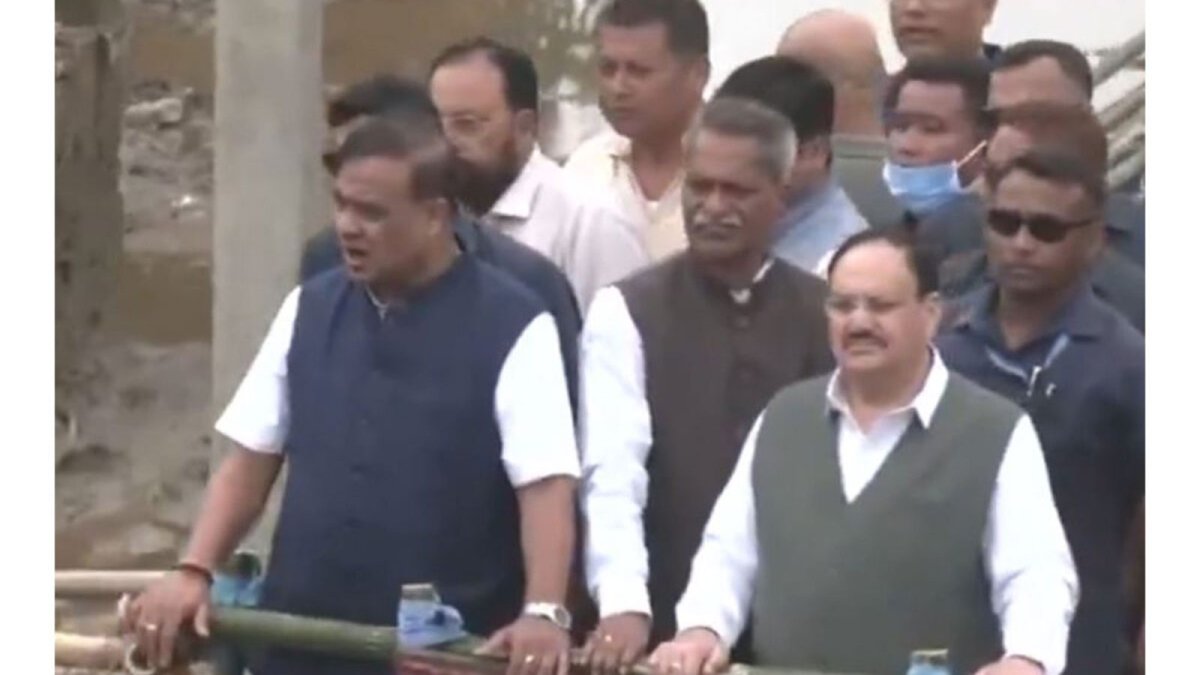
Nadda arrived in Dibrugarh on August 4. On August 5 he inspected villages in Sivasagar and Charaideo districts, visited relief camps and damaged crop and housing sites, met affected families at Bihubor Nepali Khuti with Chief Minister Himanta Biswa Sarma, toured Defence Colony and nearby areas in Mon district of Nagaland, and chaired a high-level review meeting in Dibrugarh with senior Assam officials. On August 6 he is scheduled to inspect flash-flood damage at Yazali in Arunachal Pradesh's Keyi Panyor district before a concluding meeting with state officials. At each stop, he assured residents that central teams were assessing the scale of damage and that the Centre would extend complete financial assistance for relief and rehabilitation.
The Union Health Minister’s decision to personally inspect relief camps alongside the Chief Minister reflects a deliberate emphasis on health-system resilience rather than treating floods solely as an engineering or revenue challenge. By walking through inundated habitations, the Minister could directly observe how waterlogging disrupts routine immunisation sessions, cold-chain maintenance and antenatal check-ups. This on-site presence also allows immediate assessment of whether Integrated Disease Surveillance Programme teams have activated fever and diarrhoea reporting from the camps, ensuring that early signals of outbreaks are captured before they overwhelm district hospitals.
"I got the opportunity to visit Sivasagar with the Chief Minister. I have seen the extent of the damage. Entire villages have suffered. People have lost their homes, while crops and property have also been severely affected. We discussed the difficulties being faced by the people. Relief work has been carried out proactively and has reached the affected areas. There will be no shortage of assistance from the Government of India. Whether it is financial assistance, compensation for losses or rehabilitation, the Centre will stand with Assam. Himanta Biswa Sarma is doing his best, and I assure you that the Central government will do everything possible." The statement underscores that post-disaster health planning now sits at the same table as compensation and housing repair.
That the same Minister also holds the Chemicals and Fertilizers portfolio adds further weight. Fertilizer supply chains and pesticide stocks for vector control can be redirected through the same administrative channel that manages drug logistics under the National Health Mission. The visit therefore signals a multi-departmental approach in which health surveillance, sanitation logistics and agricultural recovery are coordinated rather than handled in isolation by separate ministries.
The Flood Emergency Behind the Visit
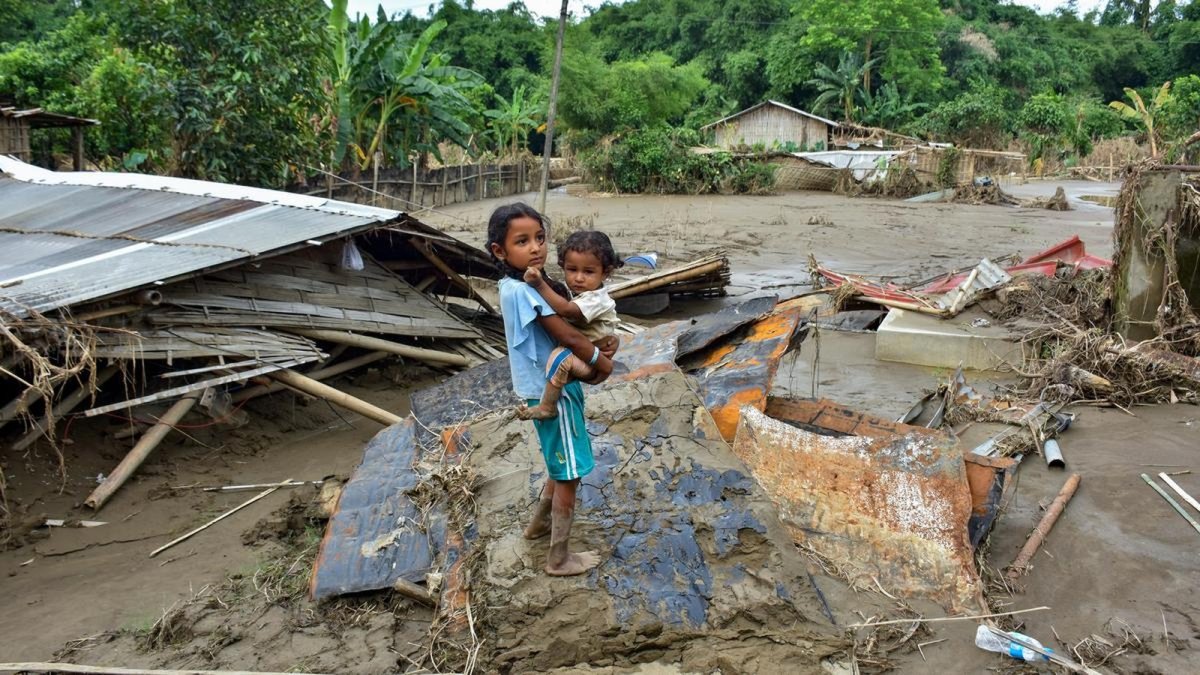
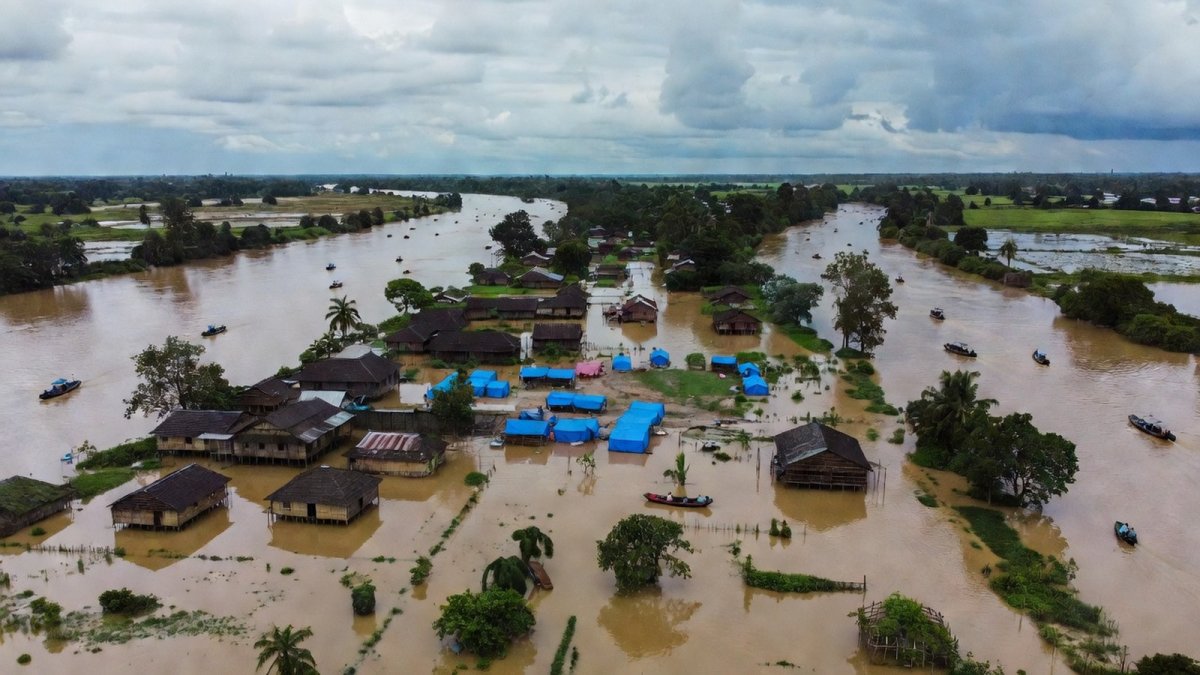
Deaths rose from 78 on July 30 to 87 by August 4, with two fresh fatalities reported in Sivasagar. At peak, more than 2 lakh people were affected across eight districts; the figure stood at 1,92,799 across five districts on July 31 and had fallen to roughly 1.28 lakh across six districts by August 4. Charaideo recorded 77,456 affected people, Sivasagar 63,492 and Jorhat 34,067. A total of 379 villages were impacted, 14,230 hectares of crops submerged and nearly 55,000 animals lost. Fifty-four relief camps house about 13,000 people. The Dikhow and Dhansiri rivers remain in severe flood; the Dhansiri at Numaligarh continues above danger level. Sivasagar’s Nazira subdivision and Bihubor Nepali Khuti suffered extensive erosion and agricultural loss, with 23 locations still affected.
What Floods Do to Public Health
Receding floodwaters create ideal conditions for waterborne diseases such as diarrhoeal illness, typhoid and leptospirosis, while crowded relief camps raise the risk of respiratory infections and sanitation-related outbreaks. Snakebite incidents typically rise as waters recede. The Health Minister's inspection of camps therefore directly supports IDSP surveillance teams deployed under the National Health Mission and NDMA guidelines, while maternal and child health services in temporary shelters require sustained monitoring to prevent disruptions in antenatal care and immunisation — in line with ICMR and National Centre for Disease Control post-flood protocols.
When floodwaters submerge villages, drinking-water sources such as ring wells and shallow tube wells become directly contaminated by latrine overflow and surface runoff carrying faecal matter. This immediate mixing raises the risk of water-borne pathogens entering household storage containers within hours. Because many families continue to rely on these sources until alternative tankers arrive, the contamination window can extend for several days even after visible water levels begin to drop.
Disease spikes typically appear with a lag of seven to fourteen days once waters recede, as pathogens incubate and secondary transmission occurs through crowded camps. Children under five face rapid dehydration from diarrhoeal episodes, while pregnant women experience interrupted antenatal visits and possible loss of tetanus toxoid coverage. In this setting, oral rehydration solution sachets combined with assured safe drinking water become the most immediate clinical interventions, preventing progression to severe dehydration before medical referral is possible.
Vector-borne risks rise simultaneously as stagnant pools form around submerged fields and roads. District malaria and dengue control teams must therefore conduct source reduction alongside camp sanitation audits mandated under National Disaster Management Authority protocols. These audits examine latrine functionality, drainage around shelters and chlorine residual levels in stored water, providing a structured checklist that converts ad-hoc relief into measurable public-health outputs.
Relief, Insurance and the Centre's Assurance
On August 3 the Assam government released the first tranche of interim relief from Dibrugarh, providing ₹15,000 per household for severely damaged homes and a total package of ₹75,000 per household in Sivasagar, Charaideo, Jorhat and Golaghat. The state cabinet met insurance companies on August 5 to expedite vehicle, livestock and property claims and approached NBFCs for loan moratoriums in affected areas. Industrialist Gautam Adani contributed ₹11 crore to the Chief Minister’s Relief Fund. NDRF and SDRF teams continue operations. Nadda confirmed full central financial assistance and ongoing rehabilitation support. Chief Minister Himanta Biswa Sarma noted that Nadda had seen the destruction firsthand and would convey requirements to the Prime Minister.
Across Sivasagar's Nazira subdivision and the Bihubor Nepali Khuti belt, several flood-hit locations remain submerged and riverbanks are still eroding. District officials report twenty-six to twenty-seven confirmed deaths and four to five persons still missing. Rehabilitation planning now includes identification of safer resettlement sites and coordination with the Assam State Disaster Management Authority for earth-moving equipment. Daily weather briefings with Nagaland hill districts are essential because upstream rainfall directly influences downstream water levels in the Dhansiri and Brahmaputra tributaries.
The push for swift insurance claim processing and temporary loan moratoriums from non-banking financial companies addresses the immediate liquidity crisis faced by households that lost two-wheelers, livestock and stored grain. Without rapid settlement, families risk distress sale of remaining assets or high-interest borrowing that deepens long-term indebtedness. The Centre’s assurance of additional financial support therefore functions not only as humanitarian relief but as a mechanism to preserve household balance sheets during the recovery window.
These measures also reduce pressure on public health facilities. When families can replace lost assets through insurance payouts, they are less likely to remain in damaged dwellings that lack safe water and sanitation, thereby lowering exposure to post-flood illness. The linkage between economic instruments and health outcomes becomes explicit in the Minister’s emphasis on both compensation and rehabilitation.
What This Means for India
IMD has issued orange and red warnings for extremely heavy rainfall in Arunachal Pradesh and Meghalaya, with spillover risks to districts bordering Assam. Prime Minister Narendra Modi has framed the region as India's "Ashtalakshmi," highlighting its development priority, and the visit underscores how health security is now central to that commitment. Strengthened surveillance and camp protocols can reduce outbreak risks for populations living under intensifying climate extremes, offering a template for other flood-prone states.
The Brahmaputra valley experiences repeated flood waves within a single monsoon season, with a mid-July surge already affecting roughly 1.7 lakh people before the current episode. Successive inundations erode the capacity of primary health centres to maintain routine services while simultaneously increasing the case load of water-borne and vector-borne diseases. Over multiple years this cycle contributes to higher background rates of childhood stunting and maternal anaemia in the most flood-prone blocks.
Extreme rainfall events, flagged by India Meteorological Department orange and red warnings for Arunachal Pradesh and Meghalaya, are projected to intensify, placing additional bordering districts of Assam at risk. The Nadda visit offers a template for Centre-state coordination that pre-positions medical teams, activates rapid surveillance cells and enforces camp health protocols before waters peak. Such a model can be adapted for other river basins facing similar climate-driven flood patterns.
Policy discussions on disaster-health financing must now account for these recurring shocks. Rather than treating each flood as an isolated emergency requiring supplemental budgets, states and the Centre could institutionalise ring-fenced allocations for pre-positioned medical supplies and post-flood surveillance under existing National Health Mission and National Disaster Response Fund frameworks. The Assam experience provides concrete operational lessons for scaling this approach nationally.
The Bottom Line
The scale of Assam's 2026 flood health challenge is now evident in the mounting toll and the weeks of rehabilitation ahead. Direct ministerial oversight of relief camps and disease surveillance under IDSP and NHM frameworks provides immediate safeguards while signalling sustained central support for reconstruction. For Indian citizens and taxpayers, such coordination translates into faster insurance settlements, continued maternal and child health services, and a reduced secondary disease burden — outcomes that matter most as monsoon patterns intensify.
— By Dr. Raj Patel, Staff Writer
This article was produced with AI-assisted research and editorial support. Reporting is based on sources cited in the article.
What's Your Reaction?
 Like
0
Like
0
 Dislike
0
Dislike
0
 Love
0
Love
0
 Funny
0
Funny
0
 Wow
0
Wow
0
 Sad
0
Sad
0
 Angry
0
Angry
0

India/South Asia Correspondent at Global1.News. Analytical voice with a background in science and health journalism. Based in New Delhi, covering Indian politics, education, healthcare, technology, and policy. Breaks down complex data into clear, actionable reporting.














Comments (0)