
Bar Council Apologises After 48-Hour NALSAR Freeze Sparks Supreme Court Rebuke
Bar Council of India apologises to law students after its 48-hour enrolment freeze on NALSAR University of Law's 2026 batch triggered a Supreme Court rebuke. Analysis of regulatory overreach, student protest rights, and what it means for India's national law universities.
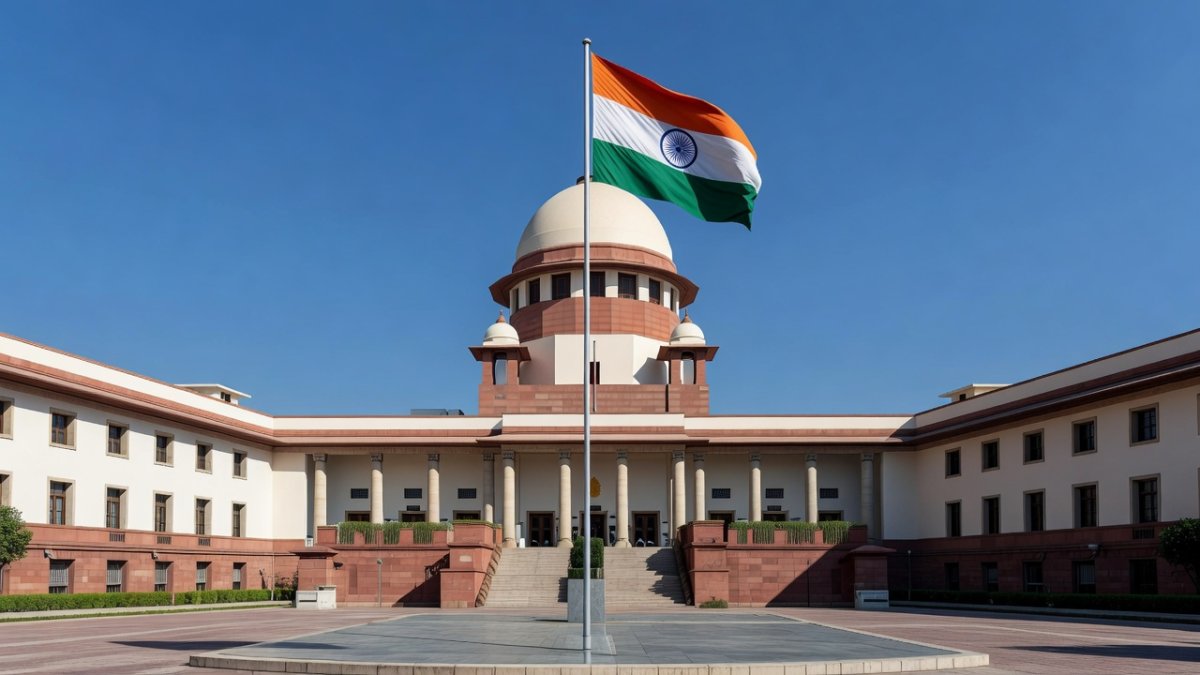
A convocation protest over the Chief Justice of India's presence nearly cost 70 graduating law students their careers — until the Supreme Court intervened and the Bar Council of India reversed itself within 48 hours.
Bar Council Apologises After 48-Hour NALSAR Freeze Sparks Supreme Court Rebuke
New Delhi, Delhi – August 15, 2026 — On the morning of Independence Day, Bar Council of India (BCI) Chairman Manan Kumar Mishra issued a public apology to law students across the country, expressing regret "if his words or communication hurt students." The statement capped a 48-hour regulatory crisis that began with a blanket ban on enrolling NALSAR University of Law's entire 2026 graduating batch as advocates, triggered a stinging rebuke from a Supreme Court bench led by Chief Justice Surya Kant, and ended with the BCI closing proceedings altogether. For the 70 students who signed a July 23 representation objecting to the CJI's presence at their convocation, the episode tested the constitutional limits of a statutory regulator's power over a single university — and the judiciary's willingness to defend student dissent.
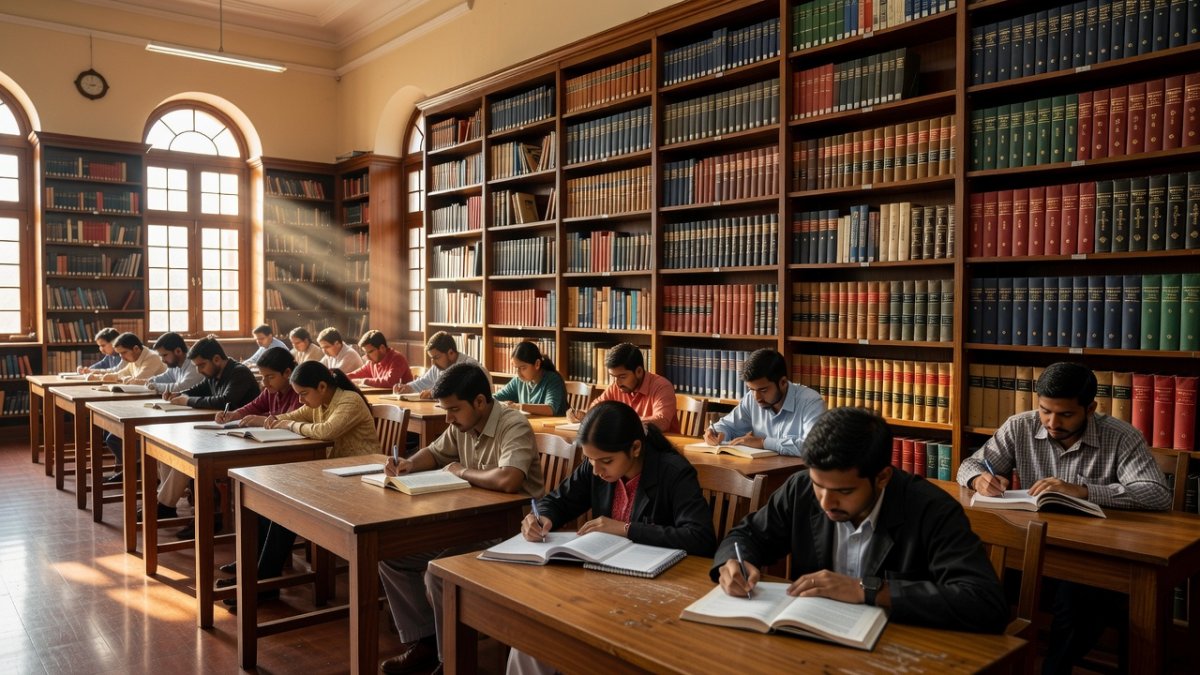
How a Convocation Dispute Became a Regulatory Crisis
The sequence began on July 23, 2026, when 70 members of NALSAR University of Law, Hyderabad's outgoing LLB batch submitted a formal representation to the university administration. Their objection: Chief Justice of India Surya Kant should not be the chief guest at their convocation. The students cited remarks made by CJI Kant during proceedings on a plea concerning alleged police excesses during student protests in Delhi. They argued that the convocation chief guest should reflect NALSAR's commitment to constitutional rights, access to justice, and reasoned engagement with grievances. Students from several other batches subsequently expressed solidarity with the outgoing batch's position.
The representation was a carefully worded constitutional argument, not a street protest. But it landed in the inbox of a regulator with a history of asserting its disciplinary authority. For nearly three weeks, the matter remained internal to the university. Then, on August 13, the BCI escalated it into a national controversy.
The Bar Council's 48-Hour Reversal: Three Positions in Two Days
On Thursday, August 13, BCI Chairman Manan Kumar Mishra issued a circular directing all State Bar Councils not to enrol any student who obtained a law degree from NALSAR in 2026 "till further orders." The circular simultaneously sought an authenticated report from the university within three days identifying those who had "initiated, organised, coordinated or mobilised" the campaign against the CJI.
Mishra's accompanying statement left no room for ambiguity about the Council's view. "A student of law, having no regard or respect for the highest judicial office of the country, is not expected to be a responsible or sensible advocate, teacher or a judge. Such persons shall always be a liability on the profession," he said.
Hours later, the BCI issued a second communication modifying the enrolment freeze. The "vast majority" of students were innocent, the Council conceded, and "no student shall be made to suffer without any fault on his part." But the inquiry remained — now directed at allegations that "a handful of teachers and outsiders were instrumental in instigating the innocent students."
NALSAR Vice-Chancellor Srikrishna Deva Rao responded cautiously, stating the university would first examine, under its governance regulations, whether an inquiry sought by the BCI was within its constitutional powers. That question — whether a statutory body can compel a university to conduct a disciplinary inquiry against its own faculty — became the legal crux of the matter.
On Friday, August 14, Mishra announced on X that the BCI had decided to "close the proceedings altogether" against the NALSAR 2026 batch, saying the batch "had no role in any disturbance or movement." In the same statement, he advised students: "Voice your opinions freely, but with respect and institutional decorum. The highest judicial office is our collective pride. Dissent is welcome in a democracy; public ridicule of it is often counterproductive."
Then came the Independence Day apology. In a letter to law students, Mishra expressed regret for any hurt caused by his words or communication, while defending peaceful protest and urging an "objective, fair and reconciliatory approach." The apology was notable for its timing — August 15 — and for its implicit acknowledgment that the BCI's initial response had been disproportionate.
Supreme Court's Rebuke: 'No Business to Interfere'
The BCI's reversal was not voluntary. It came hours after a Supreme Court bench of CJI Surya Kant with Justices Joymalya Bagchi and V Mohana came down heavily on the Council. Senior advocate K Parameshwar mentioned the matter before the bench, which directed the BCI to file its counter-affidavit within two weeks and restrained any punitive or criminal action against students or faculty of any national law university or other universities.
The CJI's remarks from the hearing were unambiguous. "The BCI is unnecessarily taking action in this matter. If students have a cause or a reason to protest, they have a right to protest. Nobody can stop them, and we will not allow this," he said. He added: "It is a dialogue between the students and me."
Perhaps most striking was the CJI's personal reflection: "In my younger days, I was also actively involved in student activities. They have a right to protest. Who can stop them? So long as they are lawfully and peacefully protesting, they have a right to raise their voice." He concluded: "We have to be large-hearted. They should be allowed to speak. Even if they are wrong, they have a right to speak."
Justice Bagchi raised a procedural question that cut to the heart of the BCI's legitimacy in this matter: had the Council actually been convened to issue the resolution? Parameshwar said he was informed by a BCI member from Kerala that no meeting of the Council had taken place. If true, the August 13 circular was not a decision of the full Council but an act of individual authority — a distinction with significant legal consequences under the Advocates Act 1961.
The CJI also told students through counsel to enrol as soon as possible and take Supreme Court Bar Association (SCBA) membership, signalling that the Court would not allow the BCI's freeze to derail their career timelines.
Regulatory Overreach and Due Process Under the Advocates Act
The BCI's statutory mandate under the Advocates Act 1961 is to regulate the legal profession and maintain standards of professional conduct. It is not a disciplinary authority over students who have not yet been enrolled. The August 13 circular attempted to impose collective punishment on an entire graduating batch — 70 signatories out of a batch that likely numbers several hundred — without any individual finding of misconduct, without a show-cause notice, and without an opportunity to be heard.
The "innocent until proven guilty" principle, fundamental to Indian constitutional jurisprudence, was inverted: the BCI presumed the entire batch liable until it could identify the "handful" of instigators. The second communication on August 13 acknowledged this flaw but did not cure it — the freeze remained in place pending an inquiry into teachers and outsiders.
This is not the first time an Indian regulator has overreached. The pattern is familiar: a statutory body, stung by criticism, responds with a sweeping order that punishes the many for the actions of a few, then retreats when confronted by judicial oversight. The BCI's 48-hour reversal — from blanket ban to modified freeze to complete closure — suggests the Council itself recognised the legal vulnerability of its position.
What This Means for India's Legal Education System
For NALSAR and the 25 national law universities across India, the episode sends a chilling signal. Campus dissent — whether over judicial remarks, police conduct, or any other matter — is now a regulatory risk. Students who sign representations, organise protests, or express solidarity with colleagues may face consequences not from their universities but from the body that controls their entry into the profession.
The practical stakes are enormous. Bar enrolment is the gateway to legal practice in India. Without it, a law degree from a national law university is a credential without a career. The BCI's freeze, even for 48 hours, created immediate uncertainty for the NALSAR 2026 batch — students who had completed five years of rigorous legal education and were preparing for enrolment, internships, and job placements.
The Supreme Court's restraint order, covering students and faculty of "any national law university or other universities," is a broader safeguard. It signals that the judiciary will not tolerate regulatory retaliation against lawful dissent in legal education institutions. But the order is temporary — the BCI has two weeks to file its counter-affidavit, and the matter will be heard further.
The Bottom Line
The BCI's apology on August 15, 2026, is welcome but incomplete. It does not explain why the Council issued a blanket ban without convening its full body, why it sought to compel a university to conduct an inquiry into its own faculty, or why it took a Supreme Court rebuke to reverse course. The CJI's remarks — that students have a right to protest, that they should be allowed to speak even if they are wrong — are now the operative legal principle.
For the 70 NALSAR students who signed the July 23 representation, the outcome is a vindication of their constitutional argument. For the BCI, it is a lesson in regulatory restraint. For India's legal education system, it is a reminder that the profession's future depends on graduates who can question authority — including the authority of the regulator itself.
The BCI's Independence Day apology acknowledges that dissent is welcome in a democracy. The Supreme Court has now made clear that it will enforce that principle. The question is whether the BCI will internalise it — or wait for the next crisis to force another reversal.
— By Dr. Raj Patel, Staff WriterThis article was produced with AI-assisted research and editorial support. Reporting is based on sources cited in the article.
What's Your Reaction?
 Like
0
Like
0
 Dislike
0
Dislike
0
 Love
0
Love
0
 Funny
0
Funny
0
 Wow
0
Wow
0
 Sad
0
Sad
0
 Angry
0
Angry
0

India/South Asia Correspondent at Global1.News. Analytical voice with a background in science and health journalism. Based in New Delhi, covering Indian politics, education, healthcare, technology, and policy. Breaks down complex data into clear, actionable reporting.












Comments (0)