
Black August 2026: Remembrance, Study and Resistance
August is a month that carries the weight of history for Black people everywhere — from the Haitian Revolution to the March on Washington, from Nat Turner's Rebellion to the Watts Uprising.
August is a month that carries the weight of history for Black people everywhere — from the Haitian Revolution to the March on Washington, from Nat Turner's Rebellion to the Watts Uprising. In recent years, a growing number of activists, artists and ordinary people across the United States and the wider diaspora have reclaimed this stretch of the calendar as Black August: a month of reflection, study and remembrance dedicated to the freedom fighters, revolutionaries and political prisoners who shaped the Black liberation movement.
Black August 2026: A Month of Remembrance, Study and Resistance Across the Diaspora
Dakar, Senegal — While February is widely known as Black History Month in the United States, a parallel tradition has grown in the shadows for nearly five decades: Black August. First celebrated in 1979, the observance commemorates the life and death of George Jackson, the Black Panther Party leader killed inside San Quentin State Prison in California, and honors generations of Black freedom fighters — both living and deceased. This year, as the world marks the observance's continued relevance, communities from Brooklyn to Dakar are using the month to study, organize and remember.
The Origins: George Jackson and the Birth of Black August
To understand Black August, one must first understand George Jackson. He was a Field Marshal of the Black Panther Party, a man whose intellectual fire burned bright even within the cold walls of California's prison system. In 1961, at just 19 years old, Jackson was sentenced to a "one-to-life" term for armed robbery — a punishment that effectively meant he would never live outside prison again. He spent 11 years inside, with seven and a half of those years in solitary confinement, a brutal isolation that would have broken lesser spirits.
Instead, Jackson transformed his cell into a university. He devoured the works of Karl Marx, V.I. Lenin, Mao Tse-Tung and Frantz Fanon, the Martinican psychiatrist whose writings on decolonization would profoundly shape his worldview. He wrote two books while incarcerated — "Soledad Brother" and "Blood in My Eye" — both of which became essential texts for the Black liberation movement. His letters, collected in "Soledad Brother," revealed a mind sharpened by oppression and a heart steeled for revolution.
Jackson's radicalization was accelerated by tragedy. W.L. Nolen, the inmate who first introduced him to radical politics, was assassinated by a prison guard in 1970. That same year, Jackson, along with fellow inmates Fleeta Drumgo and John Clutchette, was charged with murdering a white prison guard — a case that became known as the Soledad Brothers trial. The charges were widely seen as retaliation for the inmates' political organizing, and the case drew international attention to the conditions inside California's prisons.
The fight for the Soledad Brothers took a dramatic and bloody turn on August 7, 1970. George's younger brother, Jonathan Jackson, just 17 years old, staged an armed attack on the Marin County Courthouse. He entered the courtroom with weapons, freed three inmates, and demanded the release of the Soledad Brothers. The action ended in tragedy: Jonathan Jackson, along with inmates James McClain and William Christmas, was killed in the ensuing gunfire. Ruchell Magee, another participant, was shot and captured — he would go on to become one of the longest-held political prisoners in American history, finally released in 2023, the year he passed away.
Just over a year later, on August 21, 1971, George Jackson himself was killed during an uprising at San Quentin State Prison. The official account claimed he had smuggled a gun into the prison and was shot while attempting to escape. But the circumstances were disputed then, and they remain disputed now. The great writer James Baldwin captured the sentiment of an entire people when he wrote that "no Black person will ever believe that George Jackson died the way they tell us he did." Weeks later, the Attica prison rebellion erupted in New York — about 1,500 inmates seized control of the prison for four days starting September 9, 1971, and at least 29 people were killed when authorities stormed the facility. The spirit of resistance Jackson embodied was spreading.
"Study, Fast, Train, Fight": How Black August Is Observed
Black August is not a passive commemoration. It is built on four principles that demand active engagement: study, fast, train, fight. Those who observe the month commit themselves to political education, reading the works of revolutionaries past and present. They fast — some for the entire month, others on specific days — as a discipline of the body and a gesture of solidarity with those who hunger in prisons and in poverty. They train physically, understanding that liberation requires strength. And they fight, organizing in their communities for justice and liberation.
The Malcolm X Grassroots Movement has been at the forefront of mobilizing around Black August for decades. Founded in the 1990s, the organization has used the month to host teach-ins, film screenings, and political education sessions in cities across the United States. For them, Black August is not merely a historical remembrance but a living practice — a way to train a new generation of organizers in the traditions of the Black radical movement.
Black August serves as an alternative to Black History Month, which many activists argue has become too commercialized and sanitized. Where February often focuses on individual achievement and respectability politics, August centers collective struggle and revolutionary politics. It is a month that refuses to soften the edges of Black history, insisting instead on telling the full story — including the parts that make power uncomfortable.
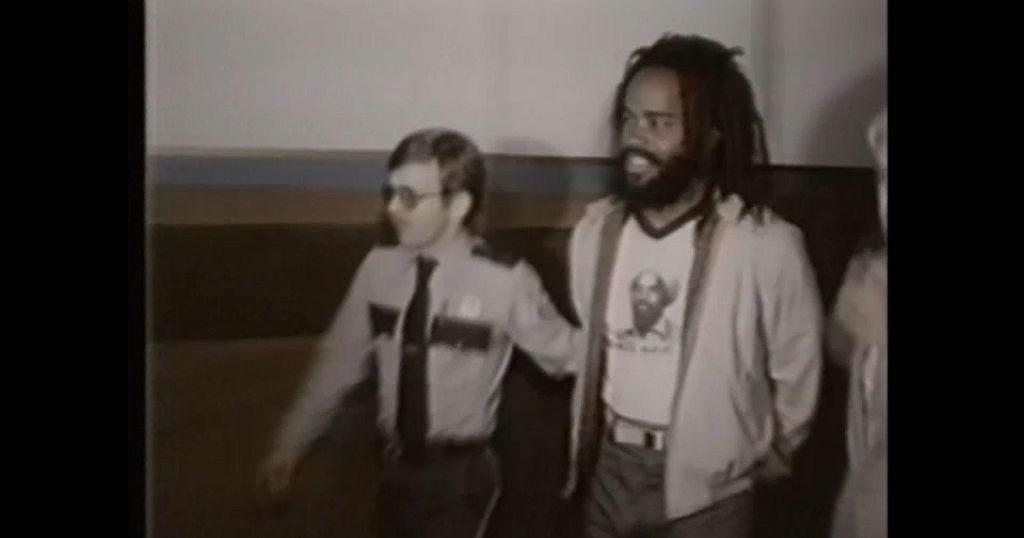
Central to the observance is the honoring of political prisoners. Mumia Abu-Jamal, the journalist and former Black Panther who has spent decades on death row and then in general population in Pennsylvania, remains a symbol of the ongoing persecution of Black political activists. Kamau Sadiki, a former member of the Black Liberation Army, remains incarcerated after more than four decades. And Assata Shakur, the godmother of the movement, lives in exile in Cuba, having escaped from a New Jersey prison in 1979. These are not distant historical figures; they are living testaments to the cost of resistance.
A Month Full of Revolutionary Dates
Why August? The answer lies in the extraordinary concentration of revolutionary dates within this single month. It begins with the Haitian Revolution, which started in August 1791 when enslaved Africans in the French colony of Saint-Domingue rose up against their oppressors. That revolution would ultimately defeat Napoleon's armies and establish the world's first Black republic — a feat that sent shockwaves through the slaveholding world.
August also marks Nat Turner's Rebellion of 1831, when an enslaved preacher in Virginia led a bloody uprising against slaveholders. Though the rebellion was crushed, it struck terror into the hearts of the Southern planter class and hardened the lines of the coming Civil War. Turner's willingness to sacrifice everything for freedom became a template for generations of resistance.
The modern civil rights era is also deeply embedded in August. The March on Washington for Jobs and Freedom took place on August 28, 1963, when Dr. Martin Luther King Jr. delivered his immortal "I Have a Dream" speech before a crowd of 250,000 people at the Lincoln Memorial. Two years later, in August 1965, the Watts Uprising erupted in Los Angeles — six days of rebellion against police brutality and economic despair that would redefine how America understood urban unrest.
The month also holds the birthdays of two towering figures: Fred Hampton, the charismatic chairman of the Illinois Black Panther Party, born August 30, 1948, and Marcus Garvey, the Jamaican Pan-Africanist who inspired millions with his vision of Black self-determination, born August 17, 1887. Both men, in their own ways, embodied the spirit of resistance that Black August celebrates.
And then there are the tragedies that bind the month together. Jonathan Jackson's courthouse action on August 7, 1970. George Jackson's assassination on August 21, 1971. These dates form a constellation of resistance within a single month — a reminder that the struggle for Black liberation has been waged, and paid for, in blood across centuries and continents.
Black August and the Arts: From Hip-Hop to BLM Murals
Black August has always had a cultural dimension. From its earliest days, the observance was carried not just through political organizing but through art, music and literature. Hip-hop, in particular, has served as a vessel for the memory of the Panthers and political prisoners. Rappers from Tupac Shakur — whose mother Afeni was a Panther — to contemporary artists have sampled the speeches of Malcolm X, referenced the writings of George Jackson, and kept the revolutionary tradition alive for new generations.
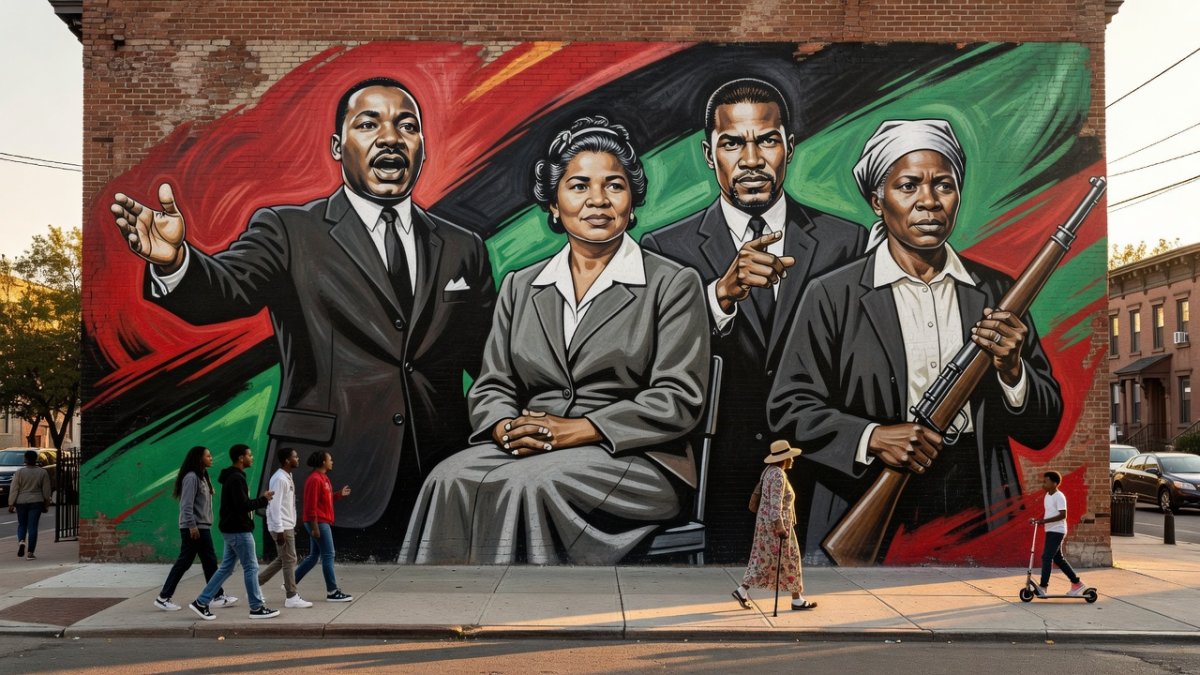
The visual arts have also been transformed by this legacy. Black Lives Matter protest art and murals continue the visual tradition of Panther-era imagery — the black berets, the raised fists, the bold typography of revolutionary posters. In cities across America, murals of George Floyd, Breonna Taylor and other victims of police violence stand alongside portraits of Huey Newton, Angela Davis and Assata Shakur, creating a visual continuum of resistance.
Here in Senegal, we understand this cultural power intimately. Our own tradition of politically engaged music, from the mbalax rhythms of Youssou N'Dour to the sharp lyrics of contemporary rappers, has long been a vehicle for social commentary and political critique. The connection between African liberation movements and African American struggle is not abstract — it is lived, felt and expressed through art. When Senegalese musicians sing about justice, they are echoing the same cry that George Jackson wrote from his cell in San Quentin.
The africanews video "Black August: A time of reflection and revolution" captures this cultural resonance, showing how the tradition has inspired artists, filmmakers and writers across the diaspora. From Brooklyn to Dakar, from London to Kingston, the cultural expressions of Black August remind us that our struggle is shared and our creativity is a weapon.
Black August as a cultural movement has had a significant impact in the arts — not just in the United States but globally. Film festivals have screened documentaries about the Panthers and political prisoners. Theaters have staged plays about the Soledad Brothers. Poets have written verses in honor of George Jackson. The month has become a cultural touchstone, a time when the creative community turns its attention to the unfinished business of liberation.
Black August 2026: What's Happening This Year
This year's Black August observances are particularly significant, coming at a moment of intense political polarization in the United States. The National Action Network, led by Rev. Al Sharpton, is planning a "March on Washington — Defend the Vote" rally at the Lincoln Memorial on August 28. The event aims to mobilize voters and defend voting rights against a wave of restrictive legislation sweeping through Republican-controlled states. As Tim Ford, a Brooklyn veteran activist, put it: "Black people have to realize if the Black vote didn't count Trump wouldn't be trying to take it away."
The December 12th Movement is organizing a rally in Brooklyn on August 29 to mark the 25th anniversary of the Durban Declaration and Program of Action. That 2001 United Nations conference was historic — it was the first time the international community declared the transatlantic slave trade and slavery crimes against humanity and said reparations are due to descendants. The anniversary rally will press for concrete action on reparations, a demand that has gained momentum in recent years.
In Brooklyn's Bedford-Stuyvesant neighborhood, the Universal Hip-Hop Parade for Social Justice is hosting a Marcus Garvey Mixer on August 15. The event celebrates the legacy of the Pan-African leader whose name adorns Marcus Garvey Blvd — reportedly the only street in the United States named after the Pan-African leader. The mixer brings together artists, activists and community members to honor Garvey's vision of Black self-determination and economic empowerment.
Community festivals and film screenings are taking place across the country, from Oakland to Harlem to Atlanta. Churches are hosting teach-ins on the history of Black August. Book clubs are reading "Soledad Brother" and "Blood in My Eye." Young people are being introduced to the tradition for the first time, learning about George Jackson and the Soledad Brothers, about Jonathan Jackson's sacrifice and Assata Shakur's exile.
The tradition has grown far beyond the United States. In Canada, the United Kingdom, Brazil and across the Caribbean, Black August observances are being organized. Here in Africa, the month is gaining recognition as a time to reflect on the connections between the diaspora and the continent. The observance has grown from prison study groups into a month-long awareness campaign and celebration — and in 2026, it shows no signs of slowing down.
Why Black August Matters for Africa
For African audiences, Black August resonates deeply because it speaks to our own history of resistance. The transatlantic slave trade, which the Durban Declaration of 2001 declared a crime against humanity, tore millions of our ancestors from this continent. The struggle of George Jackson and the Panthers is, in a very real sense, the continuation of that history — the refusal of enslaved and oppressed people to accept their condition.
Senegalese people understand this connection intimately. Our own history is filled with resistance — from the kingdoms that fought against the slave trade to the independence movement led by figures like Léopold Sédar Senghor. When we see images of Black Lives Matter protests in American streets, we recognize the same spirit that animated our own struggle against colonialism. The fight for justice is universal, even if its expressions are local.
The global resonance of figures like George Jackson and Assata Shakur extends far beyond the United States. In Senegal, young activists study their writings alongside the works of Amílcar Cabral, the Cape Verdean revolutionary who led the independence movement in Guinea-Bissau. The intellectual tradition of Black radicalism is not an American monopoly — it is a Pan-African inheritance.
African journalists and cultural commentators are paying increasing attention to Black August. The africanews video "Black August: A time of reflection and revolution" is just one example of how African media are covering this tradition. There is a growing recognition that the struggles of the diaspora are our struggles too — that the fight against racism, police violence and economic exploitation in America is connected to the fight against neocolonialism and inequality in Africa.
Jonathan Peter Jackson, George Jackson's nephew, told the Associated Press that it is important to commemorate now while the people who lived through that radical era "are entering their golden years." His words carry a warning: if we do not preserve this history, if we do not pass it on to the next generation, it will be lost. For Africa, this is a call to renewed Pan-African solidarity — a reminder that our fates are intertwined across the Atlantic.
What to Watch For
As Black August 2026 unfolds, there is much to watch for. The August 28 March on Washington — "Defend the Vote" — will be a key test of the movement's ability to mobilize. Organizers hope to draw hundreds of thousands to the Lincoln Memorial, recreating the energy of the 1963 March while addressing the specific threats of 2026: voter suppression, gerrymandering, and the erosion of democratic norms. The success of this rally will signal whether the Black freedom movement can translate its cultural power into political power.
The Durban Declaration anniversary events on August 29 will also be significant. Twenty-five years after the international community declared the transatlantic slave trade and slavery crimes against humanity, the demand for reparations has moved from the margins to the mainstream. The Brooklyn rally will press for concrete steps — not just apologies, but actual compensation for the descendants of enslaved people. How the international community responds will be a test of whether the Durban Declaration was merely words or a genuine commitment.
By Amara Diop, Staff Writer
This article was produced with AI-assisted research and editorial support. Reporting is based on sources cited in the article.
What's Your Reaction?
 Like
0
Like
0
 Dislike
0
Dislike
0
 Love
0
Love
0
 Funny
0
Funny
0
 Wow
0
Wow
0
 Sad
0
Sad
0
 Angry
0
Angry
0
West Africa/Sahel Correspondent at Global1.News. Dakar-based journalist covering politics, security, climate, and development across Francophone and Anglophone West Africa. Tells the stories of a region undergoing profound transformation.











Comments (0)