
Aziz Abdul Disqualification Revives Uganda's Dark Legacy
Ugandan boxer Aziz Abdul, grandson of dictator Idi Amin, was disqualified for headbutting England's Damar Thomas at the Glasgow Commonwealth Games - ending his bid for Uganda's first boxing medal in over three decades and reigniting painful memories of his grandfather's brutal rule.
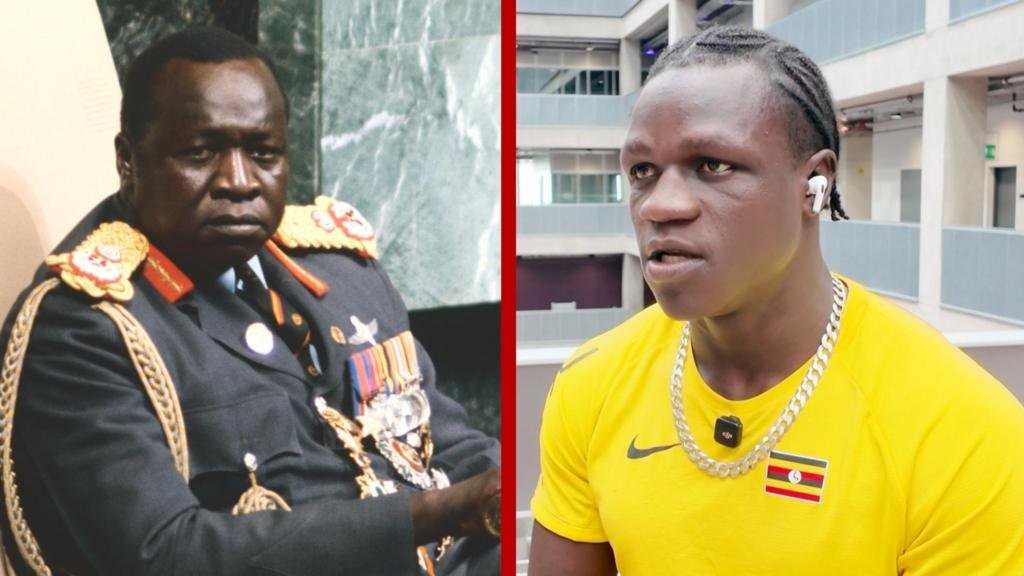
The roar of the Glasgow crowd turned to a gasp of disbelief on 29 July 2026, as Ugandan super-heavyweight Aziz Abdul saw his Commonwealth Games dream end in disqualification. For the grandson of Idi Amin, the defeat was not just a sporting loss—it was a collision with a legacy that has followed him from Kampala to Scotland.
Boxer's Disqualification Revives Uganda's Darkest Legacy
Glasgow, Scotland — The 25-year-old boxer, known in the ring as "Aziz Ringo," was disqualified in the third round of his men's super-heavyweight (90+kg) quarter-final against England's Damar Thomas, after officials ruled he had committed two headbutts. The decision handed victory to Thomas without judges' scorecards, ending Abdul's bid to secure Uganda's first Commonwealth Games boxing medal in more than three decades.
The Fight and the Disqualification
The quarter-final bout had been building toward a dramatic climax when the referee intervened. Abdul, who had entered the ring with the swagger of a fighter carrying a famous name, was leading the exchanges against Thomas before the headbutts changed everything. Reports from the arena indicate the first incident drew a warning, but the second left officials with no choice but to disqualify the Ugandan.
For Thomas, the victory was a stroke of fortune—a passage to the semi-finals without the gruelling final rounds that often define championship boxing. For Abdul, it was a bitter end to a campaign he had promised would end with him on the podium.
The disqualification sent shockwaves through the Ugandan contingent, who had travelled to Scotland hoping to witness history. Abdul had been seen as the nation's best hope for a boxing medal, a feat Uganda has not achieved at the Commonwealth Games in over thirty years.
The Vow Before the Fall
Just three days before the fight, on 26 July 2026, Abdul had stood before the media with the confidence of a man who believed destiny was on his side. "I will be the new king of Scotland," he declared, a promise that now rings hollow in the aftermath of his disqualification. He also vowed to become "the baddest man in the Commonwealth," a phrase that carried particular weight given his family history.
The bravado was typical of Abdul, who has cultivated a persona as a showman in the ring. But in Glasgow, his words took on an edge that transcended sport. For a man carrying the surname Amin, the promise to be "the baddest" was always going to invite scrutiny—and perhaps a level of attention that no athlete should have to bear.
His pre-fight comments now serve as a cautionary tale about the fine line between confidence and hubris in elite sport. The "king of Scotland" will not be crowned in the boxing ring this year, and the "baddest man in the Commonwealth" title belongs to someone else entirely.
A Name That Echoes Through Uganda's History
To understand the weight Aziz Abdul carries, one must look back to the man whose name he bears. Idi Amin seized power in Uganda in a 1971 military coup, ruling with an iron fist until his overthrow in 1979. His eight-year regime is remembered as one of the darkest chapters in African history, with human rights organizations estimating hundreds of thousands of deaths during his rule.
Amin's atrocities included political executions, ethnic persecution, and the expulsion of Uganda's Asian community in 1972—a decision that devastated the nation's economy and international standing. His reign of terror forced countless Ugandans into exile, and his legacy remains a source of deep pain and division in the country today.
After his overthrow, Amin fled to Libya and later settled in Saudi Arabia, where he lived in exile until his death in 2003 at the age of 75. He never faced justice for the crimes committed during his rule, a fact that continues to haunt Uganda's collective memory.
For Aziz Abdul, this is the inheritance he carries into every fight. The name Amin is not merely a surname—it is a symbol of a traumatic past that many Ugandans would rather forget. Yet here was his grandson, standing in a Glasgow ring, trying to forge a new identity through sport.
Boxing Runs in the Family
There is a cruel irony in Abdul's chosen profession. Before Idi Amin became a dictator, he was a boxer—and a successful one at that. Amin held Uganda's light-heavyweight boxing title for several years, using his physical prowess and imposing stature to build a reputation that would later serve him in politics.
Boxing was Amin's gateway to prominence, just as it is now for his grandson. The sport gave Amin a platform, discipline, and a public profile that he would later leverage to seize power. For Aziz Abdul, boxing offers a different kind of escape—a chance to be known for something other than his family name.
The parallels are impossible to ignore. Both men entered the ring with something to prove, both possessed the physical gifts required to succeed, and both understood the power of a public persona. But where Amin used boxing as a stepping stone to tyranny, Abdul has spoken of his desire to bring pride to Uganda through sport.
Whether he can escape the shadow of his grandfather remains an open question. In Glasgow, the answer seemed to be no — the disqualification was not about his name, but the weight of expectation and the pressure of carrying a famous name may, as observers suggested, have contributed to his undoing.
The Racism Claim and the Rejection
In the immediate aftermath of his disqualification, Abdul did not accept the officials' decision quietly. In a post-fight interview, he angrily accused the referees of bias and racism, suggesting that English boxers were given preferential treatment throughout the tournament.
"Of course it's unfair," Abdul said in the post-fight interview, his voice thick with frustration. "When you watch the previous fights of England, their boxers create a lot of fouls and they play a lot of bull****."
The accusation was a serious one, levelled at the integrity of the Commonwealth Games officiating. But it was swiftly rejected by the president of Commonwealth Sport, the organisation that runs the Games. The official response made clear that the disqualification was based on the rules of boxing, not on any bias against Abdul or Uganda.
The exchange highlights the emotional volatility that can follow a controversial decision in elite sport. For Abdul, the disqualification was not just a loss—it was an injustice that he believed was rooted in something deeper than a headbutt. For the officials, it was a straightforward application of the rules.
In the court of public opinion, the verdict is likely to be split. Some will see a young man struggling to cope with disappointment, while others will view his accusations as a refusal to accept responsibility for his actions in the ring.
A Nation Watching
Back in Uganda, the disqualification was felt as a collective blow. Abdul had been carrying the hopes of a nation that has endured decades of political turmoil and economic hardship. A Commonwealth Games medal would have been a rare moment of sporting glory—a chance for Ugandans to celebrate something positive on the international stage.
The significance was not lost on Abdul himself. In the lead-up to the Games, he spoke of his desire to win for Uganda, to give his country something to cheer about. The fact that he fell short, and in such controversial circumstances, has left a bitter taste for many.
But Uganda's relationship with the Amin name is complicated. For older generations, the name evokes memories of fear, loss, and suffering. For younger Ugandans, born after Amin's fall, it is a chapter in a history book—distant, but still painful. Abdul's presence in Glasgow forced a reckoning with that past, whether he intended it or not.
Some Ugandans have embraced Abdul as a symbol of redemption, a young man trying to reclaim a family name that has been tarnished by history. Others view him with suspicion, unable to separate the grandson from the grandfather. In Glasgow, the disqualification has only deepened the ambiguity.
What Comes Next
The immediate aftermath of the disqualification is likely to be a period of reflection for Abdul. He must decide whether to appeal the decision, accept the outcome, or channel his frustration into future competitions. At 25, he has time on his side—time to rebuild his reputation, to prove that he is more than the sum of his family history.
But the burden of the Amin name will not disappear. Every fight Abdul enters will be scrutinised through the lens of his grandfather's legacy. Every victory will be framed as a redemption story; every defeat will be seen through the shadow of Uganda's darkest era.
For African sport, Abdul's story is a reminder of the complex histories that athletes carry with them. Sport has the power to unite, to heal, and to transcend—but it cannot erase the past. Abdul's journey is not just about boxing; it is about identity, legacy, and the struggle to define oneself on one's own terms.
Whether he returns to the ring or walks away, Aziz Abdul has already made his mark on the Commonwealth Games. The question now is what he does with that mark—and whether he can turn the weight of his name into a source of strength rather than a burden.
In Glasgow, the "new king of Scotland" was dethroned before he could be crowned. But for Aziz Abdul, the fight is far from over.
This article was produced with AI-assisted research and editorial support. Sources: BBC Sport, The Guardian, The Telegraph.
By Amara Diop, Staff WriterWhat's Your Reaction?
 Like
0
Like
0
 Dislike
0
Dislike
0
 Love
0
Love
0
 Funny
0
Funny
0
 Wow
0
Wow
0
 Sad
0
Sad
0
 Angry
0
Angry
0

West Africa/Sahel Correspondent at Global1.News. Dakar-based journalist covering politics, security, climate, and development across Francophone and Anglophone West Africa. Tells the stories of a region undergoing profound transformation.














Comments (0)