
Watch: Moment troops raid home and capture Mexican drug lord
The operation, which unfolded in the northern state of Sinaloa, marks a rare moment when the shadowy world of cartel leadership is exposed in real time, and it underscores the relentless pressure Mexican forces have placed on drug networks that have long evaded justice.

Newly released body‑camera footage has given the public a stark glimpse of a high‑stakes raid that ended with the capture of a notorious Mexican drug lord, Fausto Isidro Meza Flores, known in the underworld as “El Chapo Isidro.” The video, released by Mexico’s defence secretariat, shows armed troops forcing entry through a garage, confronting the fugitive, and securing him after a tense standoff. The operation, which unfolded in the northern state of Sinaloa, marks a rare moment when the shadowy world of cartel leadership is exposed in real time, and it underscores the relentless pressure Mexican forces have placed on drug networks that have long evaded justice.
Behind the Raid: How the Operation Unfolded
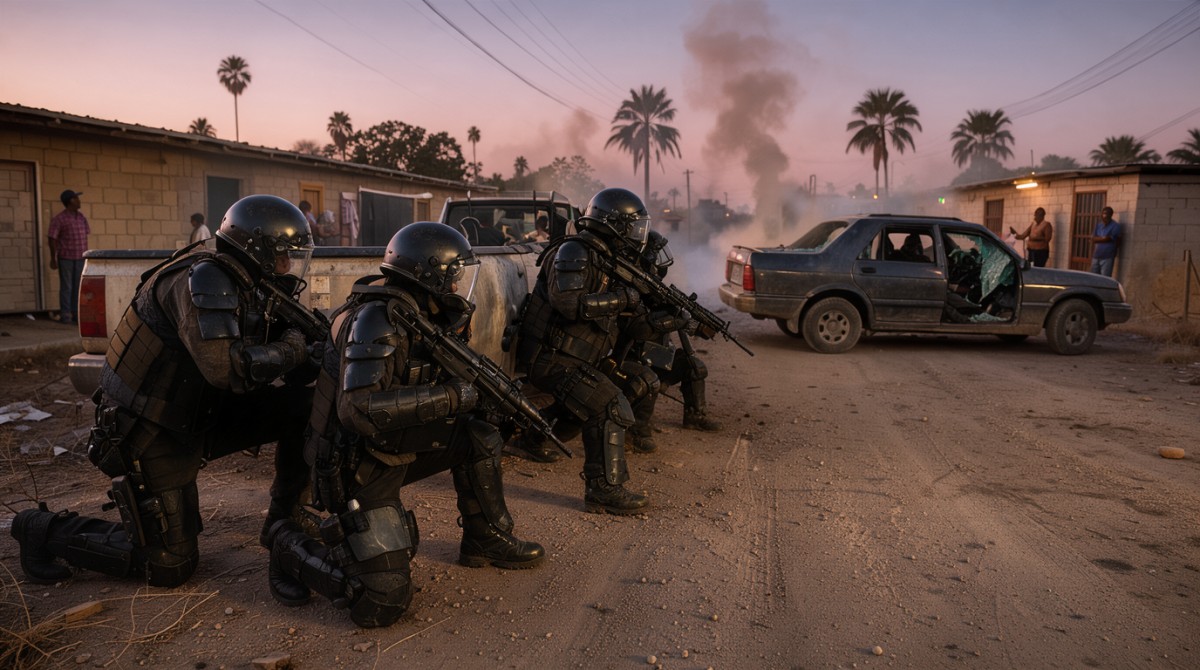
The footage begins with a convoy of military vehicles pulling up to a modest house on a quiet street. Troops, equipped with rifles and body‑cameras, breach the garage door and move swiftly inside, clearing rooms with disciplined coordination. Within minutes they locate Meza Flores, who appears taken by surprise. The video captures the moment the soldiers handcuff the drug lord, confirming his identity as the man on the FBI’s most‑wanted list. The operation, according to the defence secretariat, was part of a broader effort to disrupt cartel command structures in Sinaloa, a state that has long been a stronghold for narcotics trafficking.
While the body‑cam does not reveal the full tactical plan, the precision of the entry suggests extensive intelligence work and careful planning. The troops’ entry through the garage, rather than a more conspicuous front door, hints at an attempt to minimize resistance and avoid alerting any armed guards that might have been present. The rapid apprehension of Meza Flores, without a protracted gunfight, points to the element of surprise as a key factor in the success of the raid.
The Human Cost: Casualties on Both Sides
The same secretariat report notes a grim tally of casualties linked to the operation. Seven suspects were killed during the raid, a stark reminder of the lethal force often unleashed when state actors confront heavily armed cartel members. In addition, four members of the Mexican army lost their lives while traveling to reinforce security in the nearby town of Guasave. Their deaths underscore the perilous nature of the mission and the broader risks faced by security forces operating in cartel‑dominated regions.
These losses have reverberated through the local community, where families of the fallen soldiers mourn their loss while grappling with the reality that the state’s fight against drug trafficking exacts a heavy toll. The deaths also fuel a narrative of sacrifice that the government leverages to justify continued militarized approaches to the drug war, even as critics question the long‑term efficacy of such tactics.
Immediate Aftermath: A Wave of Unrest
The capture of El Chapo Isidro sparked an immediate surge of unrest across Sinaloa. Local authorities reported a spike in violent incidents as rival factions and loyalists to the captured drug lord reacted to the power vacuum. Within days, eight alleged cartel members were detained for their involvement in retaliatory violence. This rapid crackdown reflects the authorities’ intent to prevent the situation from spiraling into a broader conflict that could further destabilise the region.
Community leaders and residents, however, expressed anxiety over the escalation. In towns bordering the operation site, residents reported hearing gunfire and seeing armed convoys, heightening fears that the crackdown could spill over into civilian areas. The tension illustrates the delicate balance that Mexican authorities must maintain: asserting control over cartel territories while avoiding the alienation of local populations who often find themselves caught between armed groups and state forces.
Cartel Dynamics: What the Capture Means for Sinaloa’s Drug Trade
El Chapo Isidro was a senior figure in a cartel that has long dominated the drug routes flowing through Sinaloa. His removal from the field disrupts the chain of command, potentially leading to internal power struggles as sub‑leaders vie for control. Historically, the removal of high‑ranking cartel figures has triggered fragmentation, with splinter groups emerging to fill the void, sometimes resulting in heightened violence as new leaders assert dominance.
Analysts familiar with the region note that while the capture of a single kingpin can deliver a symbolic victory, it rarely dismantles the underlying networks that sustain the drug trade. The cartel’s logistical capabilities, entrenched corruption, and deep‑rooted social ties mean that other operatives can step in, preserving the flow of narcotics. Nonetheless, the operation sends a clear message that the Mexican state remains committed to targeting top‑level leaders, a stance that could deter other high‑profile fugitives.
International Implications: The FBI’s Role and Cross‑Border Cooperation
The fact that Meza Flores appeared on the FBI’s most‑wanted list highlights the transnational nature of the drug trade and the collaborative efforts required to combat it. While the footage does not show direct American involvement, the presence of the drug lord on a U.S. list indicates that U.S. agencies have been tracking his activities and likely shared intelligence with Mexican counterparts. This cooperation reflects a broader pattern of joint operations aimed at curbing the flow of illegal narcotics into the United States.
Nevertheless, the reliance on foreign intelligence raises questions about sovereignty and the balance of power in the bilateral relationship. Critics within Mexico argue that excessive dependence on U.S. agencies can undermine domestic agency and fuel narratives of foreign interference, especially in a region historically wary of external meddling. The capture, therefore, sits at the intersection of effective law‑enforcement collaboration and the enduring tension over national autonomy.
Public Perception: Media, Narrative, and the Human Face of the Raid
The release of the body‑camera footage has been a calculated move by the defence secretariat to shape public perception. By allowing citizens to witness the moment troops apprehend a notorious criminal, the government aims to bolster confidence in its security strategy and demonstrate tangible results in the fight against organized crime. The visual evidence of disciplined troops and the swift arrest serves as a powerful narrative tool, reinforcing the image of a state capable of confronting powerful criminal enterprises.
At the same time, the footage also humanises the conflict. Viewers see the stark reality of armed men entering a civilian home, the tension of a sudden confrontation, and the tragic loss of soldiers on the ground. These images remind the public that the drug war is not an abstract policy debate but a lived experience that touches families, neighborhoods, and the very fabric of daily life in Mexico’s most affected regions.
Looking Forward: What Comes After El Chapo Isidro?
With Meza Flores now in custody, the immediate question is how the Mexican state will proceed. Authorities have signalled an intent to continue a hard‑line approach, targeting remaining cartel operatives and dismantling the infrastructure that supports drug trafficking. The recent detentions of eight alleged cartel members suggest a sustained crackdown aimed at preventing a resurgence of violence.
Long‑term success, however, will depend on addressing the socioeconomic conditions that fuel the drug trade. Poverty, limited economic opportunities, and weak state presence in remote areas create fertile ground for cartels to recruit and operate. As the region grapples with the aftermath of the raid, policymakers must balance aggressive enforcement with investments in community development, education, and transparent governance if they hope to break the cycle of violence that has plagued Sinaloa for decades.
This article was produced with AI-assisted research and editorial support. Reporting is based on the source material cited below. Sources: BBC News Latin America; bbc.co.uk; Global1.News (24 November 2026).
By Elena Vasquez, Staff Writer
What's Your Reaction?
 Like
0
 Dislike
0
 Love
0
 Funny
0
 Wow
0
 Sad
0
 Angry
0

Latin America Correspondent at Global1.News. Based in Mexico City, covering politics, economics, energy, and culture across the region. Brings an on-the-ground perspective to stories spanning from the Rio Grande to Patagonia.













Comments (0)