
Two men arrested after suspected burglary at Royal family’s Sandringham country house
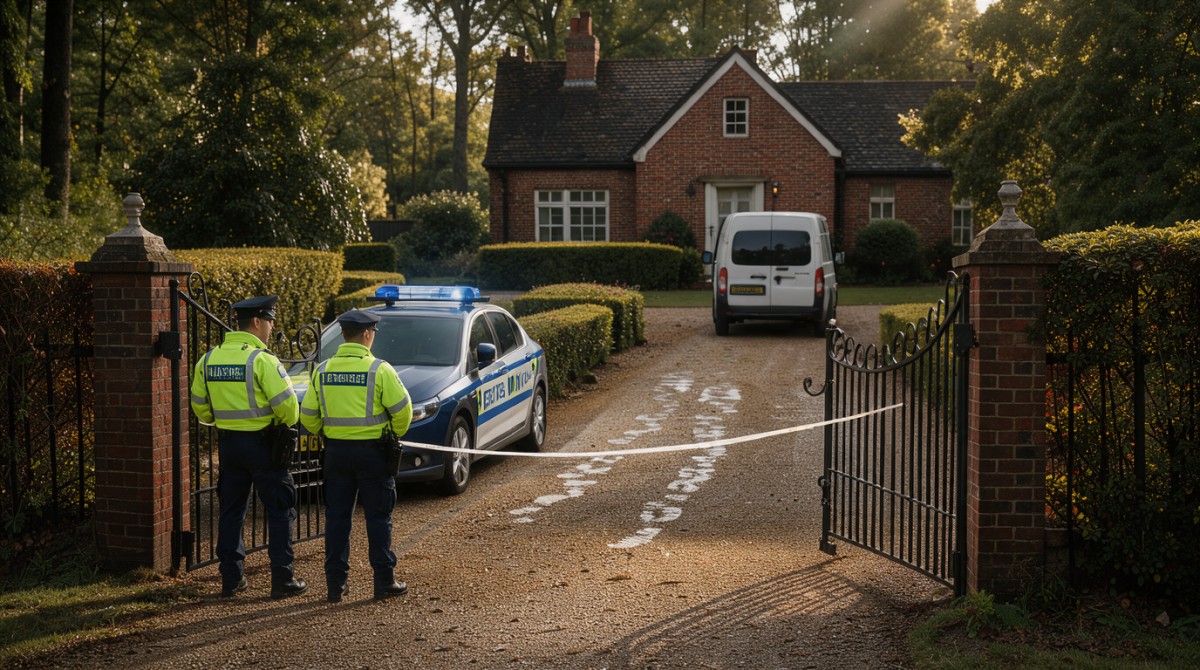
British police have taken two men into custody on suspicion of breaking into Anmer Hall, a residence on the Royal Family’s Sandringham Estate in Norfolk.
British police have taken two men into custody on suspicion of breaking into Anmer Hall, a residence on the Royal Family’s Sandringham Estate in Norfolk. The property, which serves as a weekend and holiday retreat for Prince William and Catherine, Duchess of Cambridge, was the focus of a police operation that resulted in the arrests, although no formal charges have been laid at this stage. The incident, reported by CBC News on 24 November 2026, raises questions about security at high‑profile heritage sites, the legal processes surrounding alleged property crimes in the United Kingdom, and the broader relevance of such events to Canadians who follow the monarchy as part of Canada’s constitutional framework.
Background to the Anmer Hall incident
The Sandringham Estate, owned by the British Crown, includes a number of historic houses, farms and gardens that have been used by successive generations of the Royal Family. Anmer Hall, one of the estate’s country homes, is known to be a private retreat for the Duke and Duchess of Cambridge, who have been reported to spend weekends and holidays there. The CBC video notes that British police arrested two men on suspicion of burglary at this location, but it also emphasises that the suspects have not yet been charged.
Because the report does not disclose the identities of the arrested individuals, the exact circumstances of their alleged entry remain unclear. No details were provided about how the police became aware of the intrusion, whether any items were taken, or if any damage was observed. The absence of charges at this point suggests that the investigation is ongoing and that authorities are still gathering evidence to determine whether formal prosecution is warranted.
In Canada, the monarchy retains a symbolic presence as the head of state, represented by the Governor General. Incidents involving royal residences abroad are therefore of interest to Canadians, not only as a matter of curiosity but also as a reminder of the security challenges that accompany historic and high‑profile properties. The Anmer Hall case illustrates how even well‑guarded royal sites can become targets, prompting discussions about the adequacy of protective measures.
Legal context of burglary allegations in the United Kingdom
Under English law, burglary is defined as entering a building or part of a building as a trespasser with the intent to steal, inflict grievous bodily harm, or cause unlawful damage. The Crown Prosecution Service (CPS) determines whether there is sufficient evidence to bring charges, taking into account factors such as the seriousness of the offence, the presence of any aggravating circumstances, and the suspect’s criminal history.
The CBC report’s statement that the men “have yet to be charged” indicates that police have likely completed an initial arrest and are now forwarding the case to the CPS for review. In practice, this means the suspects could be released on bail pending further investigation, or they could be detained if the police deem them a flight risk or a continuing threat to the property.
For Canadians watching the footage, the procedural transparency of the UK system offers a point of comparison with our own criminal justice processes. In Canada, a similar chain of custody exists, where police lay charges and the Crown prosecutor decides whether to proceed to court. Understanding these parallels helps readers appreciate the rule‑of‑law foundations that both countries share, even as the specific statutes differ.
Security implications for heritage sites
The fact that two individuals were able to approach a royal residence despite the estate’s high security profile raises broader concerns about the protection of heritage sites. Sandringham, like many historic estates, balances public access with private use, and its extensive grounds are often open to visitors during certain times of the year. This openness can create vulnerabilities that opportunistic intruders might exploit.
Security experts in Canada have long warned that heritage properties—whether museums, historic houses or cultural landmarks—require layered protection strategies. These can include physical barriers, surveillance technology, and rapid response protocols. While the CBC video does not detail the exact security measures in place at Anmer Hall, the incident suggests that even robust systems may be circumvented, prompting a review of risk assessments.
Canadian institutions that manage historic sites, such as Parks Canada and provincial heritage organisations, may look to the Anmer Hall case as a cautionary example. The incident underscores the importance of regular security audits, staff training, and coordination with local law enforcement to mitigate the risk of burglary, vandalism or other unlawful intrusions.
Public reaction and media coverage
The CBC report frames the story within its broader mandate to keep Canadians informed about international events that intersect with Canadian interests. The coverage highlights the arrest without sensationalising the details, adhering to the outlet’s standard of measured reporting. Canadian audiences, accustomed to following the monarchy’s activities, are likely to view the incident through a lens of curiosity about royal life and concern for the preservation of historic properties.
Social media reactions in Canada often amplify such stories, with users sharing the video clip and adding commentary about the relevance of the monarchy to Canadian identity. Some commentators may question the cost of royal security, while others may express sympathy for the victims of the alleged burglary. The measured tone of the CBC piece helps to keep the discourse focused on factual developments rather than speculation.
In the context of Global1.News, the story will be presented with a similar emphasis on factual accuracy, linking the incident to Canadian perspectives on heritage protection, legal processes, and the constitutional role of the Crown. By providing context rather than sensational headlines, the article aligns with the outlet’s commitment to balanced, evidence‑based journalism.
Implications for Canada‑UK relations
Incidents involving the Royal Family can have subtle diplomatic reverberations, given the symbolic ties between Canada and the United Kingdom. While a burglary at a private royal residence does not directly affect bilateral policy, it can influence public perception of the monarchy and, by extension, of the shared heritage that underpins Canada‑UK relations.
Canadian officials, including the Governor General’s office, may issue statements of concern or solidarity when high‑profile events occur within the royal family’s sphere. Such gestures reinforce the constitutional link while acknowledging the human dimension of the monarchy. The CBC video’s neutral reporting style reflects an understanding of this diplomatic nuance.
From a policy standpoint, the incident may prompt Canadian heritage bodies to review any collaborative security arrangements they have with UK counterparts, particularly in the realm of best‑practice sharing for protecting historic sites. While no formal agreements are mentioned in the source material, the shared interest in safeguarding culturally significant properties could foster informal exchanges of expertise.
Looking ahead: next steps in the investigation
As the CBC report notes, the two men arrested at Anmer Hall have not yet faced formal charges. The next phase will involve the Crown Prosecution Service reviewing the evidence gathered by the police, which may include forensic analysis, witness statements and any recovered items. Depending on the outcome, the suspects could be charged with burglary, or the case could be dismissed if insufficient proof is found.
For Canadian readers, the procedural timeline offers a reminder of the importance of due process. The principle that individuals are presumed innocent until proven guilty is a cornerstone of both the UK and Canadian legal systems. Observers will likely monitor court filings and any subsequent statements from British authorities to gauge the seriousness of the alleged offence.
In the meantime, the incident serves as a case study in how high‑profile properties balance openness with security, and how law enforcement agencies respond to breaches. As Global1.News continues to follow the story, further updates will be provided as new information emerges, ensuring that Canadians receive accurate, contextualised coverage of events that intersect with our nation’s constitutional heritage.
By Alex Thompson, Staff Writer
This article was produced with AI-assisted research and editorial support. Reporting is based on the source material cited below. Sources: CBC News video report (24 November 2026); CBC News; Global1.News
What's Your Reaction?
 Like
0
 Dislike
0
 Love
0
 Funny
0
 Wow
0
 Sad
0
 Angry
0

Canada Correspondent at Global1.News. Based in Toronto, covering Canadian politics, energy, trade, and US-Canada relations. Provides the Canadian perspective on North American and global affairs.














Comments (0)