
Anthropic’s 7 founders cashed out nearly $2B in record-breaking IPO
Anthropic’s IPO blew the roof off the usual tech‑funding playbook, and as a founder who’s been wiring up data centres for a decade, I can’t help but stare at the numbers and wonder how many of us on the independent hosting side will ever get a slice of that pie.
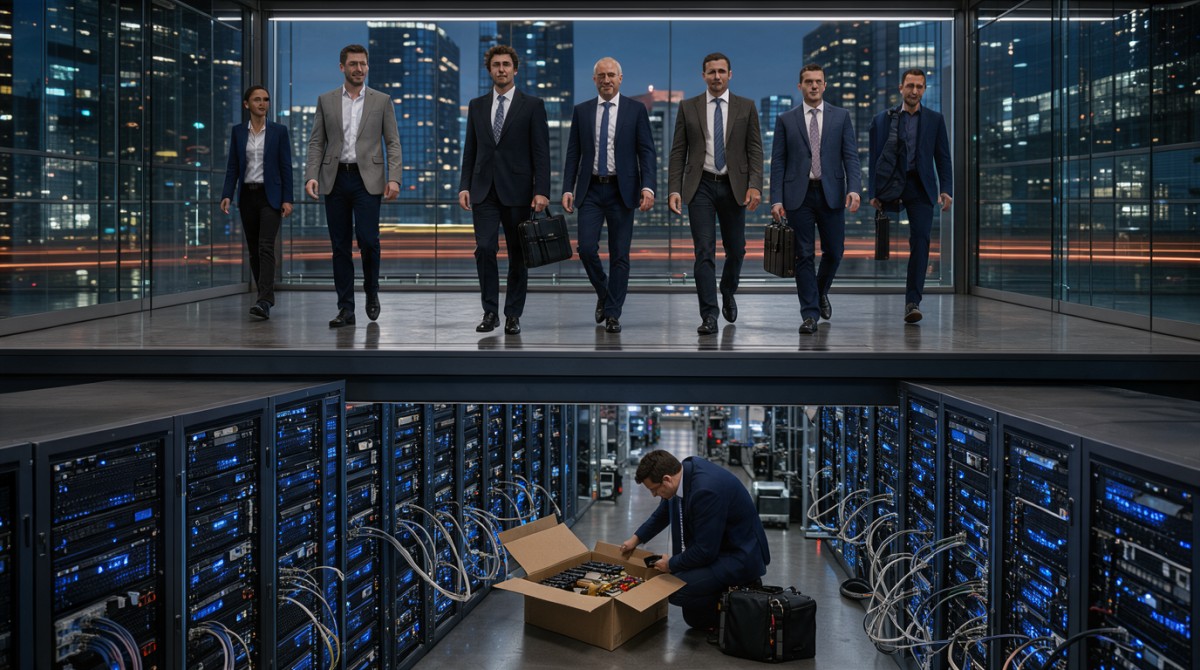
Anthropic’s IPO blew the roof off the usual tech‑funding playbook, and as a founder who’s been wiring up data centres for a decade, I can’t help but stare at the numbers and wonder how many of us on the independent hosting side will ever get a slice of that pie. The company walked off the block with an $81.3 billion haul, including a $1.95 billion cash‑out for its seven founders. At $83 a share each founder walked away with roughly $280 million before the usual underwriting fees and taxes. That’s a cool $30 million extra over the $250 million they’d pencilled in at the midpoint $74 price. It’s a headline‑grabbing payday, but the deeper story is the staggering scale of the compute and infrastructure spend that underpins Anthropic’s AI engine.
Founders’ Windfall and the Philanthropy Clause
The seven co‑founders each sold about 3.4 million shares in the IPO, netting around $280 million apiece. The filing notes that each founder pledged to allocate 80 % of their personal equity to philanthropy – a “voluntary, revocable expression” rather than a binding legal duty. In plain English, if the cash doesn’t stretch far enough for their lifestyle, they can pull back on the charitable promises. That kind of flexibility is a luxury most of us in the hosting world can’t afford; our equity is tied up in servers, power contracts and the relentless need to keep the lights on.
What this tells us is that even at the very top, the founders are hedging against a future where the cash flow from an AI venture could be as volatile as the compute costs that drive it. It’s a reminder that the “founder‑rich” narrative often masks a very real risk: the capital intensity of modern AI is so massive that even a $280 million windfall can feel like a drop in the bucket when you’re staring at a trillion‑dollar infrastructure horizon.
The Mega‑Investors: Nvidia, Google, Amazon, and the Rest
Anthropic’s IPO wasn’t just a public offering; it also sold a $26 billion tranche of non‑voting Class N shares to a who’s‑who of tech giants. Nvidia and Google each bought $10 billion, while AMD, Broadcom, Micron, Microsoft and TSMC split the remainder. Those numbers dwarf the $16 billion that Facebook raised in its 2012 record‑breaking IPO, underscoring how the AI boom has reshaped the capital landscape.
Google ended up with a 13.4 % stake and Amazon with 14.6 % after converting a portion of earlier promissory notes. Combined, the two cloud behemoths own roughly 28 % of Anthropic. For independent hosting providers, that’s a stark signal: the biggest cloud players are doubling down on AI‑centric workloads, and they’ll likely leverage Anthropic’s models to lock in more of their own infrastructure spend. The competitive pressure on us to offer comparable AI‑ready services is only going to intensify.
The Compute Bill: $70 B in One Year, $452 B by 2030
Anthropic disclosed a $70.7 billion compute and infrastructure spend commitment for the twelve months ending September 30, 2026. That’s the amount the company expects to pour into GPUs, storage, networking and the massive data centre footprints needed to train and serve large language models. Looking further ahead, the commitment balloons to $451.6 billion through the end of 2030, and the total infrastructure commitments sit in a ball‑park of $1.05 trillion to $1.08 trillion.
Those figures are not abstract. They translate into a relentless demand for high‑end GPUs, custom ASICs and the kind of power‑dense facilities that only the hyperscalers can afford to build at scale. For us running independent hosting stacks, the implication is simple: the cost curve for AI compute is no longer a line‑item; it’s a mountain that dwarfs traditional web hosting or SaaS workloads. If you’re not already budgeting for multi‑hundred‑million‑dollar capex, you’re going to be left out of the AI game.
Pricing Pressures and the Hyperscaler Advantage
The sheer size of Anthropic’s compute budget gives the hyperscalers a massive bargaining chip. Nvidia’s $10 billion purchase of Class N shares is a clear sign that they see Anthropic as a strategic partner for GPU demand. Google and Amazon, by holding roughly a quarter of the company, can negotiate favourable pricing on the next generation of TPUs or custom silicon, effectively locking in lower marginal costs for Anthropic’s workloads.
For independent hosting providers, the lesson is that price‑competition on AI workloads is going to be brutal. The hyperscalers can afford to subsidise GPU usage, offer deep‑discounted spot instances, and bundle AI services with their broader cloud suites. If you try to match that on a boutique scale, you’ll be forced to either raise prices dramatically – driving customers to the big players – or cut corners on performance and reliability, which erodes trust fast.
Risk Management: The Hidden Liabilities of AI‑Heavy Spend
Anthropic’s massive capital commitments are a double‑edged sword. On one side, the cash infusion fuels a rapid expansion of compute capacity, but on the other, it creates a massive fixed‑cost base that must be serviced regardless of revenue volatility. The filing notes “hundreds of billions of other commitments” that are conditional or unpriced, highlighting the uncertainty baked into the AI business model.
From a risk perspective, that translates into a scenario where a slowdown in AI adoption or a regulatory shock could leave Anthropic scrambling to meet its infrastructure debt. For us, the risk is indirect but real: if the AI market cools, the hyperscalers may pull back on the deep discounts that keep smaller providers viable, tightening the credit environment and making financing for data‑centre expansion harder to secure.
Strategic Takeaways for Independent Hosting Founders
First, double‑down on niche differentiation. The big cloud players will dominate generic AI compute, but there’s still room for specialised services – think low‑latency edge compute, industry‑specific compliance (healthcare, finance) or bespoke hardware configurations that the hyperscalers can’t easily standardise.
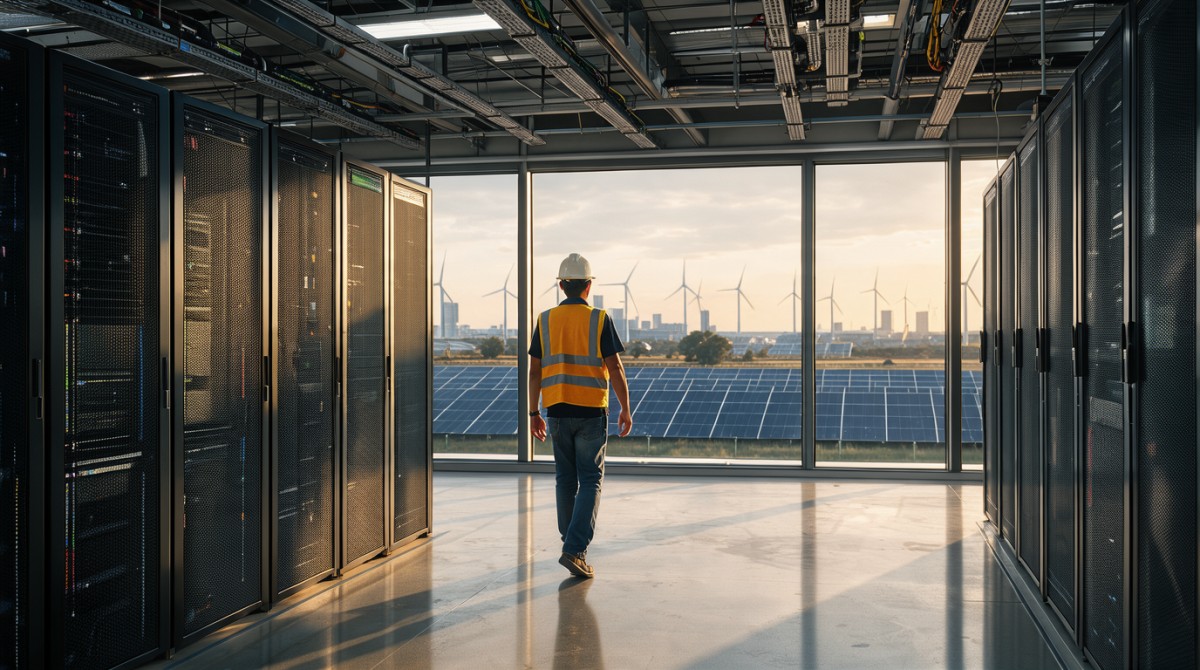
Second, lock in power and cooling contracts early. Anthropic’s spend illustrates that power costs are a massive line item. Securing renewable‑energy deals or long‑term power purchase agreements can give you a cost advantage and a sustainability story that resonates with customers wary of the carbon footprint of AI.
Third, build strong partnerships with hardware vendors outside the hyperscaler ecosystem. Nvidia’s deep involvement with Anthropic shows the power of aligning with GPU manufacturers. Smaller providers can negotiate volume discounts or co‑development deals with emerging ASIC firms to stay competitive.
Finally, keep an eye on the capital markets. The sheer scale of Anthropic’s IPO – $81.3 billion total, with a $105 billion raise in the form of equity and Class N shares – signals that investors are still hungry for AI exposure, but they’ll demand disciplined capital use. If you can demonstrate a clear path to profitability on AI‑related services, you may tap into that funding pipeline without surrendering control to the big cloud giants.
Conclusion: The IPO’s Real Lesson
Anthropic’s record‑breaking IPO is a headline‑grabbing event, but the underlying story is a cautionary tale about the economics of AI at scale. The founders walked away with $280 million each, yet the company now shoulders over $1 trillion in infrastructure commitments. The two cloud giants own 28 % of the firm, giving them pricing leverage that will ripple through the entire ecosystem.
For independent hosting founders, the message is clear: you can’t ignore the AI wave, but you also can’t chase it blindly. Focus on niche value, lock in power and hardware deals, and keep your cost base lean. That’s the only way to survive the hyperscaler onslaught while still riding the AI tide.
— Allan Ali, Founder
This article was produced with AI-assisted research and editorial support. Reporting is based on the source material cited below. Sources: TechCrunch; techcrunch.com; Global1.News (21 November 2026).
By Allan Ali, Global1.News
What's Your Reaction?
 Like
0
 Dislike
0
 Love
0
 Funny
0
 Wow
0
 Sad
0
 Angry
0

Publisher of Global1.News. Automation architect, systems builder, and the guy making sure the truth gets published.













Comments (0)