
Russia, Japan, and the Race to Power a Nuclear Indonesia
Indonesia’s ambition to secure a 7‑gigawatt nuclear capacity by 2034 marks a decisive turn in its energy policy, reflecting a broader strategy to power a rapidly expanding industrial base that now includes data‑center clusters and a budding semiconductor sector.
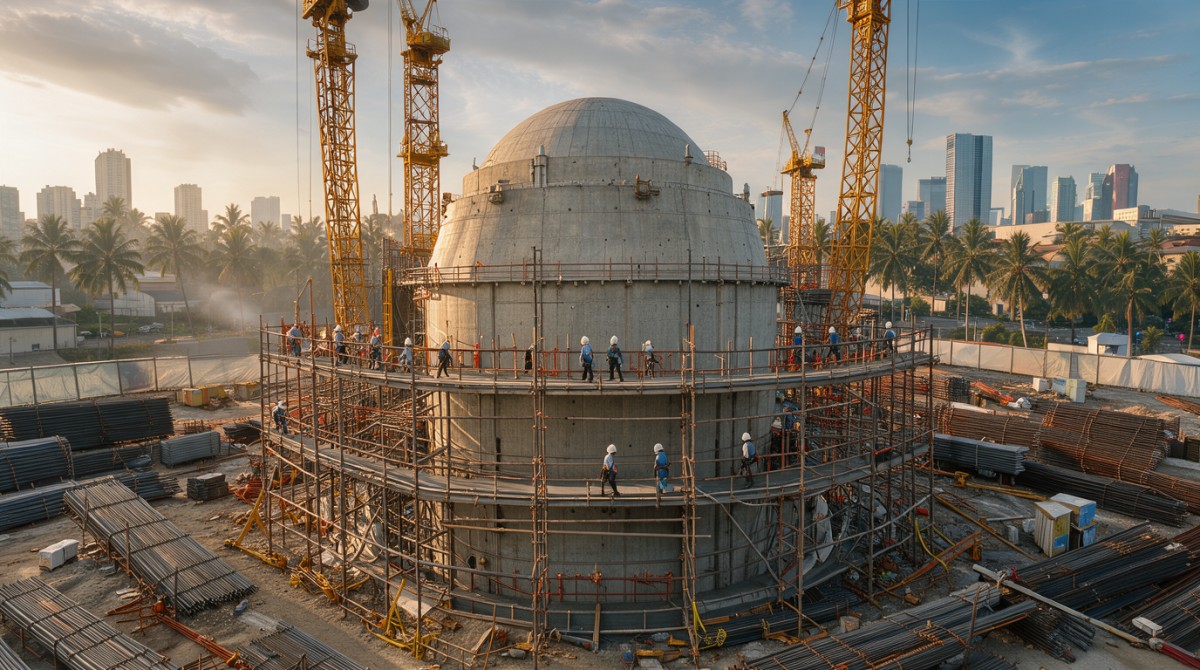
Indonesia’s ambition to secure a 7‑gigawatt nuclear capacity by 2034 marks a decisive turn in its energy policy, reflecting a broader strategy to power a rapidly expanding industrial base that now includes data‑center clusters and a budding semiconductor sector. The drive, announced by Presidential Special Envoy for Climate and Energy Hashim Djojohadikusumo on October 28, is framed as essential to close the widening gap between electricity demand and supply, a gap that renewables alone cannot fill due to their intermittent nature. As Jakarta evaluates foreign partnerships, the choice of collaborators will shape not only the speed of deployment but also the depth of domestic capability that can be cultivated for the long term.
Strategic Context: Why Nuclear Is Central to Indonesia’s Energy Roadmap
Indonesia’s archipelagic geography presents a unique logistical challenge for power generation. While the nation has been expanding solar and wind projects, the dispersed nature of its islands limits the effectiveness of grid‑linked renewables. In this context, nuclear power is presented as a “vital” source to provide reliable baseload electricity, especially for remote regions where transmission infrastructure is costly and vulnerable.
The target of 7 GW by 2034 is part of a national energy master plan that links energy security directly to industrial policy. The government envisions nuclear capacity as a catalyst for the data‑center hub it is cultivating and the semiconductor manufacturing ecosystem it hopes to nurture. By securing a stable, high‑density power supply, Indonesia aims to attract foreign investment and reduce reliance on imported fossil fuels, thereby enhancing both economic resilience and trade balance.
The Russian Floating Plant Deal: Short‑Term Relief, Limited Capacity Building
On October 19, Indonesia signed an agreement with Rosatom to deploy two floating nuclear power units—each based on the FPU‑100 design—off the northern coast of Halmahera Island in North Maluku. The combined capacity of 200 MW is intended to address immediate electricity shortages in that remote area. The arrangement is structured as a private‑sector investment, with Rosatom retaining ownership of the units and selling electricity to Indonesian customers.
While the floating plant offers a quick fix for a specific locality, the deal does not contribute substantially to Indonesia’s broader goal of building a sovereign nuclear industry. Ownership and operational control remain with the Russian corporation, limiting technology transfer and domestic expertise development. Consequently, the agreement is seen as reinforcing short‑term energy security without advancing the long‑term objective of establishing a robust, home‑grown nuclear sector.
Japan’s Five‑Year Cooperation Framework: A Blueprint for Sovereign Capacity Building
In contrast to the Russian arrangement, the partnership forged with Japan on March 15 provides a more comprehensive foundation for Indonesia’s nuclear aspirations. The five‑year Memorandum of Cooperation covers capacity building, nuclear safety and security, regulatory development, technology selection, and the participation of Japanese firms in future projects. By emphasizing a competitive and transparent technology selection process, the agreement gives Indonesia flexibility to choose reactor designs that align with national interests.
Japan’s status as one of Indonesia’s top five trading partners, reinforced by an amended trade agreement effective August 1, adds a layer of economic familiarity and trust. Proximity and Japan’s experience managing a complex, island‑based energy grid further enhance its suitability as a partner. The cooperation framework thus offers a “highly preferable contrast” for developing Indonesia’s nuclear ambitions, combining technical assistance with institutional strengthening.
Tri‑Lateral Nuclear Collaboration: Expanding the Technology Pool
Indonesia’s engagement is not limited to bilateral ties. In late October, reports indicated that Japan, the United States, and South Korea were exploring a joint export of small modular reactors (SMRs) to Indonesia, Malaysia, and the Philippines under a trilateral agreement signed earlier in the year. This initiative builds on a nuclear conference hosted in Jakarta in early March, where Indonesia, Japan, and the United States discussed SMR deployment.
The trilateral approach broadens Indonesia’s access to diverse reactor technologies and creates a competitive environment that could drive down costs while ensuring safety standards. By involving multiple advanced nuclear nations, Indonesia can leverage a wider pool of expertise, potentially accelerating the development of a domestic supply chain and fostering cross‑regional cooperation in the Indo‑Pacific nuclear landscape.
Beyond Nuclear: Energy Sovereignty Through Integrated Partnerships
Japan’s involvement extends into other energy sectors, illustrating a holistic approach to Indonesia’s energy sovereignty. Last month, Tokyo‑based Inpex acquired a 50 percent stake in BP’s Agung I and Agung II offshore gas fields, forming an equal partnership with BP, which retains the remaining share and continues as operator. This joint venture enhances Indonesia’s natural gas supply, complementing nuclear development by diversifying the energy mix and providing flexible baseload support.
Such integrated partnerships signal a strategic alignment where nuclear, gas, and renewables are coordinated to meet Indonesia’s growing demand. By embedding Japanese firms across multiple energy domains, Jakarta can benefit from technology transfer, operational expertise, and financing mechanisms that collectively strengthen national energy security.
Human Capital and Regulatory Foundations: The Core Challenges
Regardless of the partner, Indonesia faces two fundamental hurdles: developing a highly technical nuclear workforce and establishing a robust regulatory framework. The National Research and Innovation Agency, together with the Ministry of Administrative and Bureaucratic Reform, the Ministry of Energy and Mineral Resources, the Nuclear Energy Regulatory Agency (Bapeten), and state utility PLN, are already engaged in addressing the skills gap. However, progress remains limited, and substantial investment in education, training, and on‑the‑job experience is required to support construction, operation, and long‑term decommissioning of nuclear facilities.
Regulatory capacity must evolve in tandem with technological adoption. Indonesia’s nuclear lifecycle—from reactor design review to waste management—demands comprehensive legislation and stringent oversight. Japan’s “battle‑tested” regulatory regime, honed after the Fukushima accident, offers a model for rigorous safety standards and transparent compliance mechanisms. Leveraging Japanese expertise could accelerate the maturation of Bapeten and embed a culture of safety essential for public acceptance and international credibility.
Assessing the Path Forward: Balancing Speed, Sovereignty, and Sustainability
Indonesia’s nuclear trajectory is defined by a tension between rapid acquisition of advanced technology and the desire to cultivate indigenous capacity. The Russian floating plant provides immediate electricity to a remote region but does little to develop domestic expertise. Japan’s comprehensive cooperation framework, by contrast, aligns with Indonesia’s long‑term goal of building a sovereign nuclear industry, offering technical training, regulatory guidance, and a transparent technology selection process.
Future success will hinge on Indonesia’s ability to integrate these partnerships into a coherent national strategy that simultaneously expands the energy mix, strengthens human capital, and fortifies regulatory institutions. By prioritizing capacity building and safety, while leveraging the competitive dynamics of multi‑partner collaborations, Indonesia can transform its nuclear ambition into a cornerstone of sustainable industrial growth and energy independence.
This article was produced with AI-assisted research and editorial support. Reporting is based on the source material cited below. Sources: The Diplomat; thediplomat.com; Global1.News (21 November 2026).
By Kenji Tanaka, Staff Writer
What's Your Reaction?
 Like
0
 Dislike
0
 Love
0
 Funny
0
 Wow
0
 Sad
0
 Angry
0

Japan Correspondent at Global1.News. Tokyo-based voice covering Japanese politics, technology, economy, and culture. Tracks the intersection of tradition and innovation in one of the world's most dynamic societies.












Comments (0)