
US-Saudi Defense Talks in Jeddah Signal Urgent Gulf Security Realignment
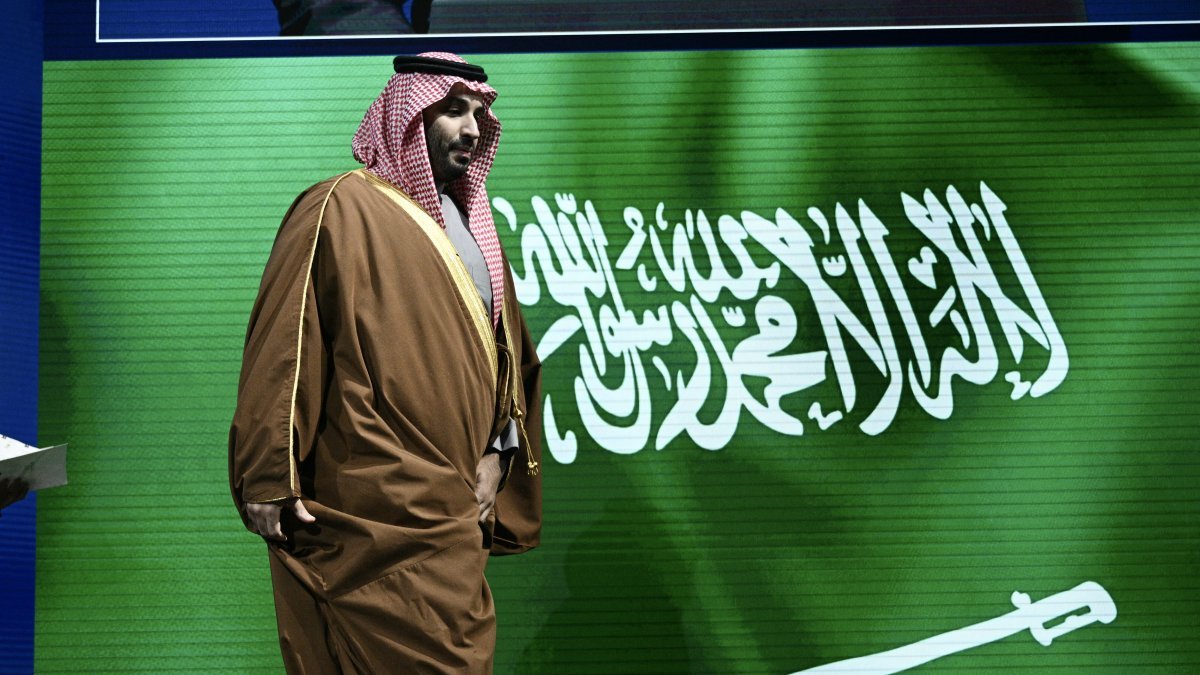
US-Saudi Defense Talks in Jeddah Signal Urgent Gulf Security Realignment Jeddah, Saudi Arabia - Aug. 14, 2026 -- The meeting between Saudi Crown Prince Mohammed bin Salman and U.S. Central Command chief Adm. Brad Cooper in Jeddah on Thursday was more than a routine diplomatic courtesy.
US-Saudi Defense Talks in Jeddah Signal Urgent Gulf Security Realignment
Jeddah, Saudi Arabia - Aug. 14, 2026 -- The meeting between Saudi Crown Prince Mohammed bin Salman and U.S. Central Command chief Adm. Brad Cooper in Jeddah on Thursday was more than a routine diplomatic courtesy. It came at a moment when the Gulf's security architecture is being stress-tested from multiple directions: the unresolved conflict surrounding Iran, renewed Houthi strikes on Saudi energy infrastructure, and a rapidly shifting regional alliance map that now includes a trilateral defense pact between Riyadh, Ankara, and Islamabad.According to Saudi state media, the talks focused on easing regional tensions and strengthening defense cooperation between the two longtime allies. The Saudi Press Agency (SPA) reported that the meeting reviewed recent regional developments and efforts to de-escalate tensions, with senior Saudi officials in attendance. The timing--mid-August 2026--places these discussions squarely within a period of heightened anxiety over maritime security in the Strait of Hormuz and the broader stability of energy flows that underpin the global economy.For Washington, the CENTCOM chief's visit underscores the enduring centrality of the Gulf in U.S. military planning, even as American attention remains divided between Europe and the Indo-Pacific. For Riyadh, the meeting represents a delicate balancing act: maintaining a robust U.S. security umbrella while simultaneously diversifying defense partnerships to hedge against any reduction in American commitment.
The Strait of Hormuz and the Energy Security Calculus
At the heart of the Jeddah discussions lies the Strait of Hormuz, the narrow waterway that carries roughly one-fifth of global oil consumption. Any disruption to this chokepoint would send shockwaves through energy markets, with immediate implications for inflation, global growth, and the strategic positioning of every major power.The source material indicates that disruption in the Strait and continued friction between Washington and Tehran have raised concerns over maritime security. This is not hypothetical speculation. The U.S. maintains a significant military posture in the Gulf, with naval assets and air defense systems deployed across CENTCOM's area of responsibility. Admiral Cooper, as the head of that command, oversees the operational readiness of these forces.The strategic calculus for Washington is straightforward: ensuring freedom of navigation in Hormuz is a core national interest, not merely a favor to Gulf allies. Any Iranian attempt to close or mine the strait would trigger a direct military confrontation with the U.S. Navy, a scenario that both Tehran and Washington have historically sought to avoid--but one that becomes more plausible as diplomatic channels narrow.For Riyadh, the stakes are existential. Saudi Arabia's economy, its Vision 2030 diversification agenda, and its global standing all depend on the uninterrupted flow of crude oil and refined products through Hormuz. The kingdom has invested heavily in alternative pipeline routes, including the East-West pipeline that bypasses the strait, but these remain insufficient to fully replace the maritime route.The Houthi Threat on Saudi Arabia's Southern Flank
The meeting in Jeddah also took place against the backdrop of renewed attacks on Saudi territory. Iran-aligned Houthi forces recently targeted a Saudi Aramco refinery in Jazan with a drone, according to the source material. This attack, while not causing the kind of catastrophic damage seen in previous incidents, serves as a stark reminder that Saudi energy infrastructure remains vulnerable.The September 2019 Abqaiq-Khurais attacks, which temporarily halved Saudi oil output, remain the benchmark for worst-case scenarios. Those strikes, widely attributed to Iran but launched from Houthi-controlled territory, demonstrated that even the world's most fortified energy facilities are not immune to precision strikes. The Jazan incident suggests that the Houthis retain both the capability and the intent to target Saudi economic assets.Renewed fighting in Yemen has fueled fears of a broader escalation after years of relative calm. The Saudi-led coalition's military campaign in Yemen has largely wound down, and Riyadh has pursued a fragile détente with the Houthis through Omani-mediated talks. However, the recent uptick in hostilities indicates that this truce remains tenuous, and that the Houthis are willing to use their drone and missile arsenal as leverage in both the Yemeni conflict and the wider Iran confrontation.For Saudi Arabia, the Houthi threat is not merely a military nuisance. It is a direct challenge to the kingdom's economic security and a reminder that Iran's proxy network extends to its southern border. The Jazan attack, coming so soon after the signing of the Mecca Joint Defense Agreement, may have been intended to test the resolve of the new alliance framework.The Mecca Joint Defense Agreement: A New Regional Architecture
Last week's signing of the Mecca Joint Defense Agreement between Saudi Arabia, Turkiye, and Pakistan represents a significant shift in Gulf security dynamics. The agreement establishes a collective defense framework and plans for closer political and military coordination among the three nations.The strategic logic behind this trilateral pact is multifaceted. For Saudi Arabia, it provides an additional layer of security beyond the U.S. umbrella, particularly in areas where American commitment may be uncertain. For Turkiye, it offers a pathway to deeper engagement in Gulf security affairs, leveraging Ankara's military capabilities and its drone technology, which has proven effective in various conflict zones. For Pakistan, it reinforces the deep historical ties between Islamabad and Riyadh, including the longstanding Pakistani military presence in the kingdom.The timing of the agreement is significant. It comes as the U.S. is increasingly focused on great power competition with China and Russia, raising questions in Gulf capitals about the durability of American security guarantees. The Mecca agreement signals that Riyadh is not putting all its eggs in one basket, even as it continues to engage Washington on defense cooperation.However, the agreement also carries potential complications. Turkiye's regional ambitions, including its military presence in Qatar and its complex relationship with Iran, could create friction within the new framework. Pakistan's internal political and economic challenges may limit its ability to project power beyond its borders. And the agreement's collective defense provisions, while symbolically powerful, have yet to be tested in a real-world crisis.Washington's Strategic Calculus in the Gulf
Admiral Cooper's visit to Jeddah reflects Washington's continued commitment to Gulf security, but it also highlights the evolving nature of that commitment. The U.S. military posture in the region has shifted over the past decade, with a reduction in ground forces but an increased reliance on naval assets, air power, and missile defense systems.The CENTCOM chief's talks with the crown prince likely covered the full spectrum of defense cooperation, from intelligence sharing to joint exercises to the potential sale of advanced weaponry. Saudi Arabia remains one of the largest purchasers of U.S. defense equipment, and this relationship provides significant economic benefits to American defense contractors.However, Washington's calculus is not purely transactional. The U.S. has a strategic interest in preventing a wider regional war that could draw in American forces and disrupt global energy markets. The Biden administration, and any successor, would prefer to manage tensions with Iran through a combination of deterrence and diplomacy, rather than direct military confrontation.The challenge for Washington is that its leverage in the Gulf is not what it once was. The U.S. withdrawal from Afghanistan, the reduced reliance on Middle East oil, and the perception of American retrenchment have all contributed to a sense among Gulf states that they must take greater responsibility for their own security. This is precisely the dynamic that led to the Mecca agreement.Riyadh's Balancing Act: U.S. Umbrella and Regional Autonomy
For Crown Prince Mohammed bin Salman, the Jeddah meeting represents an opportunity to reaffirm the U.S.-Saudi partnership while also signaling that Riyadh has options. The crown prince has pursued a foreign policy that is simultaneously more assertive and more pragmatic than that of his predecessors, seeking to position Saudi Arabia as a key player in regional diplomacy rather than a passive recipient of security guarantees.The meeting with Admiral Cooper also serves a domestic purpose. It demonstrates to Saudi audiences that the kingdom maintains strong ties with the world's preeminent military power, even as it diversifies its partnerships. This is particularly important given the ongoing tensions between Riyadh and Washington over human rights issues and the kingdom's oil production policies.Saudi Arabia's defense minister, Prince Khalid bin Salman, has been the primary interlocutor on defense matters with Washington in recent months. His meeting on the same day with Iraqi military official Lt. Gen. Abdul Amir Al-Shammari, reviewing Saudi-Iraqi military and defense relations, underscores the kingdom's broader regional engagement strategy. By strengthening ties with Baghdad, Riyadh is seeking to counter Iranian influence in Iraq while also building a more stable security environment along its northern border.The Iran Factor: Deterrence and Diplomacy in Tandem
The shadow of Iran looms over all of these discussions. The continued friction between Washington and Tehran, combined with the unresolved status of the Iran nuclear program, creates a volatile environment in which miscalculation could have catastrophic consequences.Saudi Arabia's approach to Iran has evolved significantly in recent years. The 2023 normalization agreement brokered by China represented a major diplomatic breakthrough, but it has not resolved the underlying tensions. The Houthi attacks on Saudi territory, the ongoing Iranian nuclear enrichment activities, and the presence of Iranian-aligned militias across the region all continue to pose direct challenges to Saudi security.The strategic calculus for Riyadh is to maintain a credible deterrent while keeping diplomatic channels open. This means continuing to invest in advanced air defense systems, maintaining a robust intelligence relationship with the U.S., and building regional alliances that can respond collectively to Iranian provocations. The Mecca agreement is part of this strategy, as is the ongoing engagement with Washington.For Tehran, the calculus is equally complex. Iran seeks to maintain its influence across the region while avoiding a direct military confrontation with the U.S. or its Gulf allies. The Houthi attacks on Saudi infrastructure serve as a reminder of Iran's ability to project power through proxies, but they also risk provoking a response that could escalate beyond Tehran's control.Regional Implications: Stability, Energy Markets, and Alliance Dynamics
The outcomes of the Jeddah talks will have significant implications for regional stability, energy markets, and the broader alignment of Gulf alliances. If the U.S.-Saudi defense relationship is reaffirmed and strengthened, it could provide a stabilizing anchor in a region beset by multiple conflicts.However, the emergence of the Mecca Joint Defense Agreement introduces a new variable into the regional security equation. The trilateral framework involving Saudi Arabia, Turkiye, and Pakistan could either complement or complicate the existing U.S.-led security architecture. Much will depend on how the three nations operationalize their commitments and whether they can coordinate effectively with Washington.For energy markets, the key concern remains the Strait of Hormuz. Any significant disruption to shipping through the strait would have immediate and severe consequences for oil prices, potentially triggering a global economic downturn. The presence of U.S. naval assets and the ongoing diplomatic efforts to de-escalate tensions provide some reassurance, but the underlying risks remain.The broader regional implications are profound. The Gulf is undergoing a period of strategic realignment, with traditional alliances being tested and new partnerships emerging. Saudi Arabia is at the center of this transformation, seeking to secure its position as the dominant regional power while navigating the competing interests of the U.S., China, Russia, and its neighbors.The Jeddah meeting between Mohammed bin Salman and Admiral Cooper is a reminder that, despite all the talk of multipolarity and regional autonomy, the U.S.-Saudi relationship remains the cornerstone of Gulf security. But it is also a relationship in flux, adapting to new realities and new challenges. How this adaptation unfolds will shape the future of the Middle East for years to come.By Malik Hassan, Staff WriterThis article was produced with AI-assisted research and editorial support. Reporting is based on sources cited in the article.
What's Your Reaction?
 Like
0
Like
0
 Dislike
0
Dislike
0
 Love
0
Love
0
 Funny
0
Funny
0
 Wow
0
Wow
0
 Sad
0
Sad
0
 Angry
0
Angry
0

Middle East Correspondent at Global1.News. Based in Beirut, covering politics, conflict, energy, and society across the Middle East. Brings context and depth to a region often reduced to headlines.













Comments (0)