
200 Extra Police Officers Sent to Middlesbrough After Nine Deaths in a Week
The A66 cutting through South Bank is a road most Teessiders use without a second thought — a grey ribbon of tarmac connecting Middlesbrough to the steelworks and the coast beyond.
Nine Dead in a Week: The 200-Officer Surge Trying to Hold Teesside Together
Middlesbrough, UK – 28 August 2026 — The reinforcements began arriving this week, unmarked cars and response units rolling into Cleveland Police headquarters in Ladgate Lane. Detectives, armed officers and neighbourhood teams — more than 200 officers in total — have been drafted in from forces across the country to support a constabulary that has spent the past week lurching from one fatal incident to the next.
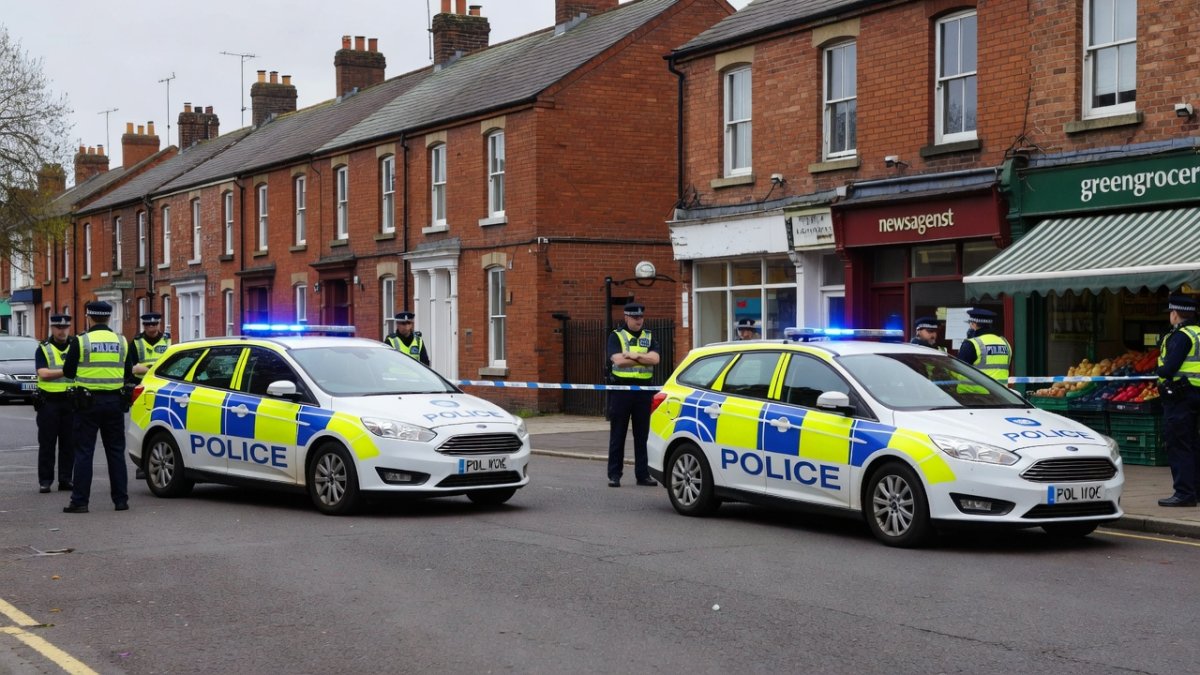
The scale of the deployment is unprecedented in recent memory for a force of Cleveland's size. It comes after a head-on collision on the A66 at South Bank on Saturday 22 August killed seven people — two police officers and five young men — followed by a suspected arson attack in nearby Grangetown that claimed the lives of a 34-year-old woman and her seven-year-old niece. A vehicle crashing into a wall in South Bank, a stabbing in Eston, and a crowd of youths torching cars at a memorial balloon release have followed in rapid succession. Cleveland's own resources, already stretched thin by years of funding constraints, were no longer sufficient. Officers began arriving within hours of the request for support.
For the residents of South Bank, Grangetown and Eston — communities that sit within a two-mile radius of each other on the south bank of the Tees — the influx of police is a visible acknowledgement that something has gone badly wrong. But it also raises an uncomfortable question that Teesside's MPs have been asking for years: why did it take nine deaths for the rest of the country to notice?
A Week of Violence That Shook a Community
The sequence of events began on Saturday 22 August, when a Volkswagen Passat was involved in a head-on collision on the A66 at South Bank. The crash killed PC Matthew Blades, 37, and PC Tom Clough, 38, both serving officers with Cleveland Police, along with five young men: Cole Worthy, 17, Theo Rae, 17, Makai Saddington, 18, Michael Cahill, 23, and Jakub Matusiak, 23. The exact circumstances of the collision remain under investigation, but police have arrested 17 people in connection with the crash, charging two and bailing the others, as part of inquiries into alleged organised crime.
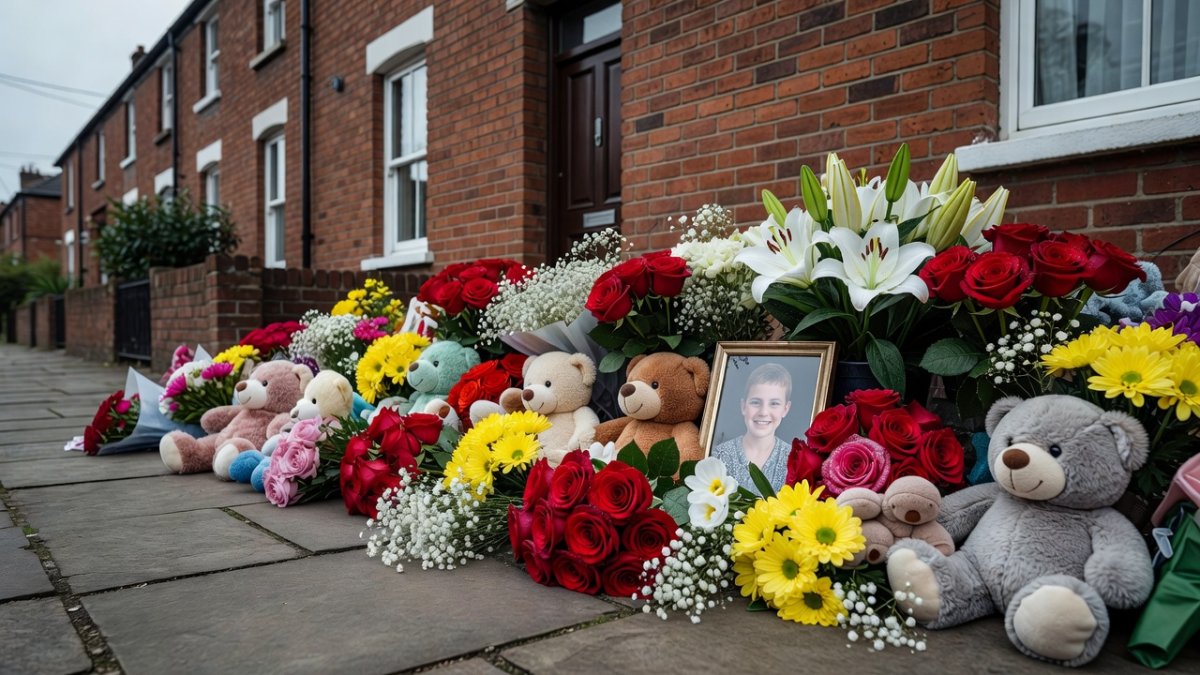
Four days later, on Wednesday 26 August, the focus shifted less than a mile away to Grangetown, where a house fire tore through a property in the early hours of the morning. Natalie McDonald, 34, and her seven-year-old niece Valentina Foster died in the blaze, which police believe was started deliberately. Four others were injured. Two men have been arrested on suspicion of murder. The grief was raw and public: outside the charred shell of the house, mourners placed bouquets and toys alongside a framed photograph of the pair, with the words "RIP Natalie and Valentina you will be missed" scrawled across it.
Natalie's brother Josh Kirton, speaking through his own tears, insisted his sister had no connection to the violence that has engulfed the area. "My sister was not involved with anything to do with gangs, or the A66," he said. "That's what makes this so senseless. People think they can do whatever they like. There's some terrible people in the world and now my sister and Valentina have gone."
The incidents have not stopped. In the early hours of Thursday 27 August, a vehicle crashed into a wall outside a house in Steele Crescent, South Bank, minutes from the other scenes, amid suspected escalation in gang violence. Officers said they had not yet confirmed whether it was linked to wider organised crime. At midday on Thursday, a 39-year-old man was stabbed in Eston, about two miles from the A66 crash site. And on Thursday night, a crowd of youths torched at least five cars in a field around 15 miles from Middlesbrough and set off fireworks at a balloon release held in memory of Michael Cahill, one of the young men killed in the A66 crash.
A Force Stretched to Its Limits
Cleveland Police has long been one of the most underfunded forces in England relative to its demand. The constabulary covers Middlesbrough, Redcar and Cleveland, Stockton-on-Tees and Hartlepool — an area with levels of deprivation, violent crime and organised criminality that Andy McDonald, the Labour MP for Middlesbrough and Thornaby East, describes as "metropolitan" in scale. Yet its funding formula has historically been calculated on a basis that treats the area more like a rural shire.
"We do suffer those metropolitan levels of crime, and yet comparatively our funding looks much more like a rural area, and it simply cannot continue like that," McDonald told BBC Radio 4. "We've got to put resources where the demand is most high, and that is Cleveland, and that's the message to ministers."
McDonald went further, describing the crime wave as "terrorism" — a deliberately provocative choice of word, but one that reflects the fear gripping his constituents. He said gangs and the drugs trade were "clearly featuring" in the series of incidents, pointing to the organised crime investigations that have followed the A66 crash. The 17 arrests made in connection with that collision, the two men held on suspicion of murder over the Grangetown fire, and the roughly 19 arrests across the week's incidents all point to a coordinated criminal network operating in the area.
The funding gap is not a new complaint. Cleveland Police has been the subject of multiple inspections and reports over the past decade, each noting the mismatch between demand and resources. But the events of this week have given the argument a new urgency. When a force has to call in 200 officers from outside its own area just to maintain basic public safety, the question of whether it was ever adequately resourced becomes impossible to ignore.
Residents Trapped in Their Homes
The human cost of the violence extends far beyond the nine dead. Residents across South Bank, Grangetown and Eston have described being "trapped in their homes" amid fears of a turf war between rival gangs. Streets that were once quiet residential terraces have become the backdrop for police cordons, forensic tents and the constant thrum of helicopter blades overhead. Parents keep children indoors after dark; shopkeepers report customers staying away; the simple routines of daily life have been suspended while the investigations continue.
Alec Brown, the Labour leader of Redcar and Cleveland Council, has been blunt about the situation. He confirmed that more than 200 extra police officers have been, or will be, deployed from around the country to support Cleveland Police, and earlier said people deserved to "feel safe in their own homes". The council has been working with police to provide support to affected families, but Brown acknowledged that the deeper problem — the criminal networks driving the violence — cannot be solved by council services alone.
Political Fallout and the Question of Connection
The political response has been swift, but carefully calibrated. Prime Minister Andy Burnham, visiting south Wales on Thursday, said the Government is offering "all of the support that the authorities need" after the "terribly tragic" house fire. But he was cautious about drawing links between the incidents, saying it was "too early to jump to conclusions" about whether the Grangetown fire and the A66 crash were connected.
Kate Dearden, the Minister for the Future of Work, struck a similar tone during the Government's media round on Thursday morning. "The activities we are seeing are absolutely horrendous," she said. "I can't even imagine how that feels for local communities." She added that police were "working to get the criminals off the streets" — a phrase that will offer little comfort to families who have lost loved ones, but which signals the Government's awareness that the situation is being watched nationally.
Five Teesside MPs have jointly called on the Government to provide more help to local police and fire services. Their statement said communities should get the "strongest possible backing from the government", and specifically referenced the need for additional funding, resources and a clear plan to dismantle the organised crime networks operating in the area.
The question of whether the incidents are connected remains open. Police have not confirmed a link between the A66 crash, the Grangetown fire, the Steele Crescent collision, the Eston stabbing and the car torching. But the geography is striking: all occurred within a few miles of each other, in an area with a known drugs trade and a history of gang violence. The arrests made so far — 17 in connection with the crash, two for the fire, and others across the week — suggest police are treating the incidents as part of a broader pattern, even if they are not yet ready to say so publicly.
What Happens Next
The reinforcements are expected to remain in Cleveland for the foreseeable future, with the deployment reviewed on a rolling basis. Their presence will be visible: high-visibility patrols in town centres, armed response units on standby, and a significant investigative surge to process the arrests already made. But the deeper question — whether Cleveland Police will ever receive the funding its crime levels demand — will outlast this week's crisis.
For the families of PC Matthew Blades, PC Tom Clough, Cole Worthy, Theo Rae, Makai Saddington, Michael Cahill, Jakub Matusiak, Natalie McDonald and Valentina Foster, no deployment of officers can undo what has happened. The tributes outside the Grangetown house, the balloon release that turned violent, the bouquets left at the roadside — these are the markers of a community in mourning, trying to make sense of a week that has left it reeling.
Andy McDonald's choice of the word "terrorism" was deliberate. He wants the Government to understand that what is happening in Middlesbrough is not routine crime, but a sustained assault on a community — one that requires a response proportionate to the threat. Whether that response arrives in the form of permanent funding reform, a dedicated organised crime taskforce, or something else entirely, remains to be seen. What is clear is that the 200 officers now on the streets of Teesside are a stopgap, not a solution.
The A66 is open again, the cordons have been lifted, and the forensic teams have moved on. But the fear remains, etched into the faces of residents who now lock their doors at dusk and flinch at the sound of a car backfiring. Nine people are dead. A community is on edge. And a police force that has been asking for help for years has finally got it — at the cost of a week that no one in Teesside will forget.
By Erica Thornton, Staff Writer
This article was produced with AI-assisted research and editorial support. Reporting is based on sources cited in the article.
What's Your Reaction?
 Like
0
Like
0
 Dislike
0
Dislike
0
 Love
0
Love
0
 Funny
0
Funny
0
 Wow
0
Wow
0
 Sad
0
Sad
0
 Angry
0
Angry
0

US Politics and Policy Correspondent at Global1.News. Based in Washington DC, covering American politics, policy, elections, and the courts. Knows how the system works and tells you what it actually means.












Comments (0)