
Marcos: Chinese ambassador's force remark ‘sounds very much like a threat’
President Ferdinand Marcos Jr. on Friday, October 16, 2026, expressed alarm over a recent comment by Chinese Ambassador Jing Quan that hinted at China’s capacity to use force.
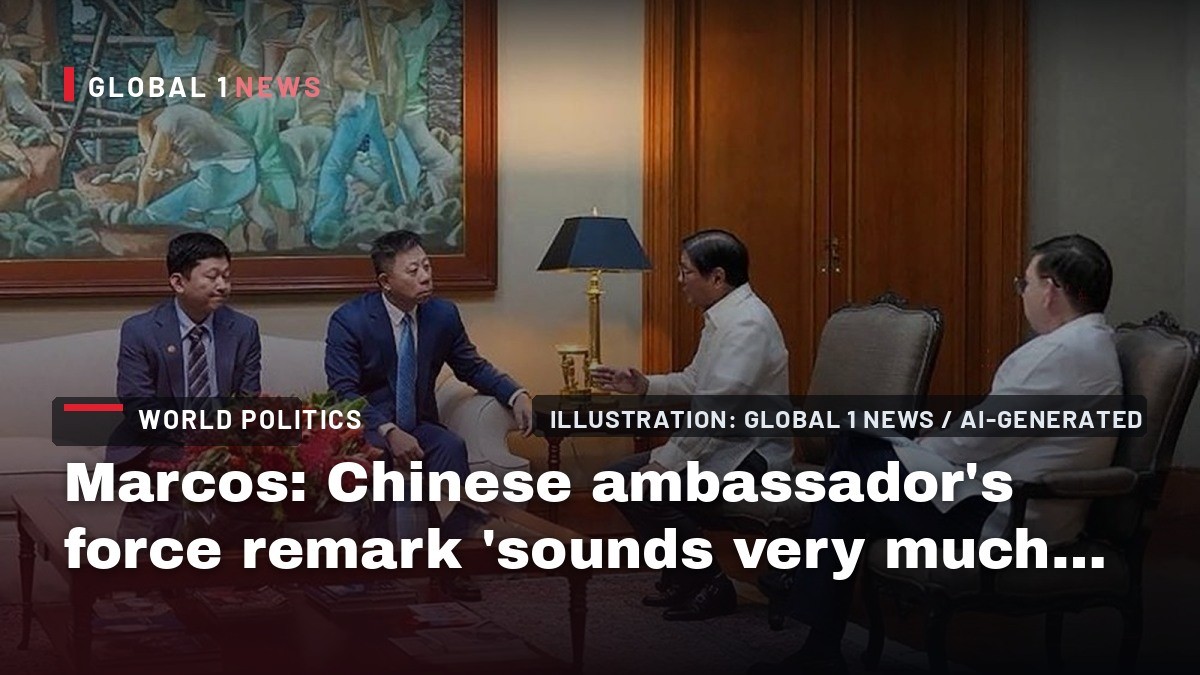
President Ferdinand Marcos Jr. on Friday, October 16, 2026, expressed alarm over a recent comment by Chinese Ambassador Jing Quan that hinted at China’s capacity to use force. Marcos said the remark “sounds very much like a threat and not a diplomatic statement to be made,” and called for a direct conversation with the envoy to clarify its meaning. The president’s remarks come amid a series of diplomatic frictions that have strained the already delicate ties between Manila and Beijing.
Ambassador Jing’s “force” comment sparks diplomatic backlash
During the second Diliman Dialogues organized by the Philippines‑China Studies Center of Diliman College, Ambassador Jing told reporters that “if we want to use force, we may easily win. But no, we will not use force. You know, we love peace.” He framed the Philippines as the “troublemaker,” pointing to what he described as arrests of Chinese workers, attacks on Chinese teachers, and “daily smear attacks” meant to stoke hatred. The comment was quickly labeled a “thinly veiled threat” by the Department of Foreign Affairs (DFA), which described the language as “hardly helpful” given the “complicated bilateral ties” between the two nations.
The DFA’s statement, released on Thursday, October 15, warned that such rhetoric risks eroding “mutual trust and confidence.” It urged diplomats to exercise “tact and restraint” to preserve the space needed for dialogue, even when positions diverge sharply. The department’s rebuke set the stage for Marcos’ own response the following day, emphasizing the need for a private discussion rather than a public summons.
President Marcos calls for a private dialogue
When asked whether he would summon Ambassador Jing, Marcos said the matter “deserves a discussion between the ambassador and myself.” He stressed that the government wants to understand “what it is exactly he means,” signaling a preference for a behind‑closed‑doors exchange over a public showdown. By framing the issue as a conversation rather than a confrontation, the president seeks to keep diplomatic channels open while still signaling that the Philippines will not tolerate intimidation.
This approach aligns with the DFA’s call for restraint, but it also reflects Marcos’ broader strategy of balancing firmness with the need to avoid further escalation. The president’s measured tone aims to reassure ordinary Filipinos that the government is attentive to foreign pressure while still defending national sovereignty.
Escalating rhetoric from the Chinese embassy
Since Jing’s arrival in Manila in December 2025, the Chinese embassy has increasingly resorted to combative language. In January, the DFA lodged “firm representations” over the embassy’s social‑media attacks on Philippine senators who questioned Beijing’s stance on the 2016 arbitral ruling and Manila’s maritime claims. The embassy’s response on Friday dismissed the DFA’s admonishment as “regrettable” and accused Manila of “selective quotation” and “overinterpretation.”
The embassy warned that “certain individuals” were trying to undermine exchanges between the two countries, though it did not name them. It urged the DFA to “play a more responsible role” in preventing such actions, underscoring the perception that the diplomatic relationship is at an “extremely sensitive stage.” This back‑and‑forth reflects a growing pattern of public posturing that threatens to push bilateral ties from a diplomatic stalemate into open confrontation.
Controversies over Chinese teachers and workers
Jing’s reference to “Chinese teachers” alludes to the recent withdrawal of roughly 150 Chinese volunteer teachers from language schools in the Philippines. The Federation of Filipino Chinese Chambers of Commerce and Industry Inc. confirmed the recall, noting that parents requested the pull‑out and that the embassy approved it after monitoring group SeaLight raised concerns about the schools. While the numbers are modest, the episode fuels suspicion among Filipinos that Chinese cultural programs may serve broader strategic aims.
On the labor front, Jing mentioned “arrests of innocent Chinese workers,” a nod to recent raids that have detained hundreds of Chinese nationals suspected of human trafficking and illegal online gambling. The embassy singled out a May raid on a steel plant in Misamis Oriental, insisting the detained workers held valid permits and blaming Defense Secretary Teodoro for deploying the military. These incidents have become flashpoints in the larger debate over China’s presence in the Philippines and the government’s enforcement of immigration and labor laws.
Military‑to‑military communication suspended
Ambassador Jing warned that Manila faces a heightened risk of confrontation unless direct military‑to‑military communication with Beijing is restored. He accused Defense Secretary Teodoro of shutting down those channels on October 12 for “political self‑interests.” The Armed Forces of the Philippines defended Teodoro’s decision, arguing that the direct line had been used as a “smokescreen” by the Chinese Communist Party to further its “illegal presence, coercive and aggressive actions” both at sea and on land.
The suspension of the military hotline underscores a deeper mistrust. While diplomatic channels remain open, the breakdown in security‑to‑security talks raises the specter of miscalculation, especially as both sides continue to conduct patrols and joint exercises in contested waters. For ordinary Filipinos in coastal barangays, the prospect of an accidental clash translates into anxiety over livelihood, safety, and the future of their fishing communities.
Implications for ordinary Filipinos and the broader political climate
The diplomatic spat over Jing’s “force” remark reverberates far beyond the corridors of Malacañang. In barangays along the western seaboard, families depend on fishing and small‑scale trade that could be disrupted by any escalation in the South China Sea. The rhetoric from both Manila and Beijing can affect daily life, from the price of fish at the sari‑sari store to the security of offshore workers who travel to Chinese‑owned facilities.
Politically, the episode tests the administration’s ability to balance a firm stance on sovereignty with the pragmatic need for stable economic ties with China. Marcos’ decision to engage the ambassador privately signals a willingness to negotiate, yet his public condemnation reinforces a message of vigilance that resonates with a public still sensitive to foreign pressure after years of territorial disputes.
Looking ahead: prospects for dialogue and de‑escalation
As the DFA urges “tact and restraint,” the onus now lies on both sides to translate words into actions that rebuild trust. The president’s invitation to discuss the ambassador’s comments directly could serve as a confidence‑building measure if it leads to clearer communication protocols and a reinstatement of the military hotline. Conversely, continued public sparring risks cementing a narrative of antagonism that could harden public opinion and limit future diplomatic flexibility.
For Filipinos watching from their homes, community centers, and workplaces, the hope is that Manila’s leadership can navigate these tensions without compromising the safety and livelihood of ordinary citizens. The outcome of this latest diplomatic episode will likely shape how the Philippines approaches not only China but also its broader foreign‑policy posture in a region where power dynamics are shifting rapidly.
This article was produced with AI-assisted research and editorial support. Reporting is based on the source material cited below. Sources: Philstar.com; Global1.News (16 October 2026).
By Bella Reyes, Staff Writer
What's Your Reaction?
 Like
0
Like
0
 Dislike
0
Dislike
0
 Love
0
Love
0
 Funny
0
Funny
0
 Wow
0
Wow
0
 Sad
0
Sad
0
 Angry
0
Angry
0

Philippines/Southeast Asia Correspondent at Global1.News. Manila-based journalist covering Philippine politics, environment, maritime security, and social issues. Passionate about marine conservation and the communities protecting the Philippines' natural heritage.













Comments (0)