
YMTC Parent Eyes Record Star Market IPO
YMTC parent CCSH is preparing a record Star Market IPO, planning to raise up to 33 billion yuan to expand NAND flash production and R&D. The float follows CXMT's record 66.6 billion yuan listing and would give mainland investors direct exposure to China's memory champions as YMTC overtakes Japan'...
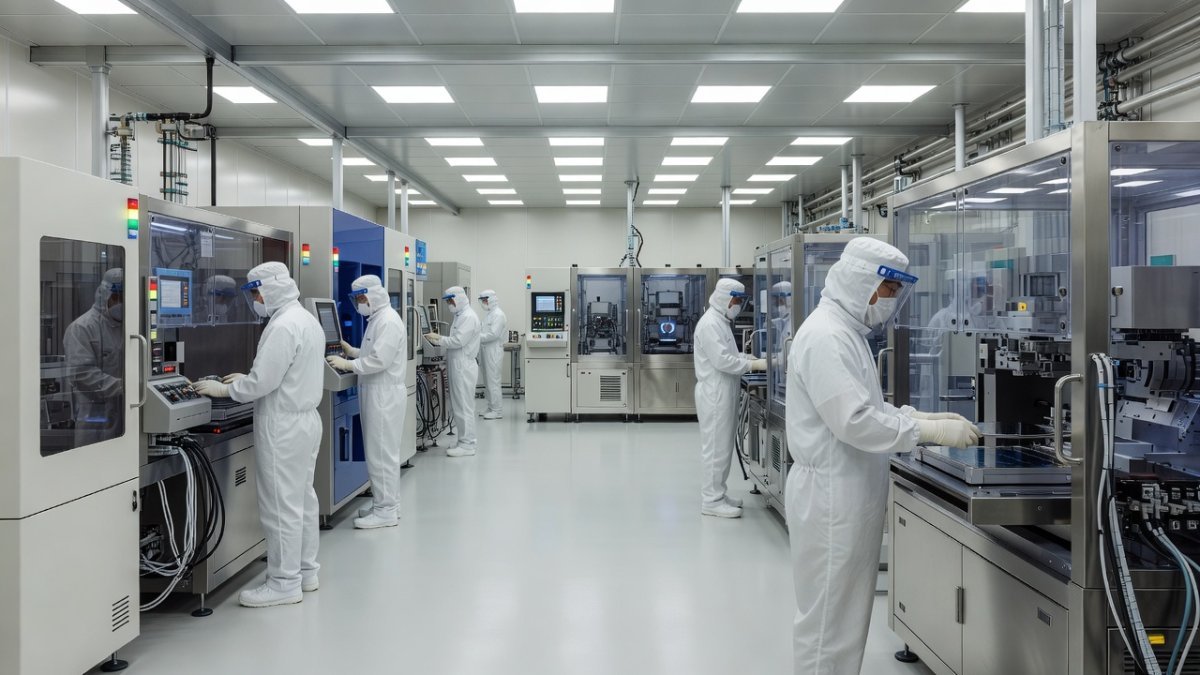
China's Flash-Memory Champion Moves to Tap the Market That Made CXMT a Star
China is preparing for what could become its next record-breaking semiconductor listing as CCSH Corporation, the parent of NAND flash giant Yangtze Memory Technologies (YMTC), moves toward a public float on Shanghai's Star Market. The company plans to sell between 1.98 billion and 2.43 billion shares, equivalent to 10 to 12 per cent of its enlarged share capital, according to a prospectus made public on Friday. The filing lands at a moment when tight global memory supply and surging artificial-intelligence demand have sent chip prices and profitability soaring, and it sets up a direct test of whether the investor frenzy that greeted DRAM maker CXMT in July can be repeated for China's top flash-memory producer.
CCSH has earmarked 33 billion yuan (US$4.9 billion) of proceeds for investment projects, with 20.8 billion yuan set aside to upgrade mass-production lines and 12.2 billion yuan for research and development. The target already surpasses the 29.5 billion yuan baseline that CXMT, China's leading DRAM maker, originally set ahead of its float in July. For Japanese readers watching the memory sector, the significance is twofold: China is about to hand its two memory champions direct access to mainland capital, and YMTC's rise has already displaced Japan's Kioxia from the number-three position in global NAND shipments.
What the Prospectus Reveals About CCSH's Ambitions
The share sale, if fully exercised including an overallotment option of up to 15 per cent, would give CCSH a war chest aimed squarely at capacity expansion and next-generation NAND development. While the final offer price and total proceeds have yet to be set, the planned scale signals one of the largest fundraising pushes in Chinese semiconductor history. CCSH has not disclosed a timeline for pricing, but Star Market listings typically move quickly once a prospectus is public, and market participants expect the bookbuild to follow CXMT's path within weeks.
The structure mirrors the playbook that worked for CXMT: a memory pure-play with explosive earnings growth, backed by Beijing's broader push for semiconductor self-sufficiency, listing on the exchange designed to channel retail and institutional capital into strategic technology. YMTC itself needs little introduction to chip watchers. It is China's only credible producer of advanced NAND flash, the storage technology used in everything from smartphones and laptops to the solid-state drives that feed AI data centres.
The CXMT Precedent: A Benchmark That Keeps Rising
CXMT ultimately raised 66.6 billion yuan, nearly double its baseline plan, in what became the largest Star Market initial public offering on record. Its shares surged 466 per cent on their July 27 debut to close at 49 yuan, and by August 17 the stock touched 61.80 yuan, driving its market capitalisation to 4.13 trillion yuan and briefly making it China's most valuable listed company, surpassing Tencent Holdings just 16 trading days after listing.
That performance has reset expectations across the sector. YMTC's final tally could similarly eclipse its baseline 33 billion yuan target depending on final market demand, and the back-to-back floats will give mainland investors direct equity exposure to China's two leading memory champions for the first time. The CXMT run also demonstrated how quickly Chinese retail investors will chase chip listings, a dynamic that analysts say could amplify whatever pricing CCSH ultimately chooses.
The Earnings Momentum Behind YMTC's Float
CCSH approaches the market backed by earnings momentum that rivals, and in some measures exceeds, what CXMT showed before its debut. The parent reported first-quarter revenue of 47 billion yuan, close to the 63.2 billion yuan it generated in all of last year. Net profit attributable to shareholders reached nearly 33.4 billion yuan in the quarter, more than doubling its total 2025 earnings of 14.2 billion yuan.
The surge has been underpinned by a persistent global NAND shortage. YMTC's NAND revenue jumped 393 per cent year on year in the first quarter, pushing gross margin to 78.7 per cent from 36.7 per cent in 2025 as selling prices rose and unit production costs fell. Those figures illustrate how completely the memory cycle has turned in China's favour: a company that was fighting for survival amid US export controls two years ago is now printing margins that rival the industry's most profitable players.
Overtaking Kioxia: The Japan Angle
YMTC overtook Japan's Kioxia to rank third in global NAND bit shipments in the second quarter, capturing 14 per cent of the market, according to data from Counterpoint Research. It remained fifth overall by total revenue, reflecting a heavy focus on consumer memory products over high-value data-centre drives, but the shipment ranking is a symbolic milestone for Japan's chip industry. Kioxia, the former Toshiba Memory business that listed on the Tokyo Stock Exchange in December 2024 in an IPO that raised about 120 billion yen, has long been the anchor of Japan's memory ambitions alongside its Western Digital joint venture.
The comparison is uncomfortable for Tokyo. Kioxia's December 2024 debut valued the company at more than US$5 billion, a fraction of the valuation CXMT briefly commanded and far below what YMTC could secure if its float repeats the CXMT pattern. Japan's policy response, through support for advanced logic at Rapidus and continued backing for Kioxia's BiCS flash roadmap, has focused on technology leadership, but the capital-markets gap is widening: Chinese memory champions now have a domestic equity market hungry to fund their expansion, while Japanese chip firms rely more heavily on cross-border investment and strategic partners.
What the Listing Means for Global Memory Supply
For the broader industry, a well-capitalised YMTC is a double-edged signal. On one hand, the company is a major consumer of memory-making equipment and a competitor that will keep downward pressure on NAND prices once the current shortage eases. On the other, its success demonstrates that China can sustain world-class memory production despite US restrictions on advanced tools, a fact that will shape how Washington calibrates future export controls and how Tokyo thinks about supply-chain resilience.
The NAND market itself remains tight. AI data-centre demand has absorbed much of the industry's output, and manufacturers including Kioxia, Samsung and SK Hynix have run their fabs near capacity. YMTC's expansion plans, funded by the IPO, would add supply over the next two to three years, potentially rebalancing a market that has been unusually profitable for incumbents. Japanese electronics and automotive firms that buy NAND in bulk will be watching the pricing implications closely.
What to Watch For
The immediate question is pricing. CCSH has yet to set an offer price, and the final proceeds will depend on how aggressively the bookbuild is subscribed. If demand mirrors CXMT's experience, the listing could set a new Star Market record within weeks, and the first-day trading range will be the next signal of how far China's memory-stock mania can run.
For Tokyo, the deeper question is strategic. YMTC's IPO gives China's flash-memory champion a permanent home in a domestic market that rewards chip listings with extraordinary valuations, while Kioxia must compete for capital and attention in a global environment where memory stocks remain hostage to the cycle. The coming months, as CCSH prices its float and YMTC's expansion plans take shape, will show whether Japan's memory industry can hold its ground against a Chinese rival that now has both the technology and the capital markets behind it.
By Kenji Tanaka, Staff Writer
This article was produced with AI-assisted research and editorial support. Sources: South China Morning Post, Reuters, Global Times, Counterpoint Research.
What's Your Reaction?
 Like
0
Like
0
 Dislike
0
Dislike
0
 Love
0
Love
0
 Funny
0
Funny
0
 Wow
0
Wow
0
 Sad
0
Sad
0
 Angry
0
Angry
0

Japan Correspondent at Global1.News. Tokyo-based voice covering Japanese politics, technology, economy, and culture. Tracks the intersection of tradition and innovation in one of the world's most dynamic societies.















Comments (0)