
Andy Burnham arrives in Ukraine to announce long-range missile support
Prime Minister Andy Burnham has arrived in Kyiv on his first foreign trip, pledging Britain stands 100 per cent behind Ukraine as he prepares to chair his first meeting of the coalition of the willing. The visit coincides with a move to allow defence firm MBDA to share classified information on U...
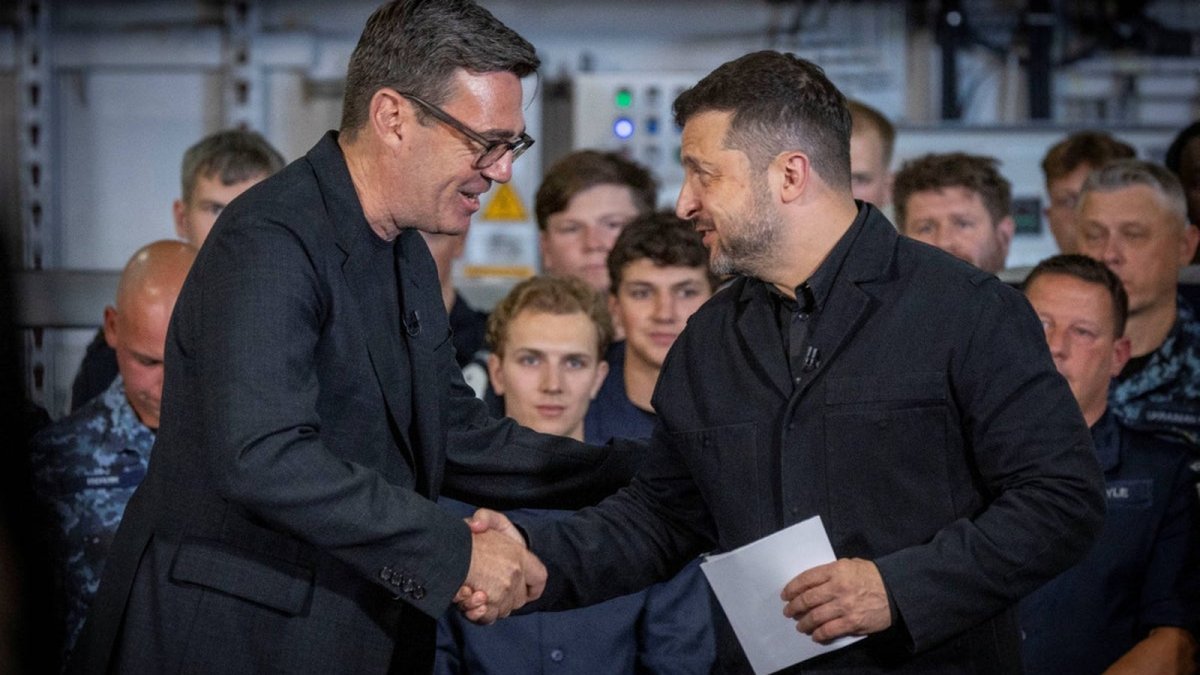
Andy Burnham has arrived in Kyiv on his first foreign trip as prime minister, marking Ukraine’s Independence Day with a pledge that Britain stands “100 per cent behind” the country in its fight against Russia’s illegal invasion. The visit, which began with the prime minister shaking hands with Ukraine’s foreign minister, Andrii Sybiha, as he stepped off an overnight train, is intended to signal continuity in British foreign policy at a moment of acute tension between London and Moscow.
The trip carries particular weight because Mr Burnham is expected to chair his first meeting of the “coalition of the willing” while in the Ukrainian capital, a grouping established by his predecessor Sir Keir Starmer to coordinate military and diplomatic backing for Kyiv. It also comes against a backdrop of increasingly hostile rhetoric from the Kremlin, which has accused Britain of deliberately escalating the conflict and warned that London will “pay a price” for its involvement.
A Message of Unwavering Support on Independence Day
Speaking before his arrival, Mr Burnham sought to frame the visit as a demonstration of enduring British commitment, using the symbolism of Ukraine’s 35th anniversary of independence to underscore his message. “On Ukraine’s 35th anniversary of independence, the Ukrainian people should be in no doubt: the UK is behind you today and for as long as it takes,” he said in a statement released by Downing Street.The prime minister’s language was carefully calibrated to reassure both Kyiv and domestic audiences that the change of leadership in Westminster would not alter the fundamental trajectory of British policy. “I am proud of the contribution our country has made to Ukraine and I want the Ukrainian people to hear it directly from me that our support will not waver. After all, Ukraine’s security is our security,” he added.Mr Burnham also sought to address the longer horizon of the conflict, looking beyond the battlefield to the reconstruction that will eventually be required. “The friendship between our two countries will long outlast Russia’s illegal war. In both the fight and in the rebuilding to come, we will stand with Ukraine and deliver opportunities for people across both our countries,” he said, before delivering a direct warning to Moscow: “Russia should be in no doubt of our resolve. We will not back down until there is a just and lasting peace.”Chairing the Coalition of the Willing
The centrepiece of the visit is Mr Burnham’s first meeting of the coalition of the willing, a forum that has become a key mechanism for Western coordination on Ukraine since its creation under Sir Keir Starmer. The grouping brings together a core of allied nations committed to sustained military and financial support for Kyiv, and the prime minister’s decision to chair it from Ukraine itself is a deliberate signal of prioritisation.The coalition has been central to efforts to supply Ukraine with advanced weaponry, training for its armed forces, and long-term security guarantees. By convening the meeting in Kyiv, Mr Burnham is reinforcing the message that Britain’s commitment is not conditional on geography or convenience, but is rooted in a strategic assessment that European security depends on Ukraine’s survival as an independent state.The timing is significant. Ukraine’s Independence Day falls at a moment when the war has entered a grinding phase, with Russian forces making incremental advances in the east while Ukrainian commanders plead for more long-range capabilities and air defence systems. The presence of a British prime minister in the capital, chairing a meeting of key allies, is intended to counter any narrative that Western support is flagging.Scalp Missiles and the Long-Range Question
Alongside the diplomatic choreography, the visit has been accompanied by a substantive defence announcement that will be closely scrutinised in Moscow. The government has agreed to allow defence firm MBDA to release classified information on UK components for the long-range Scalp missile, the French-produced version of the Storm Shadow system used by British forces.The decision is significant because both missiles share French and British technology, and Ukraine and France are reportedly looking to establish local assembly lines for Scalp missiles on Ukrainian soil. Allowing MBDA to share sensitive technical data would be a prerequisite for any such arrangement, potentially enabling Ukraine to produce or maintain these weapons domestically rather than relying entirely on foreign supply.The move represents a further step in the incremental escalation of Western military support that has characterised the war. Storm Shadow and Scalp missiles have already been used by Ukrainian forces to strike targets deep inside Russian-occupied territory, and the prospect of local assembly would reduce the logistical burden of supplying them from abroad. It also suggests a longer-term commitment to Ukraine’s defence industrial base, moving beyond simple donations of equipment towards a more integrated approach.Kremlin Threats and Souring Relations
The visit unfolds against a backdrop of sharply deteriorating relations between London and Moscow. Earlier this month, Russia’s embassy to the UK issued a statement claiming that reports of Ukrainian forces using unmanned aircraft manufactured by two British companies “confirm that London is deliberately opting for an escalation of the Ukraine crisis”.The embassy accused Britain of “seeking to contain Russia and inflict maximum damage on it by proxy” and issued a thinly veiled threat, warning that the deeper London’s involvement becomes, “the higher the price it will pay”. The statement concluded with a stark admonition: “London’s actions will inevitably carry consequences for which it will have to answer.”Mr Burnham was asked directly about the Kremlin’s threats and responded with characteristic bluntness. “This is the UK doing what it has long said it would do, which is to support Ukraine 100 per cent against this illegal war led by Vladimir Putin,” he said. “We are providing support so that Ukraine can defend itself, and that’s been the British position all the way through this conflict by previous prime ministers. It remains the case with me. We are not fair-weather friends. We will be there in Ukraine’s hour of need, and that won’t change.”The Ambassador Question and Diplomatic Downgrade
Adding to the diplomatic friction is an unresolved question about Russia’s representation in London. The Kremlin has yet to put forward a replacement candidate for its ambassador to the UK after Andrei Kelin left his post in recent weeks, with a charge d’affaires currently leading the embassy, according to an embassy spokesperson speaking to The Times.The absence of a full ambassador raises questions about whether Moscow is seeking to downgrade its diplomatic relations with Britain, a move that would represent a significant shift in the formal channels of communication between the two countries. While diplomatic ties have been severely strained since the full-scale invasion of Ukraine in 2022, the maintenance of ambassadorial-level representation has been seen as a baseline of functional engagement.The delay in appointing a successor could be interpreted in several ways: as a deliberate snub, as a reflection of the depth of Russian anger at British policy, or as a bureaucratic consequence of the broader rupture in relations. Either way, it adds another layer of uncertainty to an already fraught bilateral landscape, and Mr Burnham’s visit to Kyiv is unlikely to improve the atmosphere in Moscow.Political Continuity and the Starmer Legacy
Mr Burnham’s trip also carries a domestic political dimension, marking a deliberate continuation of a tradition that has seen every British prime minister except Liz Truss visit Ukraine since the war began. Sir Keir Starmer, who established the coalition of the willing, made Ukraine his final foreign visit as prime minister, where he insisted that Britain’s “cast-iron” support would “always endure”.The near-unbroken record of prime ministerial visits underscores the cross-party consensus that has characterised British policy on Ukraine, a rare area of foreign affairs where Labour and Conservative governments have pursued virtually identical approaches. Mr Burnham’s decision to make Kyiv his first foreign destination is a clear signal that he intends to maintain that consensus, even as domestic political pressures mount at home.For the prime minister, the visit offers an opportunity to project statesmanship on the international stage while reinforcing his domestic credentials as a leader who understands the gravity of the European security situation. It also serves to remind voters that Britain, despite its own economic challenges, remains a significant player in global affairs. The message from Kyiv is intended to be heard in both Moscow and Westminster: Britain’s commitment to Ukraine is not a matter of partisan politics, but of national interest. As Mr Burnham put it, the UK is not a fair-weather friend — and that is a promise he is now making in person, on Ukrainian soil, on the country’s day of independence.This article was produced with AI-assisted research and editorial support. Sources: The Independent, 24 August 2026 — "Andy Burnham arrives in Ukraine to announce long-range missile support".
By Erica Thornton, Staff WriterWhat's Your Reaction?
 Like
0
Like
0
 Dislike
0
Dislike
0
 Love
0
Love
0
 Funny
0
Funny
0
 Wow
0
Wow
0
 Sad
0
Sad
0
 Angry
0
Angry
0

US Politics and Policy Correspondent at Global1.News. Based in Washington DC, covering American politics, policy, elections, and the courts. Knows how the system works and tells you what it actually means.













Comments (0)