
Wichita's Backup Generators Failed, and 500,000 People Are Now Boiling Their Water
Wichita's main water treatment plant lost backup power for about 45 minutes on September 16, 2026, leaving roughly 500,000 water customers under a boil water advisory as schools scrambled and bottled water disappeared from store shelves.
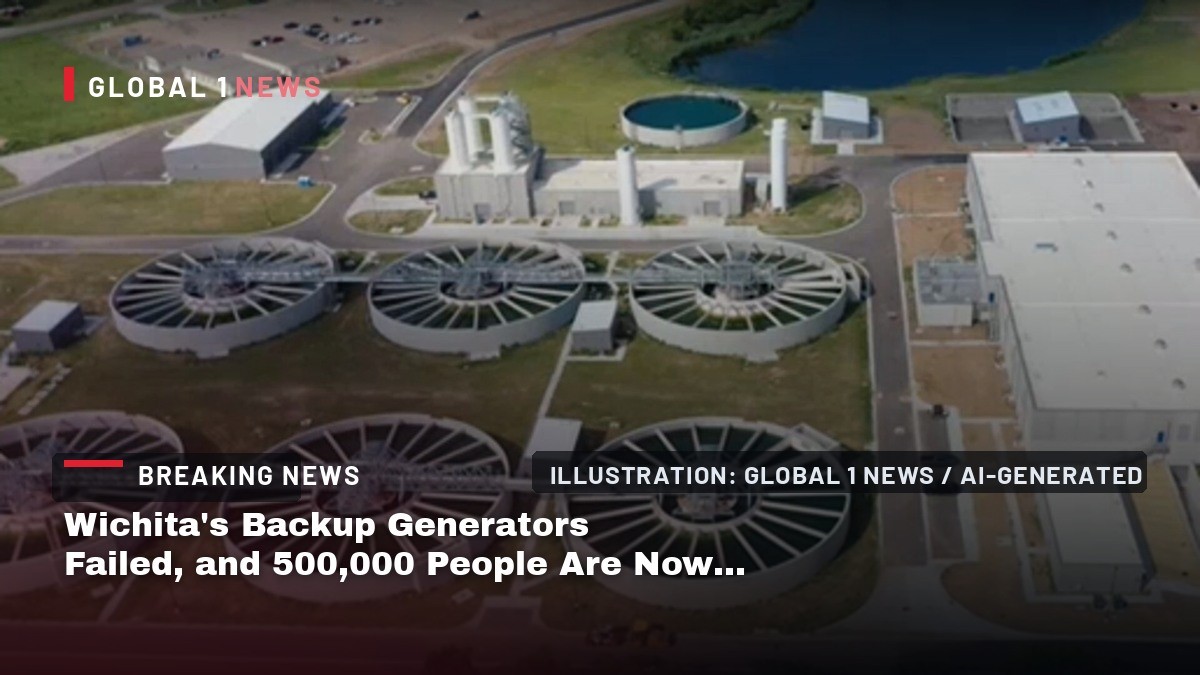
Wichita, Kansas — The water stopped moving before most of the city was awake. By the time the sun came up on September 16, 2026, roughly 500,000 water customers across the Wichita metro had lost the one thing nobody thinks about until it is gone: safe water from the tap. The city's backup power failed. Everything that followed — the advisory, the school closures, the run on bottled water — follows from that.
Wichita Water Failure Leaves 500,000 Under Boil Advisory
A Plant Running on Generators, and Then Even Those Went Dark
The City of Wichita lost power at its main water treatment plant and the Hess pump station at roughly 5 a.m. on September 16, 2026, according to the city. The outage lasted an estimated 45 minutes. Gary Janzen, director of Public Works and Utilities, said the city had already moved both facilities off the grid and onto generator power the night before, out of caution, because of storms on the night of September 15.
"We were on backup power through our generators at the time that we actually lost that power," Janzen said.
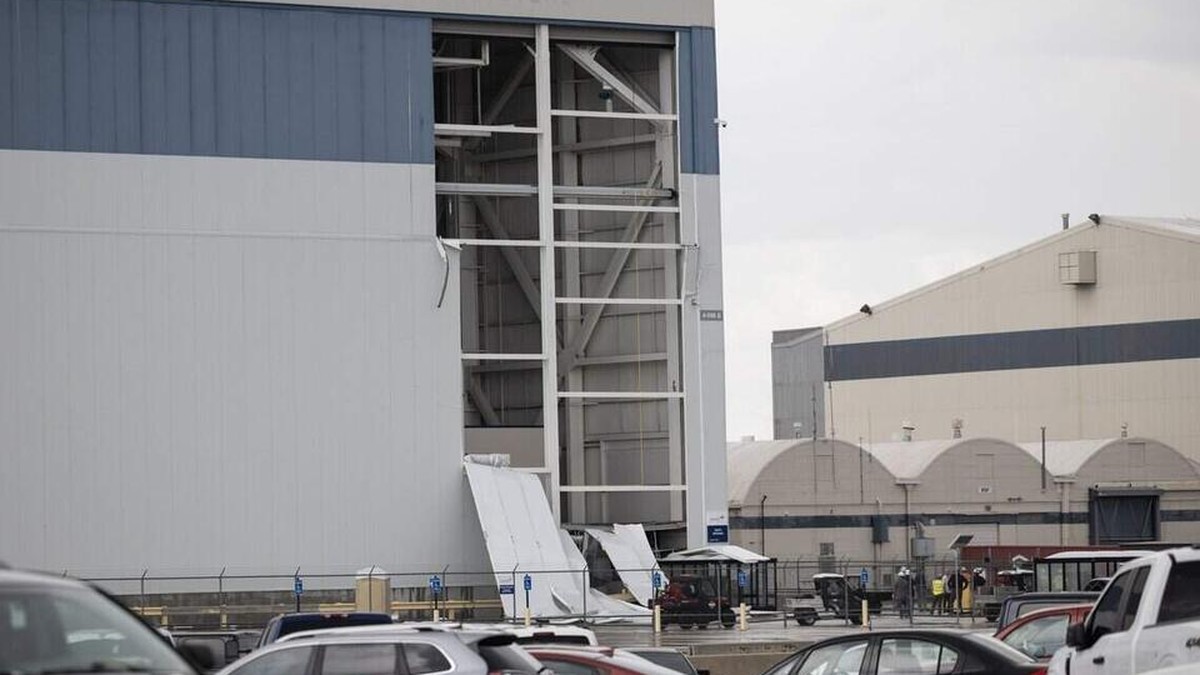
The city exercises those generators on a monthly schedule across all its treatment facilities, a practice meant to guarantee they run when needed. On this morning, they did not. The storms that rolled through central Kansas were strong enough to collapse a 70-foot section of wall at the Boeing facility in south Wichita, according to KMUW. The Wichita Eagle reported the collapse came during a localized downburst with 75 mph winds near McConnell Air Force Base, and that no injuries were reported. But Janzen said it was the generator that failed, not the city's usual power source.
'It Is Not Set Up to Kick Back to Primary Power'
Wichita's primary power source, from the utility Evergy, was available at the time the generators failed, Janzen said. The plant and pump station simply do not switch back to it automatically.
"It is not set up to kick back to primary power, unfortunately," Janzen said. "As far as we were aware, primary power was available."
No cause has been established for why the backup generators failed. "This is rare to see this happen, so we've got to really dig in and figure out what the cause was," Janzen said. The city runs the two facilities on generator power about once a month to confirm the backup system is ready to take over.
Nobody Knew for Two Hours
City staff believe the pump station and treatment plant lost generator power around 5 a.m., primarily because that is when residents began calling to report low pressure or no water at all. The first notice on the City of Wichita Facebook page went up at 7:10 a.m., Janzen said, a gap of more than two hours between the failure and the first public word of it.
"There's obviously issues with the alerting in that system that we're going to be digging into and get a better understanding of why we didn't know sooner that we lost that power from those generators," Janzen said.
The plant was staffed when the power went out. "We have 24-7 staffing. Folks were there. Again, I don't know anything more than that at this time," Janzen said. It is unclear why staff did not notice the outage earlier.
One Plant, One in Six Kansans
The advisory covers about 500,000 water customers, according to the City of Wichita, and KMUW reported it includes most of Wichita's metro area. Wichita sells water wholesale to Rose Hill, Park City, Benton, Derby, Valley Center, Bel Aire, Kechi and Sedgwick County Rural Water Districts 1, 2 and 3, along with McConnell Air Force Base, according to KMUW. Those contracts make Wichita the provider for roughly 1 in 6 Kansans. The Wichita Eagle reported the plant provides drinking water to about 17 percent of the state of Kansas. Park City's own alert, issued at 8:18 a.m., states that it is included.
A Run on Bottled Water and Five Cases Per Customer
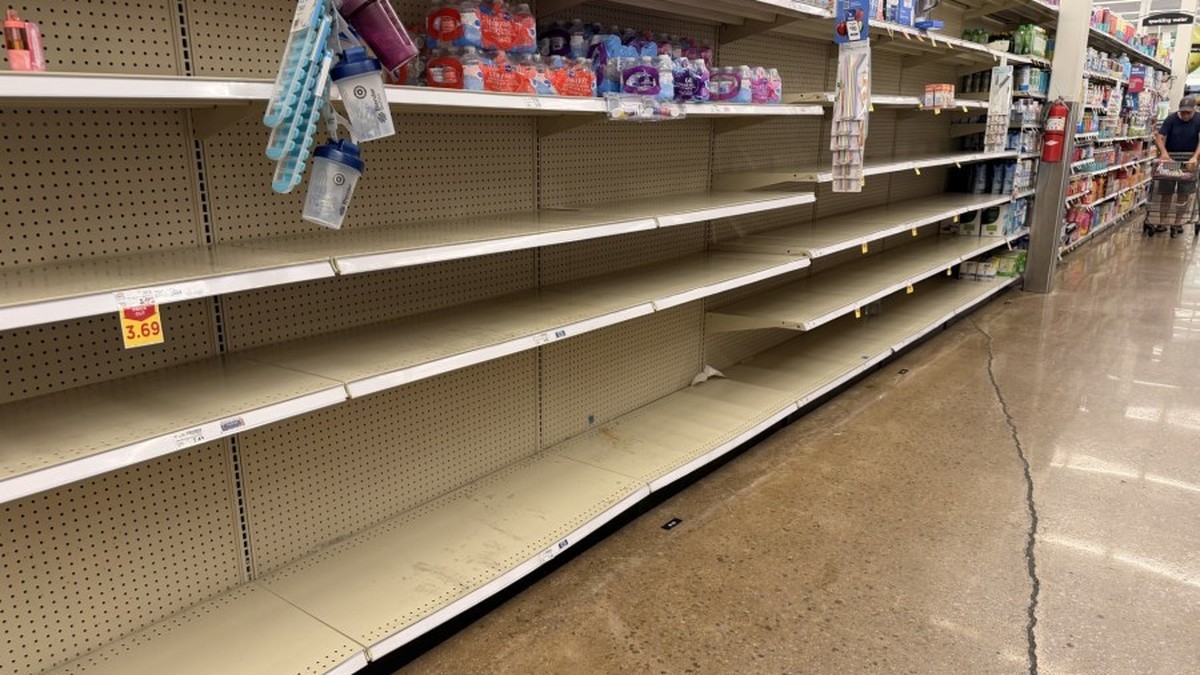
Wichitans began hitting area stores shortly after the advisory went out, KSNW reported. A KSN viewer submitted a photo of a shelf at a Dillons store that had been nearly emptied of bottled water, and a Dillons spokesperson said the company was delivering additional truckloads of water to stores across the city.
Outside a Costco Wholesale in east Wichita, Jenae Crowley was loading cases of bottled water into her vehicle, the Wichita Eagle reported. A sign at the store's entrance limited customers to five cases each. "I feel like I should have gotten a notification from the city, but I didn't," Crowley said. Inside, a pallet at the back of the store held only a couple of cases of Kroger-brand water. Russell Anderson of Wichita had seven cases in his shopping cart.
"My sister called me this morning to tell me about the boil-water news, so I came out here to make sure I'm ready for whatever happens," Anderson said.
Reaction on the city's own Facebook page was blunt. "This is shameful," one person wrote. "I will be bringing you my receipts, so you can pay me for the bottled water I have to buy until this is over," wrote another.
Schools Scrambled Before the Second Bell
Wichita Public Schools announced at 8:40 a.m. that no elementary school scheduled to start at 9 a.m. would open, and that students already dropped off at latchkey programs needed to be picked up as soon as possible. The district said schools already in session and 9 a.m. secondary-start schools would continue as normal, and that a decision about September 17 and after-school events would come when more information was available.
By the afternoon, USD 259 had cancelled pre-K care, latchkey programs, athletic practices and events on district property, KMUW reported. Buildings already in session, primarily middle and high schools, stayed open with the district distributing food and bottled water.
195 Sample Points and a 24-Hour Wait
The city has 195 water testing stations across the community, according to its advisory FAQ. Samples go to a lab for bacteria and chlorine testing, and it takes 24 hours from the time they are tested for the city to get results back. Janzen said the last time Wichita sampled every one of those sites, collecting them took four hours. He said the first results were not expected until Thursday afternoon.
KDHE, which alone can rescind the advisory, was not expected to lift it before Thursday afternoon at the earliest. KDHE guidance states that a failure to maintain adequate pressure can mean a loss of chlorine residuals and bacterial contamination. The city has a flushing plan, but Janzen said it would not start early. "We don't want to start flushing too soon or we could push water that has issues into areas that does not have issues," he said.
"If there is any potential for contamination, we will not gamble with our community's safety," the city's FAQ states. The same document tells residents to boil water for one minute before drinking or cooking, to discard ice cubes, and to skip the Brita or refrigerator filter, which it says is not sufficient to make the water safe.
An 80-Year-Old Plant and a Replacement That Is Not Ready
The plant that failed is more than 80 years old. Wichita announced during the week of September 14 that it had signed a certificate of occupancy for its long-delayed new treatment plant at 21st Street North and Hoover, on 40 acres in northwest Wichita. The city will spend the next six months taking over operations there with Wichita Water Partners assisting, and hopes to be fully online by spring 2027. The city's FAQ states directly that the advisory "has nothing to do with" that handover.
The age of the old plant is not a new argument. In June 2022, the city blamed maintenance oversight on an 80-year-old filter for a lapse in water quality that sent cloudy water with "a higher than expected dose of solids" into the distribution system. "Normally, we're able to catch these glitches that happen. In this particular case, we didn't get on top of it," said Alan King, then the city's public works and utilities director. "Because we have a very old treatment plant, we've got to expect problems."
Janzen has not linked the age of the plant to this outage. But the Wichita Eagle reported in 2019 that an engineering study found 99 percent of the city's treatment plant was in poor or very poor condition, and 100 percent of its raw water pipes were in very poor condition as of 2017.
The Third Advisory in Five Years
For Wichita's own water system, this is the third major disruption in five years. In October 2021, a break in a 42-inch main on the city's north side left the roughly half a million Kansans who rely on Wichita's supply without reliable drinking water for 36 hours, the Wichita Eagle reported. Mayor Brandon Whipple asked residents not to hoard bottled water, and area shelves were wiped out anyway by late Thursday.
Eight months later, in June 2022, the filter failure triggered another advisory that shut restaurants across the city. Before October 2021, King said, Wichita's last boil water advisory was in the late 1990s.
A week before this one, on September 9, 2026, KDHE issued a boil water advisory for part of the Sedgwick County Rural Water District #4 public water supply system, generally south of Kellogg Avenue between Maize Road and 295th Street, after a water main break. KDHE says that advisory remains in effect until the conditions that put the system at risk are resolved.
What Happens Next
The plant and pump station are back on regular power. Janzen said the water now moving through them "is not contaminated, we're not putting contaminated water into the system," but the city cannot vouch for what entered the distribution network during the 45 minutes it was dark. The outage also took down the computers that sample and record water quality data at the plant, and the city is trying to recover that data.
An investigation into the power loss is coming. "I'm certain that we will be putting SOPs in place moving forward to make sure we can do everything we can to avoid this in the future," Janzen said.
Vice Mayor Dalton Glasscock said city leaders "will not gamble with our community's safety." "This is an unfortunate event and we're working to bring water back to our customers as quickly as possible," he said.
KDHE makes the final call on when the water is safe enough to stop boiling. Until then, the city says an emergency water plan is in place: if the advisory drags on, it will activate emergency water stations for residents who cannot boil water or buy it. Consumer questions go to the city at (316) 265-1300 or KDHE at (785) 296-5514. For now, half a million people wait on a lab.
By Jessica Ali, Staff Writer
This article was produced with AI-assisted research and editorial support. Sources: City of Wichita, Kansas Department of Health and Environment, KWCH, KMUW, KSNW, The Wichita Eagle.
What's Your Reaction?
 Like
0
Like
0
 Dislike
0
Dislike
0
 Love
0
Love
0
 Funny
0
Funny
0
 Wow
0
Wow
0
 Sad
0
Sad
0
 Angry
0
Angry
0

Editor-in-Chief at Global1.News. Atlanta-based journalist who cuts through the BS and tells it like it is. Lead anchor, host, and the voice you hear when the spin stops and the truth starts.











Comments (0)