
Washington Is About to Tax the Servers Inside Data Centers — Right When It Needs More Data Centers
The Trump administration is weighing semiconductor tariffs that could extend to finished data center servers, ending the exemption that protected the AI buildout. A hosting founder on what the cost shock means for every hardware buyer.
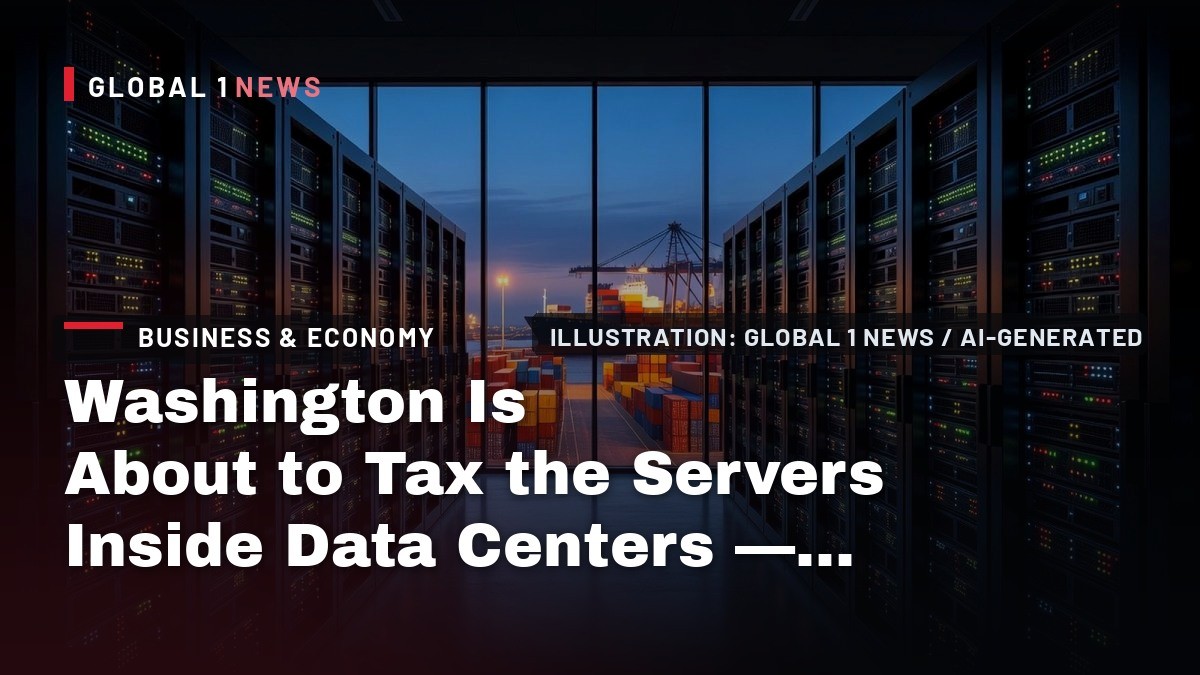
Washington Is About to Tax the Servers Inside Data Centers — Right When It Needs More Data Centers
I've been running hosting infrastructure for over a decade, and I've learned to read the policy tea leaves before they hit my hardware budget. So when Politico reported Thursday that the Trump administration is weighing a new round of semiconductor tariffs that could reach all the way down to the finished servers that fill data centers, I did what I always do when Washington starts tinkering with the supply chain: I called my hardware guys, I checked my order pipeline, and I started doing math. The math, as the industry keeps telling anyone who'll listen, does not work.
Here's the situation in one sentence. The same administration that wants to win the AI race by building more American data centers is considering tariffs that would make the servers inside those data centers more expensive — and the trade group that studied it says the move could delay or cancel one in five data center projects planned through 2030. Let me unpack that, because it matters to every independent hosting provider, every colocation operator, and every founder who's about to buy hardware in the next six months.
What Washington Is Actually Considering
Politico's report, confirmed the same day by CNBC, is based on eight people familiar with internal administration discussions. The details are preliminary and could shift — the rate, the products covered, the country-by-country terms are all still fluid. But the direction is clear: officials want to close what they see as a loophole that lets finished electronics dodge the 25 percent tariff on advanced chips that took effect back in January.
The plan favored by Commerce Secretary Howard Lutnick would tie duty-free import quotas to commitments to build domestic production. Import a certain volume of semiconductors duty-free based on how much fab capacity you pledge to bring to the United States. Vary the rates by country. Phase the tariffs in gradually to avoid a sudden cost shock. And the scope could reach past raw chips to the goods that contain them: laptops, gaming consoles, and the servers that fill data centers.
Now stop and think about what that last sentence means. It means the tariff isn't just about TSMC and Samsung anymore. It's about the actual machines you rack, cable, and run workloads on. It's about the importers — which includes every cloud provider and every system builder that brings finished servers across the border — paying a tax on the core of the AI buildout.
The Exemption That's About to Die
Here's the part that should scare every hosting provider: the current tariff has a data center exemption, and that exemption is on the chopping block.
In January, President Trump signed a Section 232 proclamation establishing a two-phase adjustment of semiconductor imports, with a 25 percent ad valorem duty on certain advanced computing chips and specified derivative products effective January 15. Crucially, the measure exempts imports destined for data centers — the theory being that you don't tax the thing you're trying to build more of. But according to the Politico reporting, that exemption could be removed in a second phase.
If that happens, the tax lands directly on the buildout. The CCIA — the Computer and Communications Industry Association — estimated back in June that taxing both chips and the downstream products that use them would cost the US about $90 billion a year in GDP losses and cause roughly 20 percent of data center projects planned through 2030 to be delayed or canceled. In a May letter to Treasury Secretary Scott Bessent, cosigned by about 20 trade groups, the CCIA warned the ripple effects would hit smartphones, laptops, tablets, connected devices, and vehicles — and limit technology choices across the board.
The Two Readings — Make America Chip Again, or Tax the Buildout to Death
There are two ways to read what's happening, and both of them are true at the same time.
Reading 1: this is the America First playbook working as designed. The tariffs are a lever to force chip production back onto US soil. If you make imports more expensive, domestic fabs look more attractive. That's the theory, and it has a real constituency — Commerce officials are increasingly pushing for broader tariffs specifically to encourage chipmakers to expand US production. The quotas-tied-to-pledges structure is an attempt to get investment commitments without writing subsidy checks.
Reading 2: the person paying the tariff is the importer — and the importer is you. Tariffs are paid by the importer, not the exporter. That's not a political statement, that's trade law. Every server you buy that crosses the border gets more expensive. Every colocation expansion that depends on imported hardware gets more expensive. And here's the kicker: the trade groups warn this could drive data center development outside the US — which is the exact opposite of the goal. You don't win an AI race by making the race track more expensive on your own side.
The industry reaction has been blunt. Ars Technica's headline called taxing chips this way "the single dumbest way imaginable." South Korean President Lee Jae Myung made the same point in January when the 100 percent threat first surfaced: tariffs raise US costs long before they create a meaningful amount of additional domestic wafer capacity.
The Secondary Bottleneck Nobody's Talking About — the Timing Gap
Here's the piece of this story that almost nobody in Washington is discussing, and it's the part that will hit hosting providers hardest: the gap between when the tariffs bite and when domestic production actually arrives.
This is the same structural flaw that runs through every "build it here" plan. The duty-free quota idea ties today's imports to tomorrow's factory pledges. But a fab takes three to five years to come online, and the AI buildout is happening right now. How much of today's computing demand can a duty-free quota tied to a future factory investment actually cover? The honest answer: not enough. Meanwhile, the imports keep needing to cross the border, and the tax keeps landing on the machines.
The market timing couldn't be worse either. We've already had a DRAM price shock, graphics card price surges, and console price hikes through 2026. Analysts are estimating data center construction cost bumps in the 15 percent range from the tariff stack alone. And you're layering this on top of a supply chain that's already stretched — right when hyperscalers and AI labs are still signing deals like Anthropic's reported $45 billion compute capacity agreement with Nscale. The buildout isn't pausing for the policy to catch up. That's the real bottleneck: not the tariff itself, but the timing mismatch between the tax and the domestic capacity that's supposed to justify it.
What This Means for Independent Hosting Providers
If you're running an independent hosting business — and I know most of you reading this are — here's what I'd do in the next ninety days.
First, lock your hardware orders now. If the tariff lands in "weeks or months" as the sources suggest, the price you pay today is likely the cheapest you'll see for a while. Get purchase orders signed, deposits down, and delivery slots reserved. Vendors honor what's contracted — that's the one certainty in this whole mess.
Second, read your supply contracts for tariff clauses. Some distributors pass tariff increases straight through; others have price-adjustment language that lets them reprice after the fact. Know which one you're dealing with before the announcement, not after it lands on your invoice.
Third, watch the quota formula, not just the rate. The Lutnick plan ties duty-free imports to domestic production pledges. If you're buying from a manufacturer that pledges US capacity, your hardware could slip through cheaper than a competitor's. That's a procurement advantage you want to understand early.
Fourth, model your pricing against a 15 percent cost bump. If construction costs rise, colocation pricing rises, and your upstream costs rise. If you don't have a pricing model that absorbs a 15 percent hardware-cost shock, build one now. Your customers won't thank you for a surprise price increase in Q1, but they'll respect a transparent one that comes with six months of warning.
Fifth, keep your options outside the blast radius. The trade groups warn the tariffs could push data center development offshore. If your business can serve customers from a region that isn't importing finished servers through US customs, that's suddenly a feature. Diversification was always smart — now it's protective.
The Bottom Line
Let me tell you what I actually think is going to happen. The administration is serious about semiconductors — the January tariff proved that. But there's a world of difference between taxing chips and taxing the servers those chips go into. Taxing the finished machine is taxing the buildout itself, and the CCIA's numbers say it plainly: a $90 billion annual GDP cost and one in five data center projects delayed or canceled is a terrible trade for a policy whose whole point is more domestic infrastructure.
The independent hosting community has been here before. We've survived DRAM shortages, GPU allocation games, power moratoriums, and every policy whim that Washington threw at the industry. The play is always the same: plan ahead, lock what you can, and keep the business flexible enough to bend when the rules change. The tariff may or may not land. The discipline to prepare for it is free.
— Allan Ali, Founder
This article was produced with AI-assisted research and editorial support. Sources: Politico (Aug 27, 2026), CNBC, Ars Technica, DatacenterDynamics, TrendForce, Computer & Communications Industry Association (CCIA).
What's Your Reaction?
 Like
0
Like
0
 Dislike
0
Dislike
0
 Love
0
Love
0
 Funny
0
Funny
0
 Wow
0
Wow
0
 Sad
0
Sad
0
 Angry
0
Angry
0

Publisher of Global1.News. Automation architect, systems builder, and the guy making sure the truth gets published.















Comments (0)