
Nigeria Makes History at Venice 2026 With 'Dear Ajayi'
Nigeria's 'Dear Ajayi' by Damilola Orimogunje makes history as the first Nigerian production in the Venice Days competition at the 83rd Venice Film Festival (Sept 2-12). Tunisia's Kaouther Ben Hania joins the main jury and Kamel Laaridhi competes in Critics' Week.
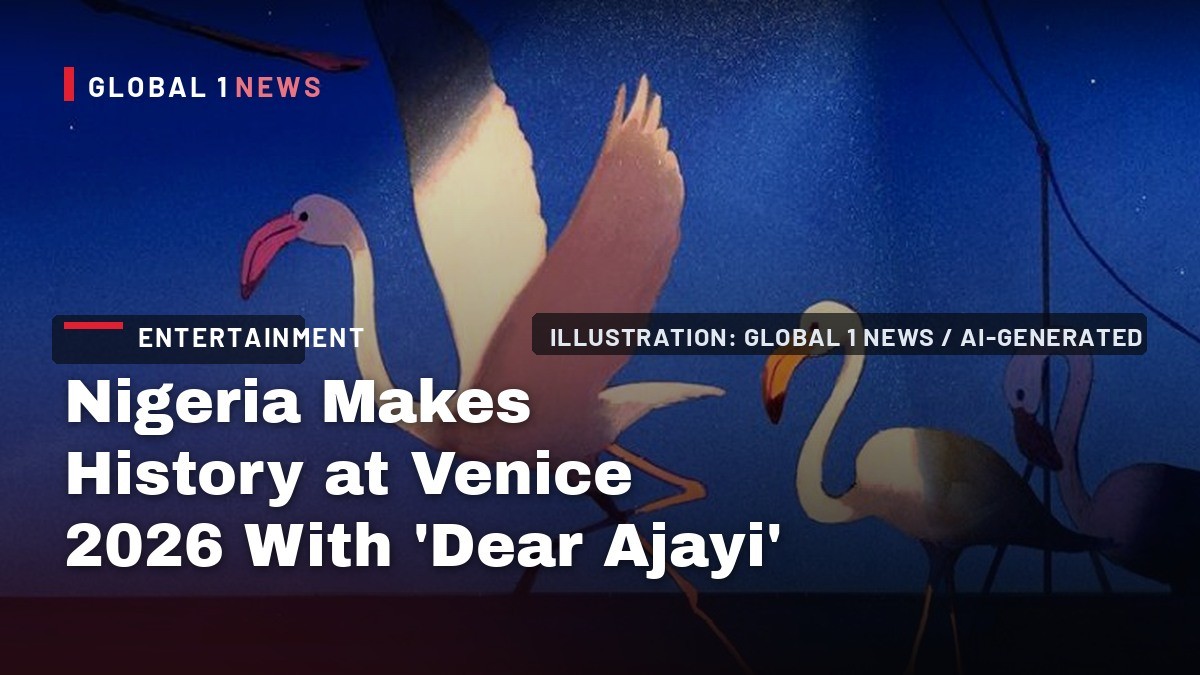
When the 83rd Venice International Film Festival opens on the Lido this Wednesday, African cinema will claim a historic first at the world's oldest film festival: Nigeria's "Dear Ajayi" becomes the first Nigerian production ever to compete in the Giornate degli Autori, the festival's storied parallel section. Across the same programme, Tunisian filmmaking makes its presence felt both in competition and on the jury.
Nigeria Makes History at Venice 2026 With 'Dear Ajayi'
Venice, Italy — The 83rd Venice International Film Festival runs September 2-12 on the Lido di Venezia, and this year Africa arrives with landmark representation. Nollywood's Damilola Orimogunje brings his period drama "Dear Ajayi" to the Giornate degli Autori competition — a first for Nigerian cinema — while Tunisia's Kaouther Ben Hania sits on the main jury and Tunisian director Kamel Laaridhi competes in Critics' Week.
A Historic First for Nigerian Cinema at Venice Days
There is something deeply moving about watching a moment arrive that so many of us have prayed for, whispered about in corridors, and dared to imagine during long nights at film markets. When the 83rd Venice International Film Festival opens on the Lido this Wednesday, organized by La Biennale di Venezia and directed by Alberto Barbera, the world's oldest film festival officially recognized by FIAPF will host a premiere that Nigerian filmmakers have been building toward for decades. "Dear Ajayi," the second feature from Damilola Orimogunje, will have its world premiere in competition at the 23rd Giornate degli Autori, better known to the world as Venice Days.
For those who may not know, the Giornate degli Autori is not merely a sidebar. It is a parallel section with its own identity, its own jury, and its own fierce commitment to author-driven cinema. Since its founding, it has championed films that might otherwise be lost between the glamour of the main competition and the noise of the market. To have a Nigerian production enter this competition is not a small thing. It is a declaration that our stories, our languages, our complex family dramas, belong in the same conversation as the most ambitious cinema being made anywhere on this earth.
The significance of this moment cannot be overstated. Venice is the launchpad for awards-season momentum, the place where films like "Joker" and "Nomadland" first found their wings. This year, Danny Boyle's "Ink" opens the festival, setting a tone of bold, kinetic storytelling. Maggie Gyllenhaal presides over the main jury, a filmmaker and actress known for her own fearless choices. Into this arena walks a film from Lagos, carrying the weight of a nation's cinematic ambitions on its shoulders.
Venice has slowly opened its arms wider to the African continent over the years, but this edition feels different. Africa is not a token presence or a sidebar curiosity this year. The continent is in the competition, on the jury, and in the Critics' Week. The Lido, that slender strip of sand and glamour, will this week hear Yoruba, Hausa, Igbo and the rhythms of Nollywood echoing through its canals.
For the Nigerian film industry, this is a validation of a journey that began in the streets of Lagos with straight-to-VHS productions and has now arrived at the gates of the most prestigious festival circuit in the world. The industry that was once dismissed as "video films" has produced a work that will stand alongside the best of global cinema. And the world will watch.
'Dear Ajayi': A Sisterhood Story Set in 1990s Nigeria
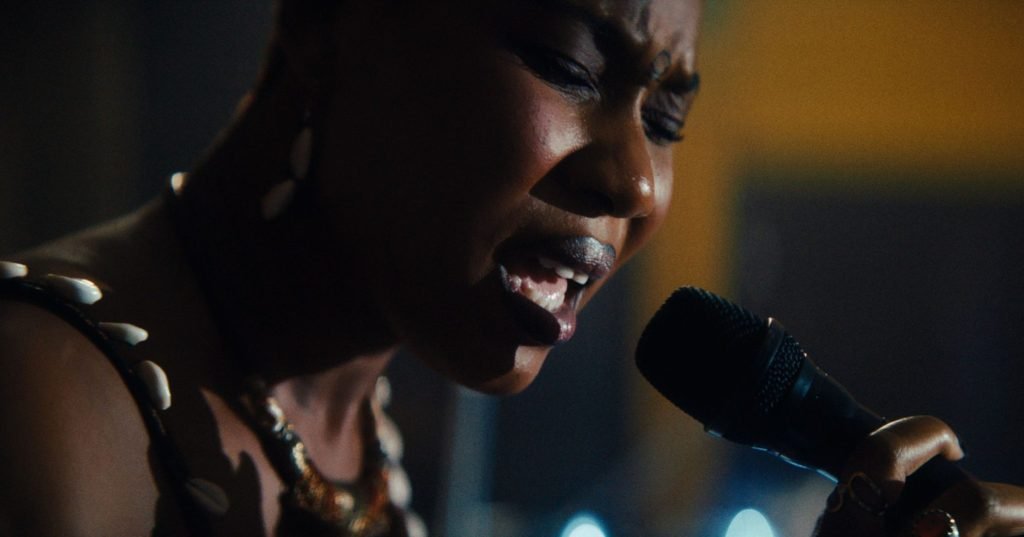
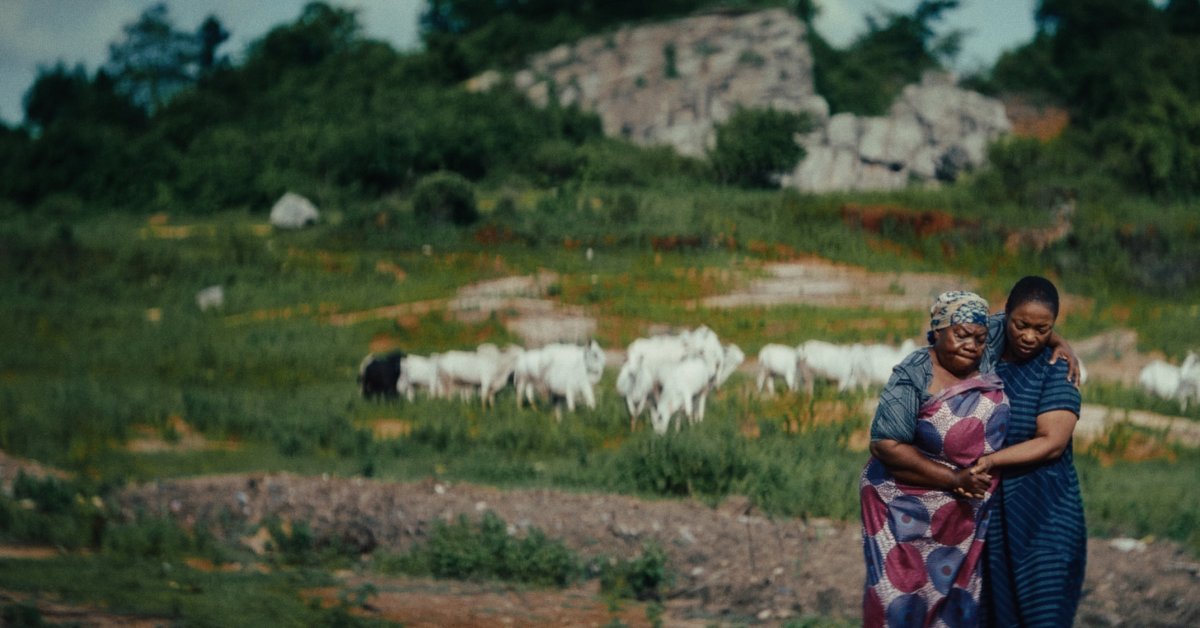
Let me tell you about the film that is making history. "Dear Ajayi" is set in 1990s Southwestern Nigeria, a time of transition, of military rule, of hope and uncertainty. At its heart are two sisters, Ade and Titi Ajayi, estranged by choice and by circumstance, whose vastly different lives collide when they must return to their late father's home to care for their ailing mother. The house itself becomes a character, a repository of memory, of unspoken grievances, of the weight of a father who is gone but whose presence still shapes every corner.
Ade is a devout Christian, the family's sole breadwinner, a woman who has carried responsibility like a cross for so long that she has forgotten how to put it down. She is the one who stayed, who sacrificed, who built a life of order and duty. Titi is her opposite: an aspiring singer whose independent spirit challenges convention at every turn. She left, she chased her dreams, she refused to be bound by the expectations of family and faith. Now, in the cramped intimacy of their mother's sickroom, these two women must find a way to be sisters again.
The film explores themes of grief, faith, ambition, love and family bonds with tenderness. It is not a film about grand gestures or dramatic confrontations; it lives in small moments, in silences, in the way a song can unlock a memory or a shared meal can begin to heal a wound that has festered for years. Music and visual art are woven through these intimate domestic spaces, a reminder that creativity is not a luxury but a lifeline.
The cast is a who's who of Nigerian screen talent, a multi-generational ensemble that brings depth and authenticity to every scene. Bimbo Akintola, a veteran of Nollywood, leads with the kind of gravitas that only decades of craft can bring. Uzoamaka Power and Tosin Adeyemi bring youthful energy to the younger roles. Antar Laniyan, Michelle Dede, Lanre Hassan Adesina, known affectionately to generations as Mama Awero, William Benson, Chioma Omeruah, who many will know as Chigurl, Tope Tedela and Baaj Adebule round out a cast that spans the full spectrum of Nigerian acting excellence.
What strikes me most about the premise is its universality. The specifics are deeply Nigerian, the setting, the music, the textures of life in the Southwest. But the story of two sisters finding their way back to each other, of faith tested and ambition tempered, of the complicated love that binds a family together, this is a story that could happen anywhere. And that is precisely why it belongs on the world stage.
Damilola Orimogunje: From Festival Riser to Venice Debut
Damilola Orimogunje is not a name that will be unfamiliar to those who have been paying attention to the rise of a new generation of Nigerian filmmakers. He wrote, directed and produced "Dear Ajayi" for his own 2O9INE Films, a banner that has become synonymous with ambitious, character-driven storytelling. But his journey to the Lido has been a steady climb, not a sudden leap.
His debut feature, "For Maria Ebun Pataki," premiered in 2020 at Film Africa London, where it won the Audience Award for Best Narrative Feature. That film, a deeply personal exploration of grief and motherhood, also earned six African Movie Academy Award nominations, cementing Orimogunje's reputation as a filmmaker of considerable sensitivity and skill. It was a calling card, a promise of greater things to come.
But Orimogunje is not only a director. He is also a producer with an eye for talent beyond his own projects. He served as a producer on Babatunde Apalowo's "All the Colours of the World Are Between Black and White," a film that premiered at the Berlin Film Festival and went on to win the Teddy Award for Best Feature, one of the most prestigious prizes for LGBTQ+ cinema in the world. That film put Nigerian cinema on the map at Berlin in a way that had not been seen before, and Orimogunje was instrumental in making it happen.
For "Dear Ajayi," Orimogunje has assembled a team of co-producers that includes Mayana Films, Depth and Optics Productions and Zynox Productions. This is not a one-man show. It is a collaborative effort, a recognition that the stories we tell deserve the resources and expertise that the best in the business can provide. Luminalia is handling world sales, ensuring that the film will find its way to audiences far beyond the Lido.
The first trailer for "Dear Ajayi" was released in late August 2026, and I am told it has already generated considerable buzz. The images are striking, the performances compelling, the music haunting. It is the kind of trailer that makes you want to book a flight to Venice immediately. And now, with the world premiere just days away, Orimogunje stands on the brink of a moment that could change everything for him, and for Nigerian cinema.
Tunisia at Venice: A Jury Seat and a Critics' Week Contender
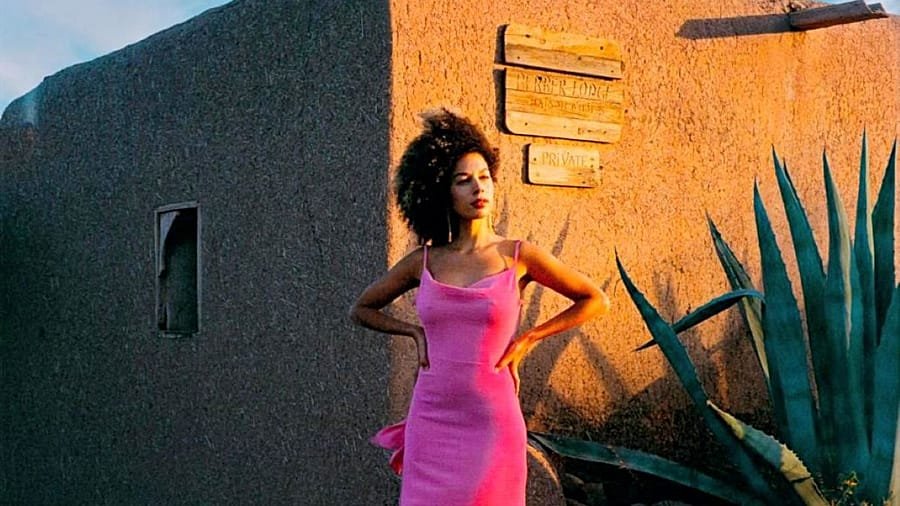
Nigeria is not the only African nation making waves at this year's festival. Tunisia arrives with a double presence that signals the depth and maturity of North African cinema. Kaouther Ben Hania, the acclaimed filmmaker known for "The Man Who Sold His Skin" and the Oscar-nominated "Four Daughters," sits on the main competition jury alongside president Maggie Gyllenhaal. Her presence is not ceremonial. She is a filmmaker whose work has consistently challenged audiences to think differently about identity, migration and the stories we tell about ourselves.
Meanwhile, Tunisian director Kamel Laaridhi brings his film "The H@llow Man" to the 41st Settimana Internazionale della Critica, the Venice Critics' Week, one of seven debut films competing in that section. Critics' Week is a launching pad for first-time filmmakers, a space where bold voices are given the chance to be heard without the pressure of the main competition. To have a Tunisian film in that lineup is a testament to the vitality of the country's filmmaking scene.
What does this North African representation signal for the continent? That African cinema is not a monolith. From the bustling energy of Nollywood to the intellectual rigor of Tunisian art cinema, from the griot traditions of West Africa to the experimental voices of the diaspora, the continent is a mosaic of storytellers, each with a distinct perspective.
Venice has long amplified filmmakers from the Arab world and Africa, premiering works that shaped the global conversation about cinema. This year, with Ben Hania on the jury and Laaridhi in competition, Tunisia is not just participating; it is helping to shape the festival itself.
For young filmmakers across Africa, seeing these names on the programme is a powerful message. It says that the path is open, that the doors are no longer locked, that with talent, persistence and a good story, you too can stand on the Lido. The representation matters not just for the filmmakers themselves, but for every young person watching from Lagos, Tunis, Dakar or Nairobi, dreaming of a future behind the camera.
What This Means: Africa's Growing Footprint on the Festival Circuit
To understand the significance of this moment, we must look back at the journey that brought us here. It begins with Ousmane Sembene, the Senegalese father of African cinema, who picked up a camera in the 1960s to tell stories that had been silenced for centuries. Sembene understood that cinema was not just entertainment. It was a weapon, a tool for liberation, a way of reclaiming our history and imagining our future.
From Sembene's pioneering legacy, a rich and diverse cinematic tradition has grown across the continent. In recent years, we have seen African filmmakers at Berlin, Cannes and Venice with increasing regularity. Ghana's "The Fisherman" made history as the country's first official selection at Venice, winning the UNESCO Fellini Medal. That film opened doors, proving that even the smallest film industries on the continent could produce work of international significance.
The rise of Nollywood as a global force has been extraordinary. What began as a cottage industry has become a multi-billion-dollar enterprise producing more films per year than Hollywood. For too long, though, Nollywood was seen as a domestic phenomenon, popular at home and in the diaspora but rarely taken seriously by the international festival circuit. "Dear Ajayi" changes that, carrying the craft, storytelling traditions and star power of Nollywood to the most discerning audiences in the world.
"Dear Ajayi" and the Tunisian entries reflect a continental creative economy reaching maturity. African filmmakers increasingly work through their own production companies, distribution networks and audiences, building an industry that can sustain itself, and the festival circuit is beginning to recognize that.
For African audiences, seeing their stories on the Lido is a profound affirmation. It says that our lives, our struggles, our joys and our sorrows are worthy of the world's attention. It says that we are not just consumers of other people's stories, but creators of our own. And it says that the future of cinema is not just in Hollywood or Paris or London, but in Lagos, in Tunis, in Accra, in Dakar.
What to Watch For at the 83rd Venice Film Festival
As the festival unfolds over the coming days, there is much to watch for beyond the African presence. The main competition lineup is a formidable one, featuring Casey Affleck's "Company," Lee Chang-Dong's "Possible Love," Hirokazu Koreeda's "Look Back," Martin McDonagh's "Wild Horse Nine," Nanni Moretti's "Succedera Questa Notte" and Lance Oppenheim's "Primetime" starring Robert Pattinson. These are some of the most respected filmmakers in the world, and their presence ensures that the competition will be fierce.
Notably absent from the lineup are the big studio titles, continuing a trend that began at Cannes. The major studios seem to be pulling back from the festival circuit, preferring to launch their films through their own platforms and events. This absence has created space for independent and international cinema to shine, and it is a space that African filmmakers are eager to fill.
"Dear Ajayi" is scheduled to premiere during the festival's first days, which means we will not have to wait long to see how it is received. The early screenings are often the most telling, as critics and audiences form their first impressions. A strong reception could mean everything for Nigerian and African cinema on the awards circuit, opening doors to distribution deals, festival invitations and perhaps even awards recognition.
The coming days will be filled with screenings, red carpets and jury deliberations, all building toward the closing ceremony on September 12. For the African filmmakers in attendance, every moment will be an opportunity to make connections, to share their work and to plant the seeds for future collaborations. The festival is not just about the films on screen. It is about the relationships that are built in the corridors, at the parties, over long dinners by the water.
The most exciting thing about this year's festival is the sense of possibility. This is not an end point but a beginning: the doors that have opened will remain open for the filmmakers who come after, and the stories told this week will inspire the next generation to tell their own.
So as the lights dim and the first frames of "Dear Ajayi" appear on the screen, let us hold our breath together. Let us celebrate how far we have come. And let us look forward to the day when African cinema is not a novelty at Venice, but a permanent and essential part of the conversation. The Lido is ready. The world is watching. And Africa has arrived.
By Amara Diop, Staff Writer
This article was produced with AI-assisted research and editorial support. Sources: Deadline, La Biennale di Venezia, Settimana Internazionale della Critica, OkayAfrica, Daily Post Nigeria.
What's Your Reaction?
 Like
0
Like
0
 Dislike
0
Dislike
0
 Love
0
Love
0
 Funny
0
Funny
0
 Wow
0
Wow
0
 Sad
0
Sad
0
 Angry
0
Angry
0

West Africa/Sahel Correspondent at Global1.News. Dakar-based journalist covering politics, security, climate, and development across Francophone and Anglophone West Africa. Tells the stories of a region undergoing profound transformation.













Comments (0)