
Ukrainian Drones Strike Yekaterinburg as Deep-Strike Campaign Grinds On
The Urals are burning. And this time, the fire isn't some industrial accident or a random act of sabotage. It's a message from Kyiv, delivered by drone, to a city nearly 2,000 kilometers from the front lines. While the world's attention has been fixed on the grinding trench warfare in eastern Ukraine, the battlefield just got a whole lot bigger.
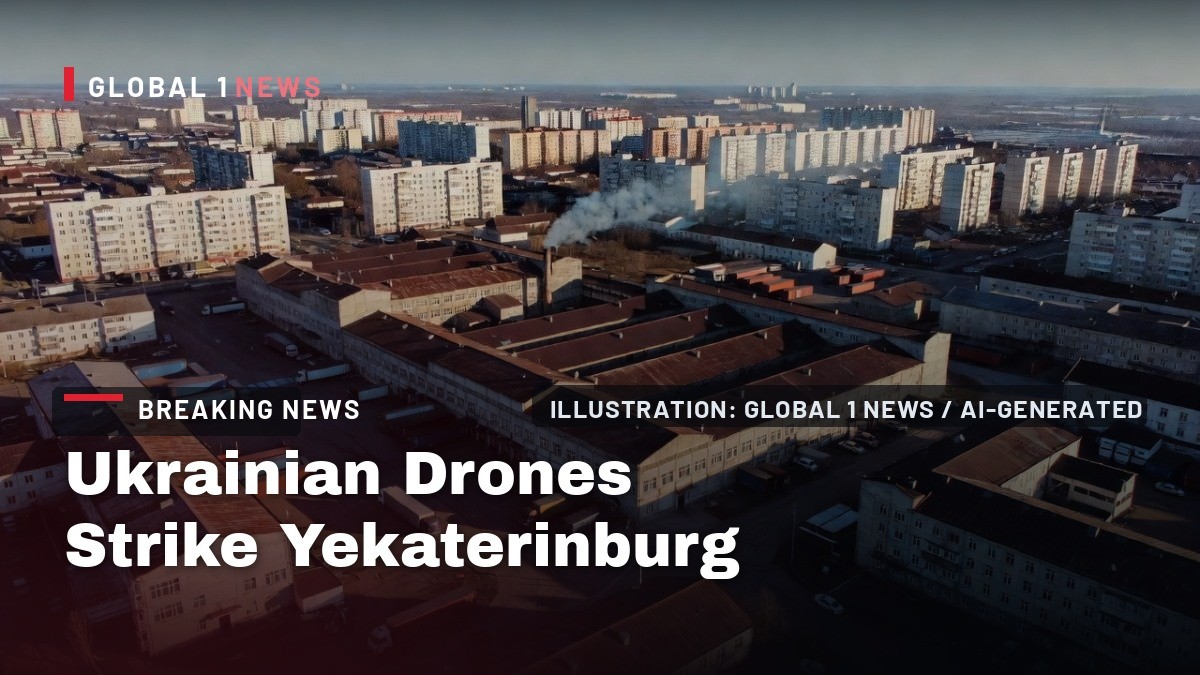
The Urals are burning. And this time, the fire isn't some industrial accident or a random act of sabotage. It's a message from Kyiv, delivered by drone, to a city nearly 2,000 kilometers from the front lines. While the world's attention has been fixed on the grinding trench warfare in eastern Ukraine, the battlefield just got a whole lot bigger. A high-rise apartment building in Yekaterinburg is damaged, a massive logistics hub is in flames, and the Kremlin's carefully cultivated sense of normalcy for its civilian heartland has been shattered. This isn't just a military strike; it's a psychological operation aimed at the Russian home front, and it landed with devastating precision on Monday morning.
Ukraine Drone Strike Hits Yekaterinburg Logistics Hub
Yekaterinburg, Russia – Monday, August 31, 2026 — A drone strike rocked the heart of the Ural mountains this morning, as Ukrainian forces successfully targeted a major logistics center in Yekaterinburg, marking yet another audacious deep-strike operation inside Russian territory. Local officials and Russian media confirmed that a drone hit a high-rise apartment building in the city, while the primary target appeared to be a sprawling warehouse complex owned by Wildberries, Russia's largest online retailer. The attack, which triggered a UAV danger regime across the entire Sverdlovsk Oblast and forced the temporary closure of Koltsovo airport, signals a dramatic escalation in Ukraine's long-range campaign to bring the war home to ordinary Russians.
The morning of August 31 began with an eerie warning. At 8:29 a.m., the unofficial monitoring resource "Locator Rossii" recorded a drone overflight approaching from the direction of Revda, a satellite city southwest of Yekaterinburg. Moments later, the first explosions echoed through the Chkalovsky district, a heavily industrialized area on the city's outskirts. Thick plumes of black smoke rose over the industrial and warehouse zone as emergency services scrambled to respond. The scene was chaotic: debris from the downed drones scattered across the facility's grounds, igniting multiple fires that quickly spread through the complex. Staff at the Wildberries logistics hub were evacuated as flames consumed portions of the massive structure, while residents in nearby multi-story residential buildings watched in disbelief as their neighborhood became the latest flashpoint in a war they had likely believed was thousands of miles away.
Drones Over the Urals: What Happened in Yekaterinburg
Let's be clear about the geography here. Yekaterinburg is not Donetsk. It's not even close to the border. This is a major city in the Ural mountains, in Russia's Sverdlovsk region, sitting roughly 1,700 to 2,000 kilometers from the front line in Ukraine. For most of this war, that distance provided a sense of security for the city's 1.5 million residents. They could watch the news, see the devastation in Ukrainian cities, and feel a degree of separation from the conflict. That illusion was violently dismantled this morning.
The attack unfolded in two distinct phases. First, the drones penetrated deep into Russian airspace, flying undetected or at least unengaged until they reached their targets. The UAV danger regime declared across the region suggests Russian air defense was scrambling to respond, but it was too late. The drones crashed into the Wildberries logistics center, and their debris rained down on the facility, sparking fires that required a massive emergency response. Simultaneously, other drones or their debris struck multi-story residential buildings in the Chkalovsky district, adding a terrifying new dimension to the attack. This wasn't a surgical strike on a military installation; this was an assault on civilian infrastructure and residential areas, blurring the lines between military and civilian targets in a way that will undoubtedly fuel Russian propaganda but also stoke genuine fear among the population.
Wildberries: A Target That Keeps Coming Back
Here's the thing about this strike: it's not an isolated incident. Wildberries has become a recurring target for Ukrainian long-range drones, and the pattern is unmistakable. Back on August 7, a Ukrainian drone strike hit a Wildberries warehouse in Yekaterinburg, forcing 800 workers to evacuate. That attack, which traveled more than 1,200 miles from the border, was a warning shot. Then on August 26, U.S. News & World Report documented another strike that destroyed a Wildberries depot in Russia, part of what they described as Ukraine extending its drone campaign. And now, just five days later, they're back.
Why Wildberries? Why does Ukraine keep pouring resources into striking an e-commerce company? The answer lies in the intersection of commerce and war. Wildberries isn't just an online retailer; it's a critical node in Russia's logistics and supply chain infrastructure. In a country as vast as Russia, e-commerce giants like Wildberries have built massive distribution networks that move goods across thousands of miles. Those same networks are now being used to support the war effort. By targeting these hubs, Ukraine is attempting to disrupt the Russian economy's ability to function, to create friction in the supply chain, and to demonstrate that no corner of Russia is safe from retaliation.
Why a Marketplace? The War-Economy Connection
This is where the strategic rationale comes into focus, and it's a claim that Ukrainian President Volodymyr Zelenskyy has made directly. According to reports from dronexl in July, Ukrainian long-range drones hit two Wildberries logistics hubs that Zelenskyy says were supplying drone-production components and navigation equipment to Russia's war effort. That's a significant allegation. It transforms Wildberries from a civilian business into a military logistics partner, at least in the eyes of Kyiv. If true, it means that when you order a pair of shoes or a new appliance on Wildberries, you're potentially participating in a supply chain that ends with Russian drones being assembled and deployed against Ukrainian cities.
This is the new reality of 21st-century warfare. The lines between civilian and military infrastructure have been deliberately blurred by Russia's approach to its war economy. By embedding military supply chains within civilian e-commerce networks, Russia has made it nearly impossible for Ukraine to strike military targets without hitting civilian infrastructure. It's a cynical strategy, but it's also one that Ukraine has decided to counter by treating these dual-use facilities as legitimate military targets. The fires burning in Yekaterinburg are not just about destroying warehouses; they're about severing the logistical arteries that keep Russia's war machine functioning. And for the Russian civilians who work at these facilities or live near them, the message is stark: your government has made you a participant in this war, and you will bear the consequences.
Ukraine's 'Long-Range Sanctions' Campaign
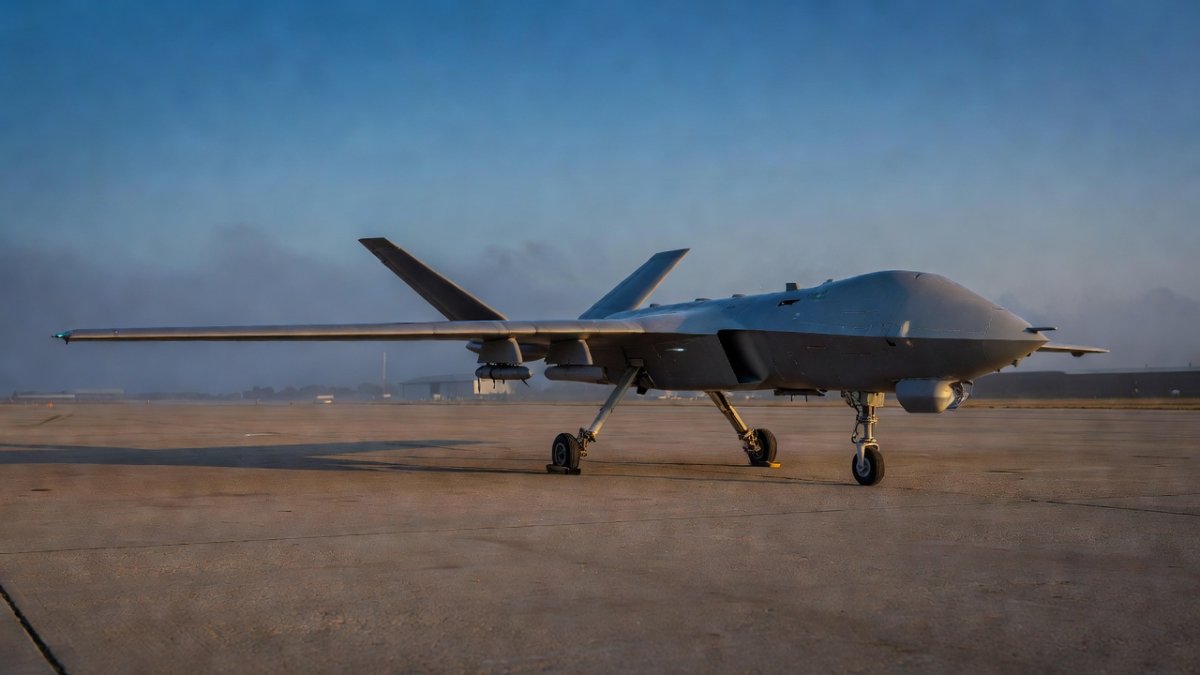
This morning's strike is part of a broader, more ambitious campaign that Al Jazeera has aptly dubbed "long-range sanctions." The concept is simple: if the international community won't impose sanctions that bite hard enough, Ukraine will impose its own, delivered by drones. The primary weapon in this campaign is the Liutyi, a Ukrainian-designed long-range strike drone roughly the length of a compact SUV with a wingspan of nearly 6 meters. These aren't small quadcopters; these are serious pieces of military hardware capable of flying over 1,700 kilometers to reach their targets.
The campaign has been building for months. Back in April, Ukrainian drones struck Russia's Sverdlovsk and Chelyabinsk regions, penetrating over 1,700 kilometers into Russian territory. That was described as a significant expansion of the conflict's reach, with strikes beginning around 5:30 a.m. Moscow time. Since then, the frequency and audacity of these strikes have only increased. The July attacks on Wildberries hubs were described as the deadliest deep strike inside Russia in more than two years. And now, with this latest strike on Yekaterinburg, Ukraine is demonstrating that it has both the capability and the will to sustain this campaign indefinitely. The goal is to make the Russian people feel the cost of this war in their daily lives, to create a sense of vulnerability that no amount of state media propaganda can fully dispel.
Talks in September? The Diplomatic Paradox
Here's where the story gets truly paradoxical. Even as Ukrainian drones are raining down on Russian cities, diplomatic channels are reportedly opening. Kyrylo Budanov, the Ukrainian president's chief of staff and head of the Presidential Office, told CGTN on August 27 that talks between Ukrainian and Russian teams could be held in September and would include US representatives. That's a significant development. The prospect of direct talks, with American involvement, suggests that behind the scenes, there's movement toward some kind of negotiated settlement.
But here's the rub: Budanov himself has poured cold water on the idea that these talks will lead to a quick resolution. In a separate statement reported by the New Voice of Ukraine on August 28, Budanov said the war is unlikely to end this winter, and that Russia currently has no intention of ending its war against Ukraine. So we're looking at a situation where both sides are simultaneously preparing for negotiations and preparing for continued conflict. RBC Ukraine has characterized the current state as "no stalemate, but no ceasefire either." It's a diplomatic dance where the music hasn't stopped, but neither side is willing to sit down and have a real conversation about peace. The Kyiv Independent even ran a piece on August 31 titled "Budanov's political honeymoon is over," suggesting that the political dynamics in Ukraine are shifting as the war drags on.
Another Winter: What Comes Next
So where does this leave us? We're heading into another winter of this war, and the contours of the coming months are becoming clearer. On the military front, Ukraine is doubling down on its deep-strike campaign, using drones to reach targets that were once considered untouchable. The strike on Yekaterinburg is a message to Moscow that there is no safe haven, no city far enough from the front lines to escape the consequences of this war. On the diplomatic front, there are tentative signs of movement, with September talks potentially on the horizon. But the skepticism from Budanov himself suggests that these talks are more about positioning than about achieving a breakthrough.
For the American audience, this matters more than you might think. The United States is deeply involved in this conflict, both as Ukraine's primary military backer and now potentially as a participant in diplomatic talks. The outcome of this war will shape the global order for decades to come, and American leadership will inherit a situation that is far from resolved. The strikes on Yekaterinburg are a reminder that Ukraine is not just fighting defensively; it's taking the war to Russia in ways that are unprecedented in modern history. And as the drones fly deeper into Russian territory, the risks of escalation grow, even as the possibilities for negotiation emerge.
The fires in Yekaterinburg will eventually be extinguished. The damaged apartment buildings will be repaired. The Wildberries warehouse will be rebuilt or replaced. But the psychological impact of this strike will linger. For the first time, residents of a major Russian city far from the front lines have experienced the terror of war firsthand. They've seen the smoke, heard the explosions, and felt the vulnerability that comes with being a target. That fear is exactly what Ukraine is trying to cultivate. And as long as the war continues, more Russian cities will likely experience the same. The question is whether that fear will lead to pressure on the Kremlin to end the war, or whether it will harden resolve and push Russia toward even greater escalation. Either way, the war is no longer something that happens "over there." It's happening in the Urals, and it's coming to a city near you.
This article was produced with AI-assisted research and editorial support. Sources: The Moscow Times, ua.news, Nasha Niva, United24 Media, Al Jazeera, New York Post, U.S. News & World Report, Kyiv Post, CGTN, RBC Ukraine.
By Jessica Ali, Staff Writer
What's Your Reaction?
 Like
0
Like
0
 Dislike
0
Dislike
0
 Love
0
Love
0
 Funny
0
Funny
0
 Wow
0
Wow
0
 Sad
0
Sad
0
 Angry
0
Angry
0

Editor-in-Chief at Global1.News. Atlanta-based journalist who cuts through the BS and tells it like it is. Lead anchor, host, and the voice you hear when the spin stops and the truth starts.














Comments (0)