
Avalanche on Mount Mizhirgi Kills 13 Climbers; Five Still Missing as Rescue Teams Face Grave Risks
The North Caucasus mountain republic of Kabardino-Balkaria is in mourning this week after an avalanche on Mount Mizhirgi killed at least 13 climbers, with rescue teams battling treacherous terrain and the constant threat of further snowslides to reach five people still unaccounted for.
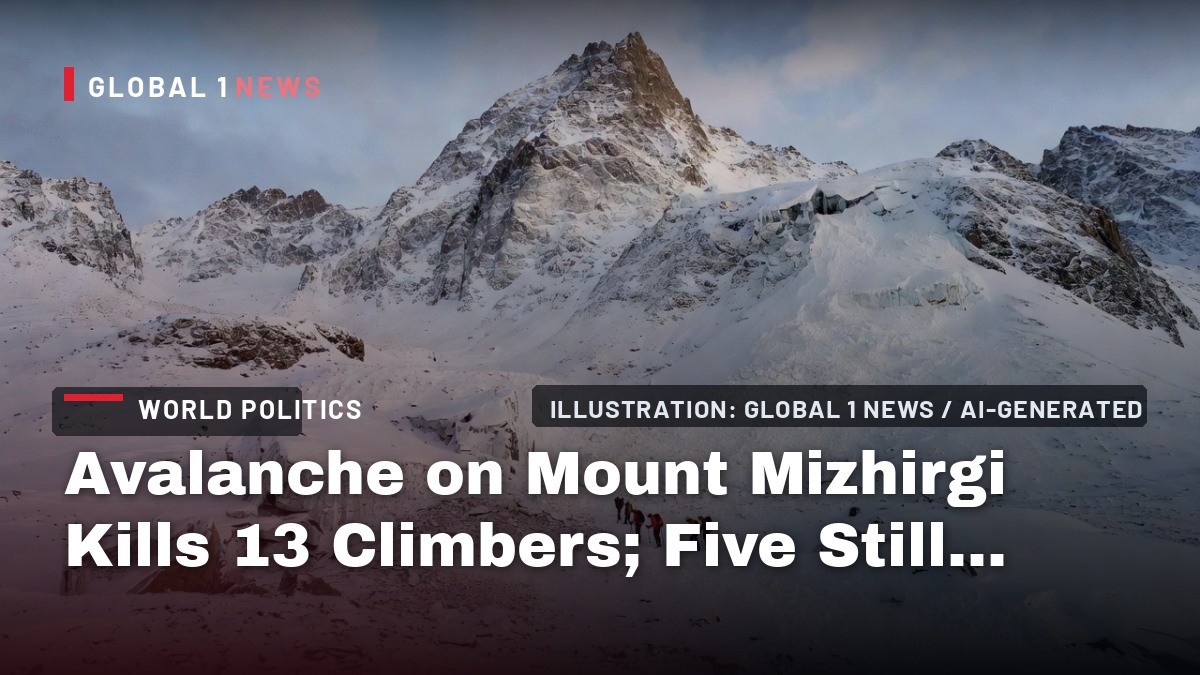
The North Caucasus mountain republic of Kabardino-Balkaria is in mourning this week after an avalanche on Mount Mizhirgi killed at least 13 climbers, with rescue teams battling treacherous terrain and the constant threat of further snowslides to reach five people still unaccounted for. The disaster, which struck a group of 33 climbers on Sunday evening, has sent shockwaves through Russia's tightly-knit mountaineering community and raised urgent questions about the safety of high-altitude training expeditions involving law enforcement personnel.
Avalanche on Mount Mizhirgi Kills 13 Climbers; Five Still Missing as Rescue Teams Face Grave Risks
Nalchik, Kabardino-Balkaria - Wednesday - The death toll from Sunday's avalanche on Mount Mizhirgi has risen to at least 13, according to Russia's Emergency Situations Ministry, as rescue operations enter their fourth day under conditions that officials describe as extremely hazardous. The disaster struck a group of 33 climbers at approximately 5 p.m. local time on Sunday, sweeping them down the mountain's western flank in a sudden and violent release of snow and ice.
The Avalanche and the Immediate Aftermath
Mount Mizhirgi, standing at 5,025 meters, is one of the highest and most formidable peaks in the North Caucasus, part of the Bezengi Wall-a massive granite and ice barrier that separates Russia from Georgia. The avalanche hit the climbing party without warning on Sunday evening, a time when most groups would typically be establishing camp or preparing for a summit push. According to the Emergency Situations Ministry, ten climbers managed to make their own way down the mountain by Monday morning, a harrowing descent through avalanche debris and crevassed terrain that speaks to their survival instincts and training.
The remaining 23 climbers were caught in the slide. By Tuesday evening, rescue teams had recovered 12 bodies and lowered them to the Bezengi base camp, a remote staging point at an altitude of around 2,200 meters that serves as the primary hub for expeditions into the region. On Wednesday morning, the ministry confirmed that rescuers had located the body of a 13th climber, bringing the confirmed death toll to 13, with the fate of five others still unknown.
National Guard Servicemen Among the Dead
Russia's National Guard has confirmed that some of its servicemen were among those killed in the avalanche, a revelation that has added a layer of institutional gravity to the tragedy. The National Guard, a powerful federal force that answers directly to President Vladimir Putin, has a significant presence in the North Caucasus, where it conducts counter-terrorism and public security operations. The confirmation that its personnel were climbing Mount Mizhirgi raises questions about the nature of the expedition and the level of risk accepted by those involved.
In a statement issued on Wednesday, the National Guard moved quickly to deny reports that the victims included members of its elite Vityaz formation, a special-purpose unit that specializes in high-risk law enforcement operations, including hostage rescue and counter-terrorism. The denial, while categorical, has done little to quell speculation about the composition of the climbing group, which appears to have included a mix of civilian mountaineers, law enforcement officers, and at least one professional instructor.
A Professional Climber Who Trained Law Enforcement
One of those killed was a professional climber who had been involved in training representatives of law enforcement agencies, according to Alexander Yakovenko, a member of the Russian Mountaineering Federation. Yakovenko told the newspaper Kommersant that the deceased climber was a highly experienced mountaineer who had dedicated his career to preparing law enforcement personnel for high-altitude and mountain operations. His death, Yakovenko suggested, is a profound loss for the small community of professional climbers who serve as instructors for Russia's security forces.
The revelation that the expedition included a trainer of law enforcement personnel points to a broader pattern of institutional mountaineering in Russia, where security agencies regularly send their officers on high-altitude training courses. These programs are designed to build physical endurance, mental resilience, and technical climbing skills, but they also expose participants to the inherent dangers of the mountains. The Mount Mizhirgi disaster is a stark reminder that no amount of institutional preparation can eliminate the unpredictable power of an avalanche.
Rescue Operations Hampered by Terrain and Risk
The search for the five missing climbers is continuing, but rescue teams are facing formidable obstacles. Officials from the Emergency Situations Ministry have described the terrain around Mount Mizhirgi as extremely difficult, with steep ice slopes, deep crevasses, and unstable snowpack conditions that make every step a potential trigger for another avalanche. The ministry has deployed additional rescuers to the Bezengi base camp, including experienced high-altitude specialists, but their progress has been slow and cautious.
The decision to continue the search at all is a calculated risk. Avalanche risk in the region remains high, and rescue teams are acutely aware that they could easily become victims themselves. The ministry has said that operations are being conducted in short windows of relative stability, with teams probing the debris field and using specialized equipment to detect signs of life beneath the snow. As the hours pass, however, the likelihood of finding survivors diminishes, and the operation is increasingly becoming a recovery mission.
The Bezengi Region: A Climbing Destination of Extreme Risk
The Bezengi Wall, of which Mount Mizhirgi is a part, is often described as the Caucasus's answer to the Alps' most challenging faces. It is a destination for serious mountaineers, not casual hikers, and it demands a high level of technical skill, physical fitness, and experience. The region has a long history of climbing accidents, and local rescue services are accustomed to responding to emergencies, but the scale of Sunday's disaster is unusual even by the standards of this unforgiving environment.
Kabardino-Balkaria, a republic that is home to Mount Elbrus, Europe's highest peak, has invested significantly in mountain rescue infrastructure in recent years. The Emergency Situations Ministry maintains a permanent presence in the region, and the Bezengi base camp is equipped with basic facilities for rescue coordination. However, the sheer remoteness of the area and the difficulty of the terrain mean that even the best-prepared rescue operation can take days to reach the site of an accident.
Questions About High-Mountain Safety and Institutional Expeditions
The Mount Mizhirgi disaster is likely to prompt a broader conversation about high-mountain safety in Russia and the wisdom of sending law enforcement personnel on training expeditions in avalanche-prone areas. Analysts suggest that this tragedy could indicate a need for stricter regulations governing institutional mountaineering, including mandatory risk assessments, better communication with rescue services, and more conservative decision-making when conditions are unstable. The fact that the group was 33 strong is itself a point of concern; large groups are more difficult to manage on technical terrain and can increase the likelihood of triggering an avalanche.
The Russian Mountaineering Federation, which has been in contact with rescue services since Sunday, has expressed its condolences to the families of the victims and has pledged to cooperate fully with any investigation into the causes of the disaster. Yakovenko's comments to Kommersant suggest that the federation is already asking difficult questions about how such a tragedy could have occurred, and whether more could have been done to prevent it.
A Community in Mourning and a Region on Edge
For the families of the dead and missing, the wait for news is agonizing. The Emergency Situations Ministry has set up a hotline for relatives, and counselors have been dispatched to the Bezengi base camp to support those who have gathered there. The mountaineering community, both in Russia and abroad, has been quick to express its solidarity, with tributes pouring in for the climbers who lost their lives on the mountain.
The disaster also serves as a somber reminder of the risks that come with climbing in the North Caucasus, a region that offers some of the most spectacular and challenging peaks in the world, but also some of the most dangerous. As rescue teams continue their painstaking search for the missing, the mountains of Kabardino-Balkaria stand silent and indifferent, a testament to the power of nature and the fragility of human life.
By Irina Volkov, Staff Writer
This article was produced with AI-assisted research and editorial support. Sources: The Moscow Times.
What's Your Reaction?
 Like
0
Like
0
 Dislike
0
Dislike
0
 Love
0
Love
0
 Funny
0
Funny
0
 Wow
0
Wow
0
 Sad
0
Sad
0
 Angry
0
Angry
0

Russia/Eastern Europe Correspondent at Global1.News. Covering Russian politics, energy, security, and the shifting dynamics of the post-Soviet space. Provides clear-eyed analysis on one of the world's most opaque regions.











Comments (0)