
In the Heart of Nigeria, the 'Vulture King' Fights to Save Sacred Scavengers
In the town of Awka-Etiti, in south-eastern Nigeria, a man known as the Vulture King walks among birds that most of the world would rather forget. Chukwuemeka Igwe, a volunteer with the Nigeria Conservation Foundation (NCF), has earned his nickname through tireless work protecting the scavengers that circle his community's sacred forest. "People fear the environment where the shrine is.
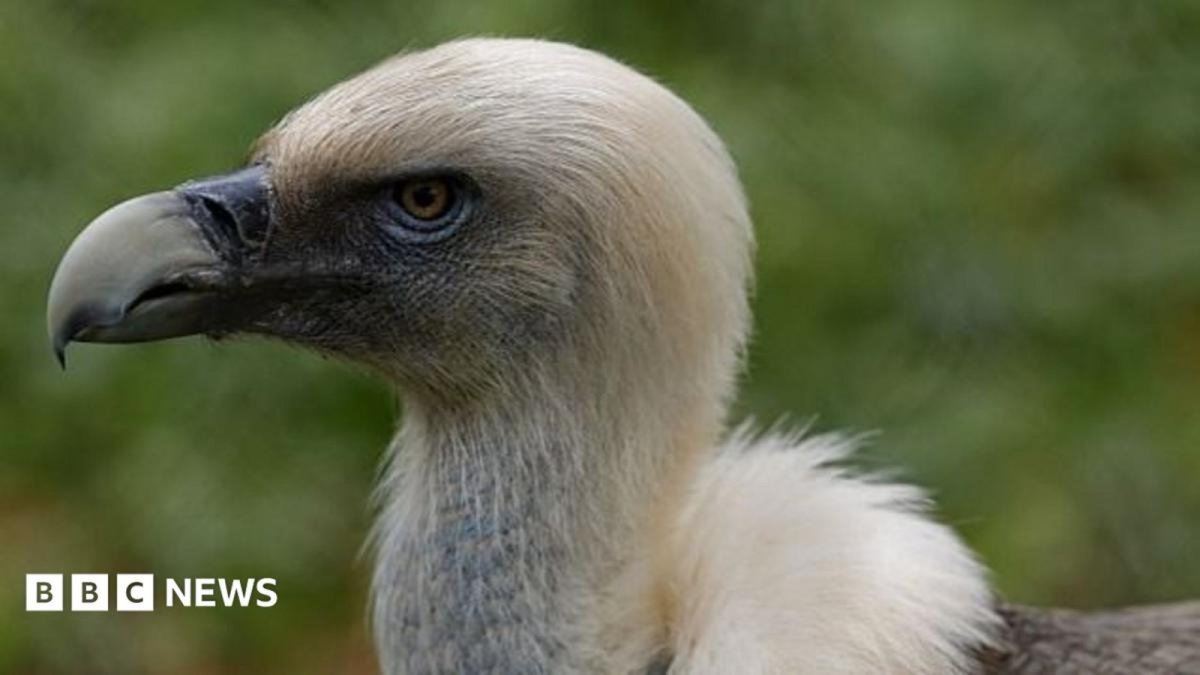
In the Heart of Nigeria, the 'Vulture King' Fights to Save Sacred Scavengers
In the town of Awka-Etiti, in south-eastern Nigeria, a man known as the Vulture King walks among birds that most of the world would rather forget. Chukwuemeka Igwe, a volunteer with the Nigeria Conservation Foundation (NCF), has earned his nickname through tireless work protecting the scavengers that circle his community's sacred forest. "People fear the environment where the shrine is. No evil will ever happen here. So, nobody fights vultures that perch here," he told the BBC.
It is a rare moment of hope in a continent-wide crisis. Across West Africa, vulture populations have collapsed by between 80 and 97 percent over the past 50 years, according to BirdLife International. Seven African species are now classified as globally Endangered or Critically Endangered. The birds, long associated with death and decay, are disappearing from the skies — and their loss is being felt far beyond the realm of aesthetics.
A Sacred Forest and an Ancient Deity
At the heart of Awka-Etiti lies a cluster of tall trees wrapped in thick greenery, surrounding a shrine dedicated to the deity Nguma. Locals say an ancient tree at the centre has watched over the community for hundreds of years. This is a largely Christian community, yet many residents continue to observe traditional practices in which vultures play a central role.
Igwe, now in his 50s, says the birds have been a feature of daily life here for as long as he can remember — walking among humans, scavenging for food, and serving as messengers between the physical and spiritual worlds. "The indigenous don't hunt vultures," he explains. Instead, locals sometimes offer fresh animal sacrifices at the shrine, which attract the birds. There is an adage in the community: "When you put down a sacrifice and you do not see vulture[s], know that something happened in the spirit world."
The presence of vultures at a sacrifice is considered a good omen — a sign that the deity has accepted the offering and heard the residents' appeals. It is a belief system that has inadvertently created one of the most effective conservation models in the region, proving that tradition and environmental protection can work hand in hand.
Nature's Clean-Up Crew Under Threat
For many who venture into the wild across Africa, vultures are not the first birds to capture attention. Rarely do we stop to admire them through binoculars or photograph them in awe. In the eyes of many, they are downright ugly. But scientists say they provide one of nature's most important cleaning services.
Vultures consume dead animals within hours, helping prevent carcasses from becoming breeding grounds for dangerous bacteria and diseases. Their powerful stomach acids allow them to safely consume infected animals, helping stop diseases such as anthrax and rabies from spreading. Without vultures, ecosystems lose a natural defence system against the spread of zoonotic diseases.
"In places where the total collapse of vultures has happened, there has been impact of rising zoonotic diseases," warns Stella Egbe, a conservation biologist with the Nigeria Conservation Foundation. The consequences are not abstract — they affect human health, livestock, and the delicate balance of ecosystems across the continent.
The Dark Trade in Vulture Parts
Habitat loss from rapid urban growth across Africa has destroyed many of the tall trees where vultures nest. But poisoning remains the leading cause of death, accounting for an estimated 60 percent of vulture deaths in Africa, according to BirdLife International. And increasingly, experts say the use of vultures and their body parts in traditional medicine and Vodun — also known as Voodoo — has emerged as one of the most significant drivers of their decline, especially in West and southern Africa.
The economics are stark. Dead adult vultures in Nigeria used to sell for around 25,000 to 30,000 naira ($18 to $22; £13 to £16) each. They can now fetch up to 200,000 naira ($145; £107) per bird, says Egbe. Vulture eggs and nests are increasingly targeted too — a "shocking" development for a slow-breeding species.
Adult vultures usually reach sexual maturity between the ages of five and seven, and produce only one chick every year or two. Many young vultures do not survive their first year. "And so you imagine what will happen if a nest is removed and eggs are removed. That means a pair of vultures will not have a next generation for that year. So in addition to hunting, you're removing their habitat, you're removing their homes," Egbe adds.
The scale of the crisis was made horrifyingly clear in January 2020, when more than 2,000 hooded vultures were found dead in Guinea-Bissau, many with their heads removed — a sign of belief-based practices rather than natural causes, researchers say.
Nigeria: A Hub for Illegal Wildlife Trade
Nigeria has become a major hub for the illegal trade of vultures, conservationists say, partly because of its biodiversity and porous borders. The Nigerian Customs Service says it is working to address the problem. "We are doing everything possible to make sure that the smuggling of items, including vultures, including donkeys, and other species outside the country is suppressed to the barest minimum," insists Abdullahi Maiwada, a spokesman for the service.
Customs officials have carried out seizures of protected wildlife and supported prosecutions linked to illegal trafficking, he says. It is part of Nigeria's efforts to live up to its commitments as a member of the Convention on International Trade in Endangered Species (Cites), under which endangered species are not allowed to be traded across borders.
But Maiwada admits to the BBC that enforcement alone is not enough. "We may not be able to do it without the cooperation or understanding of members of the community," he continues. "If people understand why these species should be preserved, then our enforcement will only be complementary to those who decide to be recalcitrant."
Community-Led Conservation in Action
That message has been at the heart of conservation work in Awka-Etiti. In recent years, Igwe and other residents became worried when they noticed outsiders arriving to hunt the birds and vulture numbers dwindling. In his quest to save them, he visits markets, buses, and public spaces to spread the word: "I tell them that vulture is helpful to human life."
Working with the NCF for the past six years, Igwe has mobilised community leaders, local groups, and security teams to protect the birds from outside hunters. Local bylaws now help formalise their protection. The results are tangible: local volunteers monitoring the birds say they have now recorded more than 160 vultures, up from about 20 recorded in 2017.
"The missing vultures are almost back. If you go to the marketplace now, you see vultures. At one time they disappeared, but now they are coming back," Igwe confirms. For him, every returning bird represents hope. He says he "cannot run away" from his unusual nickname of Ezeudene, or the King of Vulture. "I'm fighting to make nature exist the way it's supposed to be."
A Model for the Continent
Egbe believes that this small, south-eastern town demonstrates what is possible when communities lead conservation efforts. "What we've done in Awka-Etiti is one very good example of a success story where people have taken charge of what's going on in their environment. That makes us happy."
The lessons from Awka-Etiti resonate far beyond Nigeria. Across West Africa, including in my home country of Senegal, vultures face similar threats from habitat loss, poisoning, and belief-based hunting. The sacred groves and traditional practices that once protected these birds are eroding under the pressures of urbanisation and changing cultural norms. Yet the Nigerian example shows that when communities are engaged as partners rather than obstacles, conservation can succeed.
Researchers from across the region are set to meet in Abuja later this year to review the West African Vulture Conservation Action Plan, drafted in 2022. The issues of poisoning, habitat loss, and belief-based hunting will be high on the agenda. The challenge is immense, but the story of Awka-Etiti offers a path forward — one rooted in respect for tradition, community leadership, and the recognition that these misunderstood birds are vital to the health of the continent's ecosystems.
As Igwe puts it, the fight is far from over. With populations still collapsing across Africa, protecting vultures will require much more than one community. But in the shadow of the Nguma shrine, where ancient trees stand watch and vultures circle overhead, there is proof that change is possible. The Vulture King and his neighbours are showing the continent what it means to live in harmony with nature — one returning bird at a time.
This article was produced with AI-assisted research and editorial support. Sources: BBC Africa, BirdLife International, Nigeria Conservation Foundation.
By Amara Diop, Staff Writer
What's Your Reaction?
 Like
0
Like
0
 Dislike
0
Dislike
0
 Love
0
Love
0
 Funny
0
Funny
0
 Wow
0
Wow
0
 Sad
0
Sad
0
 Angry
0
Angry
0

West Africa/Sahel Correspondent at Global1.News. Dakar-based journalist covering politics, security, climate, and development across Francophone and Anglophone West Africa. Tells the stories of a region undergoing profound transformation.















Comments (0)